Top 50 Things to Do in Japan for First-Time Visitors
A practical route from Tokyo and Kyoto to mountain towns, art islands, northern wilderness and Okinawa—organized so you can choose what fits instead of racing through a checklist.
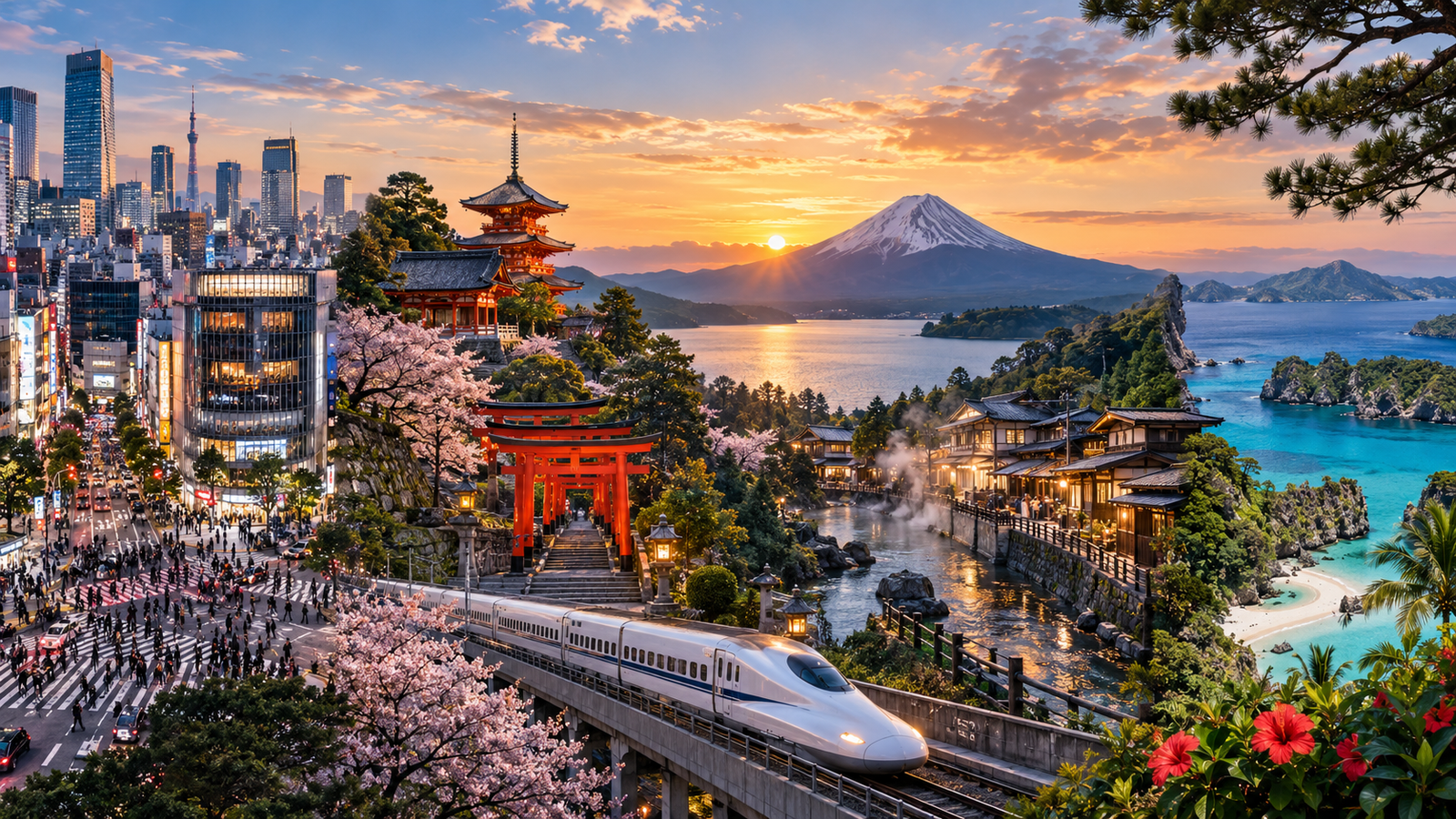
Image note: the feature artwork for this guide was created with generative AI and reviewed by a human editor. It is illustrative, not a documentary photograph of one location.
A realistic way to build the trip
| Trip length | Useful first route | What to leave for next time |
|---|---|---|
| 7 days | Tokyo + Kyoto, with one nearby day trip | Hokkaido, Kyushu and Okinawa |
| 10–14 days | Tokyo + Hakone/Fuji area + Kyoto + Osaka or Hiroshima | Remote islands and long rural detours |
| 15–21 days | Add Kanazawa/Takayama, Hiroshima/Miyajima, Kyushu or Hokkaido | Still choose one distant region rather than all of them |
Tokyo and the Kanto region
Cross Shibuya, then climb above it
Walk the famous crossing once at street level, but do not stop there. A high viewpoint helps the scale of western Tokyo make sense and is especially rewarding near sunset. Timed observation decks can sell out, so reserve only after checking the weather and build nearby Harajuku or Daikanyama into the same half-day.
Visit Sensoji before Asakusa gets busy
Arrive early enough to notice the temple gates, incense, side lanes and Sumida River before tour groups fill Nakamise. The shopping street is livelier later, so early risers can return for snacks after exploring quieter neighboring streets. Treat the site as an active place of worship, not merely a photo backdrop.
Slow down in a major landscape garden
Choose Shinjuku Gyoen, Hamarikyu or Rikugien rather than trying to collect every garden. Each offers a different relationship between designed nature and the surrounding city. Seasonal opening rules change, and some gardens close on particular weekdays, so check the official listing before crossing town.
Eat through a neighborhood, not a viral list
Pick one compact area—Ueno, Kichijoji, Monzen-nakacho or Nakano—and follow what locals are actually queuing for. Mix a market snack, a small noodle shop and a café instead of reserving three heavy meals. Carry cash for older counters and avoid blocking entrances while deciding.
Give Ueno’s museums a focused half-day
Ueno Park contains enough institutions to exhaust an entire trip. Select one museum that fits your interests, then leave time for the park, Ameyoko and nearby Yanaka. Special exhibitions often require separate or timed tickets, while permanent collections can be much calmer.
See Shinjuku after dark without overplanning
Start with the metropolitan skyline, continue through neon streets, then choose one tiny bar district or a relaxed izakaya. Some venues have cover charges or limited English menus; asking politely before sitting avoids surprises. Keep the last-train time in mind unless your hotel is walkable.
Watch sumo culture in Ryogoku
Tournament tickets are the headline experience, but the district remains worthwhile outside tournament dates. Visit the sumo museum when available, notice stable architecture and try chanko-nabe. Training visits require permission and strict etiquette; do not assume you can enter a stable unannounced.
Make a day trip to Nikko
Nikko combines ornate shrines with cedar forest and mountain scenery. Focus on the World Heritage core if you only have a day; adding Lake Chuzenji and Kegon Falls makes transport tighter. Bus queues grow in foliage season, so start early and keep one priority if traffic slows.
Pair Kamakura temples with the Shonan coast
Begin with one temple cluster, walk part of the wooded trail network if conditions allow, then continue toward the Great Buddha and coast. Enoshima is possible on a long day, but trying to see every temple turns the visit into transit. Weekend trains and lanes can be crowded.
Stay overnight in Hakone
Hakone works best when it is more than a rushed Fuji-photo mission. Choose a ryokan or hotel with bathing facilities, ride part of the mountain transport loop, and leave room for weather changes. Views of Mount Fuji are never guaranteed, even when forecasts look promising.
Mount Fuji, the Japanese Alps and central Japan
Choose one Fuji viewing base
Kawaguchiko, Hakone and the Shizuoka side offer different trade-offs. Kawaguchiko is strong for classic lake views, Hakone combines transport and hot springs, while Shizuoka can fit a Tokaido route. Spend a night if the mountain matters to you; clouds often change by the hour.
Climb Mount Fuji only in the official season
This is a real high-altitude hike, not a casual extension of sightseeing. Use the official climbing information for trail dates, reservations, weather and safety rules, and prepare for cold even when Tokyo is hot. Outside the season, appreciate the mountain from lower trails and viewpoints.
Walk the Nakasendo between post towns
The preserved route between Magome and Tsumago offers forest paths, old streets and a manageable introduction to rural walking. Send heavy luggage ahead or leave it at your accommodation. Wear shoes with grip and check trail conditions after rain rather than treating the walk like a paved promenade.
Wake up early in Takayama
Takayama’s old merchant district is most atmospheric before day visitors arrive. Add the morning market, local craft shops and a small sake brewery, then use the afternoon for Hida Folk Village or nearby countryside. Festival dates are exceptionally busy and need much earlier booking.
See Shirakawa-go responsibly
The steep-roofed farmhouses sit within a living community, so stay on public paths and respect private homes. Winter and peak foliage visits require serious transport planning; buses can sell out. An overnight stay creates quieter hours, but a well-timed day trip can still be meaningful.
Give Kanazawa more than a stopover
Kenrokuen, the castle area, samurai streets, tea districts and contemporary art justify at least one full day. Cluster sights geographically rather than zigzagging by bus. The city also provides a calmer introduction to crafts and seafood than squeezing every experience into Kyoto.
Cross the Tateyama Kurobe Alpine Route
This multi-stage mountain journey uses trains, buses, cable transport and walking sections. It is seasonal, weather-sensitive and luggage planning matters. Reserve enough time for connections and viewpoints instead of treating it as a normal train trip between cities.
Learn onsen etiquette in a hot-spring town
Choose a town such as Shibu, Nozawa or Bessho and stay overnight. Wash before entering the bath, keep towels out of the water, speak quietly and confirm tattoo policies in advance. The real reward is the rhythm—bath, meal, walk, sleep—not merely checking off a famous pool.
Kyoto, Nara and Osaka
Walk beyond the first gates at Fushimi Inari
The lower tunnel of torii is busiest. Continue uphill and the crowds thin, but decide in advance whether you want a short loop or the full mountain route. Early morning and late afternoon offer calmer light; after dark, stay on the lit route and keep noise low.
Explore Higashiyama as a route
Connect a few temples, preserved lanes and hillside viewpoints on foot rather than arriving by taxi at isolated photo spots. Start at one end and move steadily to avoid backtracking. These are residential streets too, so follow local photography restrictions and do not block doorways.
Match temples to your interests
Kiyomizudera, Kinkakuji and Ryoanji are famous for different reasons and are not close together. Pick two major sites, then add one quieter temple nearby. This creates time to notice gardens, architecture and ritual instead of spending the day in buses.
Go beyond Arashiyama’s bamboo path
The bamboo grove is short and crowded, so treat it as the entrance rather than the entire destination. Continue to Tenryuji, riverside paths, a garden or the quieter northern temple area. Arrive early and avoid private rail tracks or residential alleys used as photo shortcuts.
Try a seasonal Kyoto meal
A refined kaiseki dinner can be memorable, but tofu cuisine, obanzai and market snacks offer accessible ways to understand local ingredients. Reserve only what suits your budget and dietary needs. Nishiki Market is best approached as a working food street, not a place to eat while blocking the aisle.
Take a side trip to Uji
Uji combines tea culture, riverside walking and Byodoin in a compact outing south of Kyoto. Choose a guided tasting or a reputable tea shop if you want context rather than ordering the sweetest matcha dessert available. It pairs naturally with Fushimi on the same rail corridor.
Spend a full day in Nara
Todaiji and the giant Buddha are the anchor, but the park, Kasuga shrine paths and old Naramachi lanes make the trip richer. The deer are wild animals; feed only approved crackers, secure paper items and give them space. Begin early before the main approach fills.
Use Dotonbori as the start of an Osaka evening
See the canal lights, then move into smaller streets in Namba, Hozenji or Ura Namba for dinner. Try one or two local specialties rather than a marathon of rich snacks. Street scenes are energetic, but keep bags close and avoid stopping in the busiest pedestrian flows.
Pair Osaka Castle with city history
The current castle is a reconstruction with a museum, while the vast park and stone walls provide much of the atmosphere. Combine it with the Osaka Museum of History or a river route for context. Cherry-blossom weekends are crowded, so arrive early or visit on a weekday.
Learn Osaka through its everyday food
Takoyaki and okonomiyaki are obvious introductions, but markets, standing bars and neighborhood noodle counters reveal more. Look for busy places with clear pricing, order modestly, and add dishes gradually. If a restaurant is tiny, do not occupy a seat long after finishing.
Western Japan, Shikoku and the art islands
Visit Hiroshima’s Peace Memorial Park thoughtfully
Allow enough time for the museum rather than treating the dome as a quick image. The material can be emotionally demanding, so keep the schedule gentle afterward. Read survivor testimony, maintain a respectful tone and avoid performative photography.
Stay into the evening on Miyajima
Itsukushima Shrine and the offshore torii change character with the tide. Check tide information, walk beyond the waterfront and consider Mount Misen if weather and time allow. When day-trippers leave, the village becomes calmer; an overnight stay also simplifies an early shrine visit.
Compare Korakuen with Okayama Castle
The garden’s open lawns, ponds and borrowed scenery reward a slow circuit. Cross the river to the castle for a contrasting view and use the city as a gateway to Kurashiki. Seasonal events can extend evening hours, but check dates rather than assuming illumination is daily.
Walk Kurashiki’s Bikan district early
White-walled warehouses, canals and small museums create an easy half-day. Arrive before tour buses for uncluttered streets, then stay for galleries and cafés as businesses open. Combine it with Okayama rather than dedicating a rushed overnight unless the town’s craft scene is a priority.
Plan an art-island day on Naoshima
Museum reservations, ferry schedules and limited island transport control the day. Choose two major art sites and leave margin for cycling or walking; attempting every installation creates stress. Outdoor art is not a substitute for timed museum entry, so secure key tickets first.
Walk a small part of the Shikoku pilgrimage
You do not need to complete all 88 temples to engage respectfully with the route. Pick a connected section, learn basic temple etiquette and use local transport to frame the walk. Summer heat and mountain distances are serious; carry water and plan accommodation before remote stretches.
Build a Takamatsu day around udon and gardens
Start with Ritsurin Garden, then visit one or two sanuki udon shops rather than chasing an impossible list. Many celebrated shops close when noodles sell out. Takamatsu is also a practical ferry base for Naoshima, Teshima and nearby islands.
Kyushu
Eat at a Fukuoka yatai with realistic expectations
The outdoor stalls are sociable, compact and weather-dependent. Look at prices before ordering, expect a short menu and be prepared to queue. Balance the experience with a ramen shop, market or neighborhood izakaya so the city is not reduced to one photogenic dinner.
Read Nagasaki through its layers
Visit the Peace Park and museum, but also explore the port city’s Christian, Chinese and Dutch connections. The slopes and trams reward a two-day stay more than a rushed return trip. Pair viewpoints with historical neighborhoods so the panorama has context.
See Kumamoto Castle’s restoration story
The castle’s earthquake recovery is part of the visit. Follow designated routes and current access information rather than expecting every building to be open. Add Suizenji Garden or local food nearby, and avoid treating Kumamoto only as a transit point for Mount Aso.
Choose Beppu for variety or Yufuin for pace
Beppu offers multiple hot-spring districts and dramatic geothermal landscapes; Yufuin is smaller, scenic and more boutique. Both become busy on weekends. An overnight stay lets you bathe when day visitors leave and gives time for a proper multi-course inn dinner.
Watch Sakurajima from land and ferry
The active volcano shapes Kagoshima’s skyline and daily life. Ride the short ferry, use official safety information and follow closures if activity increases. Ash is possible, so protect lenses and do not ignore local warnings for the sake of a viewpoint.
Hike Yakushima with a weather plan
The island’s ancient cedar forests are wet, rugged and far more than a day trip from the mainland. Choose a route that matches fitness, arrange transport and pack proper rain gear. Ferry and flight disruptions can affect onward travel, so avoid a tight international connection immediately afterward.
Hokkaido, Tohoku and Okinawa
Use Sapporo as a seasonal base
Sapporo works for winter festivals and snow trips, but summer food markets, parks and nearby Otaru are equally rewarding. Hokkaido distances are large; do not assume every famous landscape is a quick drive. Build the region around one season and two or three bases.
See Furano and Biei outside one famous field
Flower seasons vary and the countryside is spread out. Use a car, tour or carefully checked bus plan, and avoid entering farmland for photographs. In winter, road conditions change the experience completely; daylight and driving confidence matter more than a packed list.
Treat Shiretoko as wilderness, not scenery
Shiretoko’s wildlife and remote coastline require local guidance, bear awareness and respect for closures. Cruises and walks are weather-dependent. Stay multiple nights, follow ranger instructions and never approach or feed animals for a closer photograph.
Choose one Tohoku festival or craft route
Summer festivals in Aomori, Akita and Sendai are spectacular but accommodations disappear early. Outside festival dates, castle towns, crafts, coastal history and hot-spring villages offer a quieter journey. A regional rail plan is more effective than commuting repeatedly from Tokyo.
Stay in a snow-country onsen town
Ginzan, Zao and Nyuto each deliver a different combination of architecture, snow, skiing and bathing. Famous winter images can hide transport limits and icy paths. Reserve early, pack footwear with traction and confirm whether outdoor baths remain open in severe weather.
Understand Okinawa beyond its beaches
Naha’s markets, Shuri area, peace memorial sites and Ryukyu heritage give essential context. The islands have a distinct history and culture, so avoid presenting them as a tropical extension of mainland Japan. Rent a car only after checking local driving and parking needs.
Snorkel or dive with reef-safe habits
Use a reputable operator, follow marine conditions and never stand on coral. Visibility and boat schedules depend on season and weather. Beginners should choose a guided trip with clear safety briefings rather than selecting solely by social-media images.
Pick one outer-island group
Ishigaki, Miyako and the Kerama Islands are not interchangeable. Ishigaki supports access to Yaeyama culture and neighboring islands, Miyako is known for beaches and bridges, while the Keramas are close to Naha. Flight and ferry buffers are essential during typhoon season.
Leave space for ordinary Japan
One unplanned neighborhood walk, local train ride, supermarket visit or small public bath often becomes more memorable than another headline attraction. Observe how people queue, sort waste and share quiet spaces. The best first trip combines famous places with enough margin to notice daily life.
Planning notes that prevent common mistakes
Primary planning sources
- Japan National Tourism Organization: destinations
- Japan National Tourism Organization: things to do
- JNTO: Tokyo
- JNTO: Kyoto
- JNTO: Osaka
- JNTO: Hokkaido
- JNTO: Okinawa
Editorial note: this guide was independently written and human-reviewed. It does not claim first-hand experience at every listed place. No destination paid for inclusion. Always verify current rules, closures, accessibility and costs with the official operator.
Leave a Reply