This guide uses official tourism, government and transport sources. Rules and prices can change, so check the linked official pages before booking.
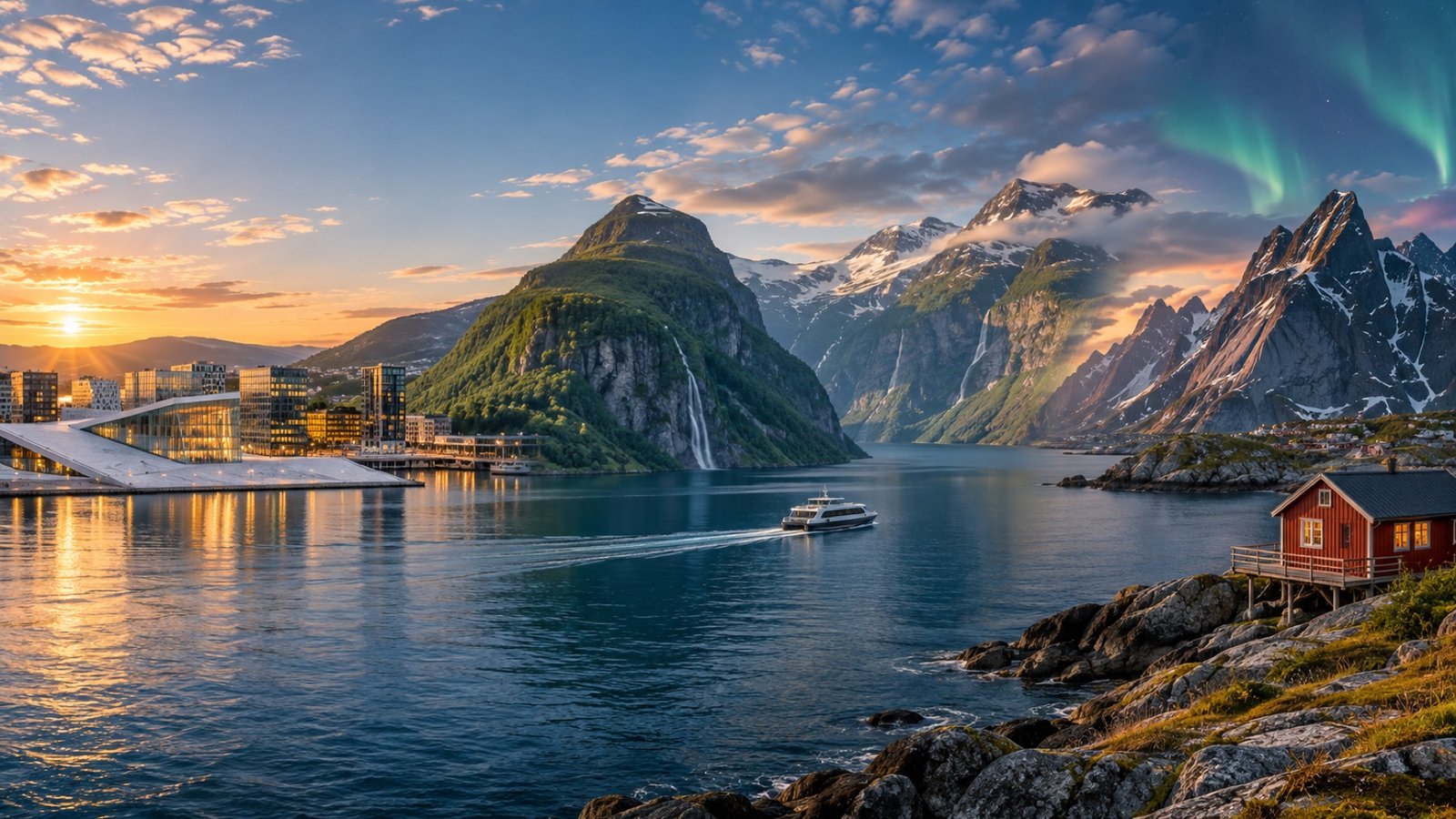
Norway is too long and varied for a single rushed checklist. Oslo’s museums, Bergen’s maritime history, western fjords, inland plateaus, Trøndelag, the southern coast and Arctic Norway each demand different seasons, transport and safety decisions. These fifty experiences help first-time visitors choose one or two coherent regions, use official transport and road information, understand mountain and marine risk, and spend in ways that respect working communities and Sámi culture.
Norway at a glance
- Ideal first trip: 10–14 days for Oslo plus one fjord or northern region; longer for a north–south journey.
- Currency: Norwegian krone; cards are common, but remote transport and seasonal services still need advance checks.
- Daily rule: check Yr, the Norwegian Public Roads Administration, Entur and the relevant operator before exposed journeys.
- Pacing: select one or two regions; apparent map distances hide ferries, tunnels, mountain roads and weather delays.
- Price check: verify live lodging, rail, ferry, toll, parking, guide, equipment and cancellation totals before booking.
Entry, visa and arrival planning
Norway participates in the Schengen Area. Check the Norwegian Directorate of Immigration and the authority responsible for your passport and residence for current visa and border rules.
Oslo is the principal international gateway, while Bergen, Stavanger, Trondheim, Tromsø and regional airports can reduce backtracking. Svalbard has separate document and transit considerations.
When to go
Summer offers the broadest mountain-road, hiking and ferry access but also peak demand. Winter brings limited daylight, snow, ice, convoy controls and possible aurora conditions rather than guaranteed displays.
Many scenic roads, high trails and attractions are seasonal. Shoulder periods can combine reduced services with winter hazards, so plans must follow current official status.
Budget and places to stay
Compare rail-and-ferry itineraries with a rental car using the full total: tolls, ferries, parking, fuel or charging, insurance, one-way fees and weather buffers.
Rooms, cabins, sleeper trains and famous ferries can sell out. Keep flexible nights and verify breakfast, kitchen, late arrival, bedding and cleaning terms.
Fifty things to do in Norway
1. Oslo Opera House roof and harbour walk
Why go: Oslo. The walkable roof, waterfront and working harbour introduce contemporary Oslo without requiring a long transfer.
How to do it: Check performance-day access, begin early and continue only to one nearby museum district.
Good for: Architecture, city breaks and first-time visitors
Know before you go: Wet stone, ice and crowding can make the sloped roof unsafe.
2. MUNCH for Edvard Munch and changing exhibitions
Why go: Oslo. The collection places The Scream and Munch’s wider practice within Norwegian and international art history.
How to do it: Reserve a timed slot when required, confirm which version is displayed and allow two focused hours.
Good for: Art, culture and rainy-day travellers
Know before you go: Works rotate and a famous image may not be in the expected room.
3. National Museum for Norwegian art and design
Why go: Oslo. A large national collection connects painting, architecture, craft and design across centuries.
How to do it: Study the current floor plan, choose two sections and use lockers rather than attempting every gallery.
Good for: Museums, design and cultural travellers
Know before you go: The scale creates fatigue; accessibility routes and temporary closures should be checked.
4. Akershus Fortress with layered history
Why go: Oslo. The fortress landscape connects medieval defence, royal history, occupation and the modern waterfront.
How to do it: Use official opening information, respect military areas and pair the grounds with one interior museum.
Good for: History, architecture and families
Know before you go: Ceremonies, security and winter surfaces can restrict routes.
5. Vigeland installation in Frogner Park
Why go: Oslo. More than two hundred sculptures form a public art experience within a lived city park.
How to do it: Walk from public transport, read the artist and commission context and avoid climbing the works.
Good for: Public art, walking and budget travellers
Know before you go: Ice, events and restoration may alter paths.
6. Bygdøy museum day without rushing
Why go: Oslo. The peninsula brings maritime, exploration and social-history museums into one manageable district.
How to do it: Choose no more than two museums, check ferry season and bus alternatives and verify each collection’s status.
Good for: Maritime history and families
Know before you go: Seasonal transport and separate admissions can complicate an overpacked day.
7. Ekeberg sculpture park and city viewpoints
Why go: Oslo. Woodland paths combine contemporary sculpture, archaeology and broad Oslo views.
How to do it: Use marked trails, check daylight and surfaces and keep the visit shorter in snow or low cloud.
Good for: Art, walking and repeat visitors
Know before you go: Steep or icy paths need suitable footwear.
8. Island-hopping in the inner Oslofjord
Why go: Oslofjord. Public ferries can reveal beaches, cabins and car-free island landscapes close to the capital.
How to do it: Use the official Ruter planner, check seasonal service and choose one or two islands rather than racing.
Good for: Summer, families and slow travellers
Know before you go: Cold water, limited facilities and missed last ferries are real risks.
9. Kistefos and The Twist on a planned day trip
Why go: Hadeland. Industrial heritage, landscape sculpture and bridge architecture make this more than a single photo stop.
How to do it: Verify the operating season, transport and ticket terms; allow time for the full sculpture route.
Good for: Contemporary art and architecture travellers
Know before you go: The site is seasonal and outdoor terrain can be uneven.
10. Lillehammer and Maihaugen open-air museum
Why go: Eastern Norway. Historic buildings and exhibitions explain inland farming, craft and everyday life beyond the Olympic image.
How to do it: Check which buildings and demonstrations are open, then combine with a compact town walk.
Good for: Families, social history and architecture
Know before you go: Large grounds, snow and seasonal interpretation affect the route.
11. Røros mining town with local interpretation
Why go: Trøndelag. The UNESCO town connects copper mining, wooden urban form and a demanding mountain environment.
How to do it: Stay overnight, use an authorised museum or guide and respect homes within the heritage area.
Good for: Industrial history and winter atmosphere
Know before you go: Cold, snow and limited seasonal hours reward advance planning.
12. Bergen’s Bryggen with conservation context
Why go: Bergen. The UNESCO wharf reflects Hanseatic trade, fire, rebuilding and living conservation rather than a decorative façade.
How to do it: Visit the museum or guided interpretation, keep passageways clear and avoid treating workshops as props.
Good for: History, architecture and first-time visitors
Know before you go: Rain, slippery timber and cruise peaks can affect comfort.
13. Fløibanen and Mount Fløyen beyond the platform
Why go: Bergen. The funicular provides quick orientation and access to signed woodland routes above the city.
How to do it: Check maintenance and weather, reserve peak times when offered and select a trail suited to daylight.
Good for: Families, viewpoints and short walks
Know before you go: Fog, ice and steep alternative descents can change the plan.
14. Ulriken with cable-car and hiking choices
Why go: Bergen. Bergen’s highest city mountain gives a more demanding counterpart to Fløyen.
How to do it: Verify cable-car operation, wind and trail conditions; ride both ways unless equipped for the descent.
Good for: Views and active travellers
Know before you go: Weather changes quickly and the plateau is exposed.
15. Bergen fish market with price and origin checks
Why go: Bergen. A working visitor market can introduce west-coast seafood when provenance and pricing are read carefully.
How to do it: Compare posted menus, ask origin and weight, and treat the market as one meal rather than a checklist.
Good for: Food and city-break travellers
Know before you go: Tourist pricing, allergies and sustainability claims require questions.
16. Hardangerfjord orchard and cider experience
Why go: Hardanger. Orchards, fjord farms and regulated producers connect landscape with regional food culture.
How to do it: Book a licensed producer or guided tasting, arrange a sober driver and check ferry connections.
Good for: Food, scenery and couples
Know before you go: Alcohol rules, narrow roads and seasonal opening matter.
17. Vøringsfossen from official viewpoints
Why go: Hardangervidda edge. Engineered platforms frame a major waterfall while keeping visitors away from exposed informal edges.
How to do it: Check road and viewpoint access, remain behind barriers and expect spray or cloud to obscure parts.
Good for: Waterfalls, families and road trips
Know before you go: Ice, wind and steep drops make shortcuts unacceptable.
18. Hardangervidda National Park on a modest route
Why go: Eastern and Fjord Norway. A vast plateau supports reindeer habitat, high-mountain ecology and long-distance traditions.
How to do it: Choose a marked route below your limit, check DNT and weather information and carry full mountain layers.
Good for: Hiking, wildlife and experienced travellers
Know before you go: Snow, fog, river levels and remoteness can turn a short plan serious.
19. Flåm Railway with an overnight fjord base
Why go: Aurlandsfjord. The steep railway links mountain engineering, waterfalls and valley settlements in a compact journey.
How to do it: Book the official through itinerary, verify seat and luggage rules and stay overnight to avoid cruise-hour compression.
Good for: Rail journeys and first-time visitors
Know before you go: Timetables, crowds and weather affect connections.
20. Nærøyfjord on a licensed passenger route
Why go: Aurland and Gudvangen. The narrow UNESCO fjord is best understood through slow travel and protected-landscape context.
How to do it: Use an authorised ferry or electric vessel, confirm onward transport and dress for cold decks.
Good for: Fjords, photography and families
Know before you go: Wind, cold and schedule changes can disrupt the day.
21. Stegastein on the open scenic-road approach
Why go: Aurlandsfjellet. A cantilevered viewpoint provides fjord scale without requiring an exposed hike.
How to do it: Check whether the scenic road section is open, use official transport and never stop outside safe bays.
Good for: Architecture, views and road trips
Know before you go: Snow closures, narrow roads and bus traffic are seasonal realities.
22. Borgund Stave Church with conservation etiquette
Why go: Lærdal. The church preserves medieval timber architecture and carved detail within a broader cultural landscape.
How to do it: Check seasonal entry, use the visitor centre and follow rules for worship, photography and fragile surfaces.
Good for: Architecture, history and cultural travellers
Know before you go: Opening is seasonal and some areas may be restricted.
23. Jostedalsbreen visitor centre and guided ice only
Why go: Vestland. Glacier interpretation explains landscape change while separating safe viewpoints from technical travel.
How to do it: Begin at an official centre and enter ice only with a qualified operator using supplied equipment.
Good for: Geology, families and adventure travellers
Know before you go: Glacier fronts, rivers, rockfall and crevasses make independent access dangerous.
24. Geirangerfjord from a low-impact base
Why go: Sunnmøre. The UNESCO fjord combines waterfalls, farms and transport history but can be overwhelmed at peak times.
How to do it: Stay locally, use scheduled boats or buses and choose early or shoulder-season hours when possible.
Good for: Fjords, heritage and photographers
Know before you go: Cruise congestion, landslide risk and seasonal roads require flexibility.
25. Norwegian Scenic Route Geiranger–Trollstigen only when open
Why go: Møre og Romsdal. The route joins mountain engineering, architecture and major viewpoints across a demanding road.
How to do it: Check the official route and road authority on the day; accept closure without seeking detours on unsuitable roads.
Good for: Road trips and design travellers
Know before you go: Winter closure, rockfall, narrow bends and traffic can halt the journey.
26. Ålesund Art Nouveau centre and waterfront
Why go: Ålesund. Rebuilt architecture and fisheries history give the city cultural depth beyond its hilltop panorama.
How to do it: Use the Art Nouveau centre first, then follow a compact signed walk and check harbour operations.
Good for: Architecture, city breaks and photography
Know before you go: Rain, steps and working-quay traffic affect access.
27. Atlantic Road with designated stops
Why go: Nordmøre. Bridges and skerries demonstrate coastal road engineering when experienced from legal pull-offs.
How to do it: Check wind and road status, stop only at signed facilities and combine it with a nearby town rather than speeding through.
Good for: Road trips, engineering and coast travellers
Know before you go: Storms, spray and distracted traffic make roadside photography unsafe.
28. Trondheim’s Nidaros Cathedral and Archbishop’s Palace
Why go: Trondheim. Pilgrimage, medieval power and continuing worship meet in Norway’s most important Gothic complex.
How to do it: Check service and tour times, dress respectfully and reserve any tower or museum component separately.
Good for: History, architecture and pilgrimage travellers
Know before you go: Worship, events and stairs can limit tourist access.
29. Bakklandet and old wharves without blocking residents
Why go: Trondheim. Wooden streets, river views and cycling culture reveal an intimate side of the historic city.
How to do it: Walk quietly, patronise local businesses and photograph from public space without using doorways as sets.
Good for: Neighbourhoods, food and slow travellers
Know before you go: Cobbles, bicycles and residential privacy require care.
30. Rockheim for Norwegian popular music
Why go: Trondheim. Interactive exhibitions connect music, technology and social change across modern Norway.
How to do it: Check the current exhibition and performance schedule, then allow time for sound-based displays.
Good for: Music, teens and rainy days
Know before you go: High sensory intensity may require breaks.
31. Stavanger old town and canning history
Why go: Stavanger. White wooden streets and an industrial museum connect seafaring, sardines and urban preservation.
How to do it: Use a museum-led route, respect homes and combine with the harbour rather than photographing façades only.
Good for: Industrial history and city breaks
Know before you go: Cruise peaks and wet cobbles can reduce comfort.
32. Norwegian Petroleum Museum with transition context
Why go: Stavanger. The museum explains offshore engineering, labour and the economic and environmental debates surrounding oil.
How to do it: Allow two hours, read the safety and climate sections and pair it with the city’s maritime history.
Good for: Science, industry and families
Know before you go: Interactive galleries can be busy and technically dense.
33. Preikestolen with official trail preparation
Why go: Lysefjord. The cliff hike provides extraordinary geology but demands footwear, weather judgment and honest turnaround decisions.
How to do it: Use official parking or transport, check the trail forecast, start with daylight and carry food, water and layers.
Good for: Fit hikers and landscape travellers
Know before you go: Unfenced drops, ice, crowding and rapid weather changes are serious.
34. Kjerag only for capable hikers in season
Why go: Lysefjord. A long mountain route offers plateau views and the famous boulder, not a casual extension of a fjord cruise.
How to do it: Use official seasonal information, begin early, avoid the boulder if uncomfortable and turn back in poor conditions.
Good for: Experienced hikers
Know before you go: Steep chains, snow, fog and exposure can make the route dangerous.
35. Jæren beaches with wind and farming respect
Why go: Rogaland. Long beaches, dunes and agricultural landscapes contrast with the steep fjords.
How to do it: Use designated parking and paths, protect dunes, check surf conditions and keep away from livestock.
Good for: Coast, walking and families
Know before you go: Cold water, rip currents and wind require conservative choices.
36. Kristiansand and Kunstsilo
Why go: Southern Norway. A converted grain silo and compact coastal city create a strong art-and-architecture stop.
How to do it: Check exhibition tickets, walk the harbour and leave time for a neighbourhood meal rather than only the museum.
Good for: Art, architecture and city breaks
Know before you go: Events and ferry traffic can alter access.
37. Setesdal culture and folk-music context
Why go: Agder. Valley museums, craft and recognised music traditions show a different Norway from the fjords and capitals.
How to do it: Choose an official museum or scheduled performance, verify seasonal hours and stay overnight.
Good for: Music, craft and slow road trips
Know before you go: Long distances and limited public transport require planning.
38. Tromsø Polar Museum and harbour history
Why go: Tromsø. The museum gives critical context for Arctic hunting, exploration and coastal life before modern excursions.
How to do it: Visit early in the trip, read difficult history carefully and pair it with a responsible contemporary activity.
Good for: Arctic history and winter travellers
Know before you go: Some historical material may be confronting.
39. Arctic Cathedral and bridge-area planning
Why go: Tromsø. Modern church architecture and the Tromsdalen setting offer cultural context beyond aurora marketing.
How to do it: Check services and concerts, use public transport or walk only in safe weather and avoid blocking worship.
Good for: Architecture, music and city breaks
Know before you go: Ice, wind and service times affect entry.
40. Fjellheisen cable car in suitable weather
Why go: Tromsø. The lift provides city, island and mountain orientation when wind and visibility cooperate.
How to do it: Check live operation, reserve peak periods and remain within marked winter areas.
Good for: Views, families and short stays
Know before you go: Wind, ice and whiteout can suspend service.
41. Northern lights with a safety-led operator
Why go: Northern Norway. A responsible small-group tour can manage darkness, road conditions and local weather better than improvised roadside stops.
How to do it: Compare driving policy, clothing, toilets and cancellation terms; accept that aurora are never guaranteed.
Good for: Winter, photography and first-time Arctic visitors
Know before you go: Cold, fatigue and road danger make self-directed chasing risky.
42. Whale watching from Tromsø or Vesterålen by season
Why go: Northern Norway. Licensed trips can interpret migration, fisheries and marine ecology without promising sightings.
How to do it: Check species season, vessel type, welfare policy, sea forecast and warm-clothing provision.
Good for: Wildlife and families
Know before you go: Rough seas, cold and wildlife uncertainty affect every trip.
43. Lofoten fishing villages with several nights
Why go: Lofoten. Working harbours, stockfish, mountains and beaches deserve a slow base rather than a same-day photo circuit.
How to do it: Stay three or more nights, use buses or legal parking and keep private jetties and drying racks unobstructed.
Good for: Photography, fishing culture and road trips
Know before you go: Narrow roads, winter storms and parking pressure create conflict.
44. Lofotr Viking Museum with evidence and reconstruction
Why go: Vestvågøy. The reconstructed longhouse and finds interpret a major chieftain site while distinguishing archaeology from performance.
How to do it: Check seasonal demonstrations, allow indoor and outdoor time and read which elements are evidence-based.
Good for: History, families and archaeology travellers
Know before you go: Outdoor activities and transport are seasonal.
45. Reinebringen only on the maintained stairs in safe conditions
Why go: Moskenes. The steep viewpoint is spectacular but should not define a Lofoten visit or override weather judgment.
How to do it: Check official warnings, start early, carry layers and skip it when ice, crowding or fitness make the stairs unsafe.
Good for: Fit hikers and photographers
Know before you go: Rockfall, exposure, ice and rescue limitations are serious.
46. Saltstraumen from land or a licensed boat
Why go: Bodø. Powerful tidal currents demonstrate ocean mechanics on a predictable but hazardous schedule.
How to do it: Check the official tide table, view from designated land areas or use a qualified operator.
Good for: Nature, families and marine travellers
Know before you go: Currents, slippery shorelines and cold water demand distance.
47. Alta Museum and UNESCO rock art
Why go: Alta. Open-air carvings and exhibitions connect prehistoric life, landscape and later northern history.
How to do it: Use the official route, check snow-season visibility and never touch or trace the carvings.
Good for: Archaeology, families and cultural travellers
Know before you go: Seasonal snow can hide outdoor panels and paths may be slick.
48. Sámi cultural experience led by Sámi people
Why go: Finnmark or Troms. A community-led visit can address living language, land, craft and contemporary identity beyond stereotypes.
How to do it: Choose a Sámi-owned or clearly community-led operator, ask before photographing and pay fairly for expertise.
Good for: Culture, education and responsible travellers
Know before you go: Reindeer and ceremonial imagery should not be treated as costume props.
49. North Cape with weather and transport realism
Why go: Magerøya. The plateau offers Arctic-ocean scale and interpretation, but its meaning is not dependent on a clear horizon.
How to do it: Check road convoys, buses, wind and opening conditions; stay overnight nearby rather than forcing a long turnaround.
Good for: Arctic road trips and first-time visitors
Know before you go: Fog, storms and winter controls can remove the expected view.
50. Svalbard only with regulated logistics and guides
Why go: Svalbard. Longyearbyen and the high Arctic require separate planning, strict wildlife safety and respect for a fragile environment.
How to do it: Use official Svalbard guidance, carry required documents and leave settlements only with appropriately equipped professionals.
Good for: Arctic specialists, wildlife and expedition travellers
Know before you go: Polar bears, avalanche, sea ice, remoteness and rescue limits make independent wandering unsafe.
Food and drink worth planning around
Seafood, brown cheese, waffles, cured meats, berries, bakery traditions and modern Nordic cooking vary by region. Ask about origin, season and allergens rather than pursuing novelty alone.
Remote kitchens may close early or outside peak season. Carry appropriate food and water, while respecting waste, fire and wildlife rules.
What to buy
For knitwear, silver, ceramics, knives, outdoor goods and Sámi duodji, identify the maker, materials and production location. A Nordic motif is not proof of Norwegian manufacture.
Do not remove stones, plants or cultural material. Use established sellers and check export, wildlife-material and tax rules.
Getting around
Use Entur for national public-transport planning and confirm tickets with the operating company. Rail, express boats and ferries are useful, but reservations and seasonal timetables vary.
Use the Norwegian Public Roads Administration for closures, webcams and traffic information. Scenic routes can be narrow, seasonal and slower than navigation estimates.
Easy access and family travel
Accessibility varies across old towns, ferries, viewpoints, mountain paths and snow seasons. Ask for exact gradients, gangways, lifts, toilets and assistance arrangements.
Families and mixed-ability groups should use a short shared route with optional extensions. Cold, wind, darkness and long transfers can be more tiring than the distance suggests.
Stay safe
Check official weather, avalanche, road and operator notices. Use qualified guides for glaciers, exposed winter travel, technical hikes and unfamiliar marine activities.
The right to roam carries duties: respect cultivated land, homes, livestock, fire rules, protected areas and the 150-metre tent distance from inhabited houses or cabins unless local rules differ.
Mistakes to avoid
- Trying to combine Oslo, the western fjords, Lofoten and the North Cape in one rushed week.
- Treating a navigation estimate as proof that a mountain road or ferry connection is open.
- Attempting Preikestolen, Kjerag or Reinebringen without weather, equipment and turnaround judgment.
- Stopping on narrow roads for photographs or aurora.
- Assuming midnight sun or northern lights are guaranteed experiences.
- Using Sámi culture as costume imagery rather than choosing community-led interpretation.
- Entering glaciers, rough seas or winter backcountry without the right professional support.
- Booking every night non-refundable with no delay buffer.
Sample seven-day route
Use two Oslo nights, one rail or flight transition and four nights in Bergen plus one fjord corridor. Do not add Arctic Norway to the same week.
Sample ten-day route
Use two Oslo, two Bergen, three fjord-region and three Trondheim or Stavanger nights, with a flight or rail segment chosen to reduce backtracking.
Sample fourteen-day route
Use three Oslo and east, four Bergen and fjords, three Trondheim or coastal Norway and four Tromsø or Lofoten nights. Keep one flexible weather day.
Norway travel FAQ
How many days are enough for Norway?
Seven days suits Oslo plus one region. Ten to fourteen days creates a stronger first trip with realistic transfers.
Do I need a car?
No for major cities and many rail-ferry routes. A car helps in selected rural areas, but weather, tolls, ferries and seasonal roads require planning.
Are northern lights guaranteed?
No. Darkness, clear sky, solar activity and a safe location all matter; never stop on an active road to watch them.
Can I camp anywhere?
The right to roam applies with conditions on uncultivated land. Distance from homes, fire restrictions, local bylaws, protected areas and leave-no-trace duties still apply.
Official planning sources
- Visit Norway official travel guide
- Visit Norway official places to go
- Visit Norway official trip planning
- Norwegian Public Roads Administration traffic information
- Entur national journey planner
- Norwegian Directorate of Immigration visitor visas
- Norwegian Environment Agency right to roam
- UNESCO World Heritage state-party record for Norway
- United Kingdom government travel advice for Norway
- United States government travel advisory for Norway
Disclosure: This independent editorial guide is informational, not a booking guarantee. No price, ranking, safety outcome, entry permission or availability is guaranteed. Recheck all time-sensitive details with the linked official source before purchase.