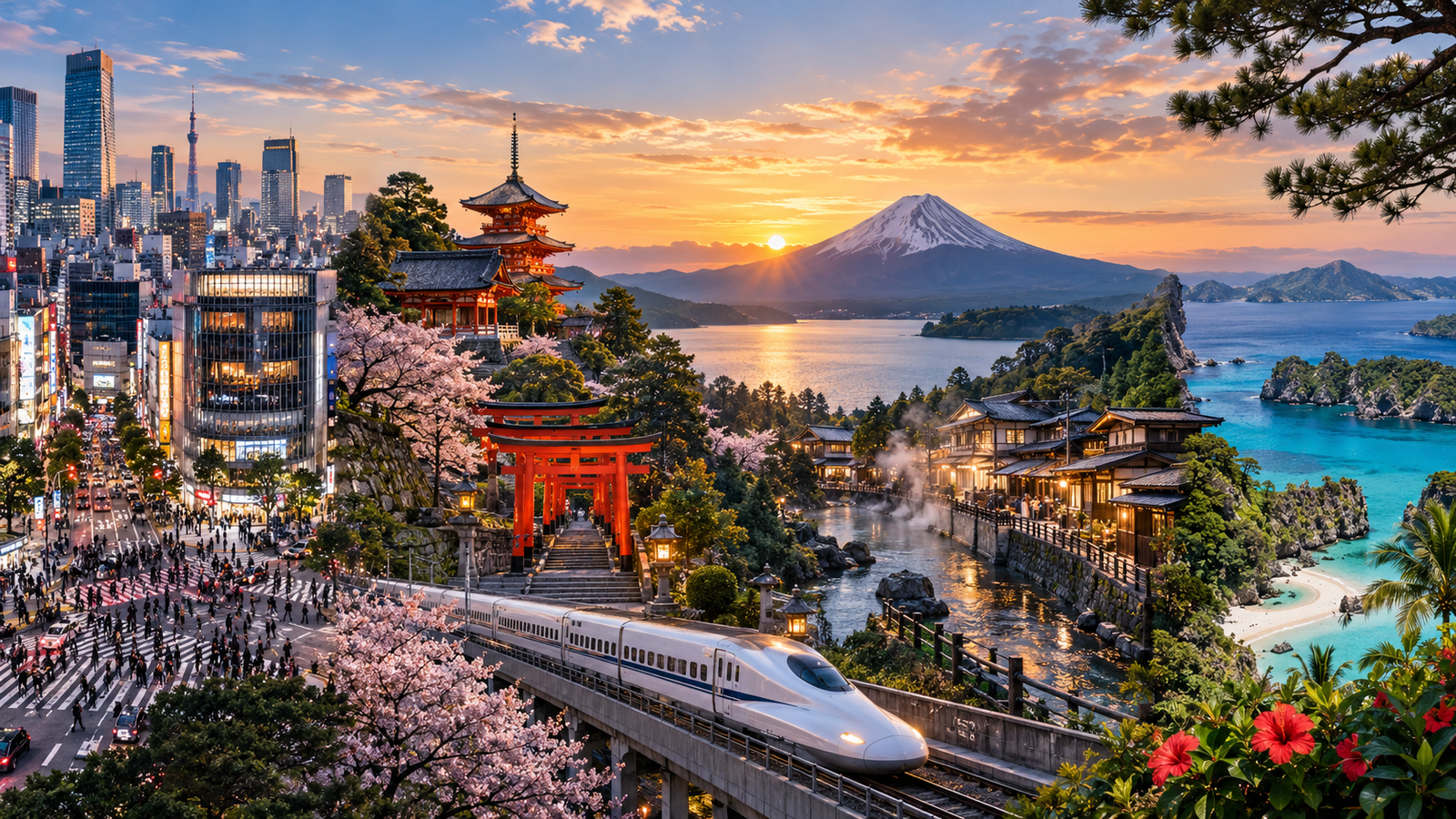
When is the best time to visit Japan? There is no one month that fits every trip. Spring brings blossoms and busy sightseeing areas. Summer offers festivals but can feel hot and humid. Autumn is popular for comfortable walks and changing leaves. Winter suits snow, hot springs and quieter city days. Your best choice depends on the regions you want to visit, your budget and your tolerance for crowds.
Japan by season at a glance
- Spring, March to May: blossoms, new greenery and popular city walks. Book early if you want famous blossom spots.
- Summer, June to August: festivals and fireworks, with heat and humidity in many places. Mountain and northern destinations can feel different from Tokyo or Osaka.
- Autumn, September to November: seasonal color, food and comfortable sightseeing in many regions. Exact foliage timing changes by place and year.
- Winter, December to February: snow activities in some regions, hot springs and clear days in other areas. Pack for the actual route rather than a single national forecast.
The Japan National Tourism Organization’s travel FAQ describes four distinct seasons and emphasizes regional differences. It does not name one universally best season.
Choose the trip first, then the month
If your dream is cherry blossoms, build a flexible spring route and check the current forecast closer to travel. A fixed bloom date printed months ahead can be wrong. If you prefer hiking or outdoor festivals, look at summer events and the weather for the specific area. If you want comfortable city walking, autumn may suit you, but popular locations still attract crowds. For skiing or snow scenery, research the relevant winter region and opening dates.
Japan stretches far north to south. A Hokkaido plan and an Okinawa plan should not use the same packing list. Use the official JNTO weather and geography guide alongside local forecasts.
When Japan gets especially busy
JNTO identifies three major domestic travel periods: New Year around late December and early January, Golden Week around late April and early May, and summer vacation around July and August including Obon. Transport and hotels can be busier, and desirable rooms may sell out earlier. Cherry-blossom areas can also be busy. If your dates overlap, reserve key travel pieces early and keep day plans flexible.
A simple planning method
- Pick two must-do experiences, such as a Tokyo museum visit and a mountain stay.
- Choose one or two base cities. For a short trip, fewer hotel changes can make the days more enjoyable.
- Check the likely weather and domestic holiday calendar for those exact places.
- Compare flights and rooms across a few date ranges rather than choosing only from a photo of blossoms or snow.
- Leave one open day for rain, rest or an unexpected discovery.
JNTO’s trip-planning tips recommend a single base city for trips of a week or less so travel time does not swallow the holiday. That is a useful starting point, not a rigid rule.
First visit: three sensible choices
Want familiar highlights? Choose a spring or autumn window, but expect competition for popular hotels. Want festivals? Consider summer and plan for heat, water breaks and an indoor fallback. Want snow? Choose a winter destination known for the experience, then verify transport and local conditions before booking. Keep costs flexible by checking multiple dates.
For calls home while planning, use our live Japan time guide. Japan uses Japan Standard Time year-round, so the difference from your home city can change when your country moves clocks.
Quick answers
Is Japan good in winter?
Yes, if winter activities or seasonal city travel fit your interests. Conditions differ greatly by region, so check the exact destination.
Is summer too hot for Japan?
Many central-city days can be hot and humid, but summer also brings festivals and other experiences. Plan your pace and destination around your comfort.
Can I predict cherry blossoms months ahead?
Use an early estimate only as a rough guide. Check updated forecasts closer to departure and plan enjoyable activities even if the blooms arrive early or late.
Official sources: JNTO FAQ; JNTO planning tips; JNTO weather guide. Verify current schedules, prices and weather before booking.
Leave a Reply