This guide uses official tourism, government and transport sources. Rules and prices can change, so check the linked official pages before booking.
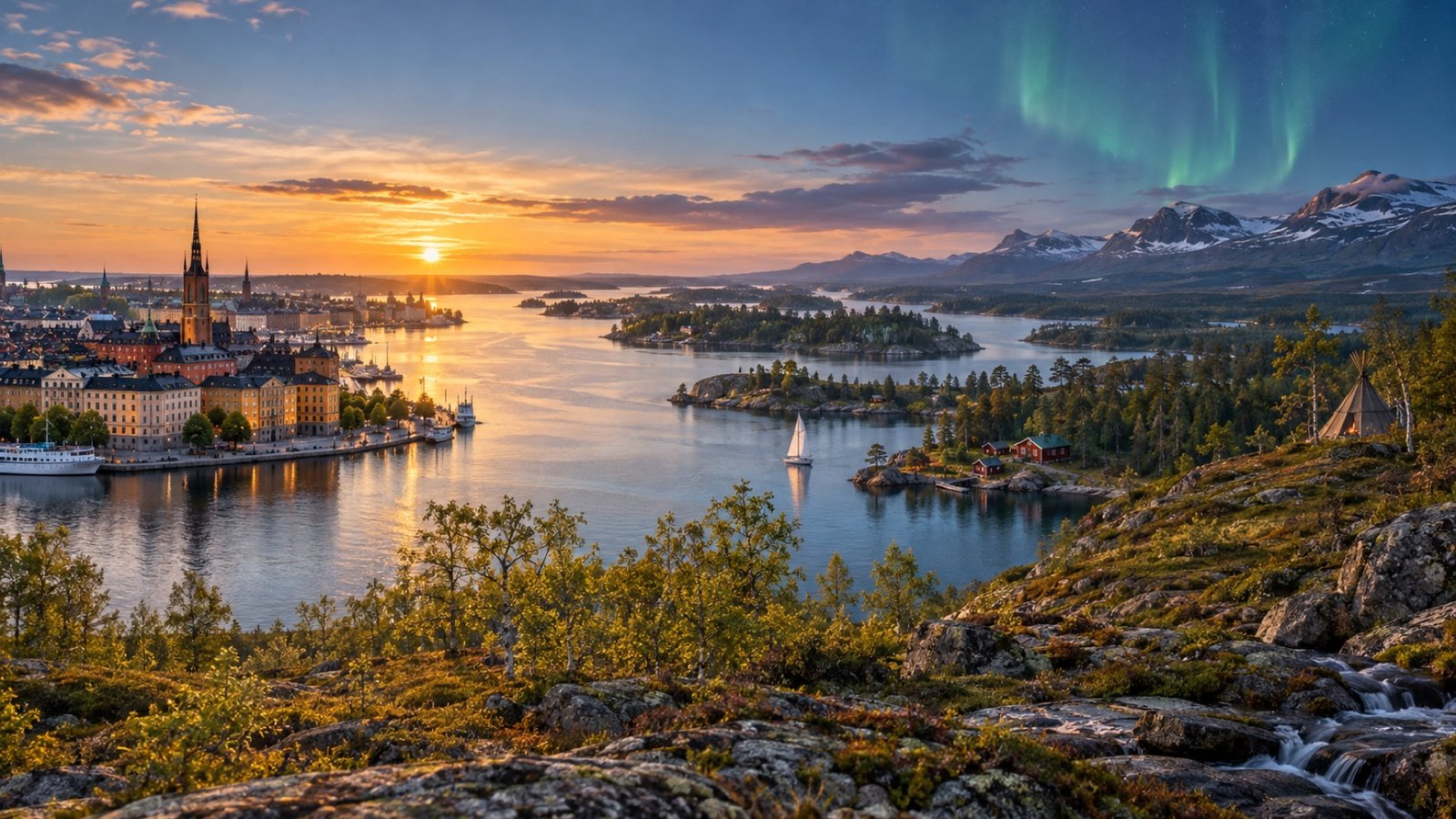
Sweden is more than a Stockholm weekend followed by a northern-lights promise. Island cities, Baltic and west-coast archipelagos, medieval towns, industrial landscapes, forests, farms and the living Sámi cultural landscape of the north all require different timing and behaviour. These fifty experiences help first-time visitors build a coherent regional route, use public transport and official trail information, understand the Right of Public Access, and avoid turning working communities into scenery.
Sweden at a glance
- Ideal first trip: 10–14 days for Stockholm plus one southern, western or northern region.
- Currency: Swedish krona; cards are dominant, though small seasonal services and remote transport should be checked.
- Daily rule: confirm SJ or the operating company, regional transit, weather and the relevant park, ferry or attraction.
- Nature: the Right of Public Access grants freedoms with duties; homes, cultivated land, fire rules and protected areas remain limits.
- Price check: verify current rail, ferry, accommodation, museum, rental and cancellation totals before purchase.
Entry, visa and arrival planning
Sweden participates in the Schengen Area. Check the Swedish Migration Agency and the authority responsible for your passport and residence for current entry and visa rules.
Stockholm Arlanda is the main air gateway, while Gothenburg, Malmö/Copenhagen connections and northern airports can reduce backtracking. Confirm cross-border rail and airport transfer status separately.
When to go
Summer supports archipelago boats, long daylight and the broadest trail access, but demand is high. Winter brings snow, ice, limited northern daylight and possible aurora conditions rather than a guarantee.
Many island boats, open-air museums and northern activities are seasonal. Shoulder periods can be quiet but combine reduced services with cold or wet conditions.
Budget and places to stay
Compare point-to-point rail with passes using the exact trains and reservation rules. Add ferries, airport transfers, luggage, local transit and cancellation flexibility.
Cabins and apartments may quote cleaning, linen and breakfast separately. Verify the final amount and the realistic distance from public transport before booking.
Fifty things to do in Sweden
1. Gamla Stan before the day crowds
Why go: Stockholm. Medieval lanes, public squares and the changing shoreline reveal how the capital grew across islands.
Good for: city breaks and first-time visitors
Know before you go: Cobbles, residents and delivery traffic require an unhurried walking route.
2. Royal Palace with one focused museum
Why go: Stockholm. State rooms, royal collections and a working ceremonial setting explain monarchy without reducing the visit to a guard change.
Good for: culture, families and rainy-day travellers
Know before you go: Ceremonies, security and official events can alter opening.
3. Vasa Museum with conservation context
Why go: Stockholm. The preserved seventeenth-century warship connects naval ambition, design failure, archaeology and modern conservation.
Good for: culture, families and rainy-day travellers
Know before you go: Dim galleries, crowds and the object’s scale reward time and breaks.
4. Skansen open-air museum across one historical period
Why go: Stockholm. Historic buildings, craft and living interpretation connect regional architecture with changing social life.
Good for: culture, families and rainy-day travellers
Know before you go: Large outdoor grounds and seasonal demonstrations make a selective route essential.
5. Nationalmuseum for art, craft and design
Why go: Stockholm. Collections link Swedish painting, decorative arts and modern design with wider European currents.
Good for: culture, families and rainy-day travellers
Know before you go: Temporary displays rotate and a full-building sprint creates fatigue.
6. Fotografiska and Södermalm waterfront
Why go: Stockholm. Changing photography exhibitions and the industrial waterfront provide a contemporary counterpoint to royal Stockholm.
Good for: culture, families and rainy-day travellers
Know before you go: Exhibitions, event access and steep nearby streets vary.
7. Stockholm City Hall on an authorised tour
Why go: Stockholm. The civic complex, Nobel banquet spaces and brick architecture are best understood through controlled access.
How to do it: Confirm whether interiors are open, observe the building from lawful public space and pair it with nearby urban history rather than a photo-only stop.
Good for: design and architecture travellers
Know before you go: Tours sell out and ceremonies can close interiors.
8. Djurgården by tram, ferry or foot
Why go: Stockholm. The island combines parkland, museums and waterside paths without needing a car.
Good for: walking, wildlife and landscape travellers
Know before you go: Event crowds and winter ice can change the easiest route.
9. Stockholm archipelago on one realistic island day
Why go: Stockholm Archipelago. Scheduled boats connect inhabited islands, nature reserves and working communities across a vast seascape.
Good for: coast, islands and slow-travel visitors
Know before you go: Missed last boats, cold decks and limited island services require timetable discipline.
10. Drottningholm Palace and theatre
Why go: Ekerö. The royal domain combines formal landscape, palace interiors and an exceptional historic theatre.
Good for: history, archaeology and cultural travellers
Know before you go: The residence remains active and separate components have seasonal access.
11. Birka archaeological site by official boat
Why go: Lake Mälaren. The UNESCO site interprets an early trading settlement through archaeology rather than Viking costume alone.
Good for: history, archaeology and cultural travellers
Know before you go: Boat schedules, weather and exposed outdoor terrain define the day.
12. Sigtuna rune stones and old-town walk
Why go: Sigtuna. Church ruins, rune stones and a small urban plan connect medieval Sweden with everyday modern life.
Good for: history, archaeology and cultural travellers
Know before you go: Fragile stones, worship sites and winter paving need respect.
13. Uppsala Cathedral and university history
Why go: Uppsala. The cathedral, university collections and burial history form one of Sweden’s strongest intellectual and religious day trips.
Good for: history, archaeology and cultural travellers
Know before you go: Services, academic events and separate museum hours affect access.
14. Gamla Uppsala museum and burial landscape
Why go: Uppsala. Monumental mounds, archaeology and interpretation complicate simplified royal and Viking narratives.
Good for: history, archaeology and cultural travellers
Know before you go: Outdoor surfaces, snow and protected earthworks rule out shortcuts.
15. Gothenburg archipelago without a car
Why go: Gothenburg. Public ferries reach car-free islands, fishing settlements and coast paths close to the city.
Good for: coast, islands and slow-travel visitors
Know before you go: Wind, last ferries and sparse off-season services require planning.
16. Gothenburg Museum of Art and Götaplatsen
Why go: Gothenburg. Nordic art and the civic square introduce the west-coast city’s cultural identity.
Good for: culture, families and rainy-day travellers
Know before you go: Collections rotate and events can reshape the square.
17. Universeum for science and biodiversity
Why go: Gothenburg. Interactive science, aquaria and living environments make a substantial family visit.
Good for: culture, families and rainy-day travellers
Know before you go: Humidity, noise and timed activities may require sensory breaks.
18. Haga and Linné on a respectful neighbourhood walk
Why go: Gothenburg. Wooden streets, cafés and local shops show lived urban texture beyond a single oversized pastry.
Good for: city breaks and first-time visitors
Know before you go: Narrow pavements and residential doorways must remain clear.
19. West-coast seafood with traceable origin
Why go: Bohuslän. Shellfish, fishing harbours and seasonal menus connect cuisine with the Skagerrak environment.
How to do it: Choose an established producer or restaurant, confirm origin, season, price and allergens, and arrange transport that avoids unsafe driving.
Good for: food-focused and regional travellers
Know before you go: Weather, harvest rules, allergies and live pricing change the experience.
20. Tanum rock carvings from marked paths
Why go: Bohuslän. UNESCO-listed Bronze Age imagery and landscape context reward careful interpretation at official sites.
Good for: history, archaeology and cultural travellers
Know before you go: Wet rock, protected surfaces and road crossings require restraint.
21. Marstrand fortress and island streets
Why go: Bohuslän. A car-free island, fortress and sailing history create a coherent coastal day.
Good for: history, archaeology and cultural travellers
Know before you go: Ferry timing, exposed ramps and strong wind affect access.
22. Dalsland canal and paddling with local guidance
Why go: West Sweden. Lakes, locks and forested waterways support slower travel away from headline cities.
Good for: coast, islands and slow-travel visitors
Know before you go: Cold water, portages and changeable weather require correct equipment.
23. Malmö old town and Moderna Museet
Why go: Malmö. Historic squares, contemporary art and an international food scene fit a compact low-car city day.
Good for: city breaks and first-time visitors
Know before you go: Cycling lanes, events and gallery rotations change movement.
24. Västra Hamnen and Turning Torso district
Why go: Malmö. A redeveloped waterfront reveals sustainability ambitions, public space and landmark architecture.
How to do it: Confirm whether interiors are open, observe the building from lawful public space and pair it with nearby urban history rather than a photo-only stop.
Good for: design and architecture travellers
Know before you go: The tower is not generally a walk-in attraction and coastal wind is strong.
25. Öresund coast and Ribersborg bathing culture
Why go: Malmö. Public waterfront, sauna traditions and bridge views show everyday recreation in the city.
Good for: walking, wildlife and landscape travellers
Know before you go: Cold water, swimming ability and seasonal facility rules matter.
26. Lund Cathedral and Kulturen
Why go: Lund. Romanesque architecture and an open-air cultural museum create a deep university-town day.
Good for: history, archaeology and cultural travellers
Know before you go: Worship and seasonal building access should guide timing.
27. Ales Stenar without invented certainty
Why go: Skåne. The stone ship setting is visually powerful, while archaeology remains more nuanced than popular legends.
Good for: history, archaeology and cultural travellers
Know before you go: Cliffs, grazing land and wind require marked paths.
28. Kullaberg reserve with an approved route
Why go: Skåne. Cliffs, woodland and sea viewpoints provide southern Sweden’s most dramatic coastal walking.
Good for: walking, wildlife and landscape travellers
Know before you go: Steep terrain, rescue limits and protected habitats make route choice important.
29. Söderåsen National Park below the ridge limits
Why go: Skåne. Beech forest, ravines and seasonal colour offer accessible nature away from the coast.
Good for: walking, wildlife and landscape travellers
Know before you go: Mud, ice and steep sections vary by trail.
30. Ystad architecture and regional film context
Why go: Skåne. Medieval street patterns, monasteries and screen tourism can be understood without turning homes into sets.
Good for: city breaks and first-time visitors
Know before you go: Residential privacy and event closures require considerate walking.
31. Kalmar Castle with Baltic history
Why go: Kalmar. The castle connects the Kalmar Union, warfare and Renaissance rebuilding beside the modern city.
Good for: history, archaeology and cultural travellers
Know before you go: Stairs, restoration and event days can restrict rooms.
32. Öland World Heritage agricultural landscape
Why go: Öland. Limestone alvar, villages and long farming continuity create a cultural landscape rather than an empty wilderness.
Good for: walking, wildlife and landscape travellers
Know before you go: Fragile ground, grazing animals and seasonal traffic require marked access.
33. Visby walls and Gotland Museum
Why go: Gotland. The UNESCO town and museum connect medieval trade, archaeology and a living island community.
Good for: history, archaeology and cultural travellers
Know before you go: Festival peaks, cobbles and ferry capacity demand early planning.
34. Fårö sea stacks and Bergman context
Why go: Gotland. Raukar, beaches and film history reward a full island day beyond one viewpoint.
Good for: walking, wildlife and landscape travellers
Know before you go: Ferry queues, nesting areas and exposed coasts change access.
35. Karlskrona naval heritage by official museum routes
Why go: Blekinge. The UNESCO naval city links planned urban form, shipbuilding and active defence history.
Good for: history, archaeology and cultural travellers
Know before you go: Military zones and naval operations make boundaries important.
36. Glasriket studio visit with demonstrated craft
Why go: Småland. Working glass studios make industrial skill, design and regional labour visible.
How to do it: Check demonstration times, identify the maker and production location, and buy only when the object and provenance justify the price.
Good for: design, makers and responsible shoppers
Know before you go: Hot workshops, production calendars and genuine-maker checks matter.
37. Astrid Lindgren landscape and Vimmerby context
Why go: Småland. Literary heritage, farms and family attractions can connect stories with place without confusing fiction and history.
How to do it: Check the intended age range, seasonal programme, quiet spaces, food and toilets, then keep the rest of the day deliberately light.
Good for: families and multigenerational groups
Know before you go: Peak demand, age suitability and seasonal opening require advance choice.
38. Gränna and Visingsö beyond candy shopping
Why go: Lake Vättern. A small town, ferry island and lake history turn a roadside stop into a fuller regional day.
Good for: history, archaeology and cultural travellers
Know before you go: Ferry timing, bicycles and island service hours need planning.
39. Göta Canal on a short boat or towpath section
Why go: Central Sweden. Locks, engineering and waterside communities are best appreciated on one well-planned segment.
Good for: coast, islands and slow-travel visitors
Know before you go: Seasonal boats, moving lock gates and shared paths require attention.
40. Örebro Castle and Wadköping
Why go: Örebro. A city castle and open-air district connect political history with timber urban life.
Good for: history, archaeology and cultural travellers
Know before you go: Events and seasonal building access affect the route.
41. Falun Mine with an authorised underground tour
Why go: Dalarna. The UNESCO mining landscape explains copper, labour, engineering and Sweden’s economic development.
Good for: history, archaeology and cultural travellers
Know before you go: Cold underground conditions, stairs and safety rules are non-negotiable.
42. Dalarna craft and Midsummer without spectacle tourism
Why go: Dalarna. Music, painting, red cottages and seasonal traditions deserve community-led interpretation.
How to do it: Choose a community-led museum, performance or guide, ask before photographing people and avoid treating a living tradition as costume.
Good for: responsible cultural travellers
Know before you go: Private celebrations, traffic and event capacity require respect.
43. Hälsingland decorated farmhouses
Why go: Gävleborg. UNESCO farmhouses reveal rural prosperity, painted interiors and ceremonial use.
Good for: history, archaeology and cultural travellers
Know before you go: Properties have separate owners, tours and seasonal hours.
44. High Coast hiking on one signed section
Why go: Ångermanland. Post-glacial uplift, forest and Baltic viewpoints form a distinctive UNESCO landscape.
Good for: walking, wildlife and landscape travellers
Know before you go: Steep sections, weather and dispersed trailheads require realistic transport.
45. Umeå design, birch avenues and Bildmuseet
Why go: Umeå. Contemporary art, university culture and rebuilt birch streets create a northern city break.
Good for: city breaks and first-time visitors
Know before you go: Exhibitions, snow and reduced seasonal daylight alter pacing.
46. Gammelstad Church Town with living-community respect
Why go: Luleå. The UNESCO church cottages explain long-distance worship patterns and northern settlement.
Good for: history, archaeology and cultural travellers
Know before you go: Buildings are not generic museum props and access varies.
47. Kiruna city transformation and mine context
Why go: Swedish Lapland. The moving city, mining economy and relocated landmarks show the social cost and engineering of extraction.
How to do it: Use an authorised visitor programme, follow every safety boundary and read labour and environmental history alongside engineering claims.
Good for: engineering and social-history travellers
Know before you go: Industrial zones, blasting schedules and guided-access rules matter.
48. Abisko National Park on a season-matched trail
Why go: Swedish Lapland. Mountain birch, lake, canyon and northern-sky conditions offer a manageable gateway to Arctic nature.
Good for: walking, wildlife and landscape travellers
Know before you go: Snow, avalanche terrain, cold and rapid weather changes require conservative routes.
49. Kungsleden as a hut-to-hut commitment
Why go: Swedish Lapland. The King’s Trail crosses remote valleys and mountain landscapes that demand more than a day-trip mindset.
How to do it: Use current mountain information, carry navigation and emergency layers, book huts or transport where required and turn back before conditions exceed the plan.
Good for: experienced hikers and hut-to-hut travellers
Know before you go: River crossings, hut booking, navigation and emergency self-reliance are serious responsibilities.
50. Laponia with Sámi-led interpretation
Why go: Norrbotten. The World Heritage area is both a natural landscape and a living Sámi cultural landscape.
How to do it: Choose a community-led museum, performance or guide, ask before photographing people and avoid treating a living tradition as costume.
Good for: responsible cultural travellers
Know before you go: Remote travel, protected land and Indigenous rights require qualified local guidance.
Food and drink worth planning around
Fika, breads, seafood, berries, mushrooms, dairy, meat and vegetable-led Nordic cooking vary by region. Ask about origin, season and allergens rather than chasing a novelty list.
Foraging is not automatically safe or unrestricted: identify species confidently, avoid protected areas or private gardens and follow local fire and land rules.
What to buy
For glass, textiles, wood, ceramics, knitwear and Sámi duodji, identify the maker, materials and production place. Swedish branding is not proof of Swedish manufacture.
Use established sellers, keep receipts and check wildlife-material, antique and tax rules before export.
Getting around
Use the national and regional public-transport planners, then confirm the ticket with the operating company. Long-distance trains and overnight services can require reservations.
Road travel is straightforward only when weather and distance are respected. Use Trafikverket for current road information and do not stop on active roads for wildlife or aurora.
Easy access and family travel
Accessibility varies across historic ships, cobbles, ferries, open-air museums, beaches and snow seasons. Ask for exact boarding, gradients, lifts, toilets and assistance.
Families and mixed-ability groups should agree on a short shared route plus optional extension. Cold, darkness and large museum campuses can be more tiring than expected.
Stay safe
Check official weather, fire restrictions, ice, avalanche and trail information. Use professional guides for glaciers, exposed winter travel and unfamiliar marine activities.
The Right of Public Access does not permit disturbance or damage. Stay away from homes and cultivated land, control dogs, protect wildlife and leave no trace.
Mistakes to avoid
- Trying to combine Stockholm, Gotland, Gothenburg and Lapland in one rushed week.
- Assuming every archipelago ferry, museum building or mountain hut runs year-round.
- Treating the Right of Public Access as permission to enter gardens, crops or protected habitat.
- Stopping on roads for wildlife or northern lights.
- Expecting aurora or midnight sun without matching the season and latitude.
- Photographing Sámi people or activities without permission.
- Beginning Kungsleden or winter backcountry travel without equipment and emergency planning.
- Booking every segment non-refundable with no rail or weather buffer.
Sample seven-day route
Use four Stockholm nights, one Uppsala or Sigtuna day and two archipelago or Sörmland nights. Do not add Lapland to the same short week.
Sample ten-day route
Use four Stockholm, three Gothenburg and west coast, and three Malmö, Lund or Skåne nights, travelling by rail.
Sample fourteen-day route
Use four Stockholm and Mälaren, three Gothenburg and Bohuslän, three southern Sweden and four Kiruna or Abisko nights. Fly one long leg and keep a weather buffer.
Sweden travel FAQ
How many days are enough for Sweden?
Seven days suits Stockholm and one nearby region. Ten to fourteen days supports a stronger south–west or city–Lapland combination.
Do I need a car?
No for the main cities and many rail corridors. A car helps in selected rural areas, but island ferries, snow and long distances still require planning.
Can I camp anywhere?
No. The Right of Public Access has limits near homes, on cultivated land and in protected areas, and local fire or camping rules still apply.
Are northern lights guaranteed?
No. Darkness, clear sky, solar activity and a safe viewing place all matter; Stockholm is not equivalent to Swedish Lapland.
Official planning sources
- Visit Sweden official things to do
- Visit Sweden official places to go
- Visit Sweden official practical information
- Visit Sweden Right of Public Access guide
- Swedish Migration Agency visitor visa information
- Trafikverket traffic information
- Swedish national parks
- UNESCO World Heritage state-party record for Sweden
- United Kingdom government travel advice for Sweden
- United States government travel advisory for Sweden
Disclosure: This independent editorial guide is informational, not a booking guarantee. No price, ranking, safety outcome, entry permission or availability is guaranteed. Recheck all time-sensitive details with the linked official source before purchase.