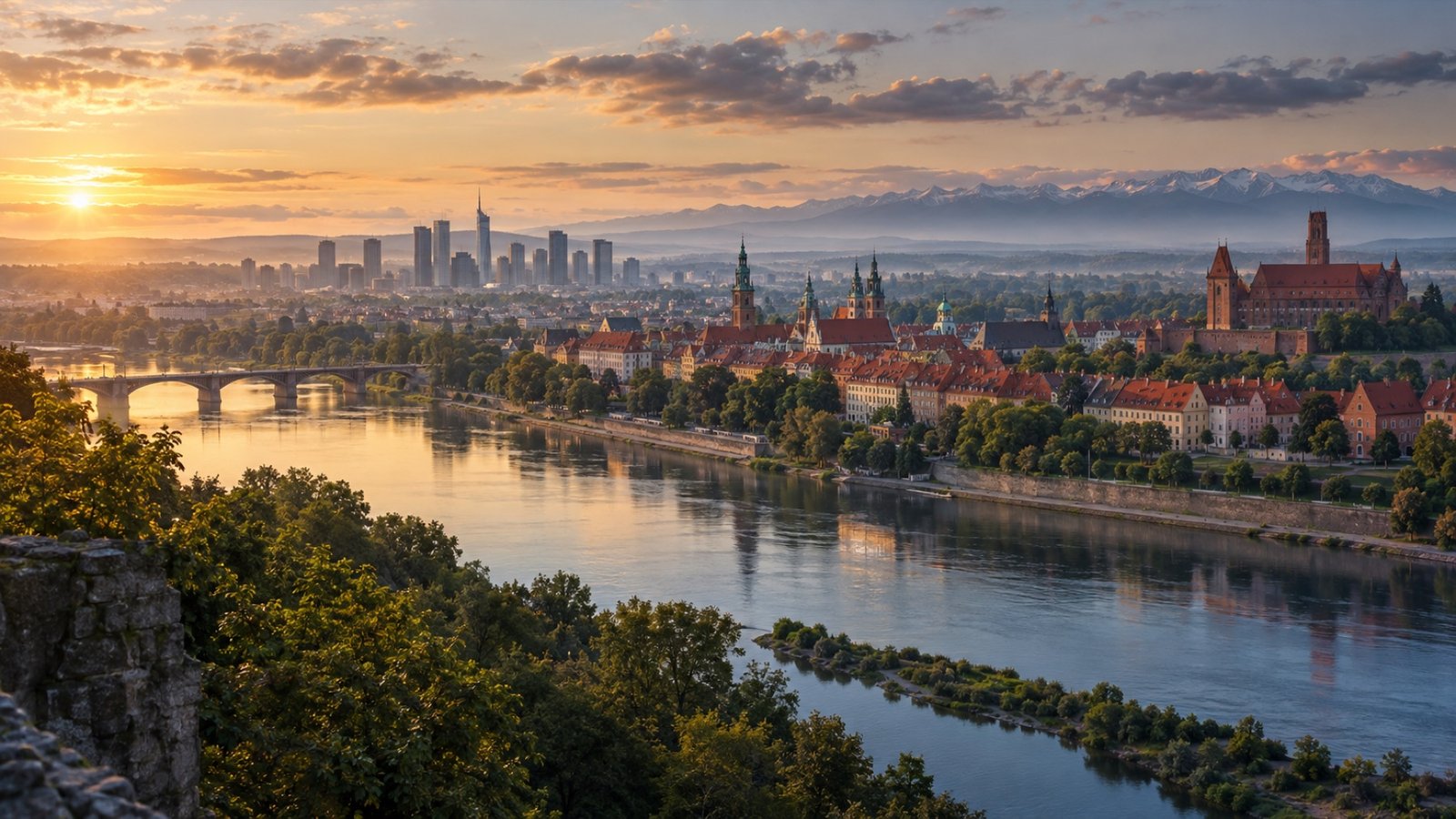
This guide uses official tourism, government and transport sources. Rules and prices can change, so check the linked official pages before booking.
Poland is not a two-city checklist. Rebuilt capitals, royal and industrial cities, Baltic ports, mountain parks, wetlands, forests and places of commemoration require different evidence, conduct and logistics. These fifty experiences help first-time visitors build a coherent rail-led route, approach memorial sites with seriousness, distinguish reconstruction and legend from surviving evidence, protect habitats and avoid turning long distances into daily races.
Poland at a glance
- Ideal first trip: 10–14 days for Warsaw, Kraków, one western or Baltic city and one carefully chosen nature or memorial chapter.
- Currency: Polish złoty; cards are common, but small rural services and some markets may require cash.
- Entry: Poland is in the Schengen Area; passport, visa and residence rules depend on nationality and status.
- Transport: intercity rail links major cities well, while regional buses, engineering works and reservations require exact live checks.
- Ethical rule: memorials, active religious sites and protected habitats are not entertainment sets; follow official conduct and photography rules.
Entry, visa and arrival planning
Use GOV.PL, the Polish Border Guard or the authority responsible for your passport for current entry rules. Short-stay Schengen limits, visa needs, passport validity, funds and purpose requirements depend on nationality and residence.
Warsaw and Kraków are the largest gateways. Gdańsk, Wrocław, Poznań, Katowice and cross-border rail can support open-jaw routes only after the exact service and border conditions are verified.
When to go
Late spring and early autumn often balance cities, coast and lower trails. Summer brings Baltic, lake and mountain crowds; winter brings snow, ice and short daylight.
Storms, heat, floods, wildfire risk, strong wind and rail engineering can change routes. Keep flexibility around mountains, wetlands and international connections.
Budget and places to stay
Compare live rail, seat-reservation, museum, memorial, park, hotel, tourist-tax and cancellation totals. A cheap distant room can lose value after late transfers.
Major memorials and museums may have free or low-cost entry but still require timed reservations, guides or transport. Never treat an old price as a guarantee.
Fifty things to do in Poland
1. Warsaw Old Town through reconstruction evidence
Why go: Warsaw. The rebuilt historic core becomes meaningful when visitors study wartime destruction, conservation decisions and surviving fragments rather than treating it as an untouched medieval set.
Good for: city breaks and first-time visitors
Know before you go: Crowds, worship and residential lanes require a compact route and respectful photography.
2. Royal Castle with state-history context
Why go: Warsaw. Ceremonial rooms, collections and reconstruction explain the changing Polish state beside Castle Square.
Good for: history, architecture and cultural travellers
Know before you go: Timed entry, security and gallery closures require an official check.
3. POLIN Museum with protected reflection time
Why go: Warsaw. The museum presents a long history of Jewish life in Poland that cannot be reduced to the Holocaust alone.
Good for: history students, families and reflective travellers
Know before you go: Content is emotionally demanding; security, photography and gallery rules take priority.
4. Warsaw Uprising Museum with source awareness
Why go: Warsaw. Objects, testimony and multimedia interpretation examine the 1944 uprising and civilian experience.
Good for: history students, families and reflective travellers
Know before you go: Sound, darkness and difficult material may overwhelm some visitors.
5. Chopin route from museum to concert or Żelazowa Wola
Why go: Warsaw region. Documents, instruments and documented places connect the composer to Warsaw and his birthplace without relying on decorative legend.
Good for: culture, families and rainy-day travellers
Know before you go: Concert schedules, transport and separate tickets require advance coordination.
6. Łazienki Park and palace landscape
Why go: Warsaw. Gardens, pavilions, public sculpture and palace interiors provide a slower chapter in the capital.
Good for: history, architecture and cultural travellers
Know before you go: Events, wildlife, interior hours and winter surfaces change the route.
7. Warsaw modern skyline from one lawful viewpoint
Why go: Warsaw. A single authorised observation point helps explain post-war planning, contemporary towers and the Vistula geography.
Good for: design, industrial history and urban travellers
Know before you go: Weather, queues and security determine whether upper access works.
8. Praga district through a local museum or trained guide
Why go: Warsaw. Surviving streets, industry, faith and contemporary culture reveal a different urban history east of the Vistula.
Good for: city breaks and first-time visitors
Know before you go: Private courtyards and vulnerable residents must not become photo props.
9. National Museum in Warsaw by one chosen collection
Why go: Warsaw. Focused galleries connect medieval, Polish and European art with the wider trip.
Good for: culture, families and rainy-day travellers
Know before you go: Collection scale and temporary loans make a selective plan essential.
10. Vistula riverfront and Copernicus area without overloading
Why go: Warsaw. A public river landscape, university district and contemporary civic spaces balance museum-heavy days.
Good for: city breaks and first-time visitors
Know before you go: Flooding, events, cycling traffic and seasonal facilities need checking.
11. Kraków Old Town and Planty as one historic circuit
Why go: Kraków. The market square, university lanes, defensive fragments and green belt reveal an evolving royal city.
Good for: city breaks and first-time visitors
Know before you go: Resident access, worship and extreme peak crowds require early timing.
12. Wawel Castle and Cathedral with separate priorities
Why go: Kraków. Royal collections, state memory and an active cathedral require visitors to choose a coherent route.
Good for: history, architecture and cultural travellers
Know before you go: Separate tickets, stairs, worship and security can change access.
13. St Mary’s Basilica with active-faith respect
Why go: Kraków. Architecture, liturgy and the Veit Stoss altarpiece deserve more than an exterior photograph.
Good for: history, architecture and cultural travellers
Know before you go: Services, dress, photography and timed tourist entry must be respected.
14. Rynek Underground for medieval city evidence
Why go: Kraków. Archaeology below the market explains commerce, street levels and urban growth.
Good for: culture, families and rainy-day travellers
Know before you go: Timed entry, dark spaces and multimedia intensity require planning.
15. Kazimierz through Jewish institutions and lived history
Why go: Kraków. Synagogues, museums and community sites reveal a layered district whose Jewish history is not scenery.
Good for: history students, families and reflective travellers
Know before you go: Worship, security, residents and memorial etiquette take priority.
16. Podgórze with evidence-led wartime interpretation
Why go: Kraków. The former ghetto area and documented museum sites connect occupation history with civilian lives.
Good for: history students, families and reflective travellers
Know before you go: Avoid dramatic posing and allow recovery time after difficult content.
17. Nowa Huta with planning and labour context
Why go: Kraków. A planned socialist district, housing, industry and civic spaces broaden Kraków beyond its royal centre.
Good for: design, industrial history and urban travellers
Know before you go: Use a documented route and do not enter industrial or residential areas without permission.
18. National Museum Kraków with a focused art question
Why go: Kraków. One selected collection or temporary exhibition provides context for art encountered across the country.
Good for: culture, families and rainy-day travellers
Know before you go: Multiple branches and changing installations require an exact venue check.
19. Wieliczka Salt Mine on the official tour
Why go: Małopolska. Underground chambers and mining interpretation show labour, geology and engineered heritage.
Good for: history, architecture and cultural travellers
Know before you go: Stairs, depth, temperature, confined spaces and tour language affect suitability.
20. Bochnia Salt Mine as a distinct mining chapter
Why go: Małopolska. A separate historic mine offers different routes and interpretation rather than a duplicate photo stop.
Good for: history, architecture and cultural travellers
Know before you go: Underground conditions, transport and specific tour options require confirmation.
21. Auschwitz-Birkenau as evidence and commemoration
Why go: Oświęcim. The memorial and museum require serious preparation, factual language and enough time for both principal sites.
Good for: history students, families and reflective travellers
Know before you go: Follow official booking, security, photography and conduct rules; never frame the visit as entertainment.
22. Zakopane culture beyond souvenir streets
Why go: Podhale. A documented architecture or regional museum route introduces highland history, craft and living culture.
Good for: culture, families and rainy-day travellers
Know before you go: Traffic, crowds and superficial costume tourism require careful selection.
23. Tatra National Park on one route below ability
Why go: Polish Tatras. A marked lower or valley route can reveal Alpine ecology without turning a summit into an entitlement.
Good for: prepared walkers and outdoor travellers
Know before you go: Check the official tourist bulletin, weather, avalanche conditions, closures and daylight; turn back early.
24. Morskie Oko only with official access logistics
Why go: Polish Tatras. The lake road and mountain basin can be visited responsibly when parking, public transport and park rules are confirmed.
Good for: landscape, ecology and wildlife travellers
Know before you go: Crowds, ice, storms, animal-welfare concerns and the long return require conservative timing.
25. Pieniny and Dunajec through a lawful low-impact day
Why go: Pieniny. River landscape, limestone peaks and border geography reward one official walking, cycling or licensed-boat plan.
Good for: landscape, ecology and wildlife travellers
Know before you go: Water levels, storms, seasonal operation and cross-border details change the day.
26. Wrocław islands, market and civic history
Why go: Wrocław. Oder crossings, religious islands and a reconstructed market connect Czech, German and Polish layers.
Good for: city breaks and first-time visitors
Know before you go: Bridge works, events and worship require a flexible walking circuit.
27. Książ Castle with twentieth-century evidence
Why go: Lower Silesia. A large castle complex links aristocratic history, landscape and difficult wartime uses.
Good for: history, architecture and cultural travellers
Know before you go: Multiple routes, tunnels, stairs and separate tickets require selection.
28. Karkonosze on one weather-safe trail
Why go: Lower Silesia. Marked mountain routes and visitor centres reveal border ecology without requiring the hardest summit.
Good for: prepared walkers and outdoor travellers
Know before you go: Wind, ice, storms, closures and cross-border conditions can invalidate the plan.
29. Poznań old market and origins of statehood
Why go: Poznań. Civic architecture, museums and Cathedral Island connect merchant history with early Polish institutions.
Good for: city breaks and first-time visitors
Know before you go: Renovation and events can change the usual market route.
30. Gniezno cathedral and museum context
Why go: Gniezno. Religious art, state origins and a working cathedral justify a focused day from Poznań.
Good for: history, architecture and cultural travellers
Know before you go: Services, dress, interior access and rail timing require checking.
31. Toruń medieval plan and Copernicus context
Why go: Toruń. Brick architecture, river trade and documented science history create a coherent compact city visit.
Good for: city breaks and first-time visitors
Know before you go: Cobbles, worship and festival crowds affect movement.
32. Malbork Castle with one curated route
Why go: Malbork. The vast fortified complex is best understood through collections, conservation and political history rather than scale alone.
Good for: history, architecture and cultural travellers
Know before you go: Long distances, stairs, event closures and timed routes require pacing.
33. European Solidarity Centre and Gdańsk shipyard history
Why go: Gdańsk. Labour activism, communist-era history and civic change are interpreted beside a working industrial landscape.
Good for: culture, families and rainy-day travellers
Know before you go: Security and operating shipyard boundaries must be respected.
34. Gdańsk Main Town and maritime museum circuit
Why go: Gdańsk. Reconstructed streets, port wealth and maritime collections reveal a Baltic city shaped by trade and war.
Good for: city breaks and first-time visitors
Know before you go: Cruise peaks, worship and separate museum branches require priorities.
35. Gdynia and Sopot as one modern Baltic contrast
Why go: Tricity. Modernist port planning in Gdynia and resort history in Sopot broaden a Gdańsk stay.
Good for: city breaks and first-time visitors
Know before you go: Seasonal crowds, pier access and suburban rail changes need a live check.
36. Hel Peninsula with rail and habitat limits
Why go: Baltic coast. Dunes, fishing towns and coastal ecology make a strong car-light excursion when one section is chosen.
Good for: landscape, ecology and wildlife travellers
Know before you go: Wind, military zones, seal and bird habitats, swimming warnings and last trains require discipline.
37. Masurian Lakes through one responsible base
Why go: Masuria. A single lake base supports sailing, paddling or shoreline learning without turning the region into a race between marinas.
Good for: landscape, ecology and wildlife travellers
Know before you go: Use a licensed operator; storms, cold water, navigation rules and alcohol are serious risks.
38. Wolf’s Lair with dictatorship and war context
Why go: Masuria. Ruins of a military command complex require evidence-led interpretation rather than bunker adventure mythology.
Good for: history students, families and reflective travellers
Know before you go: Unstable structures, forest weather and commercial storytelling demand caution.
39. Białowieża National Park with a licensed strict-area guide
Why go: Podlaskie. Forest processes and European bison ecology are strongest through park interpretation, not promised close sightings.
Good for: landscape, ecology and wildlife travellers
Know before you go: Strict zones require authorised access; storms, fire, night use and disturbing wildlife are prohibited.
40. Biebrza wetlands on an authorised seasonal route
Why go: Podlaskie. Floodplain ecology and birdlife reward a marked boardwalk, hide or licensed water route.
Good for: landscape, ecology and wildlife travellers
Know before you go: Breeding closures, fire risk, flooding, insects and dog restrictions change access.
41. Lublin Old Town and regional museum context
Why go: Lublin. City gates, civic buildings and layered religious communities support a compact eastern-city chapter.
Good for: city breaks and first-time visitors
Know before you go: Hills, worship and festival closures require a realistic walking route.
42. Majdanek memorial with factual preparation
Why go: Lublin. The museum and preserved camp landscape require time, quiet conduct and evidence-led interpretation.
Good for: history students, families and reflective travellers
Know before you go: Content is distressing; follow official access, photography and behaviour rules.
43. Zamość planned city and fortification circuit
Why go: Zamość. Renaissance planning, arcades and defensive works show an intentionally designed city in its regional setting.
Good for: design, industrial history and urban travellers
Know before you go: Heat, uneven surfaces and museum schedules affect the route.
44. Łódź textile heritage and adaptive reuse
Why go: Łódź. Factories, workers’ housing and contemporary cultural venues explain industrial growth and transformation.
Good for: culture, families and rainy-day travellers
Know before you go: Some complexes are commercial or residential; use museums and public routes.
45. Katowice industrial landscape with trained interpretation
Why go: Upper Silesia. Modern civic spaces and former mining infrastructure reveal a region shaped by labour and energy.
Good for: design, industrial history and urban travellers
Know before you go: Operational sites and post-industrial structures require authorised access only.
46. Silesian Museum and mining memory
Why go: Katowice. Underground galleries and regional collections connect art, industry and contested identity.
Good for: culture, families and rainy-day travellers
Know before you go: Timed entry, dark spaces and separate exhibitions require a focused plan.
47. Szczecin waterfront and border-city history
Why go: Szczecin. River geography, port activity and shifting borders create a distinct north-western city chapter.
Good for: city breaks and first-time visitors
Know before you go: Port security, construction and long distances make one coherent route important.
48. Bieszczady on one marked route with wildlife distance
Why go: Carpathian south-east. Open ridges, forest and border landscapes reward a conservative multi-night base rather than a rushed summit.
Good for: prepared walkers and outdoor travellers
Know before you go: Weather, remote transport, bears, darkness and seasonal closures require current park information.
49. Biskupin archaeological reserve with reconstruction explained
Why go: Kuyavia-Pomerania. Excavation evidence and reconstructed settlement areas introduce prehistoric archaeology when interpretation distinguishes original findings from modern rebuilding.
Good for: culture, families and rainy-day travellers
Know before you go: Outdoor weather, events and seasonal transport affect the visit.
50. Ojców National Park on one authorised limestone route
Why go: Małopolska. Valleys, caves, castles and karst forms provide a lower-effort nature chapter near Kraków.
Good for: landscape, ecology and wildlife travellers
Know before you go: Parking pressure, cave closures, slippery trails and protected habitat require an official route.
Food and drink worth planning around
Polish food changes between Baltic fish, pierogi traditions, Silesian dishes, mountain cheese, eastern breads and regional soups. Verify allergens and producer origin.
Vodka and strong beer are optional, not cultural obligations. Arrange safe transport and never combine alcohol with driving, swimming, cycling or mountain travel.
What to buy
For amber, ceramics, textiles, food, folk art and design, identify the maker and production region. A national motif is not proof of Polish manufacture.
Use established sellers for amber, antiques and wartime objects; retain receipts and check cultural-property, food, wildlife and customs rules.
Getting around
Use the exact rail, regional bus, city transport, ferry or park operator for current schedules, platform changes, reservations and bicycle rules.
A car helps selected lakes, forests and mountain bases, but city centres rarely need one. Include toll or vignette rules, parking, winter equipment, insurance and a sober driver.
Easy access and family travel
Accessibility varies across reconstructed old towns, mines, castles, memorial landscapes, historic rail stock, boardwalks and mountain routes. Ask for exact gradients, steps, toilets and assistance.
Do not infer accessibility from a lift or shuttle alone; the arrival surface, interior route, weather and return service are separate questions.
Stay safe
Use official weather, park, rail, road and city alerts. Heat, storms, snow, ice, floods, fire danger and wind can close forests, boardwalks or mountain trails.
Stay on marked routes, maintain wildlife distance, follow bathing flags and never enter unstable ruins, bunkers, mines or industrial areas outside authorised tours.
Mistakes to avoid
- Treating Warsaw and Kraków as the whole country.
- Rushing Auschwitz-Birkenau between entertainment stops.
- Attempting a Tatra summit without current conditions and suitable experience.
- Trusting an old rail timetable during engineering work.
- Entering forests during storms or ignoring strict-protection guide rules.
- Expecting guaranteed bison, elk or bird sightings.
- Buying amber or antiques without origin and export checks.
- Compressing Gdańsk, Malbork and Masuria into one rushed day.
Sample seven-day route
Use three Warsaw nights and four Kraków nights with one carefully planned nearby day.
Sample ten-day route
Use three Warsaw, four Kraków and three Gdańsk, Wrocław or Poznań nights by a checked rail corridor.
Sample fourteen-day route
Use three Warsaw, four Kraków, three Gdańsk or Wrocław, and four nights in one mountain, lake, forest or eastern-city region.
Poland travel FAQ
How many days are enough for Poland?
Seven days supports Warsaw and Kraków. Ten to fourteen days allows one Baltic, western-city or nature chapter without constant transfers.
Do I need a car?
No for the major cities and rail corridors. A car can help selected lake, forest or mountain bases, but local transport or a licensed guide often removes parking and alcohol risk.
How should I visit Auschwitz-Birkenau?
Use the official museum information and reservation system, prepare with factual context, allow substantial time and follow all conduct and photography rules.
Can I hike in the Tatras on a first trip?
Yes on a current marked route below your ability. Check Tatra National Park conditions, weather, avalanche risk, closures and daylight, and turn back early.
Official planning sources
- Poland official tourism portal
- Poland official top attractions
- Poland official city guides
- Poland official Kraków guide
- Polish Ministry of Interior entry conditions
- Białowieża National Park visiting rules
- Tatra National Park trail restrictions
- Tatra National Park official Geoportal
- Biebrza National Park visitor regulations
- UNESCO World Heritage state-party record for Poland
- United Kingdom government travel advice for Poland
- United States government travel advisory for Poland
Disclosure: This independent editorial guide is informational, not a booking guarantee. No price, ranking, safety outcome, entry permission or availability is guaranteed. Recheck all time-sensitive details with the linked official source before purchase.