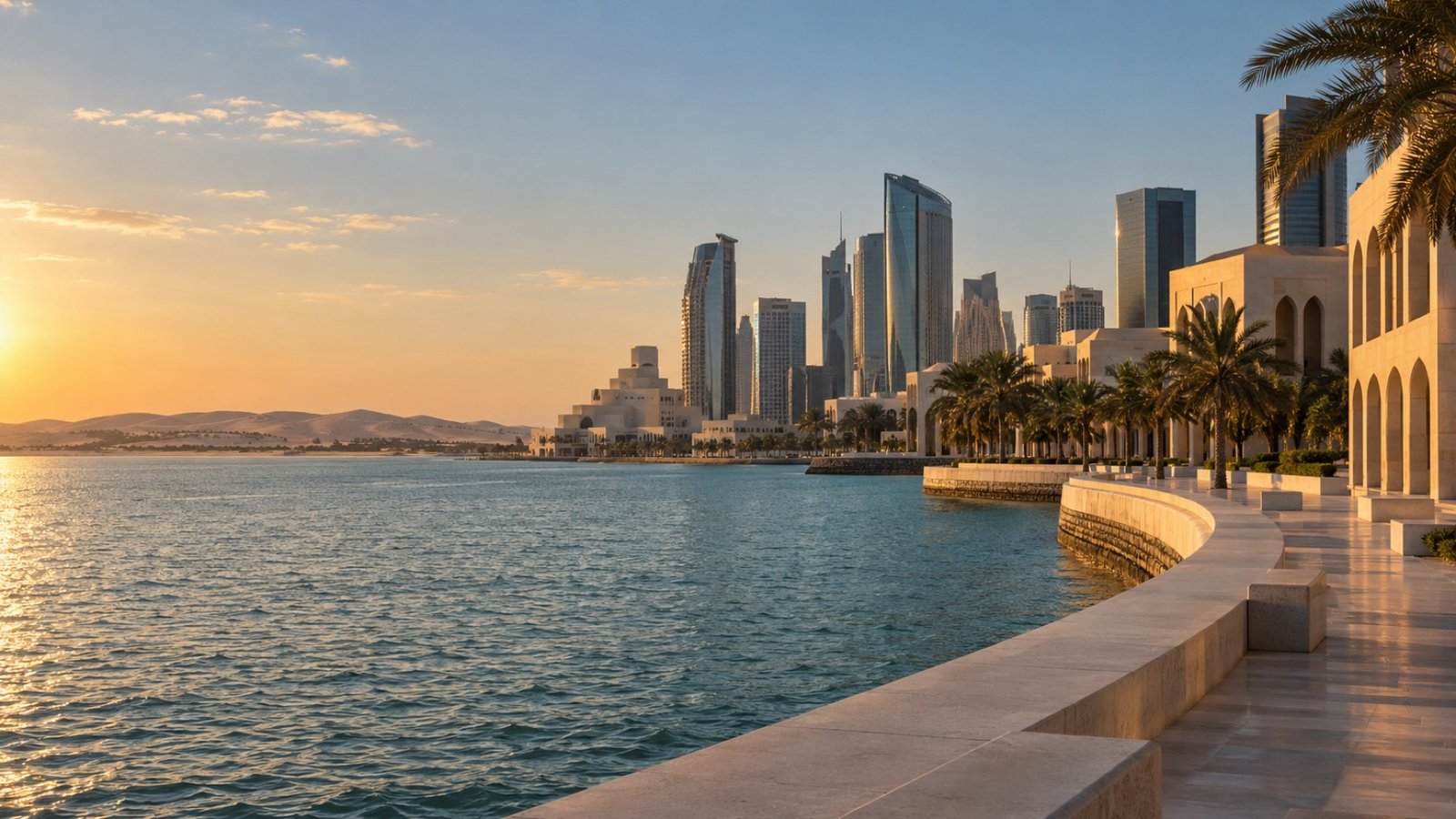
This guide uses official tourism, government and transport sources. Rules and prices can change, so check the linked official pages before booking.
Qatar combines major museums, contemporary architecture, Gulf coastline, mangroves, archaeological sites and desert landscapes in a compact peninsula, but this is not a blanket recommendation to travel now. As checked on 11 October 2026, the United States lists Qatar at Level 3, Reconsider Travel, due to armed-conflict risk. The United Kingdom warns that regional tensions can cause drone or missile incidents, short-notice airspace closures and flight disruption. Travellers must read their own government advisory, verify airline and airport operation, confirm insurance at the actual advisory level and follow local instructions before paying or moving. Every experience below is conditional on current access and safety information.
Qatar at a glance
- Current risk: regional armed-conflict risk and flight disruption can override an otherwise workable itinerary.
- Entry: eligibility for visa-free entry, visa on arrival or a Hayya e-visa depends on nationality, residence and supporting documents.
- Gateway: Hamad International Airport and Doha Metro connect efficiently when flights and services operate normally.
- Transport: Doha Metro has Red, Green and Gold lines; Lusail, Msheireb and Education City have separate tram systems.
- Climate: summer brings extreme heat, while winter is milder; outdoor plans still require sun, wind and sea checks.
- Local law: privacy, photography, alcohol, drugs, relationships, dress and public-behaviour rules differ materially from many visitors’ home countries.
Entry, visa and arrival planning
Use the official Visit Qatar visa checker and Hayya portal for the exact passport, residence status and travel purpose. Some nationalities enter visa-free, some receive a visa on arrival and others require an A1, A2 or A3 Hayya e-visa. Hotel, onward-ticket, passport-validity and insurance conditions vary, so do not apply one rule to every traveller.
The Visit Qatar tool states that many visitor passports must have at least three months validity from arrival, while the UK government advises British visitors that their passport should have at least six months validity. The safest editorial rule is to direct each traveller to the result for their exact document and their own government guidance.
Before buying non-refundable travel, check the U.S. and UK advisories for regional escalation, verify the flight with the airline and Hamad International Airport, and confirm that insurance remains valid. Airspace restrictions and commercial flight changes can occur at short notice.
Transit is not permission to enter. Travellers carrying medication must verify Qatar rules in advance, keep original packaging and documentation, and never carry a parcel or medicine for another person.
When to go
<strong>November to March:</strong> milder temperatures generally make museums, markets, coast and desert routes easier, but popular events, regional security changes and wind can still disrupt plans.
<strong>April and October:</strong> shoulder periods can be hot. Plan outdoor stops at the edges of the day and keep an indoor alternative.
<strong>May to September:</strong> extreme heat and humidity make long urban walks, unsheltered heritage sites and improvised desert trips unsuitable. Treat official heat guidance as a hard limit.
<strong>Ramadan:</strong> dates change annually. Public eating, drinking, smoking and chewing gum in daylight are restricted; museums, restaurants and transport can move to special hours.
Budget and places to stay
Price flights, cancellable accommodation, local transport, attractions, insurance and a disruption reserve separately. Regional flight changes can make a superficially cheap non-refundable fare poor value.
Doha Metro can reduce city transport costs, but remote heritage, beach and desert sites need a reputable driver, rental vehicle or tour. Do not hide that cost inside a generic daily estimate.
Qatar Museums ticketing and free-entry rules differ by venue, exhibition, age and residency. Quote a price only beside a checked date and official link.
Luxury hotels and restaurants are not a planning baseline. Visitors can combine metro travel, free public spaces and a small number of paid cultural or nature experiences, while keeping emergency funds untouched.
Fifty things to do in Qatar
1. National Museum of Qatar with a focused gallery route
Why go: Doha, near the Corniche. The desert-rose building wraps immersive galleries around the restored palace of Sheikh Abdullah bin Jassim Al Thani, making it the strongest first stop for understanding the peninsula before sightseeing.
How to do it: Reserve through Qatar Museums, recheck the live gallery notice, and choose a two-to-three-hour route rather than attempting every display in one sweep.
Good for: First-time visitors, architecture travellers and families
Know before you go: The official ticket page currently notes that some galleries can close for enhancement, while Tuesday and Ramadan schedules may differ.
2. Museum of Islamic Art with collection context
Why go: Doha waterfront. The I. M. Pei-designed museum presents Islamic art from three continents and more than fourteen centuries, so the visit should connect objects, trade routes and scholarship rather than reduce the collection to decoration.
How to do it: Book the dated ticket, review the current exhibition list and reserve time for only two collection themes plus the waterfront setting.
Good for: Art, history and architecture travellers
Know before you go: The museum normally closes on Wednesday, but special events and Ramadan can change hours; check Qatar Museums on the actual date.
3. MIA Park and the harbour edge at a cool hour
Why go: Doha waterfront. The landscaped park gives space to read the museum, dhow harbour and West Bay skyline together without buying an attraction ticket.
How to do it: Walk near sunset or early morning, keep off event set-ups and pair the park with the museum only if heat and energy allow.
Good for: Walkers, families and skyline photographers
Know before you go: There is little value in a midday summer walk; heat, humidity and event barriers can make the route unsuitable.
4. Souq Waqif as a working market, not a staged backdrop
Why go: Central Doha. Restored lanes contain spice, textile, household, restaurant and craft businesses, with a rhythm that changes between quiet mornings and lively evenings.
How to do it: Begin with a short orientation loop, ask before photographing people or merchandise and return later only if a meal or performance justifies it.
Good for: Food, market and urban-culture travellers
Know before you go: Crowds, uneven paving, smoke, allergens and late-night traffic require a clear meeting point and realistic pacing.
5. Falcon Souq with animal-welfare awareness
Why go: Beside Souq Waqif, Doha. The specialist market can introduce falconry traditions and equipment when visitors listen, ask permission and avoid treating live birds as photo props.
How to do it: Visit in trading hours, follow vendor instructions, never touch a bird without invitation and use official cultural interpretation to understand the practice.
Good for: Cultural-history and heritage travellers
Know before you go: Respect animal welfare, privacy and veterinary areas; a market visit does not guarantee demonstrations or handling.
6. Msheireb Museums across four heritage houses
Why go: Msheireb Downtown Doha. The houses explore slavery, labour, petroleum, family and urban transformation through distinct institutions rather than one celebratory national story.
How to do it: Check which houses and temporary exhibitions are open, then allow at least half a day with a reflective break between Bin Jelmood House and the other collections.
Good for: Social-history, architecture and museum travellers
Know before you go: Content about enslavement and labour can be emotionally demanding; hours and entry procedures should be confirmed directly.
7. Msheireb Downtown heritage walk and free tram
Why go: Central Doha. A compact route shows climate-responsive streets, restored buildings and newer mixed-use planning, while the local tram can reduce walking in heat.
How to do it: Use the official district map, verify tram operation and walk only a few shaded blocks before moving indoors.
Good for: Urban-design, architecture and accessibility-conscious travellers
Know before you go: The tram is not a substitute for checking step-free routes, and construction or private events can change pedestrian access.
8. Doha Corniche in short, planned sections
Why go: Doha Bay. The waterfront curve links the old port, museum district, dhow harbour and West Bay skyline, but it is too long and exposed to treat as one mandatory march.
How to do it: Choose one section, start outside peak heat and plan an indoor exit near a metro station or museum.
Good for: Walkers, photographers and first-time visitors
Know before you go: Road crossings, humidity, glare and special-event closures can undermine an improvised walk.
9. Mina District and Old Doha Port
Why go: Old Doha Port. Colourful low-rise streets, the fish market and cruise infrastructure reveal a redeveloped harbour district best appreciated alongside its working functions.
How to do it: Check cruise-day access, walk early or late, keep working entrances clear and pair the district with only one nearby museum.
Good for: Harbour, architecture and casual food travellers
Know before you go: Some spaces are commercial or operational rather than public attractions; photography and parking restrictions must be respected.
10. Katara Cultural Village programme-led visit
Why go: Katara, Doha. Galleries, theatres, performance venues, mosques, workshops and a waterfront sit within one complex, but the calendar determines whether the visit has real cultural depth.
How to do it: Choose a dated exhibition, concert or workshop from the official Katara programme before adding restaurants or beach time.
Good for: Arts, performance and family travellers
Know before you go: Venue access, dress expectations, ticketing and event security vary; do not assume every building is open for casual entry.
11. Katara architecture and public-art circuit
Why go: Katara, Doha. A compact exterior route can connect the amphitheatre, mosque architecture, pigeon towers and public art without interrupting worship or events.
How to do it: Use public paths, check performance closures and keep mosque observation outside prayer times unless official visitor access is offered.
Good for: Architecture and public-art travellers
Know before you go: Religious buildings remain active spaces; modest dress, quiet behaviour and photography consent are essential.
12. The Pearl-Qatar and Qanat Quartier on foot
Why go: Offshore Doha. Marinas, pedestrian squares and canal-side streets show a planned residential and retail district rather than historic Qatar.
How to do it: Select one marina or Qanat loop, use the metro-to-taxi connection where practical and budget only for purchases you actually value.
Good for: Urban-leisure, dining and accessible-walk travellers
Know before you go: Most of the island is lived-in private property; beaches, residences and marina facilities are not automatically public.
13. Lusail Marina and tram-based city exploration
Why go: Lusail. The marina promenade and new-city districts can be explored without a car by combining the Red Line with Lusail Tram.
How to do it: Check the current tram map and last return before departure, then choose one promenade section and one indoor stop.
Good for: Contemporary-architecture and transit travellers
Know before you go: Construction, event cordons and heat can change walking routes; do not rely on an old development map.
14. Qatar National Library and Heritage Library
Why go: Education City. The public library combines large reading spaces with a heritage collection and exhibitions that reward a quiet, research-minded visit.
How to do it: Check visitor registration, exhibition access and event timings, then preserve silence and avoid photographing readers.
Good for: Book, architecture, research and family travellers
Know before you go: Heritage materials, study areas and events have different access rules; a beautiful building is still a working library.
15. Education City Mosque and Minaretein Centre with permission
Why go: Education City. The mosque and education centre can support respectful learning about contemporary Islamic architecture and community life when visitor access is confirmed.
How to do it: Check the official Education City or Minaretein programme, dress modestly and avoid prayer periods unless attending an authorised visit.
Good for: Architecture, faith-history and educational travellers
Know before you go: Access is not guaranteed, worship takes priority and interior photography needs explicit permission.
16. Mathaf: Arab Museum of Modern Art
Why go: Education City. The collection focuses on modern and contemporary art from Qatar, the Middle East and the Arab diaspora, providing a necessary counterpoint to archaeological museums.
How to do it: Reserve the free dated ticket where required, check the current exhibition cycle and leave time for the specialist library if it is open.
Good for: Modern-art, research and cultural-history travellers
Know before you go: Mathaf normally closes on Monday and exhibitions rotate; verify the precise date before crossing the city.
17. 3-2-1 Qatar Olympic and Sports Museum
Why go: Aspire Zone, Doha. Interactive displays connect global sports history, athlete experience and Qatar’s sports story without requiring visitors to be fans of one event.
How to do it: Book through Qatar Museums, select the galleries most relevant to the group and check whether stadium or event security changes the approach.
Good for: Families, sports-history and interactive-museum travellers
Know before you go: The museum normally closes on Tuesday; major events can alter access, transport and security screening.
18. Aspire Park and Sports City at a cool hour
Why go: Aspire Zone, Doha. A large urban park and major sports precinct can provide a low-cost evening reset after the nearby museum.
How to do it: Use the metro or authorised parking, walk a defined loop and leave before fatigue makes the return difficult.
Good for: Families, walkers and sports-architecture travellers
Know before you go: Summer heat, event crowds and restricted stadium perimeters make daytime wandering poor planning.
19. Fire Station contemporary-art programme
Why go: Al Bidda area, Doha. A former civil-defence building now supports artist residencies, exhibitions and creative exchange, with value determined by the current programme.
How to do it: Check Qatar Museums listings, visit for a specific exhibition and ask before entering studio or residency areas.
Good for: Contemporary-art and creative-industry travellers
Know before you go: Between exhibitions, the experience may be limited; do not promise access to artists or private workspaces.
20. M7 design and fashion exhibitions
Why go: Msheireb Downtown Doha. M7 focuses on design, fashion and creative entrepreneurship, extending the district beyond architecture and shopping.
How to do it: Choose a dated exhibition or public programme, verify admission and combine it with nearby Msheireb Museums only if the day remains comfortable.
Good for: Design, fashion and creative-business travellers
Know before you go: Opening patterns change with exhibitions and events, so an undated listing is unreliable.
21. Liwan design studios and former-school architecture
Why go: Msheireb, Doha. The reused school complex offers exhibitions and design activity when public programming is scheduled.
How to do it: Use the official Qatar Museums calendar, attend only the advertised public areas and avoid assuming studios are open.
Good for: Design, architecture and adaptive-reuse travellers
Know before you go: Access is programme-dependent; workshops and resident spaces may be private.
22. Qatar Museums public-art route with a mapped theme
Why go: Doha and Education City. A curated route can connect works in streets, parks, metro stations and cultural campuses while explaining commissioning context.
How to do it: Use the official public-art map, choose five works on one transport corridor and read labels rather than racing across the city.
Good for: Public-art, photography and urban-design travellers
Know before you go: Do not climb works, obstruct commuters or photograph nearby people without consent; outdoor access can change.
23. Licensed dhow harbour cruise with safety checks
Why go: Doha Bay. A short bay crossing can reveal the Corniche and skyline from the water while connecting to maritime heritage.
How to do it: Book a reputable licensed operator, inspect life jackets, confirm weather and return time, and keep the route inside authorised waters.
Good for: Cityscape, families and maritime-history travellers
Know before you go: Vessel standards vary; cancel if life jackets, capacity information or weather judgement are unclear.
24. Al Safliya Island only with an equipped operator
Why go: Off Doha coast. The small island can offer skyline views and shallow-water leisure without pretending it is a serviced beach resort.
How to do it: Use a licensed boat, confirm shade, drinking water, toilets, tide and collection time before leaving the harbour.
Good for: Boat-trip and skyline travellers
Know before you go: There may be little infrastructure; heat, sea state and delayed pickup can become serious risks.
25. Al Thakira mangroves by guided kayak
Why go: Near Al Khor. Mangrove channels provide a rare green coastal habitat and a quieter way to learn about tidal ecology.
How to do it: Choose an operator who times the trip to tide and weather, supplies fitted buoyancy aids and keeps groups on permitted routes.
Good for: Nature, paddling and birdwatching travellers
Know before you go: Wildlife sightings are never guaranteed; wind, heat and tide can cancel the activity.
26. Purple Island on a low-impact boardwalk-style visit
Why go: Al Khor region. Intertidal flats, mangroves and archaeological associations make the island more valuable as habitat than as an off-road playground.
How to do it: Use the recognised access, check tide and road conditions, carry out all waste and remain on established paths.
Good for: Nature, archaeology and family travellers
Know before you go: Soft ground, insects, heat and tidal channels make improvised driving or wading unsafe.
27. Al Khor waterfront and harbour context
Why go: Al Khor. A short coastal-city stop can add fishing, harbour and regional history beyond Doha when paired with one official site.
How to do it: Choose a public waterfront section, verify museum or park access and keep the return transport confirmed.
Good for: Slow-travel, harbour and local-history visitors
Know before you go: Working areas, private boats and family spaces deserve distance and photography consent.
28. Al Zubarah Archaeological Site and fort
Why go: Northwestern Qatar. Qatar’s sole inscribed UNESCO World Heritage property preserves an eighteenth- and nineteenth-century pearling and trading town within a wider cultural landscape.
How to do it: Reserve a Qatar Museums ticket, start early and use the interpretation before walking the exposed archaeological route.
Good for: Archaeology, UNESCO and trade-history travellers
Know before you go: The official ticket page warns of limited shade; heat, wind and remote-road conditions can shorten the visit.
29. Barzan Towers with current opening confirmation
Why go: Umm Salal Mohammed. Watchtowers linked to observation, wells and the surrounding landscape can add a compact heritage stop outside central Doha.
How to do it: Check Qatar Museums heritage-site hours and combine only with a northern route that remains realistic.
Good for: Architecture and local-history travellers
Know before you go: Interior access and Ramadan hours can change; do not climb or enter closed areas.
30. Al Jassasiya rock carvings with conservation discipline
Why go: Northeastern Qatar. Petroglyphs and cup marks raise questions about chronology and use, making careful interpretation more honest than a single definitive story.
How to do it: Use current Qatar Museums or tourism directions, follow the marked approach and leave every surface untouched.
Good for: Archaeology and cultural-landscape travellers
Know before you go: Remote access, heat and fragile rock surfaces make off-road shortcuts and rubbing or tracing unacceptable.
31. Fuwairit beach with turtle-season restrictions respected
Why go: Northern Qatar. A bright coastal landscape can support a beach day only when nesting protections and official access permit it.
How to do it: Check the current environmental or tourism notice, use the designated area and choose another beach if barriers protect turtles.
Good for: Beach and nature travellers
Know before you go: Seasonal closure, wind, currents and minimal services are firm limits, not inconveniences to bypass.
32. Al Ruwais sunrise and harbour walk
Why go: Northern tip of Qatar. A short public coastal walk can show a quieter fishing-town landscape and broad Gulf horizon.
How to do it: Arrive by planned vehicle, keep clear of port operations and leave before midday heat.
Good for: Sunrise, coast and slow-travel visitors
Know before you go: Remote driving, glare and working-harbour restrictions require a conservative route.
33. Abu Dhalouf Park and shallow beachfront
Why go: Northwestern coast. A family park beside shallow water offers a gentler northern stop when public facilities are open.
How to do it: Check municipality access, bring shade and food backups, and keep children within arm’s reach near water.
Good for: Families, picnics and relaxed coastal travellers
Know before you go: Shallow water is not automatically supervised water; heat and facility closures can still end the visit.
34. Zekreet limestone landscape from lawful tracks
Why go: Western Qatar. Wind-shaped limestone, archaeological remains and open desert create one of Qatar’s most distinctive landscapes.
How to do it: Use a capable insured vehicle or guide, stay on recognised tracks and carry offline navigation, water and a return plan.
Good for: Geology, landscape and archaeology travellers
Know before you go: Phone coverage, tyre damage, heat and unmarked tracks make solo improvisation a poor choice.
35. East-West/West-East with artwork and desert respected
Why go: Brouq Nature Reserve near Zekreet. Richard Serra’s four steel plates stretch across a desert corridor, but the work is inseparable from the fragile setting and difficult access.
How to do it: Travel with a reputable driver, confirm the reserve route and keep vehicles away from the sculpture and soft ground.
Good for: Public-art, landscape and photography travellers
Know before you go: Do not climb, mark or touch the installation; heat and remote access require water and recovery capacity.
36. Dahl Al Misfir cave only under current access guidance
Why go: Central-west Qatar. A gypsum cave can illuminate the peninsula’s geology when visited without exaggerating glow, depth or ease.
How to do it: Confirm legal access and road condition through an official source or licensed guide, and use suitable footwear and lighting.
Good for: Geology and adventure travellers
Know before you go: Loose surfaces, darkness, heat and rescue difficulty make unsupervised entry inappropriate.
37. Dukhan coast and beach on an authorised public section
Why go: Western Qatar. Rocky cliffs and Gulf water can create a contrasting coastal day when industrial and private areas are avoided.
How to do it: Use an identified public beach, verify sea and access conditions, and carry all water, shade and waste out.
Good for: Coast, picnic and landscape travellers
Know before you go: Industrial boundaries, currents and limited services require careful site selection.
38. Umm Bab beach and palm-lined camping area
Why go: Western Qatar. A broad shore with scattered palms can work for a day visit or organised overnight experience away from Doha.
How to do it: Check municipal access and weather, use a lawful camping area and arrive with water, shade, lighting and a waste plan.
Good for: Camping, stargazing and family travellers
Know before you go: Open fires, strong wind, unstaffed water and night driving need explicit controls.
39. Khor Al Adaid Inland Sea with a qualified desert driver
Why go: Southeastern Qatar. Dunes meet a tidal inlet near the Saudi border, creating a distinctive landscape reached through sand rather than a normal paved road.
How to do it: Use a reputable licensed 4×4 operator, confirm permits, weather, communications, tyre equipment and the exact return plan.
Good for: Desert, geology and landscape travellers
Know before you go: The site is on UNESCO’s tentative list, not an inscribed property; self-driving without desert experience is dangerous.
40. Sealine Beach as the desert gateway
Why go: Mesaieed region. The public coastal area can introduce the transition from road to dunes without requiring every visitor to join a high-adrenaline safari.
How to do it: Choose a safe public section, separate swimming from driving activity and book any equipment with a vetted operator.
Good for: Families, coast and introductory-desert travellers
Know before you go: Fast vehicles, heat, tides and unregulated vendors can create conflicts; keep children well away from traffic.
41. Singing Sand Dunes with acoustic expectations kept realistic
Why go: Southwest of Doha. Dry sand can produce a low vibration under suitable conditions, but the geological phenomenon is weather-dependent rather than a guaranteed performance.
How to do it: Visit with an experienced driver in cool, dry conditions and walk only on a safe slope away from vehicles.
Good for: Geology, families and sound-curious travellers
Know before you go: The dunes may stay silent; heat, soft sand and vehicle movement remain the main risks.
42. Al Shahaniya camel racetrack during an official event
Why go: Al Shahaniya. A scheduled race can introduce modern camel sport, training and robot jockey technology when viewed from authorised spectator areas.
How to do it: Check the official event calendar, arrange transport and follow on-site directions rather than wandering into training or animal areas.
Good for: Sports, culture and technology travellers
Know before you go: Races are seasonal, access varies and animals or workers should never be interrupted for photographs.
43. Sheikh Faisal Bin Qassim Museum with selected collections
Why go: Al Samriya. A large private collection spans vehicles, carpets, coins, manuscripts and regional objects, making selection more useful than an attempt to see everything.
How to do it: Check the museum’s official opening and ticket page, choose two collections and confirm return transport before leaving Doha.
Good for: Collectors, families and material-culture travellers
Know before you go: Collection size, object provenance questions and remote location require time and critical interpretation.
44. Hamad International Airport art on a genuine layover
Why go: Hamad International Airport. Large-scale commissions and installations can turn unavoidable transit time into an art route without pretending the terminal replaces Qatar.
How to do it: Use the airport’s current map, remain inside the permitted zone and protect boarding, security and gate-change time.
Good for: Transit passengers and public-art travellers
Know before you go: Never cross immigration or walk to a distant concourse if visa, connection or boarding time is uncertain.
45. Oxygen Park for an evening movement break
Why go: Education City. Landscaped paths, sports spaces and shaded structures provide a low-cost complement to museums and the library.
How to do it: Go near sunset, use the Education City tram where operating and choose a short loop with water access.
Good for: Families, runners and low-cost travellers
Know before you go: Heat and event closures can make the park unsuitable despite attractive photographs.
46. Al Wakrah Souq and seaside promenade
Why go: Al Wakrah. Restored market architecture and the waterfront can form a compact evening outside Doha on the metro corridor.
How to do it: Use Al Wakra Metro plus confirmed last-mile transport, eat at one verified venue and respect working and residential spaces.
Good for: Food, architecture and relaxed-evening travellers
Know before you go: The metro station is not directly on the shore; heat and the last return must be planned.
47. A licensed desert stargazing session
Why go: Qatar desert, operator-dependent. A dark-sky session can add astronomy and Bedouin cultural interpretation when the operator separates evidence from folklore and controls the site responsibly.
How to do it: Book a small group, confirm moon phase, clouds, wind, toilets and warm layers, and remain inside the agreed camp area.
Good for: Astronomy, families and night-landscape travellers
Know before you go: Clear skies and celestial visibility are never guaranteed; night driving and remote-site safety matter more than photographs.
48. Qatari cooking or food-history workshop
Why go: Doha. A small class can connect seafood, rice, spices, dates and hospitality customs to trade and family life without claiming one recipe represents every household.
How to do it: Choose a credited teacher, disclose allergens, ask before recording and avoid republishing recipes or personal stories without permission.
Good for: Food, culture and family travellers
Know before you go: Class schedules, gender arrangements, alcohol-free rules and dietary claims must be confirmed with the organiser.
49. Doha Quest as a weather-proof family option
Why go: Msheireb, Doha. An indoor theme park can serve families during extreme heat, but it should be treated as paid entertainment rather than cultural evidence.
How to do it: Check the official operator for opening, height restrictions, sensory intensity and timed admission before promising a full family day.
Good for: Families, teenagers and thrill-ride visitors
Know before you go: Ride eligibility, motion sensitivity, noise and closures can reduce what a ticket actually covers.
50. A Ramadan cultural evening only when dates align
Why go: Doha, programme-dependent. During Ramadan, evening museums, markets and community programmes can reveal a different daily rhythm when visitors respect fasting and worship.
How to do it: Use the current Qatar Museums and Visit Qatar calendars, eat only where service is lawfully offered and plan transport around late activity.
Good for: Cultural learners and repeat visitors
Know before you go: Do not eat, drink, smoke or chew gum publicly in daytime; dates and hours change annually and Eid closures follow.
Food and drink worth planning around
Seek Qatari and Gulf dishes such as machboos, thareed, balaleet, seafood, dates and Arabic coffee through restaurants or credited workshops, but avoid claiming one preparation represents every household.
Souq and market eating needs allergen questions, hand-hygiene judgement and heat-aware food storage. Halal practice, vegetarian labels and allergy safety are different claims that should be verified separately.
Alcohol is available only in licensed venues to adults who meet the venue’s identification rules. Public drinking or drunkenness can lead to serious penalties.
During Ramadan, use current official guidance and the venue’s lawful service arrangements. Respect fasting hours and do not frame local observance as an inconvenience.
What to buy
Prefer sellers who explain where textiles, perfumes, spices, jewellery and crafts were made. Ask for a receipt and do not treat a souq setting as proof of local origin.
Falconry goods, animal products, shells, coral, antiquities and archaeological material can involve conservation, permit or export restrictions. When provenance is unclear, do not buy.
Pearl claims should distinguish cultured, natural and imitation products, with written specification for expensive purchases. A spoken story is not certification.
Do not photograph vendors, customers or private transactions without consent; Qatar has strict privacy rules.
Getting around
Doha Metro’s Red, Green and Gold lines meet at Msheireb. The Red Line serves Hamad International Airport and connects toward Lusail, the Green Line reaches Education City and the Gold Line serves the National Museum, Souq Waqif and Sports City corridor.
Check Qatar Rail or its current app for operating hours, service changes and travel-card rules. Friday morning service patterns, events and seasonal schedules can differ.
Government-owned Mowasalat operates Karwa buses and taxis. Use the Karwa Journey Planner for current routes and metroexpress availability rather than relying on an old map.
Remote desert, cave, beach and archaeological sites need appropriate insurance, communications and a route plan. Navigation-app distance does not prove that an ordinary car can reach the site.
Easy access and family travel
Qatar Museums states a commitment to accessible cultural venues, but visitors should still ask the exact museum for step-free entrances, wheelchairs, seating, accessible toilets and sensory support.
Metro stations and trains advertise wheelchair access, but the final walk can be hot, unfinished or obstructed. Check the whole door-to-door route and arrange a taxi backup.
Historic forts, archaeological ground, beaches, dunes and caves can remain inaccessible despite accessible transport. Do not label an entire experience accessible because one facility is.
Families should verify ride height rules, stroller access, shade, hydration, prayer-time schedules and age guidance before promising an activity.
Stay safe
Read the traveller’s own government advisory immediately before booking and departure. As checked on 11 October 2026, the U.S. advisory is Level 3, Reconsider Travel, due to armed-conflict risk, and the UK warns of regional strikes, airspace closures and flight disruption.
Follow Qatari authority instructions, monitor airline and airport notices, keep travel documents current and stay away from military or security facilities. If instructed to shelter, move indoors to the safest available interior location.
Respect strict local laws on drugs, medication, alcohol, public intimacy, same-sex activity, gestures, speech, photography, drones and social media. Photographing people without consent or sensitive sites can have serious consequences.
For desert drives, use a properly equipped 4×4, travel with an experienced operator or convoy, carry water and communications and leave the route with another person. For dhow or boat trips, confirm life jackets and weather.
Emergency services are reached on 999. Travellers should save their insurer, embassy or consulate, airline and accommodation contacts separately.
Mistakes to avoid
- Treating a tourism article as proof that regional travel is currently advisable.
- Assuming every nationality receives the same visa or passport-validity rule.
- Planning long outdoor walks or archaeological visits in summer midday heat.
- Self-driving into dunes, soft tracks or remote caves without training, insurance and recovery equipment.
- Photographing people, government, military, religious or construction sites without permission.
- Using old museum hours during Ramadan, Eid, exhibition changeover or major events.
- Calling Khor Al Adaid a UNESCO World Heritage property when it is on the tentative list, while Al Zubarah is Qatar’s inscribed property.
Sample seven-day route
Only if current advisories and flight operations permit: use Doha as one base. Spend three days across NMoQ, MIA, Msheireb, Souq Waqif and Katara; one Education City day; one conditional guided desert or mangrove day; and keep the final day flexible beside the airport corridor.
Sample ten-day route
Add Al Zubarah and a separate northern coast or mangrove day, plus one contemporary-art day. Do not combine remote north, west and south sites merely because the country looks compact on a map.
Sample fourteen-day route
A longer stay can add Zekreet, Al Wakrah, Lusail and a carefully selected beach or stargazing experience. Preserve two flexible days for heat, regional disruption, museum closures or flight changes.
Qatar travel FAQ
Is Qatar safe to visit now?
No guide can decide that for an individual. As checked on 11 October 2026, the United States lists Qatar at Level 3, Reconsider Travel, because of armed-conflict risk, and UK advice describes regional escalation and possible airspace disruption. Read the full current advisory, confirm insurance and follow local authorities.
Do I need a visa?
It depends on nationality, residence and travel purpose. Use the official Visit Qatar visa checker and Hayya platform for the exact document; do not rely on a generic list.
Can I explore Doha without a car?
Many central sights connect by metro, tram, walking and taxi. Remote beaches, archaeological sites and desert landscapes usually require planned road transport or a reputable operator.
When is the best weather?
November through March is generally milder, but wind, events and regional security can still alter plans. Summer outdoor activity needs strict heat limits.
Is Khor Al Adaid a UNESCO World Heritage Site?
No. It is on Qatar’s tentative list. Al Zubarah Archaeological Site is Qatar’s currently inscribed World Heritage property.
Can I take photographs freely?
No. Qatar has strict privacy and sensitive-site rules. Ask before photographing people and avoid government, military, religious, construction or other restricted locations unless permission is clear.
Official planning sources
- Visit Qatar official portal
- Visit Qatar things to do
- Visit Qatar visa checker
- Visit Qatar travel tips
- Visit Qatar getting around
- Visit Qatar Doha Metro guide
- Visit Qatar towns and cities
- Visit Qatar nature overview
- Visit Qatar Khor Al Adaid
- Qatar Museums official portal
- Qatar Museums plan your visit
- Qatar Museums museums and galleries
- Qatar Museums ticketing
- Qatar Museums public calendar
- Qatar Museums libraries
- UNESCO Qatar state party page
- Mowasalat official public transport
- Mowasalat public bus services
- Qatar Rail official network map
- Hamad International Airport official website
- United States Qatar travel advisory
- United Kingdom Qatar travel advice
- United Kingdom Qatar safety and security
- United Kingdom Qatar entry requirements
Disclosure: This independent editorial guide is informational, not a booking guarantee. No price, ranking, safety outcome, entry permission or availability is guaranteed. Recheck all time-sensitive details with the linked official source before purchase.