This guide uses official tourism, government and transport sources. Rules and prices can change, so check the linked official pages before booking.
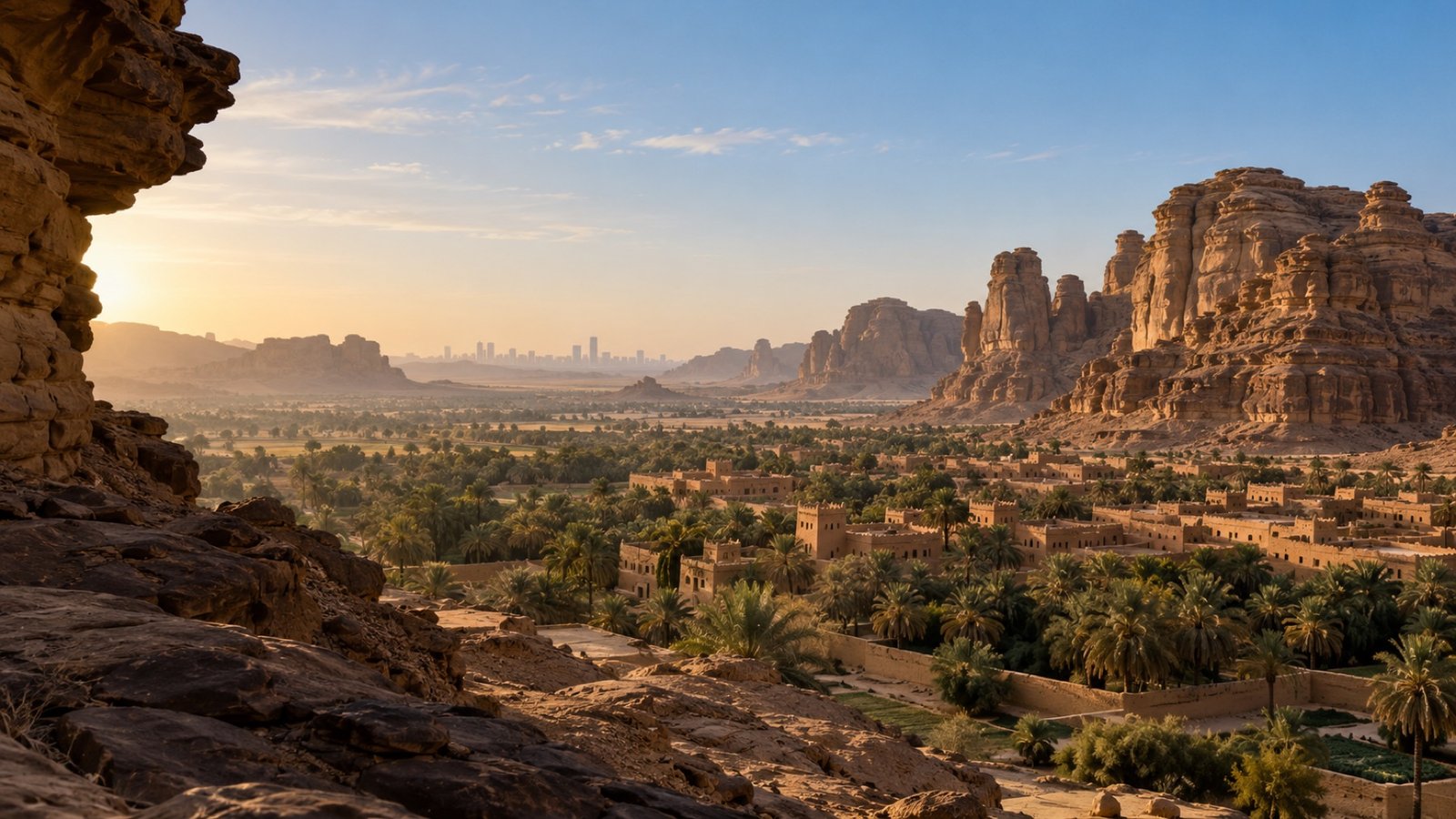
Saudi Arabia spans UNESCO-listed cities, oases and rock art, major museums, Red Sea coast, high mountains and desert archaeology, but this is not an unconditional recommendation to travel now. On 10 October 2026 the United States listed Saudi Arabia at Level 3, Reconsider Travel, citing drone and missile risk, armed conflict, terrorism, exit bans and local laws, with a do-not-travel warning for the Yemen border. United Kingdom advice warns against all or all-but-essential travel in defined southern border areas and describes renewed regional attacks and possible airspace disruption. Travellers must read their own government advisory, keep every destination outside advised-against zones, verify flight and road operation, confirm insurance and follow Saudi authority instructions before paying or moving.
Saudi Arabia at a glance
- Current risk: regional conflict, drone or missile risk, terrorism, exit bans and strict local laws require live government-advisory checks.
- Entry: the official tourist eVisa is available only to eligible applicants and is not a work visa; other nationalities and purposes require the correct route.
- Scale: Riyadh, Jeddah, AlUla, Al Ahsa, Hail and Aseer are far apart; one road trip cannot responsibly cover the entire country.
- Heritage: UNESCO currently lists eight Saudi properties, including Hegra, At-Turaif, Historic Jeddah, Al Ahsa and Hail rock art.
- Religious access: Hajj and Umrah require the appropriate official permissions, and non-Muslim travellers must not enter restricted sacred areas.
- Climate: desert heat, mountain fog, flash floods and Red Sea conditions vary strongly by region and season.
Entry, visa and arrival planning
Use the official Visit Saudi eVisa portal for the exact passport and purpose. Its terms describe a multi-entry tourist eVisa for eligible nationals, normally valid for one year with a maximum stay of three months, but the specific issued visa controls and approval does not guarantee admission.
A tourist eVisa permits tourism and, where applicable, Umrah but not work. Hajj requires a Hajj visa and permit through Nusuk, the official platform. Never buy a pilgrimage authorisation through an unofficial intermediary.
Passport-validity, insurance and document requirements differ by nationality and visa route. For British visitors, current UK guidance says the passport must expire at least six months after arrival; other travellers must use their own official result.
Before buying non-refundable travel, read the full current advisory, verify airline and airport operation, keep proof of accommodation and onward plans, and confirm that insurance remains valid at the advisory level. Regional airspace or airport disruption can occur at short notice.
When to go
<strong>November to February:</strong> generally the most workable period for central deserts, archaeological sites and urban walking, though nights can be cold and winter rain can cause flash floods.
<strong>March to April:</strong> temperatures rise quickly and dust or rain can disrupt roads; outdoor routes need a shorter window.
<strong>May to September:</strong> extreme heat makes many unsheltered desert, market and archaeological itineraries unsuitable. Aseer and Taif can be cooler but still face sun, fog and storms.
<strong>October:</strong> shoulder conditions can improve, but live regional security, event and weather information remains decisive.
Budget and places to stay
Build separate budgets for long domestic distances, cancellable accommodation, urban transport, heritage tickets, licensed guides and an emergency disruption reserve. A cheap fare is not value if insurance excludes the itinerary.
Riyadh Metro and intercity rail can reduce some costs, but AlUla heritage tours, remote rock art, escarpments and desert routes require authorised transport or a capable guide.
Official heritage and event prices change by date, season, resident status and programme. Quote no attraction price without a current official page and check date.
Luxury Red Sea or event products should remain optional. High-quality public museums, heritage districts, markets and corniche walks can anchor a trip without pretending the entire country is a resort.
Fifty things to do in Saudi Arabia
1. National Museum of Saudi Arabia with a focused chronology
Why go: King Abdulaziz Historical Centre, Riyadh. The museum gives a structured introduction to Arabian geology, archaeology, trade, religion and state formation before the trip moves into individual regions.
How to do it: Check the Museums Commission or venue listing, choose three galleries and allow a quiet break in the surrounding historical-centre gardens.
Good for: First-time visitors, history and family travellers
Know before you go: Temporary closures, prayer-time patterns and exhibition changes make live hours essential.
2. Al Murabba Palace and historical-centre grounds
Why go: Riyadh. The palace complex can explain early twentieth-century administration and urban expansion when interpreted beyond decorative architecture.
How to do it: Confirm which buildings are open, stay within public areas and pair the palace only with the nearby national museum.
Good for: Architecture and modern-history travellers
Know before you go: Official functions, restoration and security can restrict rooms without advance notice.
3. Masmak Fortress with city-history context
Why go: Central Riyadh. The mud-brick fort is tied to the recapture of Riyadh in 1902 and is most useful when read alongside the surrounding market district.
How to do it: Verify museum access, arrive outside peak heat and avoid photographing security or private activity nearby.
Good for: Saudi-history and architecture travellers
Know before you go: Do not preserve old free-entry or opening-hour claims; restoration and events change access.
4. Deira Souq and traditional-market circuit
Why go: Central Riyadh. A planned loop can introduce incense, textiles, household goods and jewellery without treating every product as locally made.
How to do it: Choose a short route, ask before photographing people or merchandise and request receipts and material details for expensive purchases.
Good for: Market, craft and food travellers
Know before you go: Crowding, counterfeit goods and heat require normal consumer judgement and modest pacing.
5. Riyadh Metro architecture and one cross-city journey
Why go: Riyadh. A single journey can reveal the scale of the capital and newer station design while reducing road exposure.
How to do it: Use the live Riyadh Public Transport map, verify service, ticket and interchange rules and plan the last kilometre before boarding.
Good for: Transit, architecture and budget travellers
Know before you go: A station near a landmark does not guarantee a comfortable or step-free final walk.
6. King Abdullah Financial District public realm
Why go: Northern Riyadh. The district offers a contemporary counterpoint to mud-brick heritage through towers, shaded connections and metro access.
How to do it: Walk only in public areas during a cool period, use the official district or transport map and select one cultural or dining stop.
Good for: Contemporary-architecture and urban-design travellers
Know before you go: Offices, events and construction create private or controlled zones; exterior appreciation is not permission to enter.
7. Kingdom Centre sky-bridge visit if officially open
Why go: Riyadh. An elevated viewpoint can clarify Riyadh’s immense low-rise spread and newer northward growth.
How to do it: Check the building operator for current admission, weather and queue conditions, then schedule the viewpoint near sunset without depending on it.
Good for: Skyline and urban-geography travellers
Know before you go: Haze, private events and maintenance can remove the view or close access.
8. Wadi Hanifah on a defined landscaped section
Why go: Riyadh region. A restored valley corridor shows how drainage, public space and historic settlement interact within a desert metropolis.
How to do it: Choose a municipal public section, visit in daylight and leave immediately if heavy-rain or flood warnings appear.
Good for: Landscape, family and urban-planning travellers
Know before you go: Dry weather at the starting point does not eliminate flash-flood risk elsewhere in a wadi.
9. Riyadh Season or current festival event chosen by date
Why go: Riyadh. A dated programme can show the capital’s contemporary entertainment economy more honestly than an evergreen list of venues.
How to do it: Use the official event platform, read age, entry, transport and cancellation rules and buy only from authorised channels.
Good for: Events, families and repeat visitors
Know before you go: Crowds, dynamic pricing, road closures and programme changes require a transport and exit plan.
10. Edge of the World only with a reputable operator
Why go: Tuwaiq escarpment northwest of Riyadh. The escarpment reveals layered limestone and the scale of the Najd landscape, but the informal name should not hide remote-road and cliff risk.
How to do it: Book an experienced insured guide, confirm legal access, vehicle capability, daylight return and weather before departure.
Good for: Geology, landscape and hiking travellers
Know before you go: Unprotected drops, poor tracks, weak phone coverage and closures make self-guided improvisation dangerous.
11. Red Sand Dunes or desert picnic on an authorised route
Why go: Riyadh region. A short controlled desert visit can introduce dune movement and evening light without turning the day into reckless off-road driving.
How to do it: Use a vetted operator, remain inside the agreed area and separate pedestrian space from vehicle activity.
Good for: Families, photography and introductory-desert travellers
Know before you go: Heat, soft sand, fast vehicles and night navigation require firm limits.
12. At-Turaif District in Diriyah with UNESCO interpretation
Why go: Diriyah. The UNESCO-listed Najdi mud-brick capital explains the first Saudi state through urban form, political history and conservation.
How to do it: Reserve through the current Diriyah platform, follow the official visitor route and allow the interpretation centre to lead the sequence.
Good for: UNESCO, architecture and history travellers
Know before you go: Restoration, events and ticketed zones can change the route; walls and private areas must remain untouched.
13. Bujairi Terrace and Wadi Hanifah at a quiet hour
Why go: Diriyah. The dining and public-realm district can frame views toward At-Turaif when it is treated as a modern visitor facility rather than heritage itself.
How to do it: Check reservation or access rules, visit outside peak dining hours and keep historic sightlines and pedestrian routes clear.
Good for: Architecture, food and evening visitors
Know before you go: Commercial access and parking controls vary during events; do not promise unrestricted entry.
14. Diriyah heritage walk beyond one monument
Why go: Diriyah. A short guided route can connect palms, mud-brick neighbourhoods and valley geography without conflating reconstructed spaces with untouched fabric.
How to do it: Use an authorised local guide, ask which elements are restored and never enter an unmarked structure.
Good for: Conservation and cultural-landscape travellers
Know before you go: Heat, uneven surfaces and active restoration affect both accessibility and authenticity.
15. Historic Jeddah Al-Balad with a conservation-led guide
Why go: Jeddah. UNESCO recognises coral-stone tower houses, rawasheen, markets and pilgrimage-port history within a living district shaped by Indian Ocean exchange.
How to do it: Use a licensed guide or official route, visit occupied buildings only when open and ask before photographing residents.
Good for: UNESCO, architecture and trade-history travellers
Know before you go: Restoration scaffolding, fragile structures and private homes make unsupervised entry inappropriate.
16. Nassif House or another officially open heritage house
Why go: Historic Jeddah. A single house can make Red Sea domestic architecture, ventilation and merchant life more legible than exterior photography alone.
How to do it: Check the exact building’s live status and choose one interior rather than assuming every famous house is open.
Good for: Architecture, interiors and social-history travellers
Know before you go: Upper floors, stairs, occupancy and conservation work can restrict access.
17. Al Alawi market through a short buying route
Why go: Historic Jeddah. Market lanes connect spices, textiles, perfumes, food and pilgrimage commerce within Al-Balad’s living economy.
How to do it: Set a purchase list, ask origin and ingredients, keep receipts and avoid blocking doorways or prayer access.
Good for: Market, food and craft travellers
Know before you go: Crowding, heat, allergens and uncertain provenance require careful choices.
18. Jeddah Corniche in one manageable section
Why go: Jeddah waterfront. The long Red Sea waterfront combines family parks, public art and city views, but the entire 30-kilometre edge is not one walk.
How to do it: Choose North, Central or another defined section, start near sunset and identify toilets, transport and a heat escape.
Good for: Walkers, families and coastal-city travellers
Know before you go: Humidity, road crossings, events and maintenance can disrupt the route.
19. King Fahd Fountain from a lawful public viewpoint
Why go: Central Jeddah waterfront. The illuminated seawater fountain is a city landmark best treated as a weather-dependent evening view, not a guaranteed performance.
How to do it: Check local operation and wind, stay in a public observation area and pair it with a short Corniche walk.
Good for: Evening, skyline and family travellers
Know before you go: Wind direction, maintenance and visibility can change or cancel the display.
20. Jeddah outdoor sculpture route with work labels
Why go: Al Hamra and Corniche areas. A selected route can explore restored modern sculpture in public space when the artist, title and conservation story are acknowledged.
How to do it: Use an official or institutional map, choose five works and avoid climbing or touching sculptures.
Good for: Public-art and urban-design travellers
Know before you go: Works can be relocated or under conservation; old maps are not definitive.
21. Tayebat Museum or Abdul Raouf Khalil collection
Why go: Jeddah. A large private museum complex can add regional material culture, architecture and city history when approached selectively.
How to do it: Verify the operator’s current hours and ticket, choose two collection themes and arrange a confirmed return.
Good for: Families, collectors and cultural-history travellers
Know before you go: Private museums can change rooms, labels and access without the notice expected from a national institution.
22. Jeddah waterfront aquarium with current animal-welfare information
Why go: North Corniche, Jeddah. A marine exhibit can introduce Red Sea species, but it should complement rather than replace reef conservation and responsible sea activity.
How to do it: Check the operator’s live opening, accessibility and programme, then focus on native species and conservation interpretation.
Good for: Families and marine-life travellers
Know before you go: Animal encounters, shows and species visibility are never guaranteed.
23. Licensed Red Sea snorkelling from Jeddah
Why go: Jeddah coast. A guided reef trip can reveal Red Sea biodiversity when buoyancy, reef distance and marine rules are enforced.
How to do it: Use a licensed operator, disclose swimming ability, inspect safety equipment and follow no-touch, no-feed instructions.
Good for: Snorkellers and marine-nature travellers
Know before you go: Sea state, heat, coral fragility and boat standards can cancel or shorten the trip.
24. Hegra archaeological site on an official tour
Why go: AlUla. Saudi Arabia’s first UNESCO World Heritage property preserves Nabataean tomb façades, wells and settlement evidence within a protected landscape.
How to do it: Reserve with Experience AlUla, use the designated transport and Heritage Ranger route and keep every surface untouched.
Good for: UNESCO, archaeology and desert-history travellers
Know before you go: Self-directed access is limited; heat, events and conservation controls can alter the tour.
25. Dadan and Jabal Ikmah combined official tour
Why go: AlUla. Dadanite and Lihyanite remains plus a canyon of inscriptions reveal oasis kingdoms and written culture before Nabataean Hegra.
How to do it: Book the official coach or approved premium tour from Winter Park and follow the sequence set by heritage staff.
Good for: Epigraphy, archaeology and ancient-history travellers
Know before you go: Self-drive is not permitted for the normal Jabal Ikmah visit, and removing or touching material is prohibited.
26. AlUla Old Town with community interpretation
Why go: AlUla oasis. A guided route through mud-brick lanes can explain pilgrimage, agriculture and settlement change without presenting abandoned houses as a film set.
How to do it: Start at the official visitor centre, join a current tour and remain outside unstable or private structures.
Good for: Architecture, oasis and social-history travellers
Know before you go: Conservation work, resident privacy and narrow surfaces affect access.
27. AlUla oasis heritage trail at a cool hour
Why go: AlUla. Palm groves, farms and water systems provide the environmental context missing from monument-only itineraries.
How to do it: Use an official open trail, start early or late, carry water and buy from community businesses without entering farms uninvited.
Good for: Walking, agriculture and landscape travellers
Know before you go: Heat, irrigation channels and private plots require attention.
28. Jabal AlFil Elephant Rock from the public visitor zone
Why go: AlUla. The naturally eroded sandstone formation demonstrates geology and evening light without requiring climbing.
How to do it: Check the current Experience AlUla access and event status, stay on managed paths and leave rock surfaces untouched.
Good for: Geology, families and sunset visitors
Know before you go: Wind, event closures and night-driving risk can alter the visit.
29. Maraya exterior and a ticketed cultural programme
Why go: Ashar Valley, AlUla. The mirrored venue reflects the sandstone setting and gains meaning when paired with an actual concert, exhibition or authorised tour.
How to do it: Buy through the official event platform and treat exterior photographs from public areas as separate from interior access.
Good for: Architecture, performance and design travellers
Know before you go: The building is not automatically open; private events and security perimeters take priority.
30. Harrat viewpoint with geological interpretation
Why go: AlUla region. A high overlook can connect oasis, sandstone and volcanic landscape when reached through an authorised road or tour.
How to do it: Confirm current road and viewing-area access, arrive before dark and keep vehicles in designated areas.
Good for: Landscape, geology and photography travellers
Know before you go: Cliff edges, wind and night descent make improvised routes unsafe.
31. AlUla stargazing through a licensed small-group operator
Why go: AlUla region. Dark desert skies can support astronomy when light, habitat and site access are controlled.
How to do it: Check moon phase, cloud, wind, warm layers and return transport, and remain inside the operator’s designated area.
Good for: Astronomy and family travellers
Know before you go: Visibility is never guaranteed and remote night travel remains the principal risk.
32. Khaybar volcanic and oasis landscape on an official experience
Why go: Khaybar region. Black lava fields, forts and oasis agriculture can expand the northwest story beyond AlUla when official access and interpretation are available.
How to do it: Book only a current authorised experience, confirm mobility requirements and never drive across protected archaeology.
Good for: Geology, archaeology and landscape travellers
Know before you go: Remote distances, heat and access controls make a speculative self-drive route inappropriate.
33. Al Hada mountain road and viewpoint with weather check
Why go: Taif region. The escarpment route explains Taif’s elevation and cooler climate when treated as a transport and landscape experience rather than a race for a viewpoint.
How to do it: Travel in daylight, verify cable-car or viewpoint operation separately and stop only in authorised areas.
Good for: Mountain, scenery and family travellers
Know before you go: Fog, steep roads, aggressive monkeys and maintenance can change the plan.
34. Taif rose farm or distillery during the real season
Why go: Taif. A credited farm visit can connect cultivation, distillation and perfume without claiming year-round blooms.
How to do it: Book directly with a farm, ask what is seasonal and buy labelled products with clear volume and origin.
Good for: Agriculture, fragrance and cultural travellers
Know before you go: Harvest timing varies; private farms are not open without invitation.
35. Shubra Palace or a currently open Taif heritage museum
Why go: Taif. A verified interior can add Ottoman-Hejazi architecture and regional history to the mountain stop.
How to do it: Check the exact building’s official status and substitute another open museum if restoration continues.
Good for: Architecture and local-history travellers
Know before you go: Do not promise a famous building is open simply because it appears in older guides.
36. Al Ahsa Oasis with an agriculture-and-water route
Why go: Al Ahsa. UNESCO recognises an evolving cultural landscape of gardens, canals, springs, wells and historic fabric rather than a single grove.
How to do it: Use an official local route or guide, select one palm landscape and one heritage district and avoid entering working farms.
Good for: UNESCO, agriculture and cultural-landscape travellers
Know before you go: Summer heat, irrigation hazards and private land require a defined route.
37. Al Qarah Mountain’s managed cave route
Why go: Al Ahsa. Limestone passages and cooler interiors can introduce local geology and settlement geography through a controlled visitor facility.
How to do it: Check the operator’s current hours and route, wear grippy shoes and keep the outdoor approach short in heat.
Good for: Geology, families and accessible-adventure travellers
Know before you go: Managed access does not remove crowding, stairs or heat exposure.
38. Al Qaisariya Souq with Al Ahsa craft context
Why go: Hofuf. A historic market can connect dates, spices, textiles and local crafts when origin claims are questioned rather than assumed.
How to do it: Visit during trading hours, speak with vendors, ask before photographing and keep receipts for higher-value items.
Good for: Market and craft travellers
Know before you go: Old timber lanes, crowds and uncertain provenance require ordinary care.
39. Yellow Lake only with a capable local guide
Why go: Al Ahsa desert edge. A seasonal lake and dune landscape can support birdwatching and photography without being treated as a paved roadside stop.
How to do it: Use an experienced driver, confirm water and track conditions and carry recovery equipment and offline communication.
Good for: Birdwatching and landscape travellers
Know before you go: Water level and bird presence vary; soft sand makes ordinary-car access unsafe.
40. Dammam Heritage Village or museum with live verification
Why go: Dammam. A selected regional museum can add eastern-coast trade, oil-era change and domestic material culture.
How to do it: Verify the institution’s current hours, interpretation language and accessibility before leaving Al Khobar or Dammam.
Good for: Regional-history and family travellers
Know before you go: Private or municipal museums can close for events or maintenance.
41. Al Khobar Corniche on a short Gulf-facing loop
Why go: Eastern Province. The public waterfront offers an evening view of the Gulf and city life without requiring a resort booking.
How to do it: Choose a defined loop near services, use a taxi or lawful parking and leave if heat or dust rises.
Good for: Families, walkers and coastal-city travellers
Know before you go: Humidity, road crossings and event crowds can make a long walk uncomfortable.
42. Jubbah rock art with a heritage guide
Why go: Hail region. UNESCO-listed engravings around Jabal Umm Sinman record long sequences of human and animal presence in a changing desert environment.
How to do it: Arrange an authorised guide, use recognised access and observe engravings without touching, tracing or adding marks.
Good for: Rock-art, archaeology and desert-history travellers
Know before you go: Remote roads, extreme temperatures and fragile surfaces require a planned visit.
43. Shuwaymis rock art only through confirmed access
Why go: Hail region. A remote component of the UNESCO property contains dense prehistoric imagery within a volcanic landscape.
How to do it: Confirm legal access, guide availability, vehicle suitability and daylight return before departure.
Good for: Specialist archaeology and rock-art travellers
Know before you go: Distance and weak services make it unsuitable as an impulsive add-on.
44. A’arif Fort and Hail city heritage circuit
Why go: Hail. A compact route can link fort architecture, city history and market life before a separate rock-art day.
How to do it: Verify the fort and museum openings, use public streets and keep the route short in summer.
Good for: Architecture and regional-history travellers
Know before you go: Restoration and official functions can restrict interiors.
45. Rijal Almaa heritage village with conservation awareness
Why go: Aseer. Stone-and-mud tower houses and community collections introduce mountain architecture and trade routes in a distinctive cultural landscape.
How to do it: Use the official visitor route, ask before photographing people or interiors and buy directly from credited local makers.
Good for: Architecture, craft and mountain-culture travellers
Know before you go: Steep lanes, rain and private houses affect accessibility.
46. Abha and Al Soudah viewpoints under live weather guidance
Why go: Aseer highlands. Mountain air, cloud and escarpment views contrast sharply with the central desert, but visibility and road safety are weather-dependent.
How to do it: Use designated viewpoints, check fog and rain, and avoid cliff edges and informal pull-offs.
Good for: Mountain, landscape and climate travellers
Know before you go: Fog, thunderstorms, rockfall and traffic can close roads or erase the view.
47. Al-Qatt Al-Asiri workshop with a credited practitioner
Why go: Aseer. The UNESCO-recognised women’s decorative-art tradition deserves direct attribution and paid learning rather than copied patterns.
How to do it: Book a community or museum workshop, credit the teacher and do not reproduce designs commercially without permission.
Good for: Art, craft and educational travellers
Know before you go: A generic souvenir demonstration is not equivalent to learning from a recognised practitioner.
48. Thee Ain marble village from the managed visitor route
Why go: Al Baha. Stone houses set above cultivated terraces show mountain settlement and agriculture when visited through conservation guidance.
How to do it: Check the current site status, wear stable footwear and stay outside closed structures.
Good for: Architecture, agriculture and landscape travellers
Know before you go: Steep surfaces, heat and unstable interiors make barriers non-negotiable.
49. Yanbu old town and Red Sea waterfront
Why go: Yanbu. A short heritage-and-harbour day can connect pilgrimage trade, port history and a quieter Red Sea city.
How to do it: Use a current municipal or tourism route, keep clear of industrial and port zones and plan transport before sunset.
Good for: Harbour, architecture and slow-travel visitors
Know before you go: Working-port restrictions, heat and limited public transport require a precise route.
50. Red Sea reef experience from a licensed coastal operator
Why go: Yanbu or an officially open Red Sea destination. A guided snorkel or dive can reveal exceptional coral diversity only when marine protection and ability limits lead the plan.
How to do it: Use a licensed operator, check certification, insurance, equipment, weather and no-touch rules before boarding.
Good for: Qualified divers, snorkellers and marine-life travellers
Know before you go: Sea state, coral protection, remoteness and regional maritime risk can cancel the activity.
Food and drink worth planning around
Regional food varies: Najdi, Hejazi, Eastern Province, Aseer and oasis traditions should be named rather than collapsed into one national plate. Dishes may include kabsa, jareesh, saleeg, mutabbaq, seafood, dates and breads, with many household variations.
Ask restaurants about allergens, ingredients and portion size. Halal practice does not automatically answer allergy, vegetarian or gluten questions.
Alcohol is prohibited. Do not carry, purchase or consume it, and do not assume a private setting changes the law.
During Ramadan, public daytime eating, drinking, smoking and chewing gum can cause offence or legal difficulty; use current official guidance and lawful venue arrangements.
What to buy
Ask who made textiles, baskets, jewellery, perfumes and painted objects, and pay credited practitioners rather than buying copied motifs with an invented heritage claim.
For gold, gemstones, pearls and expensive oud, require written material, weight and price information plus a receipt. Market atmosphere is not certification.
Do not buy antiquities, fossils, archaeological fragments, coral, wildlife products or protected plants without clear lawful provenance and export permission.
Photography of people, shops and transactions requires consent. Avoid political, religious or royal imagery that could breach public-decency or media rules.
Getting around
Use the live Riyadh Public Transport and Saudi Arabia Railways channels for service, fare and interchange information. Airport, event and prayer-period patterns can change.
Domestic flights save time across a very large country, but regional escalation can cause cancellations and airspace changes. Keep a flexible final day and independent airline alerts.
Road safety is a material risk. Wear seatbelts, avoid night desert driving, keep to major roads, and use a convoy or experienced operator in remote areas.
A map route is not proof of public access. Escarpments, rock art, dunes, archaeological sites and industrial coast need permission, capable vehicles and daylight return plans.
Easy access and family travel
Ask every museum, heritage operator and event for the exact step-free route, accessible toilet, seating, companion policy and transport drop-off. A modern ticketing page is not evidence that ancient ground is accessible.
Riyadh Metro can reduce road transfers, but heat and large station-to-door distances require a taxi backup for many travellers.
Historic Jeddah, Diriyah, AlUla, rock-art fields, mountain villages and caves include uneven or steep surfaces. Choose the accessible core and do not describe the whole destination as step-free.
Families should verify age limits, stroller access, shade, hydration, prayer-time patterns and wildlife or vehicle separation before arrival.
Stay safe
Read the traveller’s own government advisory immediately before booking and departure. As checked on 11 October 2026, the U.S. advisory is Level 3 and the UK has all-travel and all-but-essential-travel zones near the Yemen border; these zones must not appear in an itinerary.
Follow Saudi authority instructions, monitor flight and airspace changes, stay away from military, security, diplomatic, oil and critical-infrastructure sites and know the safest available indoor shelter.
Saudi law is strictly enforced. Carry identification, dress modestly and understand rules concerning alcohol, drugs, prescription medication, public behaviour, relationships, political or religious speech, photography, filming, drones and social media.
Do not photograph palaces, government buildings, diplomatic premises, military installations or people without consent. Old online posts can also be examined by authorities.
For heat, flood, desert, mountain and sea activity, use Civil Defence and local official warnings. Floods can occur in wadis after rain elsewhere; emergency numbers include 911 for medical help in areas where the unified service operates and 998 for Civil Defence.
Mistakes to avoid
- Treating a tourism article as proof that current regional travel is advisable.
- Entering or approaching the Saudi-Yemen border areas covered by official warnings.
- Using a tourist visa for work or buying Hajj or Umrah permissions from an unofficial intermediary.
- Assuming non-Muslims can enter Makkah or every sacred area in Medina.
- Trying to combine Riyadh, Jeddah, AlUla, Hail, Al Ahsa and Aseer in one rushed road loop.
- Entering dunes, escarpments, wadis, remote rock art or archaeological structures without current legal access and an equipped guide.
- Photographing people or sensitive facilities, or posting political or culturally sensitive content, without understanding Saudi law.
Sample seven-day route
Only if current advisories and flights permit: use Riyadh for four nights with the National Museum, central heritage, metro architecture and Diriyah; then fly to Jeddah for three nights focused on Al-Balad and one Corniche or Red Sea cultural day. Keep the final day flexible.
Sample ten-day route
Choose one additional region, not three. Add AlUla for three nights with Hegra, Dadan, Jabal Ikmah and Old Town through official tours, or choose Al Ahsa for oasis heritage linked by rail or flight.
Sample fourteen-day route
Use three bases at most: Riyadh, Jeddah and either AlUla, Al Ahsa, Hail or Aseer. Preserve two flexible days for heat, flood, regional escalation, road or flight disruption.
Saudi Arabia travel FAQ
Is Saudi Arabia safe to visit now?
No article can decide that for an individual. On 10 October 2026 the U.S. advisory was Level 3, Reconsider Travel, and UK advice included no-travel and essential-only zones near the Yemen border plus wider regional threats. Read the complete live advisory and verify insurance.
Can I use the tourist eVisa for work?
No. The official eVisa terms state that it is for tourism or permitted Umrah, not employment.
Can non-Muslims visit Makkah?
No. Non-Muslims must not enter Makkah and must follow all signs and official restrictions around sacred areas. This guide does not route general tourists through Makkah.
How many UNESCO World Heritage properties does Saudi Arabia have?
UNESCO currently lists eight Saudi properties. Always use the live state-party page because new inscriptions can change the count.
Can I visit Hegra independently?
Use the official Experience AlUla booking and visitor system. Access is controlled through designated tours and transport, and routes can change for conservation or events.
Is one week enough for the whole country?
No. One week supports one or two regions. Distances and the value of local interpretation make a nationwide checklist poor planning.
Official planning sources
- Visit Saudi official portal
- Official Saudi tourist eVisa terms
- Official Saudi Public Decorum Charter
- Visit Saudi Riyadh destination
- Visit Saudi Diriyah destination
- Visit Saudi Jeddah destination
- Visit Saudi Jeddah Corniche
- Visit Saudi Taif destination
- Visit Saudi Hail destination
- Visit Saudi Al Ahsa planning guide
- Visit Saudi Rijal Almaa
- Experience AlUla official portal
- Experience AlUla visitor centres
- Experience AlUla Jabal Ikmah
- Experience AlUla Dadan and Jabal Ikmah tour
- UNESCO Saudi Arabia state-party page
- UNESCO Historic Jeddah
- Saudi Arabia Railways official website
- Riyadh Public Transport official website
- Nusuk official Umrah platform
- United States Saudi Arabia travel advisory
- United Kingdom Saudi Arabia travel advice
- United Kingdom Saudi Arabia safety and security
- United Kingdom Saudi Arabia entry requirements
Disclosure: This independent editorial guide is informational, not a booking guarantee. No price, ranking, safety outcome, entry permission or availability is guaranteed. Recheck all time-sensitive details with the linked official source before purchase.