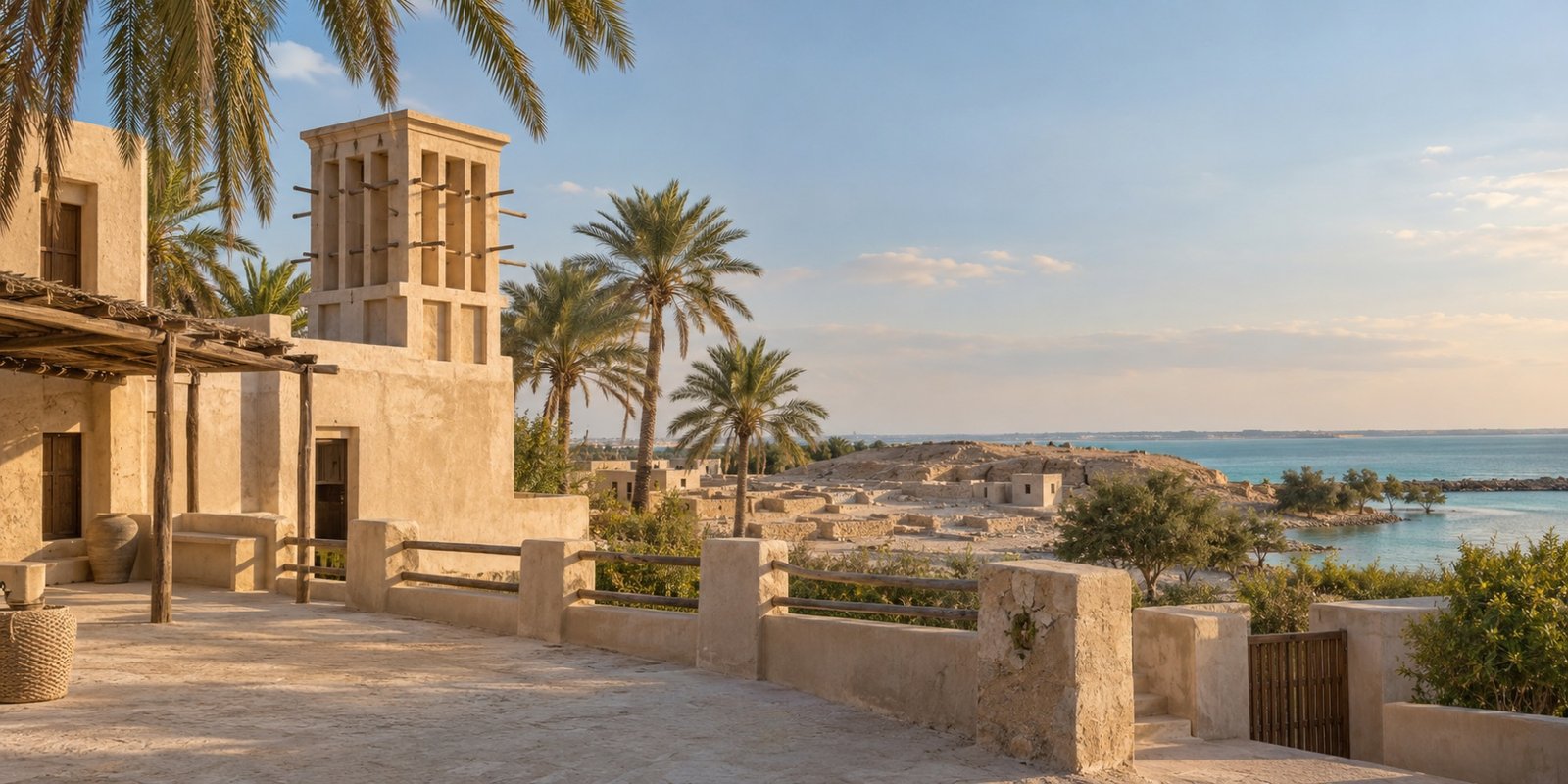
This guide uses official tourism, government and transport sources. Rules and prices can change, so check the linked official pages before booking.
Bahrain rewards travellers who read the islands through archaeology, pearling, urban trade, living religious practice and the sea. It also requires an unusually serious go-or-no-go decision in 2026. As checked on 11 October 2026, the United States lists Bahrain at Level 3, Reconsider Travel, because of terrorism and armed-conflict risk. Current United Kingdom advice describes strikes and retaliatory attacks in Bahrain, possible targeting in central Manama, potential flight cancellations and airspace or causeway disruption. This article is not advice to travel and no itinerary can make those risks safe. Anyone still considering a visit should read their own government advisory, confirm that insurance remains valid, maintain a departure plan and follow Bahraini authorities. The experiences below are conditional planning options, not a recommendation to proceed.
Bahrain at a glance
- Safety first: current US advice is Level 3, Reconsider Travel. UK advice describes an unpredictable regional situation, possible attacks and transport disruption.
- World Heritage: UNESCO lists three cultural properties: Qal’at al-Bahrain, Pearling Testimony of an Island Economy, and the Dilmun Burial Mounds.
- Best structure: build compact daylight clusters in Manama, Muharraq and one archaeological corridor instead of criss-crossing the islands.
- Sea constraint: Local maritime restrictions and operating windows can change; only use licensed operators and recheck the current official rule.
- Photography: never photograph or publish security or military sites, operations or incidents, and ask before photographing people.
- Emergency: 999 connects police, ambulance and fire in Bahrain; keep consular and insurer details offline.
Entry, visa and arrival planning
Bahraini authorities set and enforce entry rules. Use the official NPRA eVisa platform to check eligibility for your nationality and travel purpose; a visa or payment does not guarantee entry. Avoid third-party visa agents that imply government affiliation.
Passport-validity and visa rules vary by nationality. UK guidance currently says British passports need at least six months after arrival and British visitors require a visa, but travellers from other countries must use NPRA, the eVisa checker and their nearest Bahraini embassy for their own rule.
Carry evidence of onward travel, accommodation and sufficient funds when required. A visit visa does not permit employment, and overstaying can trigger penalties or legal problems.
Regional disruption can close airspace, cancel flights or affect the King Fahd Causeway with little warning. Keep documents current, monitor the airport and carrier, and maintain a plan that does not depend on consular evacuation.
When to go
November through March is generally the most comfortable period for exposed archaeology and walking, but major events, wind and regional disruption can outweigh weather advantages. Reserve indoor alternatives and check the official alert again each morning.
April, May, October and early November can mix tolerable mornings with strong heat. Put outdoor sites first, rest indoors at midday and treat heat illness as a planning risk rather than a matter of willpower.
Summer heat and humidity make long outdoor itineraries inappropriate. Use short transfers between air-conditioned museums, reduce the number of stops and cancel exposed desert, beach or heritage walks when conditions are unsafe.
Ramadan and religious commemorations change dining hours, traffic, public conduct and venue patterns. Do not eat, drink, smoke or chew gum publicly in daylight during Ramadan; confirm current local guidance on arrival.
Budget and places to stay
Price the trip in Bahraini dinars using live hotel, airline, attraction and transport quotes. Do not convert an old blog price into a promise; regional disruption can change inventory and cancellation value quickly.
A central Manama or Muharraq base can reduce taxi time. Compare the entire door-to-door route, not only the room rate, and pay more attention than usual to flexible cancellation and flight-disruption coverage.
Many heritage streets and public spaces cost little, while private beaches, islands, motorsport and guided marine experiences can dominate the budget. Spend on safe licensed access, interpretation and reliable transport rather than collecting headline attractions.
Confirm what a hotel rate includes: taxes, breakfast, airport transfer, beach access and cancellation can materially change the real total. Never describe a hotel as cheap or luxury without a dated price and evidence.
Fifty things to do in Bahrain
1. Bahrain National Museum as the historical starting point
Why go: Manama waterfront. The national collection connects Dilmun archaeology, burial traditions, pearling, crafts and twentieth-century social history, giving essential context before visitors encounter those landscapes outside.
How to do it: Check the live Bahrain Authority for Culture and Antiquities notice, choose three galleries, and allow two to three hours rather than rushing the whole museum.
Good for: First-time visitors, archaeology travellers and families
Know before you go: Opening days, temporary galleries and security arrangements can change; the museum is an interpretation centre, not proof that every related field site is open.
2. Bahrain National Theatre for a dated public performance
Why go: Beside Bahrain National Museum, Manama. The waterfront theatre is most meaningful when a concert, dance or stage programme provides an actual cultural encounter instead of a quick photograph of the exterior.
How to do it: Choose a performance from the official calendar, confirm age rules and arrival screening, and plan transport before buying a non-refundable ticket.
Good for: Performing-arts, architecture and evening-culture travellers
Know before you go: A public programme is not guaranteed every day, and regional disruption can cancel or reschedule events at short notice.
3. Beit Al Quran with respectful manuscript study
Why go: Manama. This specialist institution brings together Qur’anic manuscripts, calligraphy and Islamic art, rewarding slow observation and an understanding that sacred texts are not decorative props.
How to do it: Confirm current public hours directly, dress modestly, ask about photography, and focus on one calligraphic or manuscript theme.
Good for: Faith-history, manuscript and calligraphy travellers
Know before you go: Treat the collection and any worship-related space respectfully; access and photography rules may differ between rooms.
4. Bab Al Bahrain as an urban-history threshold
Why go: Central Manama. The gateway marks the transition between the modern government avenue and older market streets, making it a useful place to read how Manama changed around trade and reclamation.
How to do it: Begin in daylight, check the public route, photograph architecture without including security activity, and continue into only a defined section of the souq.
Good for: Architecture, city-history and market travellers
Know before you go: Traffic, official buildings and regional security sensitivity require conservative photography and situational awareness.
5. Manama Souq through one craft-and-food theme
Why go: Central Manama. The market remains a working commercial district where spices, textiles, gold, household goods and food coexist; a focused route is more useful than wandering every lane.
How to do it: Choose one theme, agree prices before services, ask before photographing people or shops, and keep a clear meeting point.
Good for: Markets, food culture and independent travellers
Know before you go: Crowding, traffic, allergens and variable opening patterns require normal precautions and a planned exit.
6. Bahrain Post Museum for port-era connections
Why go: Behind Bab Al Bahrain, Manama. The former post office explains how communications linked Bahrain with regional and global networks, adding a compact counterpoint to larger archaeology museums.
How to do it: Verify current opening on the BACA destination page and pair it with Bab Al Bahrain rather than crossing the city for this small museum alone.
Good for: Postal-history, design and urban-history travellers
Know before you go: Hours published in older announcements may no longer apply; rely on the current venue notice.
7. Khalaf House and the Memory of Manama programme
Why go: Old Manama. The restored merchant house and associated programme can introduce the port city through architecture, trade and family history when exhibitions or talks are open.
How to do it: Check the current Sheikh Ebrahim Centre or BACA programme, attend only public areas, and keep residential doorways clear.
Good for: Architecture, social-history and adaptive-reuse travellers
Know before you go: This is a programme-led stop; do not assume every room is open or that neighbouring homes are visitor attractions.
8. Al Fateh Grand Mosque on an authorised visitor tour
Why go: Juffair, Manama. A guided visit can explain contemporary mosque architecture, worship and Islamic practice when learning is placed ahead of photography.
How to do it: Confirm official visitor access, avoid prayer periods unless specifically invited, dress modestly and follow the guide’s instructions.
Good for: Architecture, faith-literacy and educational travellers
Know before you go: Worship always takes priority; access can pause for prayer, religious dates or security reasons.
9. Al Khamis Mosque Visitor Centre before the archaeological site
Why go: Khamis, Bahrain Island. Interpretation at one of Bahrain’s most important early Islamic archaeological locations helps visitors distinguish surviving fabric, later rebuilding and uncertain historical claims.
How to do it: Check the live BACA opening notice, begin inside the visitor centre, and remain on marked public routes around the ruins.
Good for: Islamic history, archaeology and architecture travellers
Know before you go: Do not enter closed excavations, climb masonry or rely on an old claim about exact construction dates without reading the current interpretation.
10. Block 338 through a current gallery or dining reservation
Why go: Adliya, Manama. The pedestrian quarter combines restaurants, small galleries and street life, but its value comes from a planned cultural or food stop rather than treating nightlife as the only story.
How to do it: Choose a current exhibition or restaurant, use an authorised taxi, and keep behaviour and dress appropriate for public streets.
Good for: Food, contemporary culture and evening travellers
Know before you go: Adliya has previously experienced demonstrations; leave any gathering immediately and follow live official security advice.
11. Qal’at al-Bahrain archaeological tell
Why go: Northern Bahrain Island. UNESCO describes more than sixteen hectares with occupation from about 2300 BCE to the sixteenth century, including the ancient harbour and capital of Dilmun.
How to do it: Read the site-museum orientation first, walk only the signed section that suits the heat, and carry water without touching exposed archaeology.
Good for: UNESCO, archaeology and ancient-trade travellers
Know before you go: The exposed tell has little shade; avoid barriers, do not remove material, and follow any security or conservation closure.
12. Qal’at al-Bahrain Site Museum
Why go: Beside Qal’at al-Bahrain. Objects, stratigraphy and models turn the adjacent mound from an attractive ruin into evidence for changing settlement, trade and political power.
How to do it: Confirm the current museum hours, give the displays at least an hour, and use the site map to choose a realistic outdoor loop.
Good for: Museum, archaeology and family travellers
Know before you go: Museum and outdoor-site schedules can differ, so check both rather than assuming one opening guarantees the other.
13. Official boat trip from the National Museum to Bu Maher
Why go: Manama harbour to Muharraq. The short crossing links museum interpretation with the maritime entrance of Bahrain’s UNESCO pearling property and makes the sea part of the historical narrative.
How to do it: Reserve or confirm the BACA boat on the day, inspect life-jacket arrangements, and return within the current lawful operating window.
Good for: Maritime-history, UNESCO and family travellers
Know before you go: Older official pages show conflicting schedules; weather, security and operations control, and visitors should not substitute an unlicensed boat.
14. Bu Maher Fort Visitor Centre
Why go: Southern Muharraq. The visitor centre explains the fort remains, coastline and departure point used by pearling crews, forming the maritime beginning of the Pearling Path story.
How to do it: Use the official museum boat unless BACA confirms another lawful access, study the three-dimensional path model, and remain within public areas.
Good for: Pearling-history, archaeology and waterfront travellers
Know before you go: Do not rely on old wording that a pedestrian bridge will open; verify current access directly.
15. Pearling Path Visitors Centre
Why go: Historic Muharraq. The centre protects market ruins beneath a contemporary roof and provides the most practical introduction to the UNESCO route, its archive and community setting.
How to do it: Start here, collect the current route and building-access information, then choose only a manageable section of the roughly three-kilometre path.
Good for: UNESCO, architecture and social-history travellers
Know before you go: Opening hours and weekly closure days can change; recheck the official page before travelling.
16. Qaisariya Souq with pearl-trade context
Why go: Muharraq. Historic market stores along the Pearling Path show how merchants, goods and finance supported the island economy beyond the act of diving.
How to do it: Walk in trading hours, distinguish restored heritage premises from private shops, and ask before photographing staff or goods.
Good for: Markets, trade history and architecture travellers
Know before you go: Do not block narrow lanes or treat every old doorway as publicly accessible.
17. Siyadi House only during confirmed public access
Why go: Muharraq. The merchant complex is a key component of the UNESCO pearling property and illustrates the wealth, domestic architecture and social hierarchy connected to natural pearls.
How to do it: Check BACA for timed access or a guided opening, approach quietly and avoid entering the active mosque except under authorised arrangements.
Good for: Architecture, UNESCO and pearling-history travellers
Know before you go: A World Heritage listing does not mean unrestricted entry; worship and private/community functions take priority.
18. Sheikh Isa bin Ali House with current opening confirmation
Why go: Muharraq. Courtyards, ventilation features and room organisation can illuminate Gulf domestic architecture when official conservation access is available.
How to do it: Verify the venue page before crossing Muharraq, use the signed route and keep walls, plaster and wooden elements untouched.
Good for: Architecture, conservation and design travellers
Know before you go: Restoration work or restricted rooms can reduce access; do not promise a full interior visit.
19. Sheikh Ebrahim Centre programme in a restored house
Why go: Muharraq. Talks, exhibitions and music across restored buildings connect heritage conservation with contemporary intellectual life.
How to do it: Choose a specific public event from the official calendar, confirm the correct building and arrive early without assuming entry to offices or residences.
Good for: Literature, architecture and cultural-programme travellers
Know before you go: The centre operates multiple venues; an old event listing is not proof of current access.
20. Mohammed bin Faris music hall for a scheduled performance
Why go: Muharraq. A live programme can introduce sawt and Bahrain’s urban musical heritage more responsibly than reducing the venue to an architectural stop.
How to do it: Use the official programme, understand the performance context, and follow any recording restrictions.
Good for: Music, intangible-heritage and evening travellers
Know before you go: Performances are date-specific and may sell out, move or cancel; quiet attendance matters.
21. Al Khalifeyah Library as a working civic space
Why go: Muharraq. The reconstructed library recalls early public education while functioning within the historic centre, adding a reading-focused pause to the Pearling Path.
How to do it: Confirm visitor areas and hours, preserve silence, avoid photographing readers and combine it with nearby heritage stops.
Good for: Books, education history and architecture travellers
Know before you go: A library is not a photo studio; public access may be limited during programmes or study periods.
22. Al Hedaya Al Khalifia School heritage stop
Why go: Muharraq. The school founded in 1919 represents modern education history in Bahrain and broadens the neighbourhood story beyond merchants and pearling.
How to do it: Check whether interior interpretation is currently open, view the exterior from public space and respect school or community activity.
Good for: Education-history and architecture travellers
Know before you go: Do not enter a closed or operational area merely because it appears in an old tourism list.
23. Dar Al Muharraq for a public music programme
Why go: Muharraq. The venue on the Pearling Path supports traditional music activity and can make intangible heritage audible when a public session is scheduled.
How to do it: Attend a dated public programme, confirm admission and recording rules, and locate the venue before the old-city lanes become busy.
Good for: Music, community culture and heritage travellers
Know before you go: Rehearsal and performance spaces are not automatically open outside advertised events.
24. Old Muharraq architecture walk on public lanes
Why go: Muharraq. A slow route between authorised heritage buildings reveals thresholds, courtyards, shade structures and the continued life of a historic city.
How to do it: Use the Pearling Path map, walk in daylight, keep private doors out of photographs and stop only where pavements allow.
Good for: Urban history, architecture and walkers
Know before you go: Residents’ privacy, heat and narrow traffic lanes set firmer limits than a social-media map.
25. Arad Fort only after a live opening check
Why go: Arad, Muharraq Island. The compact coastal fort can add regional defence and shoreline context when BACA confirms public access and a safe approach.
How to do it: Check the same-day venue notice, use the public perimeter if interiors are closed and avoid photographing any nearby sensitive infrastructure.
Good for: Fortification, architecture and short-stop travellers
Know before you go: Do not rely on years-old opening-hour announcements; regional security may affect access.
26. A’ali East Burial Mound Field through official interpretation
Why go: A’ali. This component of the UNESCO serial property helps explain the scale and landscape planning of Early Dilmun burial traditions.
How to do it: Begin with museum or UNESCO context, use only public or officially identified viewpoints, and keep a respectful distance from every mound.
Good for: UNESCO, archaeology and cultural-landscape travellers
Know before you go: The mounds are protected national monuments, not hills to climb, enter or use as informal viewpoints.
27. A’ali West Burial Mounds from a lawful public route
Why go: A’ali. A second mound field reveals how the serial property extends across today’s urban landscape without repeating the royal-mound experience.
How to do it: Follow current BACA access information, remain on established roads or paths and leave immediately if the route becomes restricted.
Good for: Archaeology, UNESCO and landscape travellers
Know before you go: Never enter excavations, cross fences or publish directions to an unofficial access point.
28. A’ali pottery workshop with maker permission
Why go: A’ali. Local workshops can connect contemporary clay work with long craft traditions when visitors meet makers as professionals rather than free demonstrations.
How to do it: Choose a workshop that explicitly welcomes visitors, agree the experience and price, ask before filming and buy only work you understand.
Good for: Craft, families and responsible-shopping travellers
Know before you go: Kilns, tools and working areas carry real hazards; follow the maker and do not claim every product is ancient in design.
29. Madinat Hamad mound field from authorised interpretation points
Why go: Western Bahrain Island. One component of the Dilmun burial property demonstrates how archaeology and modern neighbourhoods now occupy the same landscape.
How to do it: Use UNESCO and BACA maps only to understand the component, then visit solely where public access and current local conditions are clear.
Good for: Archaeology and cultural-landscape travellers
Know before you go: Some mound locations or nearby areas may be sensitive; do not improvise through villages, fences or security zones.
30. Barbar Temples with chronology kept honest
Why go: Barbar. Successive temple structures from the second and third millennia BCE show long religious and architectural development associated with Dilmun.
How to do it: Check current opening, read the on-site sequence carefully and stay on the visitor route without touching stonework.
Good for: Ancient religion, archaeology and architecture travellers
Know before you go: The site has complex phases; avoid repeating a single simplified construction date as if all remains are contemporary.
31. Ain Umm Al Sujur archaeological site with access confirmation
Why go: Near Diraz. The well and associated remains can introduce ancient water management, settlement and ritual questions when official interpretation is available.
How to do it: Confirm public access with BACA, visit only in daylight and treat any closed gate or barrier as final.
Good for: Archaeology, water history and specialist travellers
Know before you go: The surrounding area has experienced demonstrations; follow current security advice and abandon the stop if conditions are unclear.
32. Tree of Life by the recognised road
Why go: Southern Bahrain. The mature mesquite in an arid landscape has become a national symbol, but the meaningful visit is about ecology, water questions and responsible desert behaviour.
How to do it: Use the established road in daylight, carry water, park lawfully and leave before poor visibility or regional disruption complicates the return.
Good for: Landscape, ecology and road-trip travellers
Know before you go: Stay away from oil, military or security infrastructure, do not carve the tree and never follow an unofficial shortcut.
33. Al Jasra House after checking restoration status
Why go: Al Jasra. The birthplace museum associated with traditional domestic architecture can complement nearby craft interpretation when the house is officially open.
How to do it: Verify the live BACA listing, use only the signed visitor circuit and pair it with the Handicrafts Centre rather than a separate long transfer.
Good for: Architecture, social-history and craft travellers
Know before you go: Old tourism hours are unreliable and conservation can close interiors without notice.
34. Al Jasra Handicrafts Centre for a bookable workshop
Why go: Al Jasra. Makers working in pottery, weaving, basketry, wood or metal can turn shopping into an evidence-based understanding of technique and labour.
How to do it: Check which workshops are active, reserve any hands-on session, ask before photographing and pay the stated price without pressuring makers.
Good for: Craft, families and responsible-shopping travellers
Know before you go: Not every studio demonstrates every day, and mass-produced souvenirs should not be presented as local handmade work.
35. Archaeologies of Green pavilion and agricultural interpretation
Why go: Manama cultural district. The reused Expo pavilion presents Bahrain’s agricultural heritage through garden courts and architecture, adding an environmental layer to an island often described only through desert and oil.
How to do it: Confirm current exhibition access and combine it with the museum district in cool hours.
Good for: Architecture, gardens and environmental-history travellers
Know before you go: Programming and opening days can change; plants and display spaces must be treated as curated exhibits.
36. House of Poetry for a public literary programme
Why go: Muharraq. A restored house dedicated to poet Ebrahim Al Arrayed can connect modern Arabic literature with conservation and cultural memory.
How to do it: Choose a public reading or exhibition, confirm language and access, and avoid expecting staff to provide an unscheduled tour.
Good for: Literature, architecture and cultural-history travellers
Know before you go: Programme-led access is more dependable than an undated listing.
37. A BACA festival, lecture or heritage-season event
Why go: Venue announced in the official cultural calendar. A dated public event can reveal living music, craft, literature or scholarship, preventing the itinerary from treating culture as only historic buildings.
How to do it: Select one event after dates are fixed, read admission and language details, and keep a backup because regional disruption can cancel programmes.
Good for: Festival, learning and repeat visitors
Know before you go: Never build a trip around an unconfirmed annual date; official current listings control.
38. Bilaj Al Jazayer on a managed public beach day
Why go: Southwestern Bahrain. A managed shore can provide swimming and rest with clearer facilities than an improvised coast stop.
How to do it: Check live access, lifeguard and facility information, arrive outside peak heat and keep children within arm’s reach.
Good for: Beach, family and low-effort travellers
Know before you go: Managed does not mean risk-free; heat, currents, regional alerts and water quality can close the day.
39. Marassi beach and waterfront with access rules checked
Why go: Diyar Al Muharraq. A contemporary waterfront can work as a comfortable break when visitors distinguish public access from hotel, residential and paid facilities.
How to do it: Confirm day access and transport, choose a short session and keep religious and public-space dress expectations in mind.
Good for: Families, accessible-leisure and waterfront travellers
Know before you go: Private property, events and weather can change access; do not assume every photographed beach section is public.
40. Al Dar Islands with a licensed operator
Why go: Off Sitra coast. A short island trip can add beach time and marine perspective without requiring a remote expedition when the operator, sea state and return are clear.
How to do it: Book a reputable licensed service, confirm shade, toilets, life jackets and final return, and finish before the waterway curfew.
Good for: Island, beach and family travellers
Know before you go: Official advice notes variable dhow standards and time restrictions on waterways; weather or security can also cancel a trip.
41. Hawar Islands only through a current authorised trip
Why go: Southern Bahrain archipelago. The islands are important for coastal landscapes and wildlife, but conservation and border-sensitive waters require official access and low-impact behaviour.
How to do it: Use a licensed current operator, verify permits, wildlife rules, accommodation and return contingency, and accept cancellation for weather or security.
Good for: Nature, birdwatching and slow-travel visitors
Know before you go: Do not charter an informal boat, land on restricted islands or promise wildlife sightings.
42. Guided coastal kayak in daylight
Why go: A currently permitted sheltered coastal area. Paddling can reveal tidal habitat and shoreline development at human speed when route, tide and rescue arrangements are professional.
How to do it: Choose an operator providing fitted buoyancy aids, weather and tide decisions, communications and a daylight return well before curfew.
Good for: Active, nature and small-group travellers
Know before you go: Cancel for wind, poor visibility, regional warning or unclear permission; never approach ports or sensitive sites.
43. Licensed pearl-diving experience with safety and authenticity checks
Why go: Authorised Bahraini waters. A regulated experience can connect natural pearls with maritime labour and ecology when it avoids staged guarantees and unsafe breath-hold pressure.
How to do it: Verify the operator’s licence, medical and swimming requirements, boat safety, allowed collection rules and what happens to any find.
Good for: Maritime heritage, experienced swimmers and specialist travellers
Know before you go: A pearl is never guaranteed; non-swimmers, medical conditions, sea state and the waterway curfew can make the activity unsuitable.
44. Short authorised dhow or harbour cruise
Why go: Manama or another approved departure point. A daylight cruise can make Bahrain’s island geography legible and complement pearling history without turning the sea into an unregulated thrill ride.
How to do it: Use a reputable licensed operator, check capacity and life jackets, remain inside authorised waters and return within the current lawful operating window.
Good for: Cityscape, maritime and family travellers
Know before you go: Do not board an overloaded vessel or accept a route near restricted facilities.
45. Bahrain Bay public waterfront walk
Why go: Manama. A short modern waterfront route gives contrast to the historic souqs and archaeological sites while keeping the skyline experience low-cost.
How to do it: Walk in a cool daylight or early-evening window, remain on public paths and avoid framing security-sensitive sites or people without consent.
Good for: Walkers, skyline and contemporary-city travellers
Know before you go: Construction, private events, heat and regional security can alter public access.
46. Bahrain International Circuit only for an official public event or tour
Why go: Sakhir. A scheduled race, tour or public programme can explain the kingdom’s motorsport infrastructure when visitors use the event’s transport and security plan.
How to do it: Buy only through the official circuit channel, check prohibited items and transport, and avoid wandering beyond ticketed public areas.
Good for: Motorsport, engineering and event travellers
Know before you go: Event crowds, road closures and regional disruption can be substantial; never photograph adjacent sensitive infrastructure.
47. Bahrain International Karting Circuit with a safety briefing
Why go: Sakhir. A bookable driving session can add participatory motorsport without assuming access to the main race circuit.
How to do it: Check age, height, clothing and health rules, reserve the correct session and follow every marshal instruction.
Good for: Families with older children, groups and motorsport travellers
Know before you go: Motorsport carries injury risk; skip it when tired, unwell or unable to meet equipment requirements.
48. Al Areen wildlife visit judged by current welfare standards
Why go: Sakhir area. A managed wildlife park can be considered only after checking its present species information, enclosure practice, heat plan and visitor access rather than relying on childhood reputation.
How to do it: Review the current operator material, visit in a cooler period and leave any animal interaction that lacks clear welfare and safety controls.
Good for: Families and wildlife-curious travellers
Know before you go: Do not support handling, feeding or photo encounters that compromise welfare; opening and renovation status must be checked.
49. A Bahraini food route built around three dishes
Why go: Manama or Muharraq. Machboos, muhammar, grilled fish, balaleet and Bahraini halwa can reveal rice, spice, sea and trade influences when tasted in a paced route rather than one oversized meal.
How to do it: Choose established venues, ask about ingredients and allergens, share portions and keep the route within one district.
Good for: Food, families and cultural-history travellers
Know before you go: Menus, prices and recipes vary; never claim one restaurant is the definitive or cheapest example.
50. Natural-pearl and craft shopping with documentary proof
Why go: Licensed retailer in Manama or Muharraq. Bahrain’s pearling story makes authenticity especially important, so the purchase should be treated as a documented transaction rather than a souvenir gamble.
How to do it: Use a reputable licensed seller, request an itemised receipt and any applicable laboratory or origin documentation, and compare return terms before paying.
Good for: Responsible-shopping, jewellery and heritage travellers
Know before you go: Do not infer that every “Bahraini” pearl is natural or locally sourced; avoid carrying wildlife or shell items across borders without checking rules.
Food and drink worth planning around
Build a food plan around a few dishes rather than a list of “must-eat” businesses. Machboos layers spiced rice with meat or fish; muhammar is sweeter rice often paired with seafood; balaleet combines sweet vermicelli with egg; and Bahraini halwa is dense, fragrant and best shared.
Ask about nuts, sesame, dairy, shellfish and gluten rather than assuming a familiar name means a familiar recipe. Buffets and shared platters increase cross-contact risk for severe allergies.
Coffee and tea hospitality has social meaning. Accept or decline politely, watch the pace of the host, and avoid turning people into content without permission.
Alcohol is available in licensed venues, but public drunkenness and drink-driving are serious offences. Never combine alcohol with driving, swimming, boating or a religious-site visit.
What to buy
For natural pearls, use a reputable licensed retailer, request an itemised receipt and any applicable laboratory or origin documentation, and understand the return policy before payment. A seller’s story is not authentication.
At craft centres, ask who made the object, which materials were used and whether the workshop is local. Buy fewer documented pieces rather than mass-produced goods marketed vaguely as traditional.
Gold, jewellery, textiles, spices and perfume require the same discipline: compare weight, purity, ingredients and receipts; do not rely on pressure, “today only” claims or an undeclared cash discount.
Check the destination country’s customs rules before carrying shells, wildlife products, food, plants or high-value jewellery. Legal sale in Bahrain does not guarantee legal import elsewhere.
Getting around
Bahrain Public Transport Company buses cover more than twenty routes according to the government portal, but not every archaeological, desert or coastal stop is convenient by bus. Use the live route planner and keep a taxi backup.
Use authorised metered taxis or a reputable booked service. Confirm the route before departure, wear a seatbelt and do not accept an unlicensed ride.
Driving can save time but speeding, tailgating, lane changes and phone use are reported risks. Check licence and insurance validity, never drink and drive, and keep to main routes in daylight.
For boats, kayaks and island transfers, use a licensed operator, inspect life jackets and confirm the current lawful operating window. Avoid ports, restricted waters and security-sensitive infrastructure.
Easy access and family travel
Ask each venue for the exact step-free route, parking-to-entrance distance, lift status, seating, toilet access and sensory conditions. A general accessibility icon cannot describe an archaeological tell, old souq or boat transfer.
Muharraq and Manama heritage routes include uneven paving, traffic edges, heat and narrow passages. Build a shorter shared core with an optional extension rather than forcing the whole group through the hardest version.
Families should prioritise the National Museum, interpretation centres and short planned outdoor loops. A burial mound, fort wall, harbour edge or beach is not a playground even when no barrier is visible.
Heat, glare and long standing times can make a technically step-free day unusable. Carry water, medication and shade, then schedule a genuine indoor recovery period.
Stay safe
As checked on 11 October 2026, the United States lists Bahrain at Level 3, Reconsider Travel, due to terrorism and armed conflict. Current US information cites an ongoing threat of drone and missile attacks and significant commercial-flight disruption. Read the full live advisory before any booking.
UK advice says regional conditions remain unpredictable and reports strikes and retaliatory attacks in Bahrain against US military and civilian infrastructure. Stay away from military or security facilities, monitor local and international news, and be ready for flight, airspace or causeway disruption.
Leave any demonstration, public gathering, roadblock or unusual security activity immediately. Use main roads in daylight, carry photo ID as required by law and never photograph, film or redistribute material about security sites, operations or incidents.
Terrorist attacks can be indiscriminate. Maintain situational awareness at transport hubs, markets, hotels, shopping areas, religious sites, beaches and events, and know the nearest safe indoor option without approaching suspicious objects.
Bahrain’s emergency number is 999. Store insurer, airline, consular and accommodation contacts offline; keep medications, water, power and documents ready for unexpected sheltering or departure changes.
Respect conservative dress and religious practice, especially during Ramadan. Social-media posts critical of the government or culturally insensitive content can create legal risk; do not assume online speech rules match those at home.
Mistakes to avoid
- Treating an old opening-hours article as current evidence instead of checking the official venue on the actual date.
- Presenting the current regional-security situation as normal or implying that a compact country is automatically low risk.
- Entering, climbing or driving among protected burial mounds and archaeological remains.
- Booking an informal boat or allowing a sea activity to run beyond the current lawful operating window.
- Photographing people, homes, religious practice, checkpoints or sensitive infrastructure without permission.
- Trying to combine Manama, Muharraq, western mounds, Sakhir and the coast in one day.
- Assuming every heritage building on the Pearling Path is permanently open inside.
- Buying a “natural Bahraini pearl” without documentary proof and a proper receipt.
Sample seven-day route
Only after reviewing current advisories and deciding independently to proceed, use two compact Manama days, two Muharraq/Pearling Path days, one Qal’at al-Bahrain and museum day, one archaeology-and-craft day, and one flexible indoor or departure-buffer day. Remove coastal or desert activity first when alerts, heat or transport disruption rises.
Sample ten-day route
Add one carefully confirmed Sakhir or Tree of Life day, one managed beach or licensed marine day, and one current cultural programme. Preserve a full flexible day for airspace, event, security or weather change; do not treat a buffer as spare time to overfill.
Sample fourteen-day route
A longer stay can distribute the western mound fields, craft centres and contemporary programmes without rushing. It should not trigger a checklist mentality: keep at least two unscheduled days, monitor advisories daily and abandon any route near a gathering, checkpoint or sensitive facility.
Bahrain travel FAQ
Is Bahrain safe to visit now?
No guide can guarantee that. As checked on 11 October 2026, the US advisory is Level 3, Reconsider Travel, due to terrorism and armed-conflict risk, and UK advice warns of regional attacks and transport disruption. Read your own government advisory, confirm insurance and make an independent decision.
Do I need a visa?
It depends on nationality and purpose. Use the official Bahrain eVisa eligibility checker or NPRA and your nearest Bahraini embassy. A visa does not guarantee admission.
How many UNESCO World Heritage properties does Bahrain have?
UNESCO currently lists three cultural properties: Qal’at al-Bahrain, Pearling Testimony of an Island Economy, and the Dilmun Burial Mounds.
Can I walk the whole Pearling Path?
The route is about three kilometres, but heat, building hours, traffic and individual access can make a shorter interpreted section better. Start at the official visitor centre and use the current map.
Can I take a boat in the evening?
Use only licensed operators, verify the current local maritime rule and finish with a generous daylight margin.
Can I photograph freely?
No. Ask before photographing people or worship, and never photograph, film or publish security or military sites, operations or incidents.
Official planning sources
- Bahrain Authority for Culture and Antiquities destinations
- Bahrain National Museum official destination page
- Qal’at al-Bahrain official destination page
- Pearling Path Visitors Centre
- Pearling Path project
- Bu Maher Fort visitor centre project
- Bu Maher boat trip destination page
- Barbar Temples official destination page
- Ain Umm Al Sujur official destination page
- A’ali East burial mounds destination page
- UNESCO Bahrain state-party page
- UNESCO Qal’at al-Bahrain
- UNESCO Pearling, Testimony of an Island Economy
- UNESCO Dilmun Burial Mounds
- Bahrain official eVisa service
- Bahrain Nationality, Passports and Residence Affairs
- Bahrain government public transport and taxis
- Bahrain International Airport
- United States Bahrain travel advisory
- United Kingdom Bahrain travel advice
- United Kingdom Bahrain safety and security
- United Kingdom Bahrain entry requirements
- United Kingdom Bahrain getting help
Disclosure: This independent editorial guide is informational, not a booking guarantee. No price, ranking, safety outcome, entry permission or availability is guaranteed. Recheck all time-sensitive details with the linked official source before purchase.