This guide uses official tourism, government and transport sources. Rules and prices can change, so check the linked official pages before booking.
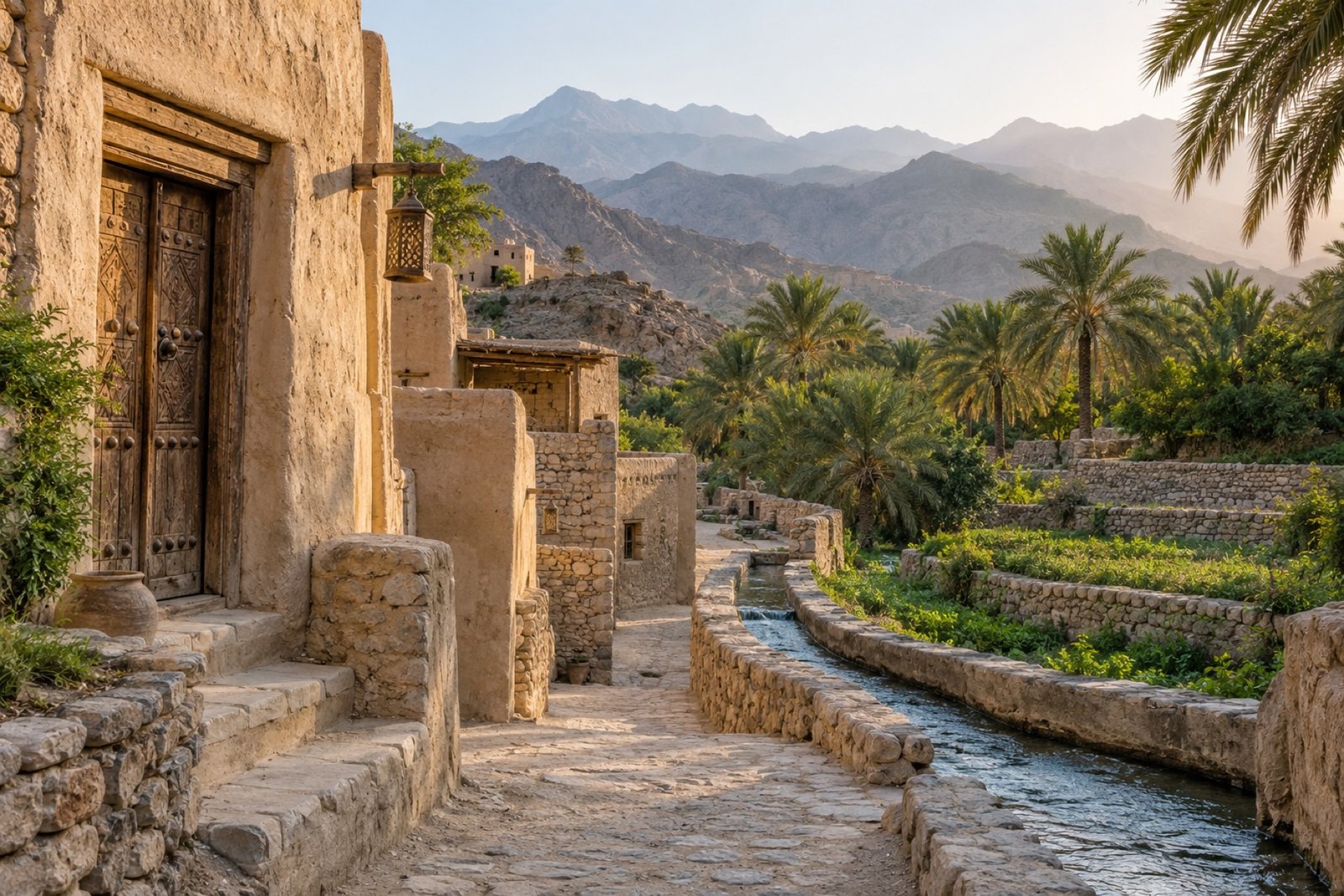
Oman’s travel appeal is unusually broad: archaeological landscapes, working aflaj, forts, maritime towns, mountains, desert, monsoon-shaped Dhofar and the separated peninsula of Musandam. In 2026, the travel decision must come before the route. As checked on 11 October 2026, the United States lists Oman at Level 3, Reconsider Travel, with terrorism and other risks, while current United Kingdom advice describes an unpredictable regional situation, recent strikes in Oman against US-linked infrastructure, possible flight or airspace disruption and the need to stay away from security or military facilities. This guide does not advise anyone to travel and cannot make the current situation safe. Anyone still considering a visit should read their own government advisory in full, verify insurance, keep an independent departure plan and follow Omani authorities.
Oman at a glance
- Safety first: current US advice is Level 3, Reconsider Travel; UK advice warns that further regional attacks and flight disruption remain possible.
- World Heritage: UNESCO lists five properties: Bahla Fort; Bat, Al-Khutm and Al-Ayn; the Aflaj Irrigation Systems; the Land of Frankincense; and the Ancient City of Qalhat.
- Wadis: never enter during rain or for at least one day after heavy rain; flash floods can be fatal even under clear local skies.
- Outdoor travel: use marked trails, professional guides where appropriate, and equipped 4WD/convoy planning for desert or mountain routes.
- Photography: ask people first and avoid government, military, oil, airport, port-security and other sensitive facilities.
- Emergency: 9999 is Oman’s emergency number; store insurer, airline and consular contacts offline.
Entry, visa and arrival planning
Omani authorities set and enforce entry rules. Use the Royal Oman Police eVisa eligibility wizard for the traveller’s exact nationality, GCC-residency status and purpose; do not infer one passport’s exemption from another.
The official eVisa FAQ says a normal passport should be valid for at least six months before entry and recommends applying at least four days in advance when an eVisa is required, but processing time varies and payment does not guarantee issue.
Check medication, drone, vape, food and customs rules before packing. Current UK advice says importing or using e-cigarettes or vape products is illegal and drug penalties are severe.
Regional events can alter flights and airspace at short notice. Keep documents current, monitor airline and Omani-authority information and maintain a departure plan that does not depend on government evacuation.
When to go
October through March is often the most practical period for Muscat, the interior and outdoor heritage routes, but heavy rain can make wadis and road crossings dangerous. Keep an indoor alternative every day.
April and May bring stronger heat. Put the shortest outdoor experience at dawn, protect recovery time and do not use a fixed itinerary to override heat or flood warnings.
June through September is extremely hot across much of Oman, while Dhofar’s khareef brings cloud, rain, traffic and slippery terrain. “Green season” does not mean risk-free driving or swimming.
Tropical cyclones can affect Oman, and UK advice specifically notes July and August. Follow the Civil Aviation Authority, Civil Defence and Royal Oman Police rather than social-media storm tourism.
Ramadan changes dining, working hours and public conduct. Do not eat, drink, smoke or chew gum publicly in daylight, including inside a car, and confirm current local guidance.
Budget and places to stay
Price the trip in Omani rials using live flights, hotels, tickets, licensed guides and vehicle quotes. Long transfers, one-way rental rules, 4WD requirements and regional disruption can cost more than attraction admission.
Muscat, Nizwa or Salalah can each support a regional base. Treat Musandam and Masirah as separate logistics decisions rather than quick add-ons.
Major museums and forts publish live fees more reliably than blogs; Oman Across Ages Museum and Royal Opera House pages are useful examples, but recheck on the booking date.
Choose flexible cancellation and proper activity insurance. No hotel, tour or camp should be called cheap, luxury or best without dated criteria and a verifiable current quote.
Fifty things to do in Oman
1. The National Museum through two connected galleries
Why go: Old Muscat. Oman’s flagship museum gives a reliable chronological foundation, from early settlement and maritime exchange to intangible heritage, before the trip moves into forts, aflaj and archaeological landscapes.
How to do it: Use the museum’s live visitor page, choose two galleries and leave time for object labels, Arabic Braille and accessible interactives rather than trying to absorb every hall.
Good for: First-time visitors, families, archaeology and maritime-history travellers
Know before you go: Hours, exhibitions and gallery access can change; the ceremonial palace opposite is not part of the museum visit.
2. Sultan Qaboos Grand Mosque on the official visitor route
Why go: Bawshar, Muscat. A respectful visit can explain contemporary Omani mosque architecture, craft and worship when learning comes before photography.
How to do it: Confirm current non-Muslim visiting hours, dress requirements and holiday closures through an official channel; stay within the signed visitor areas and avoid prayer periods.
Good for: Architecture, faith literacy and educational travellers
Know before you go: Access can close for worship or security without notice; do not photograph worshippers or treat the mosque as a costume backdrop.
3. Royal Opera House Muscat guided house tour
Why go: Shati Al Qurum, Muscat. The official tour reveals the auditorium’s changing theatre-and-concert configuration, decorative programmes and musical-instrument display more accurately than an exterior photo stop.
How to do it: Book the current house tour, arrive through the instructed gate and follow the guide’s photography boundaries; backstage access is not included.
Good for: Architecture, music, engineering and accessible-culture travellers
Know before you go: Tour days, prices and permitted rooms can change around rehearsals and performances.
4. Royal Opera House performance chosen from the live calendar
Why go: Muscat. A ticketed opera, concert or Omani programme turns the venue into a performing-arts experience rather than an architectural checklist.
How to do it: Select a current production from the official calendar, read age and dress guidance, and budget time for security screening and late-seating rules.
Good for: Performing-arts and evening travellers
Know before you go: Never promise a genre, artist or date from an old season; buy only from the authorised box office.
5. Muttrah Fort with harbour history
Why go: Muttrah, Muscat. The restored fort’s position above the harbour can frame Portuguese-period fortification, Omani control and the geography of a trading port.
How to do it: Confirm official opening and heat conditions, use the designated stairs and platforms, and read the interpretation before photographing the view.
Good for: Fortification, port history and cityscape travellers
Know before you go: Steep steps and exposed viewpoints require realistic mobility and heat planning; restricted port infrastructure should not be photographed.
6. Muttrah Souq through one craft or trade theme
Why go: Muttrah, Muscat. The working market is most meaningful when visitors study one thread such as frankincense, silver, textiles or household trade instead of treating every stall as a souvenir display.
How to do it: Ask before photographing people, compare material and origin, agree a price before any service, and keep a clear meeting point in the covered lanes.
Good for: Markets, crafts, food culture and social-history travellers
Know before you go: Crowds, counterfeit provenance and strong fragrances can be difficult; “antique” is not proof of age or legal export.
7. Muttrah Corniche as a short maritime walk
Why go: Muttrah, Muscat. A defined waterfront section connects harbour geography, merchant architecture, the fish trade and the mountain edge in one readable urban landscape.
How to do it: Walk in cooler daylight, use formal crossings, keep commercial and security access clear, and pair it with only one fort or souq visit.
Good for: Walkers, urban history and low-cost sightseeing
Know before you go: Do not photograph military, government, port-security or other sensitive operations, and do not attempt the full road in extreme heat.
8. Bait Al Zubair with private-museum context
Why go: Old Muscat. The collection can introduce clothing, jewellery, weapons, household objects and architectural settings while complementing rather than replacing the National Museum.
How to do it: Check the museum’s current opening and exhibition programme, choose one material theme and distinguish reconstructed settings from original objects.
Good for: Decorative arts, families and social-history travellers
Know before you go: It is an independent museum; displays and photography rules can change and object labels deserve careful reading.
9. Al Alam Palace exterior from the public viewing area
Why go: Old Muscat. The ceremonial palace frontage helps explain the civic layout of Old Muscat when observed from the lawful public approach.
How to do it: Remain behind barriers, make the stop brief and combine it with nearby museums rather than circling government buildings.
Good for: Architecture and first-time city visitors
Know before you go: The palace is not a public attraction inside; obey security instructions and avoid intrusive photography.
10. Qurum coast and mangrove edge without wildlife disturbance
Why go: Qurum, Muscat. A short public-coast visit can introduce the meeting of urban recreation, intertidal habitat and mangroves without presenting a protected ecosystem as a playground.
How to do it: Use public paths, check tide and heat, keep distance from birds and vegetation, and take all litter away.
Good for: Nature, families, accessible walks and bird interest
Know before you go: Do not enter closed habitat, use playback, fly a drone or publish exact sensitive nesting locations.
11. Daymaniyat Islands with a licensed permit-holding operator
Why go: Off Al Batinah coast. The marine reserve supports coral, fish, seabirds and seasonal wildlife, making operator choice and low-impact behaviour central to the experience.
How to do it: Verify the operator, permit, sea conditions, life jackets, group size and return plan; follow reserve rules on landing, anchoring and wildlife distance.
Good for: Snorkellers, divers and marine-conservation travellers
Know before you go: Boat standards vary and regional maritime conditions can change; never touch coral, feed wildlife or assume every island is open.
12. Bandar Al Khayran coastal paddle or snorkel with a guide
Why go: East of Muscat. Sheltered coves and rocky shoreline can offer a closer look at coastal geology and marine habitat when the route is professionally assessed.
How to do it: Choose a licensed operator, inspect flotation equipment, confirm weather and boat traffic, and use a route matched to the group’s swimming ability.
Good for: Paddlers, snorkellers and active families
Know before you go: Cancel for unsafe wind, heat, visibility or sea state; do not enter restricted coves or travel alone.
13. Nizwa Fort with defensive and civic interpretation
Why go: Nizwa. The large circular tower and surrounding rooms can explain Ya’rubi-period defence, administration and oasis-town life through the building’s actual layout.
How to do it: Check the official opening, begin with interpretation before climbing and use handrails and shaded pauses on exposed upper levels.
Good for: Architecture, history and families
Know before you go: Events and restoration can change circulation; steep stairs, drops and heat are genuine constraints.
14. Nizwa Souq through food and craft provenance
Why go: Nizwa. The market can connect dates, spices, livestock traditions, pottery and silverwork to the oasis economy when claims are verified rather than romanticised.
How to do it: Visit during active hours, ask makers and sellers about material and origin, and request an itemised receipt for high-value purchases.
Good for: Markets, food, crafts and photography travellers
Know before you go: Friday and event patterns vary; do not photograph people or livestock activity without permission.
15. Oman Across Ages Museum History Gallery
Why go: Manah. The chronological gallery links geology, early settlement, Magan, maritime exchange, aflaj and dynastic history in a coherent national framework.
How to do it: Reserve a dated ticket through the museum, focus on two or three pavilions and use the official access guide for mobility planning.
Good for: History, archaeology, families and research travellers
Know before you go: A ticket has a date and validity; published hours and fees must be rechecked before travel.
16. Oman Across Ages Museum Renaissance Gallery and Knowledge Centre
Why go: Manah. The modern-history gallery and research facilities can show how Oman presents recent social and institutional change rather than stopping the story at forts.
How to do it: Check which gallery, library or learning spaces are open to ordinary visitors and reserve any programme separately.
Good for: Modern history, students, design and repeat visitors
Know before you go: Events and research facilities may have different access rules from the permanent galleries.
17. Birkat Al Mouz village walk with resident privacy
Why go: Ad Dakhiliyah. The settlement, palm gardens, mud-brick fabric and water channels can be read as a living cultural landscape rather than an abandoned film set.
How to do it: Use signed public routes, keep doorways and farm access clear, dress modestly and ask before photographing residents or homes.
Good for: Village architecture, oasis agriculture and walkers
Know before you go: Fragile structures can collapse; never enter ruins, climb walls or treat private lanes as open attractions.
18. Falaj Al Khatmayn as one component of the UNESCO aflaj property
Why go: Birkat Al Mouz. A carefully interpreted visit can show how gravity-fed water allocation supports agriculture and community organisation within the five-component World Heritage property.
How to do it: Follow the public route, read the UNESCO context, keep the channel clean and avoid disrupting irrigation or private farm work.
Good for: Water heritage, engineering and cultural-landscape travellers
Know before you go: Do not claim every nearby channel is UNESCO-listed, and never step into or contaminate working water.
19. Bahla Fort within its UNESCO oasis context
Why go: Bahla. The World Heritage fort, mud-brick fabric, oasis and defensive wall form a larger settlement system, not a standalone photo monument.
How to do it: Use the current official opening, begin with the fort interpretation and observe the surrounding oasis only from lawful public routes.
Good for: World Heritage, architecture and history travellers
Know before you go: Do not enter closed mud-brick structures or confuse the inscribed property with every building in modern Bahla.
20. Bahla pottery with a documented maker or workshop
Why go: Bahla. A maker-led visit can connect clay preparation, firing, form and local knowledge to the town’s living craft economy.
How to do it: Arrange a genuine public demonstration or shop visit, ask before filming and verify whether a piece was made locally.
Good for: Craft, design, families and responsible-shopping travellers
Know before you go: Do not touch work, interrupt firing or label factory-made souvenirs as traditional handmade pottery.
21. Jabreen Castle room-by-room
Why go: Near Bahla. The seventeenth-century castle rewards slow reading of painted ceilings, domestic rooms, scholarship and administration rather than a quick defensive-fort comparison.
How to do it: Confirm opening, use the official route, protect decorated surfaces and allow enough time to understand room function.
Good for: Interiors, architecture, education and history travellers
Know before you go: Stairs, low thresholds and conservation closures can limit access.
22. Misfat Al Abriyeen on the designated community route
Why go: Al Hamra. The mountain village can demonstrate terraced agriculture, aflaj and dense vernacular form when tourism does not obstruct residents.
How to do it: Use designated parking and walking paths, wear modest clothing, carry water and spend with a locally accountable guide or business.
Good for: Village landscapes, walkers and cultural travellers
Know before you go: Private homes, farms and water channels are not props; narrow paths and heat require restraint.
23. Jebel Akhdar viewpoints with checkpoint and route rules checked
Why go: Al Hajar Mountains. High-elevation terraces, geology and village agriculture create a different Omani landscape, but road and access requirements are part of the experience.
How to do it: Confirm current 4WD checkpoint rules, weather and accommodation access; use marked public viewpoints and a licensed guide for longer walks.
Good for: Mountain scenery, horticulture and road-trip travellers
Know before you go: Fog, cold, steep drops and flash flooding can close plans; never improvise a cliff-edge or village route.
24. Jebel Shams marked trail with a realistic turnaround
Why go: Al Hajar Mountains. A carefully selected marked walk can reveal canyon geology and altitude without turning a demanding mountain environment into a casual checklist.
How to do it: Check forecast, trail condition, daylight and difficulty; start early with water, footwear, navigation and a turnaround time, preferably with a qualified guide.
Good for: Experienced walkers and geology travellers
Know before you go: Extreme heat, exposure, loose rock and unguarded drops can be fatal; do not hike alone or beyond ability.
25. Al Hoota Cave on the official timed visit
Why go: Near Al Hamra. A managed cave tour can introduce karst geology and subterranean habitat while keeping visitors on the conservation route.
How to do it: Use the current official booking, follow footwear and photography rules, and check whether transport and cave sections are operating.
Good for: Geology, families and weather-proof learning
Know before you go: Cave access can close for maintenance or conditions; never seek an unofficial entrance.
26. Bat, Al-Khutm and Al-Ayn World Heritage archaeology
Why go: Al Dhahirah. The tombs, towers and settlement evidence form one UNESCO property that documents Bronze Age communities and exchange across the Oman Peninsula.
How to do it: Use a qualified guide or current heritage information, stay on authorised approaches and leave every stone exactly in place.
Good for: Archaeology, World Heritage and landscape-history travellers
Know before you go: The components are dispersed and fragile; no climbing, off-road shortcut or removal of material is acceptable.
27. Wadi Damm only under a safe-weather, guided plan
Why go: Al Dhahirah. Rock pools, geology and a remote wadi landscape can be educational when flood risk and access are treated as primary decisions.
How to do it: Check official weather and local access, use an experienced guide, park outside flood channels and cancel during rain or for at least a day after heavy rain.
Good for: Active travellers and geology interest
Know before you go: Flash floods, heat, rough terrain and weak mobile coverage make spontaneous swimming or solo driving unsafe.
28. Nakhl Fort and oasis viewpoint
Why go: Nakhl. The fort’s rocky setting can connect defensive architecture with the agricultural plain when visited through the formal museum route.
How to do it: Confirm official access, use shaded pauses and keep any spring or village extension within clearly public areas.
Good for: Fortification, landscapes and families
Know before you go: Do not enter closed towers, private farms or hot-water channels; restoration may change the route.
29. Al Hazm Castle with engineering details
Why go: Al Rustaq area. The fortified residence is useful for reading heavy doors, corridors, roof structure and water systems as deliberate architectural responses.
How to do it: Check the current museum route, use the provided interpretation and avoid touching doors, weapons or plaster.
Good for: Architecture, engineering and history travellers
Know before you go: Low light, stairs and maintenance closures may alter access; an old opening time is not reliable.
30. Rustaq Fort with town context
Why go: Rustaq. A structured visit can compare successive building phases and regional power while placing the fort within a living town.
How to do it: Verify reopening and ticket arrangements through an official source, use authorised rooms and combine it with no more than one nearby stop.
Good for: Regional history, forts and road trips
Know before you go: Do not promise access during conservation and do not photograph security activity.
31. Sohar Fort and maritime museum story
Why go: Sohar. The fort can frame Sohar’s maritime connections and urban history without relying on legends as settled fact.
How to do it: Use the current official opening, distinguish archaeological evidence from later narratives and remain within public museum space.
Good for: Maritime history, forts and families
Know before you go: Port and industrial areas nearby can be sensitive; keep the route direct and photography conservative.
32. Sur maritime museum and Fath Al Khair centre
Why go: Sur. Boat models, seafaring tools and the preserved dhow tradition can explain navigation, trade and labour before a yard visit.
How to do it: Check the current public venue and opening, focus on vessel construction and crew life, and ask before photographing staff.
Good for: Maritime heritage, craft and families
Know before you go: Do not assume every vessel is open for boarding or every display is original to one period.
33. Sur dhow-building yard with explicit permission
Why go: Sur. A permitted visit can show timber selection, hull geometry and skilled labour as contemporary practice rather than staged folklore.
How to do it: Arrange access through a recognised guide or operator, stay in the visitor area, wear closed shoes and ask before photographing workers or plans.
Good for: Craft, engineering and maritime travellers
Know before you go: This is an active workplace with tools and heavy materials; never wander in or interrupt work.
34. Ancient City of Qalhat World Heritage route
Why go: Near Sur. The archaeological city and Bibi Maryam Mausoleum document a major Indian Ocean trading port, but the World Heritage value lies in the wider urban landscape.
How to do it: Use only the current authorised entrance or viewing arrangement, read the UNESCO statement and protect all exposed masonry.
Good for: World Heritage, archaeology and maritime-history travellers
Know before you go: Access can be restricted for conservation; the mausoleum alone is not the whole inscribed property.
35. Wadi Shab with weather, swimming and return plan
Why go: South Al Sharqiyah. A route through canyon, farm and pools can be rewarding only when transport, water level and personal ability are assessed together.
How to do it: Check official weather and local access, use a licensed guide if uncertain, carry water and secure a safe return before daylight ends.
Good for: Fit walkers and confident swimmers
Know before you go: Do not enter during rain or for at least a day after heavy rain; slippery rock, heat, deep water and flash floods can kill.
36. Wadi Bani Khalid on a conservative public route
Why go: North Al Sharqiyah. Permanent pools and oasis vegetation can be observed without turning the wadi into an unrestricted swimming park.
How to do it: Use designated access, check water and weather, dress modestly around villages and keep soap, food and litter out of pools.
Good for: Families, landscapes and moderate walkers
Know before you go: Depth, current, slippery edges and flash flooding vary; non-swimmers need a dry alternative.
37. Ras Al Jinz turtle reserve on an authorised guided watch
Why go: South Al Sharqiyah coast. A managed night or dawn programme can teach nesting biology and conservation when wildlife welfare controls every decision.
How to do it: Reserve through the official operator, follow the guide’s light, distance, silence and photography rules, and accept that sightings are never guaranteed.
Good for: Wildlife, families and conservation travellers
Know before you go: Never use flash, touch a turtle, approach hatchlings or visit an unregulated nesting beach.
38. A’Sharqiyah Sands with a licensed 4WD camp transfer
Why go: North Al Sharqiyah. A professionally managed stay can introduce dune ecology, pastoral livelihoods and night skies without normalising reckless dune driving.
How to do it: Book a licensed operator, confirm insurance and transfer point, use an equipped 4WD and travel in convoy with water, communications and recovery gear.
Good for: Desert landscapes, astronomy and families
Know before you go: Do not self-drive dunes without training, camp in a wadi, disturb livestock or market private-community encounters as guaranteed.
39. Masirah Island through seasonal wildlife guidance
Why go: Al Wusta coast. The island’s coast, geology and bird or turtle habitat reward a slow trip when ferry logistics and sensitive seasons shape the plan.
How to do it: Confirm ferry, vehicle, accommodation and weather; use local conservation guidance and keep exact nesting locations private.
Good for: Island landscapes, birders and road-trip travellers
Know before you go: Long exposed roads, rough sea, wildlife disturbance and limited services make this unsuitable as an improvised day trip.
40. Museum of the Frankincense Land at Al Baleed
Why go: Salalah. The museum and archaeological park provide the clearest introduction to Dhofar’s maritime history and the UNESCO Land of Frankincense property.
How to do it: Check the live museum and park hours, study the Maritime and History halls, then use the outdoor route in cooler conditions.
Good for: World Heritage, archaeology and families
Know before you go: The museum is one component of a larger property; khareef rain, heat or conservation work can change outdoor access.
41. Wadi Dawkah frankincense landscape
Why go: Dhofar. This component of the Land of Frankincense property can explain Boswellia sacra ecology and resin production when trees are treated as living heritage.
How to do it: Use the authorised visitor route, read the official interpretation and leave bark, resin and soil untouched.
Good for: Botany, World Heritage and trade-history travellers
Know before you go: Do not cut, collect or buy material from an unverified source; shade and services can be limited.
42. Sumhuram and Khor Rori within the UNESCO property
Why go: Dhofar coast. The fortified port and lagoon setting connect frankincense trade, archaeology and coastal environment more clearly than a single ruin photograph.
How to do it: Visit through the managed archaeological park, read the excavation evidence and remain on signed paths and platforms.
Good for: Archaeology, World Heritage and coastal-history travellers
Know before you go: Do not enter excavations, climb walls or present every structure as fully understood.
43. Shisr or Ubar archaeological component with a qualified operator
Why go: Dhofar interior. The remote component of the Land of Frankincense property can show oasis, caravan and water history when interpretation separates evidence from the popular “lost city” label.
How to do it: Use a qualified local operator, verify road and weather conditions, carry supplies and build the route around the official archaeological context.
Good for: Archaeology, desert history and experienced road trippers
Know before you go: Remote travel needs an equipped vehicle and communications; do not repeat myth as fact or wander beyond the managed site.
44. Al Mughsail beach and blowholes from designated areas
Why go: West of Salalah. Cliffs, beach and seasonal blowholes show Dhofar’s exposed coast, but conditions determine whether the stop is scenic or dangerous.
How to do it: Check weather and sea state, use railings and signed viewpoints, and keep well back from surf, cliff edges and blowhole openings.
Good for: Coastal geology, families and photographers
Know before you go: Powerful waves, slippery surfaces and road disruption make barrier crossing unacceptable.
45. Wadi Darbat during a controlled khareef visit
Why go: Dhofar. Seasonal water, limestone landscape and vegetation can illustrate the khareef system when crowds, livestock and flood risk are managed.
How to do it: Check official weather and access, visit early, stay on designated roads and paths, and choose a short route with a dry exit.
Good for: Seasonal landscapes, families and nature travellers
Know before you go: Fog, flooding, traffic and slippery ground can close roads; do not enter water or block livestock.
46. Mirbat Castle and old-port context
Why go: Mirbat, Dhofar. The castle and town can frame coastal defence, trade and regional history beyond Salalah’s resort narrative.
How to do it: Confirm castle opening, use a public old-town route and ask before photographing residents, boats or working spaces.
Good for: Fortification, coastal towns and cultural travellers
Know before you go: Fragile houses and private courtyards are not open ruins; heat and long transfers require planning.
47. Khasab Fort before exploring Musandam
Why go: Khasab, Musandam. The fort’s museum, boats and regional displays establish Musandam’s geography and maritime culture before any sea excursion.
How to do it: Check current opening and flight or road access, read the museum context and keep photography away from military, port and border operations.
Good for: Regional history, families and maritime travellers
Know before you go: Musandam logistics can be disrupted by regional conditions and borders; do not assume a mainland-Oman rental or visa permits every route.
48. Musandam dhow cruise with a licensed, safety-checked operator
Why go: Khasab coast. A managed coastal trip can interpret fjord-like khors, villages and marine life when safety and resident privacy outweigh the promise of sightings.
How to do it: Verify licensing, life jackets, passenger capacity, weather, route and return time; keep distance from wildlife and private shorelines.
Good for: Coastal scenery, families and marine travellers
Know before you go: Tourist-boat standards vary, sightings are never guaranteed, and wider Gulf of Oman maritime risk must be rechecked.
49. Omani food route built around regional dishes and allergies
Why go: Muscat, Nizwa, Sur or Salalah. Shuwa, majboos, mashuai, breads, dates, halwa and Dhofari flavours can introduce regional foodways when no single restaurant is declared the only authentic source.
How to do it: Choose licensed kitchens, ask about ingredients and cross-contact, and compare how one dish changes by region or household.
Good for: Food travellers, families and cultural learners
Know before you go: Nut, sesame, dairy, gluten, fish and shellfish risks can be serious; alcohol is legal only in licensed venues and public drunkenness is illegal.
50. Responsible Omani craft shopping with provenance
Why go: Recognised souqs, workshops and museum shops. Silver, textiles, pottery, frankincense and woodwork become meaningful purchases when maker, material, origin and legal export are documented.
How to do it: Ask who made the item, what it contains and whether wildlife, antiquity or export controls apply; request an itemised receipt.
Good for: Design, crafts and responsible-shopping travellers
Know before you go: Avoid archaeological material, counterfeit antiques, wildlife products and unverified frankincense claims.
Food and drink worth planning around
Shuwa, majboos, mashuai, harees, breads, dates, halwa and coffee are starting points for regional food learning, not proof that one recipe or restaurant represents all Oman.
Ask about nuts, sesame, dairy, gluten, fish and shellfish. Shared rice dishes, grills, sweets and buffet utensils can create serious cross-contact risk.
Visitors aged 21 or over may drink only in licensed venues. Public drinking, public drunkenness and drink-driving are illegal; never assume a private beach or vehicle changes the rule.
Accept or decline coffee and dates politely, follow the host’s pace, and never photograph private hospitality without permission.
What to buy
For silver, textiles, pottery and woodwork, ask who made the item, where, from which material and by what process. Style is not provenance.
For frankincense, ask about species, grade, harvest source and intended use; avoid unsupported medical claims and untraceable resin from protected landscapes.
Never buy archaeological material, protected wildlife products or a supposed antique without lawful provenance and destination-country import checks.
Request an itemised receipt and compare weight, material and return policy before high-value purchases.
Getting around
Distances are substantial and public transport does not reach every heritage or nature site. Use reputable taxis, licensed guides or a properly insured rental suited to the route.
Seatbelts are compulsory, phones while driving are illegal and current UK advice reports a significantly higher road-accident rate than in the UK. Camels, goats, speed and floodwater add risk outside Muscat.
Desert and mountain routes require an equipped 4WD, water, communications, route sharing and preferably a convoy. Rental contracts and insurance may exclude off-road use.
Tourist-boat standards vary. Inspect life jackets, operator credentials, capacity, weather and return plan; reconsider all sea routes during regional maritime alerts.
Easy access and family travel
Ask each venue for the exact step-free route, parking distance, lifts, seating, toilets, surface and sensory conditions. A general accessibility icon cannot describe a fort, dhow, wadi or archaeological landscape.
Oman Across Ages Museum publishes a formal access guide and accessible facilities, while historic sites often involve stairs, heat, gravel and thresholds. Build alternatives rather than assuming equivalence.
Long drives and high temperatures can make a technically accessible attraction unusable. Reduce daily stops and protect indoor recovery time.
Families should prioritise structured museums, short fort visits and managed wildlife programmes; wadis, cliffs, caves, dhow yards and excavations are not playgrounds.
Stay safe
As checked on 11 October 2026, the US lists Oman at Level 3, Reconsider Travel, with terrorism and other risk indicators. Read the full live advisory before booking.
Current UK advice says regional conditions remain unpredictable after strikes and retaliatory attacks, including in Oman, and warns of possible flight cancellations and airspace closures. Avoid security and military areas and be prepared to shelter if instructed.
Flash floods can cause death. Do not enter a wadi during rain or for at least one day after heavy rain, never camp in a wadi bed and never drive through floodwater.
Extreme heat has caused deaths. Use marked trails, avoid hiking alone, carry more water than expected and turn around early.
Terrorist attacks cannot be ruled out, including at places used by foreigners. Remain aware, avoid demonstrations and follow Royal Oman Police and local-authority instructions.
Oman’s laws on drugs, vapes, alcohol, public behaviour, photography, drones and same-sex activity are strict. Emergency services are reached on 9999.
Mistakes to avoid
- Entering a wadi because the sky directly overhead looks clear despite upstream rain or an official warning.
- Calling a Tentative List site UNESCO-inscribed or treating one component as the whole five-part World Heritage property.
- Driving desert dunes, mountain roads or remote Dhofar tracks in an unsuitable vehicle or without communications and insurance.
- Photographing people without permission or filming government, military, oil, airport or port-security infrastructure.
- Using an old visa exemption, attraction price, ferry schedule or fort opening time.
- Disturbing turtles, coral, birds, frankincense trees, archaeological stone or working aflaj.
- Planning Muscat, Nizwa, Sur, Salalah and Musandam as if they were neighbouring day trips.
- Treating khareef fog, cyclone surf, cliff edges or flash floods as photo opportunities.
Sample seven-day route
Only after reviewing current advisories and independently deciding to proceed, use two Muscat culture days, two Nizwa-Manah-Bahla heritage days, one Sur or managed marine day, one weather-flex day and one full disruption buffer. Do not force a wadi or desert visit into unsafe weather.
Sample ten-day route
Add one professionally guided mountain or desert experience and a conservative Sur–Ras Al Jinz route, while preserving one unused buffer. Salalah or Musandam should replace, not merely extend, an already rushed northern itinerary.
Sample fourteen-day route
A two-week plan can combine northern Oman with either Dhofar or Musandam, using a flight where practical. Keep at least two flexible days for regional, heat, flood, cyclone, road or airspace disruption.
Oman travel FAQ
Is Oman safe to visit now?
No guide can guarantee that. As checked on 11 October 2026, the US advisory is Level 3, Reconsider Travel, while UK advice warns about regional strikes, terrorism, flight disruption and shelter readiness. Read your own government’s full live advice and confirm insurance.
How many UNESCO World Heritage properties does Oman have?
Five: Bahla Fort; Archaeological Sites of Bat, Al-Khutm and Al-Ayn; Aflaj Irrigation Systems of Oman; Land of Frankincense; and Ancient City of Qalhat. Each has defined components and boundaries.
Can I enter a wadi after rain?
Do not enter during rain or for at least one day after heavy rain. Flash floods can arrive from rainfall elsewhere in the catchment. Follow official warnings and never cross floodwater.
Do I need a visa?
It depends on nationality, residence and purpose. Use the Royal Oman Police eVisa eligibility wizard and official embassy advice; do not rely on a universal blog list.
Can I self-drive in the desert or mountains?
Only if the vehicle, contract, insurance, equipment, weather, ability and route are suitable. Official guidance recommends an equipped 4WD, water, communications, route sharing and convoy travel where possible. A licensed operator is the safer choice for first-timers.
Can I photograph freely?
No. Ask people first and avoid government, military, oil, airport, port-security and other sensitive sites. Drones require valid permission and may be prohibited in restricted airspace.
Official planning sources
- Experience Oman destinations
- Experience Oman heritage and culture activities
- Experience Oman about the Sultanate
- Oman Ministry of Heritage and Tourism antiquities directorate
- Oman Ministry of Heritage and Tourism statistics
- Royal Oman Police eVisa portal
- Royal Oman Police eVisa eligibility wizard
- Royal Oman Police eVisa FAQ
- National Museum Oman
- National Museum family and accessible interactives
- Royal Opera House Muscat tours
- Oman Across Ages Museum plan your visit
- Oman Across Ages Museum History Gallery
- UNESCO Oman state-party page
- UNESCO Bahla Fort
- UNESCO Archaeological Sites of Bat, Al-Khutm and Al-Ayn
- UNESCO Aflaj Irrigation Systems of Oman
- UNESCO Land of Frankincense
- UNESCO Ancient City of Qalhat
- United States travel advisory list
- United Kingdom Oman travel advice
- United Kingdom Oman safety and security
- United Kingdom Oman entry requirements
Disclosure: This independent editorial guide is informational, not a booking guarantee. No price, ranking, safety outcome, entry permission or availability is guaranteed. Recheck all time-sensitive details with the linked official source before purchase.