This guide uses official tourism, government and transport sources. Rules and prices can change, so check the linked official pages before booking.
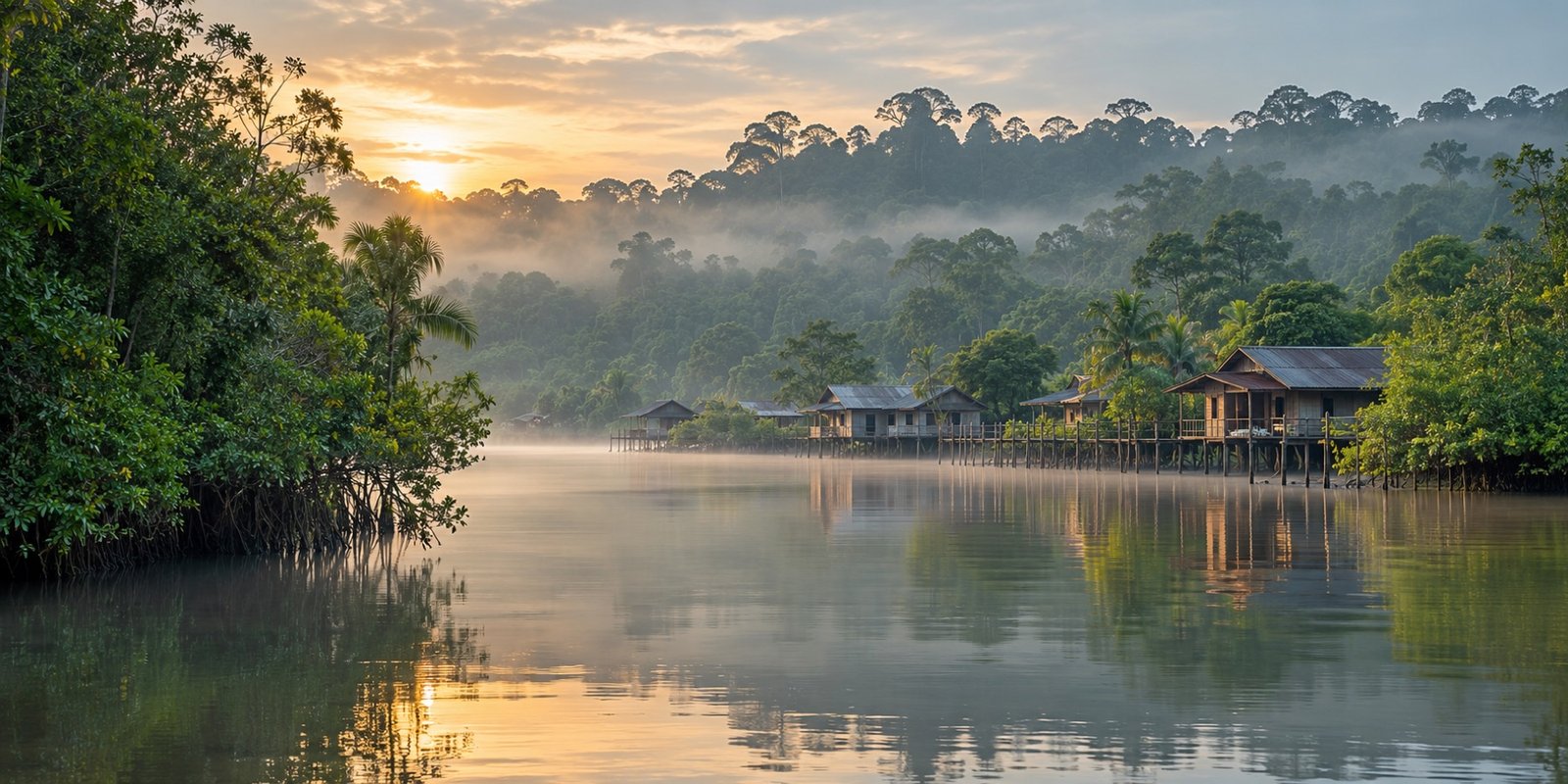
Brunei rewards careful travel: a compact capital on the Brunei River, living water-village communities, active mosques, district museums and markets, mangroves, wetlands and protected rainforest. It also demands unusually precise respect for religion, law, privacy, wildlife and authorised access. As checked on 11 October 2026, the United States advisory lists Brunei at Level 1, Exercise Normal Precautions, while current United Kingdom advice notes global flight disruption, strict local law, crocodile risk and the need not to hike alone. Neither statement guarantees an individual traveller’s safety. Read the advisory issued for your nationality, confirm insurance and follow Brunei authorities.
Brunei at a glance
- World Heritage: UNESCO currently lists zero inscribed properties and zero Tentative List sites for Brunei; do not label any attraction UNESCO-listed.
- Entry: passport, visa and length-of-stay rules depend on nationality; immigration currently provides an official E-Arrival Card portal.
- Friday: offices and many businesses change hours around Friday prayers; build a flexible midday plan.
- Wildlife: saltwater crocodiles occur around rivers, ponds and some coasts; stay away from water edges and follow signs.
- Forest: restricted forest requires authorisation; use registered operators for Ulu Temburong, Pulau Selirong and remote routes.
- Emergency: police 993, ambulance 991, fire 995 and search and rescue 998.
Entry, visa and arrival planning
Brunei authorities set and enforce entry rules. Check the Immigration and National Registration Department and the Brunei mission responsible for the traveller’s passport rather than copying a universal visa list.
Current UK guidance says British passports should be valid for at least six months after arrival; other passports must use their own official rule. An E-Arrival Card and a health declaration are currently required for travellers passing immigration.
Land border posts are not open 24 hours. Confirm the exact crossing, operating time, vehicle documents and neighbouring-country entry rules before a road itinerary.
Customs, medication, alcohol, tobacco, food and controlled-item rules are strict. Declare what is required and do not carry bags for another person.
When to go
Brunei is hot, humid and rainy throughout the year. Put outdoor walking at the cooler end of daylight and build shade, water and indoor recovery into every day.
Heavy rain can make forest trails, rivers and road access unsafe. A capital forecast is not a substitute for the operator’s site-specific decision in Temburong or Belait.
Friday and Ramadan change hours and public conduct. During Ramadan, current UK advice says it is illegal to be seen eating, drinking or smoking in public during fasting hours.
Mosque visits, parks, boats and events can pause for worship, maintenance, weather or security. Preserve a museum, market or short urban fallback.
Budget and places to stay
Price the trip in Brunei dollars using live hotel, transport, museum and registered-provider quotes. Do not carry forward old tourism-report prices.
Bandar Seri Begawan can support several city days, but Temburong and Belait require real transfer time. Overnighting may be more rational than repeating long road or river journeys.
Public waterfronts, markets and forest-recreation parks can be low-cost; licensed wildlife, rainforest and community programmes cost more because permits, transport and guides matter.
Use flexible bookings and activity-appropriate insurance. No operator or hotel should be called cheap, luxury or best without dated criteria and a current verifiable quote.
Fifty things to do in Brunei
1. Royal Regalia Museum with current-gallery confirmation
Why go: Bandar Seri Begawan. The state museum can introduce modern ceremonial history and national institutions when the current public galleries are verified before arrival.
How to do it: Use the museum or Tourism Development Department for live opening information, allow for security screening and follow photography restrictions inside.
Good for: First-time visitors, museum learners and families
Know before you go: Opening hours, gallery access and object-display rules can change; ceremonial interpretation should not be turned into political speculation.
2. Brunei History Centre gallery through documented evidence
Why go: Bandar Seri Begawan. A focused visit can establish a careful historical framework before the trip moves into mosques, river settlements and district museums.
How to do it: Confirm that the public gallery is open, choose one chronological question and distinguish archival evidence from popular legend.
Good for: History students, researchers and cultural travellers
Know before you go: Research facilities and public exhibition areas may follow different access rules.
3. Sultan Omar Ali Saifuddien Mosque on the authorised visitor route
Why go: Bandar Seri Begawan. A respectful visit can explain post-war mosque architecture and active worship when learning comes before photography.
How to do it: Confirm current non-Muslim visiting hours and dress rules through an official channel, avoid prayer periods and remain in signed visitor areas.
Good for: Architecture, faith literacy and educational travellers
Know before you go: Worship, security and religious events take priority; never photograph worshippers without permission.
4. Jame’ Asr Hassanil Bolkiah Mosque with worship-first etiquette
Why go: Kiarong. A carefully timed public visit can explore contemporary religious architecture while recognising that the building is first a working place of worship.
How to do it: Verify the exact visitor window, dress modestly, follow staff directions and skip the visit if public access is paused.
Good for: Architecture and cultural-literacy travellers
Know before you go: Do not assume the same opening pattern as another mosque or stage intrusive photographs.
5. Taman Haji Sir Muda Omar Ali Saifuddien from the public perimeter
Why go: Bandar Seri Begawan. The civic field can help explain the capital’s ceremonial geography when it is approached as regulated public space rather than an event guaranteed to visitors.
How to do it: Use only entrances and areas currently open to the public, keep government access clear and leave immediately if staff or temporary barriers redirect movement.
Good for: City orientation, civic history and low-effort travellers
Know before you go: Events, rehearsals and security can close the area without notice; do not photograph security arrangements.
6. Taman Mahkota Jubli Emas waterfront circuit
Why go: Bandar Seri Begawan. The public park can orient visitors to the riverfront and city geography without trespassing into ceremonial or government areas.
How to do it: Walk in cooler daylight, use formal crossings, keep paths clear and pair it with only one nearby museum or market.
Good for: Families, accessible walkers and city orientation
Know before you go: Heat, events and security cordons can change the usable route.
7. Royal Wharf public promenade and current art-gallery access
Why go: Bandar Seri Begawan. A short waterfront route can connect the Brunei River, public art and the working city when any indoor gallery opening is checked separately.
How to do it: Use only public space, verify gallery hours through an official source and keep operational jetties clear.
Good for: Urban walkers, art interest and low-cost sightseeing
Know before you go: Do not photograph security operations or claim that a closed exhibition is accessible.
8. Tamu Kianggeh as a working morning market
Why go: Bandar Seri Begawan. Produce, food and household trade reveal daily city life more accurately than a souvenir-only stop.
How to do it: Visit during active hours, ask before photographing vendors, confirm ingredients and carry small backup payment.
Good for: Food, markets and social-history travellers
Know before you go: Products, stall days and hygiene conditions vary; do not present every item as uniquely Bruneian.
9. Gadong Night Market with allergy and timing checks
Why go: Gadong. The night market supports a practical introduction to local snacks and everyday dining when visitors compare ingredients rather than chase a single viral dish.
How to do it: Arrive early enough to see food prepared, ask about allergens and cross-contact, and use a licensed ride for the return.
Good for: Food travellers, families and evening visitors
Know before you go: Nut, shellfish, fish, egg, dairy and gluten risks can be serious; opening and stall mix change.
10. Kampong Ayer Cultural and Tourism Gallery
Why go: Kampong Ayer. The official gallery provides essential context for water-village history, community life and conservation before visitors enter residential walkways.
How to do it: Check the Tourism Development Department live hours, begin here and follow the gallery route rather than relying on an old blog itinerary.
Good for: First-time visitors, families and heritage travellers
Know before you go: The gallery may close for public holidays or events; confirm on the day.
11. Kampong Ayer walk with resident privacy
Why go: Kampong Ayer. A guide-led public route can show schools, mosques, homes and services as a living community rather than an exotic backdrop.
How to do it: Use a registered guide where possible, stay on public walkways, keep doorways clear and ask before photographing residents.
Good for: Community heritage and responsible travellers
Know before you go: Boardwalk gaps, heat and private property require restraint; never enter a home without an explicit invitation.
12. Licensed water-taxi orientation on the Brunei River
Why go: Bandar Seri Begawan riverfront. A short boat circuit can explain the water village and river geography when safety equipment and the exact route are agreed first.
How to do it: Choose a licensed operator, confirm life jackets, capacity, price, duration and return point before boarding.
Good for: Families, photographers and river orientation
Know before you go: Keep hands inside the boat, remain away from the water edge and remember that saltwater crocodiles occur in local waterways.
13. Proboscis-monkey and mangrove cruise with a registered guide
Why go: Brunei River mangroves. A low-impact cruise can introduce mangrove ecology and proboscis monkeys without promising a sighting or approaching wildlife.
How to do it: Use a registered provider, choose a longer daylight window, keep noise low and follow guide instructions on distance and boat position.
Good for: Wildlife, birding and nature travellers
Know before you go: Sightings are never guaranteed; crocodiles, weather and boat traffic make independent shoreline access unsuitable.
14. Malay Technology Museum after live opening confirmation
Why go: Kota Batu. The museum can explain river, land and traditional technologies when the current public galleries are confirmed.
How to do it: Check the Museums Department or Tourism Development Department, select one technology theme and respect object and photography rules.
Good for: Ethnography, engineering, families and cultural travellers
Know before you go: Do not rely on old visitor statistics as proof of current opening.
15. Brunei Darussalam Maritime Museum after live opening confirmation
Why go: Kota Batu. Maritime collections can connect shipwreck evidence, trade and river geography before the archaeological park.
How to do it: Verify current hours, begin with the archaeological context and distinguish excavated evidence from later reconstruction.
Good for: Maritime history, archaeology and families
Know before you go: Gallery rotations and conservation work can alter the visit.
16. Kota Batu Archaeological Park on the managed route
Why go: Kota Batu. The landscape can connect former settlement, trade and river access when exposed archaeology is treated as fragile evidence.
How to do it: Use the current official entrance, remain on paths and platforms, and leave all stone and material untouched.
Good for: Archaeology, walkers and history travellers
Know before you go: Heat, uneven ground and conservation closures require a shorter fallback.
17. Brunei Museum only after an official reopening notice
Why go: Kota Batu. The national museum belongs in a complete cultural itinerary only when an authoritative source confirms that public access has resumed.
How to do it: Treat the site as unavailable until the Museums Department publishes a current reopening and visitor route.
Good for: Museum planners and repeat visitors
Know before you go: Historic tourism reports recorded renovation; never promise entry from an old listing or map pin.
18. Balai Khazanah Islam Sultan Haji Hassanal Bolkiah with current booking
Why go: Bandar Seri Begawan area. A confirmed public visit can present Islamic manuscripts, scholarship and material culture within the institution’s own interpretation.
How to do it: Use its current official booking or visitor notice, follow dress and photography rules and allow for security procedures.
Good for: Faith literacy, manuscript and museum travellers
Know before you go: Do not infer access, holdings or hours from an undated promotional post.
19. Arts and Handicrafts Training Centre on a confirmed public programme
Why go: Bandar Seri Begawan. A scheduled demonstration or exhibition can connect weaving, metalwork and other skills to named makers and training.
How to do it: Confirm a public programme in advance, ask before filming and buy only from an authorised sales point.
Good for: Craft, design and responsible-shopping travellers
Know before you go: Training areas are workplaces, not open studios; local style alone does not prove local manufacture.
20. Tasek Lama Recreation Park on a signed short route
Why go: Bandar Seri Begawan. A conservative park walk provides urban rainforest, water and exercise close to the capital without requiring a remote expedition.
How to do it: Use marked trails in daylight, carry water, tell someone the route and turn back before heat or storms build.
Good for: Walkers, families and urban-nature travellers
Know before you go: Police advise against hiking alone; slippery ground, wildlife and route confusion are real.
21. Bukit Shahbandar Forest Recreation Park with a turnaround time
Why go: Brunei-Muara District. Official forest-recreation routes can provide hill exercise and forest context when distance and ability are matched honestly.
How to do it: Choose a signed loop below the group’s limit, start in daylight and carry water, a whistle and a charged phone.
Good for: Prepared walkers and fitness travellers
Know before you go: Do not hike alone or enter closed forest; humidity and repeated hills can be demanding.
22. Berakas Forest Recreation Park on public trails
Why go: Berakas. A short managed-forest visit can introduce coastal forest recreation without inventing an off-trail nature experience.
How to do it: Use the Forestry Department listing, stay on public paths and combine the visit with no more than one nearby coastal stop.
Good for: Families, walkers and local ecology interest
Know before you go: Fire, maintenance or weather can close facilities; never enter restricted forest.
23. Jerudong Park from the live official calendar
Why go: Jerudong. A current evening at the registered recreation provider can work for families when attractions, operating days and height rules are checked in advance.
How to do it: Use the official website, confirm the exact date and ticket inclusions, and agree a family meeting point.
Good for: Families and recreation travellers
Know before you go: Do not repeat an old ride list or price; weather and maintenance change operations.
24. Muara Beach from the designated public area
Why go: Muara. A public beach visit can add coast and local recreation only when water, weather and crocodile warnings are taken seriously.
How to do it: Use designated access, obey signs and flags, stay away from river mouths and keep well back from the water if warnings apply.
Good for: Families and coastal scenery
Know before you go: Saltwater crocodiles and rough water can be fatal; never treat the absence of a visible animal as proof of safety.
25. Serasa coast through current public access
Why go: Serasa. A short coast stop can explain Brunei Bay geography and recreation without entering port or restricted areas.
How to do it: Confirm current public access, use only designated areas and keep cameras away from port-security operations.
Good for: Coast, geography and low-effort travellers
Know before you go: Marine conditions, industrial activity and security boundaries control the visit.
26. Ulu Temburong National Park with a registered operator
Why go: Temburong. A professionally managed visit to Brunei’s flagship protected rainforest can introduce lowland forest ecology while permits and community logistics remain central.
How to do it: Book a provider on the current registered list, confirm permits, transfers, guide ratio, meals, footwear and medical limitations.
Good for: Rainforest, conservation and active travellers
Know before you go: Restricted forest requires authorisation; flooding, heat, insects and limited emergency response make independent entry inappropriate.
27. Ulu Temburong canopy structure only when officially open
Why go: Temburong. A permitted climb can reveal rainforest layers and scale, but it is optional and should never define the success of the park visit.
How to do it: Confirm that the structure is open, follow the guide, use both hands and stop if fitness, weather or fear makes the climb unsuitable.
Good for: Fit adults, canopy ecology and sunrise travellers
Know before you go: Steep ladders, height, wet metal and storms can make access unsafe or impossible.
28. Temburong longboat transfer with safety discipline
Why go: Temburong River. The river journey is part of understanding the district when local navigation and passenger safety come before speed.
How to do it: Wear the supplied life jacket, keep hands inside, protect electronics and follow the boat operator’s seating instructions.
Good for: River landscapes and cultural geography
Know before you go: Low water, debris, storms and crocodiles require an experienced licensed operator.
29. Bukit Patoi Forest Recreation Park with a guide
Why go: Temburong. A marked forest hike can introduce geology and upland views without converting a protected route into an unplanned scramble.
How to do it: Confirm public access, use a registered guide, start early and set a conservative turnaround time.
Good for: Prepared walkers, geology and rainforest travellers
Know before you go: Do not hike alone; exposed rock, rain, heat and route-finding raise risk.
30. Batang Duri community or eco programme from the registered list
Why go: Temburong. A registered community or nature programme can add river, food or craft learning without inventing access to private village life.
How to do it: Choose a provider shown on the current Tourism Development Department list and verify the exact activities and host consent.
Good for: Families, community tourism and nature travellers
Know before you go: Provider status and programme content can change; avoid staged claims and intrusive photography.
31. Pulau Selirong mangrove reserve with authorised access
Why go: Brunei Bay. The Forestry Department-listed reserve can reveal mangrove structure and wildlife when reached through a permitted guided trip.
How to do it: Use a registered operator, verify forest permission, tides, life jackets and boardwalk condition, and keep wildlife distance.
Good for: Mangrove ecology, birding and conservation travellers
Know before you go: Remote access, crocodiles, storms and slippery walkways make independent travel unsuitable.
32. Sungai Liang Forest Recreation Park on a short managed loop
Why go: Belait District. A Forestry Department-listed park can provide an accessible introduction to forest recreation in Belait without a remote expedition.
How to do it: Check current facilities, choose a daylight loop and carry water and insect protection.
Good for: Families, walkers and district road trips
Know before you go: Maintenance and rain can change paths; no off-trail entry.
33. Luagan Lalak boardwalk and wetland view
Why go: Belait District. The official forest-recreation site can introduce freshwater wetland scenery from managed infrastructure.
How to do it: Confirm boardwalk access, visit in daylight and observe wildlife without playback, feeding or leaving the path.
Good for: Birders, photographers and low-impact nature travellers
Know before you go: Wet boards, heat and limited services require suitable footwear and an early turnaround.
34. Tumpuan Telisai Forest Recreation Park with current access check
Why go: Tutong District. A small official recreation site can break a district journey when visitors confirm that facilities are open.
How to do it: Use the Forestry Department listing, remain within the managed area and carry out all waste.
Good for: Families and short nature stops
Know before you go: Do not infer current services from the park’s historical listing.
35. Tasek Merimbun Heritage Park after official access confirmation
Why go: Tutong District. Brunei’s largest natural lake area can connect wetland, forest and cultural landscape when current visitor facilities and routes are confirmed.
How to do it: Use the responsible authority or registered guide, stay on managed routes and keep boats and wildlife encounters conditional on permission.
Good for: Wetland, birding and cultural-landscape travellers
Know before you go: Do not call the site UNESCO-inscribed; Brunei currently has no World Heritage property.
36. Tutong market through regional produce and ingredients
Why go: Tutong town. A working market can broaden the food story beyond the capital when vendors and products are described accurately.
How to do it: Confirm market day and hours locally, ask before photographing and verify ingredients or preparation before tasting.
Good for: Food, markets and district travellers
Know before you go: Avoid declaring every product traditional or locally produced without asking.
37. Tutong River cruise with a registered tourism provider
Why go: Tutong District. A licensed river trip can introduce district ecology and settlement when the operator, route and wildlife expectations are transparent.
How to do it: Use the current Tourism Development Department provider list, confirm life jackets and return time, and accept that sightings vary.
Good for: Families, river landscapes and wildlife interest
Know before you go: Crocodiles, weather and weak communications make informal boat arrangements unsuitable.
38. Billionth Barrel Monument from the designated public route
Why go: Seria. The public monument can introduce the scale and social history of Brunei’s petroleum industry without entering operational facilities.
How to do it: Use the signed public approach, keep the visit brief and frame it with museum or interpretive material rather than photographing infrastructure.
Good for: Industrial history and district road trips
Know before you go: Do not photograph restricted, security or operational oil facilities.
39. Oil and Gas Discovery Centre after live opening confirmation
Why go: Seria. A confirmed public visit can explain science, energy and industry through structured exhibits rather than operational-site tourism.
How to do it: Check the centre’s current calendar and ticket page, select priority exhibits and follow photography rules.
Good for: Science, families and industry history
Know before you go: Old tourism reports do not prove current opening, prices or exhibit availability.
40. Silver Jubilee Park as a public coastal green space
Why go: Kuala Belait. A short park circuit can provide an ordinary local landscape and rest stop without claiming it is a major attraction.
How to do it: Visit in daylight, use public paths and combine it with one confirmed museum or town stop.
Good for: Families, walkers and slower district travel
Know before you go: Heat, coast conditions and events can alter access.
41. Kuala Belait Museum only with current official confirmation
Why go: Kuala Belait. A district museum can add local social and industry history if the Museums Department confirms public opening.
How to do it: Check live opening directly, focus on one local theme and respect any restricted galleries.
Good for: District history, families and research travellers
Know before you go: Do not use an old visitor-count report as a timetable.
42. Belait River experience with a registered operator
Why go: Belait District. A licensed trip can connect river settlement and ecology when route, life jackets and community boundaries are explicit.
How to do it: Use the current provider list, agree the route and price before departure and keep hands inside the boat.
Good for: River landscapes and district travellers
Know before you go: Crocodiles, weather and industrial boundaries require local professional control.
43. Marine Biodiversity Centre only after current public-access confirmation
Why go: Serasa area. A verified education visit could introduce local marine ecosystems without disturbing habitat or entering a research workplace.
How to do it: Treat access as unavailable until an official current visitor notice or booked programme confirms it.
Good for: Marine education and students
Know before you go: A historical tourism listing is not proof of public opening.
44. Istana Nurul Iman only during an officially announced public opening
Why go: Bandar Seri Begawan. The palace should enter a visitor plan only when the government formally announces a public Hari Raya programme with exact procedures.
How to do it: Outside a published opening, view no closer than lawful public space and do not wait at gates or photograph security.
Good for: Ceremonial-calendar travellers
Know before you go: The palace is not an ordinary daily attraction; never promise access.
45. Teng Yun Temple with community permission and restraint
Why go: Bandar Seri Begawan. A respectful exterior or authorised visit can acknowledge Brunei’s Chinese community and religious diversity.
How to do it: Confirm public visiting etiquette, avoid ceremonies unless invited and ask before photographing people or altars.
Good for: Faith literacy and social-history travellers
Know before you go: Active worship takes priority and opening patterns can change.
46. Bruneian food route built around ingredients, not rankings
Why go: Bandar Seri Begawan, Tutong or Belait. Ambuyat, nasi katok, soto and market foods can support regional learning when no outlet is declared the only authentic source.
How to do it: Choose licensed eateries, ask about ingredients and compare one dish across two settings without using universal price claims.
Good for: Food travellers and families
Know before you go: Allergens and cross-contact matter; alcohol sale is prohibited and local public-conduct rules apply.
47. Responsible craft shopping with documented provenance
Why go: Official centres, museum shops and registered makers. Weaving, metalwork, woodwork and food products become meaningful purchases when maker, material and origin are documented.
How to do it: Ask who made the item, where and from what; request a receipt and check customs rules before buying plant, animal or antique material.
Good for: Design, craft and responsible-shopping travellers
Know before you go: A Bruneian motif is not proof of manufacture, age or lawful export.
48. Rainforest birding with a registered nature provider
Why go: Brunei-Muara, Tutong, Belait or Temburong. A quiet guided session can reveal habitat and behaviour without publishing sensitive nesting sites or using playback aggressively.
How to do it: Choose a current registered provider, agree an accessible route and follow distance, noise and photography rules.
Good for: Birders, photographers and conservation travellers
Know before you go: Sightings are never guaranteed; do not enter restricted forest or disclose fragile locations.
49. Registered village or community programme with explicit host consent
Why go: A currently listed community destination. A current host-led visit can add food, craft or landscape knowledge without treating private life as an attraction.
How to do it: Book only a programme on the current registered-provider list, confirm what is included and ask before entering or photographing any home.
Good for: Community tourism and cultural learners
Know before you go: Do not invent a homestay, ceremony or performance that the host has not offered.
50. Visit Brunei Year or festival event from the official live calendar
Why go: Countrywide. A dated official event can add music, food, sport or cultural programming when the exact public schedule is published.
How to do it: Use the Tourism Development Department calendar for the visit date, read venue and ticket rules and keep a non-event alternative.
Good for: Repeat visitors, families and event travellers
Know before you go: Campaign announcements are not a guarantee that every previewed event will occur; reconfirm close to travel.
Food and drink worth planning around
Ambuyat, nasi katok, soto and market snacks are starting points for learning, not proof that one recipe or restaurant represents all Brunei.
Ask about nuts, sesame, dairy, gluten, egg, fish and shellfish. Markets and shared kitchens can create serious cross-contact risk.
Alcohol and tobacco sale is illegal. Current UK guidance describes limited declared private import for eligible non-Muslims aged 17 or over, but travellers must verify the live customs rule themselves.
Respect Ramadan and mosque-area conduct, and ask before photographing vendors or other diners.
What to buy
For weaving, metalwork, woodwork and food products, ask who made the item, where, from which material and by what process.
Keep receipts and check customs restrictions for plants, wildlife material, antiques and food before purchase.
Do not buy archaeological material, protected wildlife products or an item presented as old without lawful provenance.
A Bruneian pattern or label is not proof that an item was made locally.
Getting around
Taxis, ride services, registered guides and private vehicles are often more practical than assuming an extensive public-transport network. Confirm the return before leaving the capital.
Road accidents are common. Wear seatbelts, avoid night fatigue, watch for animals and uneven roads, and remain at an accident scene while contacting police on 993.
For small boats, inspect life jackets, agree route and price, keep hands inside and allow a longer daylight window for wildlife cruises.
Borders, flights and connections can be disrupted. Keep documents and essential confirmations offline and protect an independent return plan.
Easy access and family travel
Ask for the exact step-free route, jetty boarding method, handrails, toilet, seating, shade and surface. A generic accessibility label cannot describe a stilt walkway, rainforest trail or longboat.
Bandar museums and waterfront parks may be easier than forest and river trips, but security screening, prayer closures and heat still matter.
Families should prioritise confirmed museums, markets, short parks and registered boat programmes; riverbanks, jetties and forest structures are not playgrounds.
Mixed-ability groups should agree on a short shared core and an optional extension before departure.
Stay safe
The United States lists Brunei at Level 1, Exercise Normal Precautions, as issued 14 May 2026. Read the full live advisory rather than turning a level into a guarantee.
Current UK advice says crime is low but petty theft and burglary occur, and terrorist attacks cannot be ruled out.
Saltwater crocodiles have killed people around riverbanks near Bandar Seri Begawan and can also occur on beaches and ponds. Stay away from the water edge and obey warnings.
Police advise against hiking alone. Use recognised guides, signed trails, closed footwear, water, a torch and a whistle, and turn back early.
Drug penalties are severe and can include death. Local laws on criticism of the royal family, pornography, firearms, fireworks, alcohol, tobacco and same-sex activity are strict.
Emergency numbers are police 993, ambulance 991, fire 995 and search and rescue 998. Basic care exists, but rural response can be slower.
Mistakes to avoid
- Calling a Brunei attraction UNESCO-inscribed when UNESCO lists no property for the country.
- Treating Kampong Ayer as an empty set, entering private homes or photographing residents without permission.
- Standing at river or beach edges despite crocodile risk or taking an informal boat without life jackets.
- Entering restricted forest, hiking alone or assuming a historical attraction listing proves current access.
- Planning Friday midday, Ramadan or prayer-time access as if ordinary schedules apply.
- Photographing government, royal, military, port, oil or security operations.
- Publishing old prices, opening hours or attraction lists from legacy tourism reports as current facts.
- Promising wildlife sightings, palace access, museum reopening or a festival before official confirmation.
Sample seven-day route
Use three days for Bandar Seri Begawan, Kampong Ayer and Kota Batu; one registered mangrove or river experience; one confirmed Temburong day; one Tutong or Belait day; and one weather, worship or disruption buffer.
Sample ten-day route
Add an overnight Temburong programme, a slower Belait-Seria museum day and a second capital museum or market day. Keep remote forest and wildlife plans dependent on operator approval and conditions.
Sample fourteen-day route
A two-week trip can separate Bandar, Temburong, Tutong and Belait into deliberate bases or day blocks. Preserve two unused buffers and do not fill them until river, forest, weather and opening information is current.
Brunei travel FAQ
Does Brunei have a UNESCO World Heritage Site?
No. UNESCO currently lists zero inscribed properties and zero Tentative List sites for Brunei. Individual places may still have national importance.
Is Brunei safe?
No guide can guarantee safety. The current US advisory is Level 1, while UK advice highlights strict law, crocodiles, hiking precautions and possible global flight disruption. Read your own government advice and live local warnings.
Do I need a visa?
It depends on nationality, residence, purpose and length of stay. Use Brunei Immigration and the relevant Brunei mission, and complete the current E-Arrival Card and health declaration when required.
Can I visit Kampong Ayer independently?
Use public walkways and a licensed water taxi, but a registered guide provides better context. Respect homes, schools, mosques and jetties as community spaces.
Can I enter Ulu Temburong National Park on my own?
Do not assume so. Restricted forest requires authorisation, transport and guides. Use a provider on the current registered tourism list.
Can I visit the royal palace?
Only if the government formally announces a public opening and procedures for the exact date. It is not an ordinary daily attraction.
Official planning sources
- Brunei Tourism Development Department
- Kampong Ayer Cultural and Tourism Gallery
- Brunei Forestry Department recreation parks
- Brunei Forestry Department parks of interest
- Brunei Forestry Department forest classification
- Brunei Immigration and National Registration portal
- Jerudong Park official site
- Oil and Gas Discovery Centre
- UNESCO Brunei state-party page
- United States Brunei travel advisory
- United Kingdom Brunei travel advice
- United Kingdom Brunei safety and security
- United Kingdom Brunei entry requirements
- United Kingdom Brunei getting help
- Brunei Ministry of Health
- Brunei Darussalam Maritime and Port Authority
Disclosure: This independent editorial guide is informational, not a booking guarantee. No price, ranking, safety outcome, entry permission or availability is guaranteed. Recheck all time-sensitive details with the linked official source before purchase.