This guide uses official tourism, government and transport sources. Rules and prices can change, so check the linked official pages before booking.
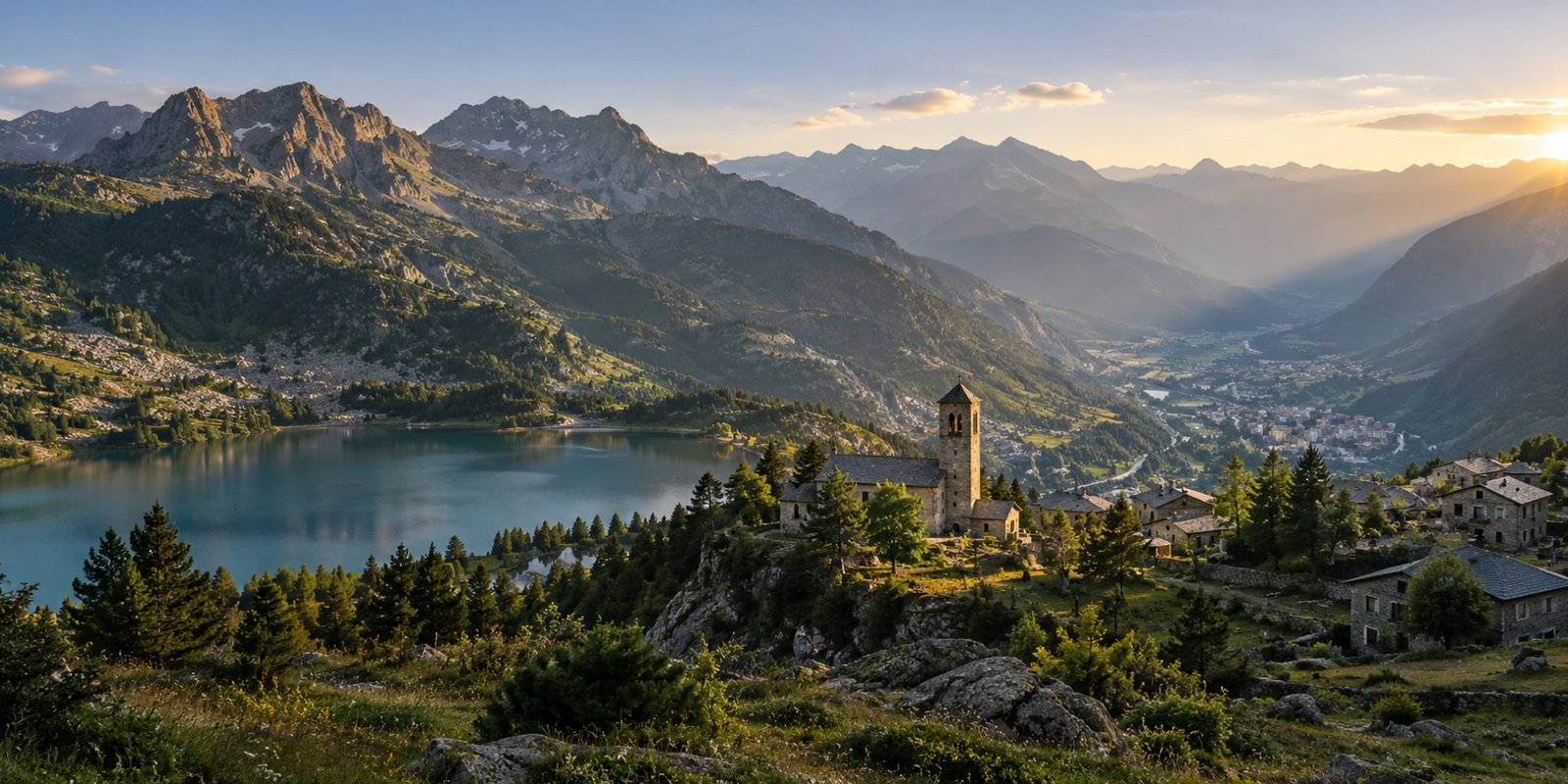
Andorra is a high-mountain microstate reached through France or Spain. Its small map hides major differences in elevation, weather and effort: a capital museum, a Romanesque village and an alpine lake are not interchangeable half-hour stops. A rewarding first visit combines cultural interpretation with one or two outdoor landscapes and checks every seasonal opening, lift, road and trail through an official source.
Andorra at a glance
- Arrival: Andorra has no commercial airport or railway; most visitors enter by road through France or Spain.
- Entry: Andorra has its own border arrangements, while reaching it normally requires lawful entry through the Schengen area.
- Landscape: elevation changes make weather and travel time more important than map distance.
- Language: Catalan is official; Spanish, French and Portuguese are also widely encountered.
- Emergency: use the official national or local emergency numbers and verify insurance for mountain activities.
Entry, visa and arrival planning
The Government of Andorra states that Andorra itself does not require a visa, but visitors generally reach it through France or Spain. Travellers who need a Schengen visa should verify that it permits the entries required for the full route, including the return from Andorra.
Carry a valid passport or accepted identity document and check rules for minors, pets, medicines, food, tobacco, alcohol and purchases. Andorra is not an EU member, so customs allowances matter even when the road crossing appears simple.
When to go
Winter supports skiing and snow activities but brings ice, snow tyres or chain requirements, short daylight and weather-dependent roads and lifts. Summer opens more high routes but also brings heat at low elevation and afternoon thunderstorms.
Spring and autumn can be quieter, yet high trails may retain snow or receive early snowfall while seasonal lifts, museums or guided interiors operate reduced calendars. Check the exact activity rather than choosing a month from a generic climate chart.
Budget and places to stay
Build the budget in euros around the real corridor: regional airport or railway arrival, cross-border bus or car, accommodation by parish, local transport, paid museums, mountain lifts and insurance. A cheaper room far from the intended trail or evening plan may create costly transfers.
Shopping savings are not automatic. Compare like-for-like final prices and the customs allowance of the country entered after Andorra. Prioritise local crafts, food and guided interpretation over purchases made only because they are described as duty free.
Fifty things to do in Andorra
1. Casa de la Vall
Why go: Andorra la Vella historic centre. This former parliamentary house explains the co-principality and the institutions that shaped modern Andorra.
How to do it: Reserve a guided visit through the official cultural service and pair it with a slow walk through the old quarter.
Good for: political history, architecture and first-time orientation
Know before you go: Opening patterns and language availability change; confirm the guided-tour schedule before building the day around it.
2. Andorra la Vella historic centre
Why go: Andorra la Vella. Stone lanes, civic buildings and small squares reveal the capital beyond its modern shopping avenues.
How to do it: Start near Casa de la Vall, follow signed heritage points and keep the route compact enough to notice changes in building fabric.
Good for: urban history, photography and an easy first afternoon
Know before you go: The centre includes slopes and uneven paving; ask the tourist office for the most suitable accessible route.
3. Church of Santa Coloma
Why go: Santa Coloma. The pre-Romanesque church and its cylindrical bell tower are central to understanding Andorra’s early religious landscape.
How to do it: Use the official heritage timetable and combine the church with Espai Columba rather than treating either as a quick exterior photograph.
Good for: Romanesque art, architecture and families
Know before you go: Interior access can be tour-based or seasonal; respectful dress and quiet behaviour are appropriate.
4. Espai Columba
Why go: Santa Coloma. This interpretation centre safeguards and explains Romanesque wall paintings and liturgical objects linked to Andorran churches.
How to do it: Allow time for the interpretation before the included or linked church visit, and verify any projection schedule.
Good for: art history, accessible interpretation and rainy days
Know before you go: Do not assume every original mural remains in its first location; use the museum’s explanation of provenance.
5. La Margineda medieval bridge
Why go: La Margineda. The stone bridge is a clear surviving element of the historic route through the Valira valley.
How to do it: Visit on foot from a lawful stopping point and combine it with nearby heritage rather than parking informally beside the road.
Good for: medieval infrastructure and short heritage stops
Know before you go: Keep off traffic lanes and slippery edges, especially after rain or frost.
6. Bici Lab Andorra Bicycle Museum
Why go: Andorra la Vella. The museum connects classic bicycles, technology and Andorra’s strong cycling culture.
How to do it: Check the current exhibition and workshop calendar, then pair it with the capital centre or river corridor.
Good for: cycling fans, design and families
Know before you go: Exhibitions rotate, so do not promise a particular object without checking the current programme.
7. Green Ring routes
Why go: Andorra la Vella. The linked paths provide a different view of the capital, its slopes and surrounding cultural landscape.
How to do it: Choose the exact circuit from the parish map, check gradients and daylight, and carry water.
Good for: walkers who want nature close to the capital
Know before you go: These are outdoor routes, not a flat urban promenade; footwear, heat and weather matter.
8. Enclar Valley ecotourism circuits
Why go: above Santa Coloma and Andorra la Vella. The valley adds wildlife habitat, forest and mountain context close to the main urban area.
How to do it: Select an official signed circuit that matches fitness and seasonal access; start early enough to return in daylight.
Good for: wildlife watching and experienced walkers
Know before you go: Never approach wildlife or leave marked routes; snow, heat and hunting or conservation restrictions can affect access.
9. Caldea thermal complex
Why go: Escaldes-Engordany. The striking thermal centre expresses the parish’s long relationship with hot springs and contemporary wellness tourism.
How to do it: Choose the correct adult, family or wellness zone on the official site and reserve a timed session when required.
Good for: wellness, architecture and a poor-weather day
Know before you go: Health restrictions, age rules and zone access differ; verify them before buying a non-refundable ticket.
10. Museu Carmen Thyssen Andorra
Why go: Escaldes-Engordany. Changing exhibitions bring international art into a compact Andorran setting.
How to do it: Check the current exhibition, guided visits and closing day; allow time for the interpretive material.
Good for: art lovers and a refined indoor stop
Know before you go: The collection shown is not static, so name the museum rather than promising a past exhibition.
11. Escaldes-Engordany Art Centre
Why go: Escaldes-Engordany. The centre presents local cultural heritage and work connected with sculptor Josep Viladomat.
How to do it: Confirm which rooms and exhibitions are open, then combine it with the older Engordany quarter.
Good for: sculpture, local art and cultural context
Know before you go: Small cultural venues may close between programmes or for installation.
12. Espai Caldes
Why go: Escaldes-Engordany. The space interprets thermal water as a natural resource and part of the parish’s identity.
How to do it: Use it as context before a thermal experience or a walk through public hot-water features.
Good for: geology, local history and families
Know before you go: Check current opening and exhibit language; public thermal features are not automatically bathing areas.
13. Madriu-Perafita-Claror Valley
Why go: Escaldes-Engordany and adjoining parishes. This UNESCO-listed cultural landscape preserves the relationship between mountain communities, pastoral activity and the Pyrenean environment.
How to do it: Choose an official access point and a route appropriate to fitness; consider a trained guide for deeper interpretation.
Good for: serious hikers, cultural landscapes and nature
Know before you go: It is a mountain landscape with no road through the core; weather, navigation, daylight and leave-no-trace rules are essential.
14. Engolasters hydroelectric route
Why go: Engolasters. The route connects the lake and hydroelectric infrastructure with Andorra’s industrial development.
How to do it: Check the official guided or self-guided interpretation and combine it with the Electricity Museum only if transport timing works.
Good for: engineering, landscape and older children
Know before you go: Some infrastructure may be tour-only; never enter restricted operating areas.
15. Church of Sant Miquel d’Engolasters
Why go: Engolasters. The Romanesque church, bell tower and elevated setting help explain parish settlement above the valley.
How to do it: Verify interior access, arrive by a legal route and allow a short quiet visit rather than blocking the approach for photographs.
Good for: Romanesque architecture and viewpoints
Know before you go: The access road and surroundings can be affected by winter conditions.
16. Vivand pedestrian district
Why go: Escaldes-Engordany. The long pedestrian commercial area shows contemporary urban Andorra and links dining, shopping and cultural stops.
How to do it: Walk it as part of a mixed day, compare prices and tax rules, and prioritise local products over impulse buying.
Good for: easy evenings, dining and accessible urban wandering
Know before you go: Duty and import allowances still apply when leaving Andorra; “tax free” does not mean unrestricted.
17. Sanctuary of Meritxell Basilica
Why go: Meritxell, Canillo. The national sanctuary honours Our Lady of Meritxell and combines religious significance with distinctive modern architecture.
How to do it: Check worship and visitor hours, observe quiet zones and pair it with one nearby Canillo stop.
Good for: architecture, living heritage and reflective travel
Know before you go: It remains a religious site; ceremonies take priority and photography rules must be respected.
18. Church of Sant Joan de Caselles
Why go: Canillo. This twelfth-century Romanesque church is one of the country’s best-known surviving ecclesiastical buildings.
How to do it: Use the official cultural-opening calendar and study the exterior even if the interior is unavailable.
Good for: Romanesque detail, history and photography
Know before you go: Seasonal opening is common; do not force entry or photograph worshippers.
19. Roc del Quer viewpoint
Why go: Canillo. The engineered platform provides a broad view over the Canillo valley and makes mountain scale immediately legible.
How to do it: Check access, parking or shuttle arrangements and weather before setting out; visit outside the busiest period if possible.
Good for: panoramas and visitors with limited hiking time
Know before you go: Strong wind, ice, cloud and fear of heights can change the experience; obey closures.
20. Canillo Tibetan Bridge
Why go: Canillo. The long high-altitude pedestrian bridge creates a dramatic crossing above the valley.
How to do it: Buy or reserve only through the official system and verify the current transport connection to the access point.
Good for: adventure-minded adults and older children who are comfortable with heights
Know before you go: Height, weather, footwear and mobility restrictions matter; it is not suitable for every traveller.
21. Incles Valley
Why go: Canillo parish. The glacial valley is a gateway to trails, traditional landscapes and high-mountain lakes.
How to do it: Use the current seasonal access system, choose a signed route and arrive with an exit plan rather than treating it as a roadside stop.
Good for: hiking, botany and landscape photography
Know before you go: Summer vehicle controls, storms, snow and limited services can affect the day.
22. Juclà lakes
Why go: upper Incles Valley. The Juclà basin contains Andorra’s largest lake and a powerful high-mountain landscape.
How to do it: Treat it as a mountain hike, check route conditions and refuge information, and start early.
Good for: fit hikers and alpine scenery
Know before you go: This is not an easy urban excursion; navigation, altitude, weather and turnaround discipline are necessary.
23. Palau de Gel
Why go: Canillo. The ice and sports complex offers a weather-independent contrast to hiking and heritage days.
How to do it: Check the activity timetable, equipment inclusion and age rules before arriving.
Good for: families, skating and an active indoor break
Know before you go: Sessions and facilities can change during events or maintenance.
24. Grandvalira Canillo and Soldeu sectors
Why go: Canillo parish. The resort landscape supports skiing in winter and selected mountain activities in warmer seasons.
How to do it: Choose one sector and season-specific activity, then check lift, pass and weather status on the operator’s site.
Good for: skiers, mountain sports and families
Know before you go: Never assume every lift or trail operates year-round; insurance and ability level matter.
25. Pessons cirque and lakes
Why go: Grau Roig, Encamp parish. The glacial cirque and chain of lakes form one of Andorra’s strongest high-mountain landscapes.
How to do it: Select an official hiking route from Grau Roig and verify lift or road access, distance and elevation.
Good for: mountain hikers and geology
Know before you go: Snow can persist and thunderstorms develop quickly; carry proper layers and turn back early.
26. Les Bons architectural site
Why go: Les Bons, Encamp. The medieval ensemble and Sant Romà church connect defensive, domestic and religious heritage.
How to do it: Follow the signed site route and check church opening through the parish cultural service.
Good for: medieval history and compact village exploration
Know before you go: Residential access must remain clear and stone paths can be slippery.
27. Casa Cristo ethnographic museum
Why go: Encamp. The modest house museum presents the domestic life of a working Andorran family in the nineteenth and early twentieth centuries.
How to do it: Reserve the guided visit if required and listen for how space, work and status shaped daily life.
Good for: social history and small-group interpretation
Know before you go: The interior is compact and may have access limitations; confirm before visiting.
28. National Automobile Museum
Why go: Encamp. Historic vehicles and related objects trace changes in mobility and Andorra’s road connections.
How to do it: Check reopening or renovation status and current location before travel, then combine it with another Encamp museum.
Good for: transport history and families
Know before you go: Do not rely on an old listing: museum access can be affected by refurbishment.
29. MW Electricity Museum
Why go: Encamp. The museum explains electricity production and its role in the country’s economic transformation.
How to do it: Check whether the visit is guided and whether hydroelectric infrastructure is included.
Good for: engineering, industrial history and education
Know before you go: Operational areas have safety restrictions; follow the guide and photography rules.
30. Funicamp and Cortals d’Encamp
Why go: Encamp. The lift corridor opens a broad mountain setting and access to seasonal activities above the town.
How to do it: Check the exact operating season, final descent and activity status before buying a ticket.
Good for: views, winter sports and mountain access
Know before you go: Wind and maintenance can stop lifts; keep a ground-level alternative.
31. Casa d’Areny-Plandolit
Why go: Ordino. Andorra’s manor-house museum shows the life, status and material culture of a prominent family.
How to do it: Book the correct language if guided and leave time to understand the contrast with rural house museums.
Good for: social history, interiors and architecture
Know before you go: Historic rooms may include stairs, narrow circulation and controlled capacity.
32. Miniature Museum
Why go: Ordino. The museum focuses attention on extremely small-scale artworks that require deliberate viewing.
How to do it: Check current opening and whether magnification or guided interpretation is provided.
Good for: craft, unusual collections and a quiet indoor stop
Know before you go: Small details and lighting can be difficult for some visual needs; ask about accessibility.
33. Church of Sant Martí de la Cortinada
Why go: La Cortinada, Ordino. The Romanesque church contains layers of architectural and artistic history in a preserved village setting.
How to do it: Use the seasonal heritage-opening calendar and pair it with the nearby mill or Iron Route.
Good for: Romanesque art and village heritage
Know before you go: Interior access and conservation rules vary by season.
34. Sorteny Valley Nature Park
Why go: Ordino parish. The protected valley is recognised for botanical diversity, mountain scenery and signed routes.
How to do it: Choose a park itinerary, check seasonal road or parking management and consider the botanical garden or refuge as a clear destination.
Good for: botany, wildlife and hiking
Know before you go: Stay on marked trails, never pick plants and prepare for fast mountain weather.
35. Tristaina lakes circuit
Why go: Ordino Arcalís. The classic glacial-lake route gives a structured introduction to Andorra’s high mountains.
How to do it: Check lift and road access, elevation, snow and the official circuit before starting.
Good for: fit first-time mountain walkers and alpine photography
Know before you go: Popularity does not remove mountain risk; footwear, layers, water and turnaround time are essential.
36. Llorts iron mine and Iron Route
Why go: Llorts and Ordino valley. The mine and sculpture-lined route explain Andorra’s historic iron economy.
How to do it: Confirm mine tour dates and language, then walk only the section that fits the return transport and weather.
Good for: industrial heritage, sculpture and families
Know before you go: Mine interiors may be cool, confined and tour-controlled; check suitability.
37. Arcalís solar viewpoint
Why go: Ordino Arcalís. The high-altitude sundial viewpoint frames surrounding peaks and connects landscape with solar orientation.
How to do it: Verify seasonal lift or road access and visibility; combine it with a short safe route rather than an overpacked day.
Good for: mountain panoramas and design
Know before you go: Altitude, wind, snow and cloud can make access unsuitable.
38. Comapedrosa Nature Park
Why go: La Massana parish. The protected park contains Andorra’s highest summit, glacial features and important mountain habitats.
How to do it: Pick an official trail below or toward the summit according to proven ability; use a guide for demanding objectives.
Good for: experienced hikers, geology and biodiversity
Know before you go: The 2,942-metre summit is a serious mountain goal, not a casual extension; weather and navigation can become hazardous.
39. Pal village and Sant Climent church
Why go: Pal, La Massana. The preserved mountain village and Romanesque church provide a compact cultural stop with strong landscape context.
How to do it: Walk through respectfully, check church access and use designated parking.
Good for: village architecture and Romanesque heritage
Know before you go: Pal is a living community; keep doorways and narrow lanes clear.
40. Casa Rull museum
Why go: Sispony, La Massana. The rural house museum explains the organisation of a prosperous Andorran farming household.
How to do it: Compare it with Casa Cristo or Casa d’Areny-Plandolit to understand different social positions.
Good for: ethnography, families and domestic history
Know before you go: Guided times and interior accessibility should be confirmed.
41. Farga Rossell iron interpretation centre
Why go: La Massana. The restored forge interprets iron production and the water-powered technology behind it.
How to do it: Check demonstration or guided times and pair it geographically with the Iron Route only if the day remains realistic.
Good for: industrial archaeology and engineering
Know before you go: Moving equipment and historic surfaces require attention to the guide’s instructions.
42. Pal Arinsal bike and mountain area
Why go: La Massana. The resort becomes a major mountain-biking and outdoor area outside the core ski season.
How to do it: Match trail grade and hire equipment to actual experience; check lift and rescue arrangements.
Good for: mountain bikers and active travellers
Know before you go: Protective equipment, insurance and weather are essential; novice riders should not follow expert-trail marketing.
43. Andorra Comapedrosa stargazing
Why go: La Massana high valleys. Starlight recognition highlights the value of the area’s dark skies and lower light pollution.
How to do it: Choose an authorised observation point or guided session, dress for cold and use dim red light.
Good for: astronomy and quiet evening experiences
Know before you go: Night mountain access adds cold, navigation and wildlife risks; do not stop on roads or private land.
44. Naturland and Tobotronc
Why go: La Rabassa, Sant Julià de Lòria. The mountain activity area combines forest recreation with the long alpine coaster known as Tobotronc.
How to do it: Check which activities operate on the chosen date, age or height limits and whether advance booking is required.
Good for: families and controlled adventure
Know before you go: Weather can close activities; follow restraint, clothing and health rules.
45. Church of Sant Serni de Nagol
Why go: Nagol, Sant Julià de Lòria. The small Romanesque church has an exceptional elevated setting and valuable historic decoration.
How to do it: Confirm interior tours, approach carefully and combine it with one parish route.
Good for: Romanesque art and intimate heritage sites
Know before you go: Road access and limited space require considerate parking and quiet behaviour.
46. Estany de la Nou
Why go: Madriu-Perafita-Claror landscape, Sant Julià approach. This mountain lake rewards a longer route through protected Pyrenean scenery.
How to do it: Use the official trail description, assess elevation and distance honestly, and consider a refuge or guide plan.
Good for: experienced hikers seeking a quieter objective
Know before you go: It requires real mountain preparation and may be unsuitable in snow or unstable weather.
47. Shrine of Our Lady of Canòlich
Why go: above Sant Julià de Lòria. The sanctuary is tied to local religious identity and a dramatic mountain setting.
How to do it: Check road conditions, worship dates and interior access; visit without disrupting services.
Good for: pilgrimage heritage and viewpoints
Know before you go: Mountain roads can be affected by weather and event traffic.
48. La Margineda archaeological site
Why go: near Santa Coloma. The excavated medieval settlement includes houses and shared spaces that expand the story beyond churches and elites.
How to do it: Check whether guided access or interpretation is available before making a special journey.
Good for: archaeology and medieval daily life
Know before you go: The site may not operate like a staffed museum every day; respect barriers and conservation work.
49. PassMuseu three-museum route
Why go: participating museums across Andorra. The official museum pass encourages a purposeful comparison of three cultural sites rather than superficial collecting.
How to do it: Confirm the current participating museums, validity and discount, then choose three on a logical transport corridor.
Good for: culture-focused visitors staying several days
Know before you go: The pass does not remove reservation or opening requirements and may not be best value for every itinerary.
50. Andorra Tourist Bus cultural circuit
Why go: routes across the seven parishes. The seasonal bus can connect churches, museums and viewpoints without requiring a rental car.
How to do it: Choose the exact published route, date and language, and verify what admissions are included.
Good for: first-time orientation and travellers who prefer guided transport
Know before you go: Routes are seasonal and may change; do not use an old brochure as a live timetable.
Food and drink worth planning around
Traditional mountain cooking includes escudella, trinxat, grilled meats, mushrooms, cheeses and preserved products, but menus and availability vary. Ask restaurants what is locally produced and reserve special rural or high-mountain meals rather than assuming walk-in space.
For allergies or dietary requirements, explain cross-contact clearly in a shared language and confirm ingredients in broths, sausages, sauces and pastries. Carry a written translation and do not treat a menu icon as a medical guarantee.
What to buy
For Andorran-made goods, look for a named producer, material and place of manufacture. Parish markets, artisan workshops and museum shops can offer stronger provenance than generic souvenir shelves.
Keep receipts and check the import allowance of France, Spain and the final destination for alcohol, tobacco, perfume, electronics, food, plants and medicines. Border rules apply even when no routine stop occurs.
Getting around
Interurban buses connect the parishes, but high valleys, trailheads and seasonal attractions may require a separate shuttle, taxi, car or long approach. Use the official Mobilitat portal and the actual operator on the travel date.
Drivers should verify parking, winter equipment, fuel, road restrictions and border traffic. Cyclists and walkers must account for steep gradients and shared mountain roads rather than trusting short map distances.
Easy access and family travel
Compact urban attractions can still involve hills, cobbles and historic interiors. Ask for the exact step-free entrance, lift, toilet and seating arrangements; accessible transport to a viewpoint does not guarantee an accessible final platform.
Mountain routes need an individual plan for gradients, surfaces, weather and evacuation. Families and mixed-ability groups should agree on a shorter shared route and a meeting point before leaving mobile coverage or staffed areas.
Stay safe
Use the national weather service, Mobilitat road information, park or resort alerts and local emergency guidance. Mountain weather changes quickly, and popular trails still require suitable footwear, water, sun protection, warm layers and a turnaround time.
Travel insurance should explicitly cover planned activities, altitude, rescue and pre-existing conditions. Never cross a closure, approach wildlife, enter a torrent in unstable weather or assume a lift will provide the final descent.
Mistakes to avoid
- Treating Andorra as one flat city because the country is geographically small.
- Assuming entry into Andorra replaces the need for correct French or Spanish Schengen documents.
- Using a summer trail description when snow, storms or a lift closure has changed access.
- Packing several distant valleys into one day without checking road, bus and parking time.
- Assuming every purchase is cheaper or can be imported without declaration.
Sample seven-day route
Spend two nights around Andorra la Vella and Escaldes-Engordany for Casa de la Vall, Santa Coloma, Espai Columba, Caldea and one museum. Move or make structured day trips to Canillo for Meritxell and a weather-appropriate viewpoint, Ordino for a house museum and the Iron Route, and La Massana or Sant Julià for one protected landscape. Keep the final day flexible for weather.
Sample ten-day route
Use the seven-day structure, then add a full Incles or Pessons mountain day, an Ordino nature day around Sorteny or Tristaina, and a slower La Massana or Sant Julià cultural circuit. Do not attempt every high route; choose contrasting landscapes and retain one indoor alternative.
Sample fourteen-day route
A fortnight allows separate bases or slower travel through the seven parishes. Add guided Romanesque interiors, the Madriu-Perafita-Claror landscape, industrial heritage, a dedicated cycling or ski day and recovery time. Preserve two flexible days because mountain weather can invalidate a fixed sequence.
Andorra travel FAQ
Does Andorra have an airport or railway?
No commercial airport or railway operates inside Andorra. Most journeys connect by road from airports or rail stations in France or Spain.
Is Andorra in the European Union or Schengen Area?
Andorra is not an EU member and is not formally part of the Schengen Area. Access normally passes through France or Spain, so travellers must satisfy the relevant Schengen rules.
How many days are useful for a first visit?
Five to seven days supports a balanced cultural and outdoor trip; longer stays help when skiing, serious hiking or visiting several parishes.
Can a visitor rely only on buses?
Many towns are linked by bus, but some trailheads and seasonal attractions need shuttles, taxis, long walks or a car. Plan every outdoor day door to door.
Is Andorra only a winter destination?
No. Winter sports are important, while warmer months support hiking, cycling and cultural routes. Each shoulder season has different access and operating constraints.
Official planning sources
- Visit Andorra official tourism portal
- Official Andorra visitor information
- Official 2025 Andorra tourism guide
- Government of Andorra: travel to Andorra
- Andorra Mobilitat official road and transport information
- Andorra national weather service
- UNESCO Madriu-Perafita-Claror Valley
- Andorra cultural heritage museums portal
- UK government travel advice for Andorra
- US government travel advisory for Andorra
- Sorteny Valley Nature Park official site
- Comapedrosa Nature Park official site
Disclosure: This independent editorial guide is informational, not a booking guarantee. No price, ranking, safety outcome, entry permission or availability is guaranteed. Recheck all time-sensitive details with the linked official source before purchase.