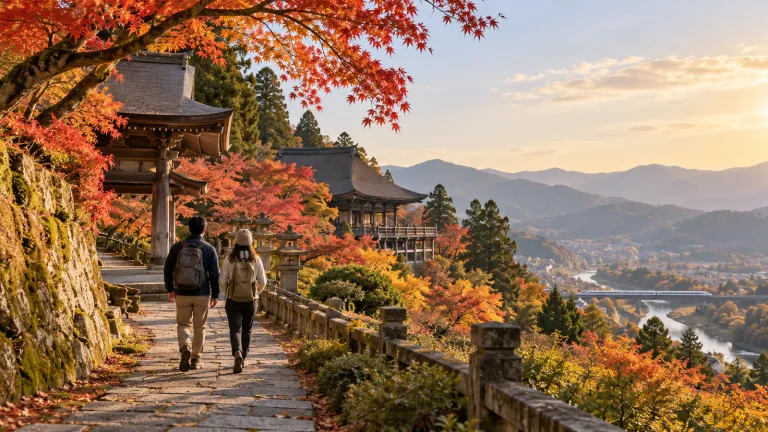
A first-timer-friendly route that follows autumn colour from mountain Nikko to Tokyo gardens and late-season Kyoto temples.
Researched and updated: 13 October 2026. Opening hours, prices, transport and seasonal conditions can change; confirm official information before booking.
Japan’s autumn colour moves by elevation and latitude. That means one date cannot be “peak” for the whole country. Japan’s national tourism organisation says Tokyo’s best-known ginkgo displays often colour from mid-November into early December, while Kyoto’s foliage usually starts in mid-November. Nikko, with higher mountains and lakes, can turn earlier.
The simple timing strategy
Do not chase one exact “peak day.” Build three layers into the same trip:
Nikko and Lake Chuzenji can provide earlier foliage and cooler weather.
Tokyo gardens and ginkgo avenues can shine later in November.
Kyoto’s maples often begin from mid-November and can extend later.
Museums, food halls, neighbourhood cafés and covered shopping streets.
A calm 10-day plan
Days 1–3: Tokyo without rushing
Use the first day for your hotel area and an easy meal. On day two, pair one garden with one neighbourhood. On day three, choose a second garden or museum rather than crossing the city repeatedly. Meiji Jingu Gaien, Koishikawa Korakuen and Rikugien are well-known autumn options, but opening hours and special evening events must be checked on official pages.
Days 4–5: Nikko
JNTO recommends about two days. The journey from Tokyo is roughly two hours depending on route. Spend one day around the World Heritage shrines and temples, then use the next for Lake Chuzenji or a waterfall area if weather and transport allow. Mountain buses can be busy, so start early and avoid scheduling a same-day evening flight or fixed dinner back in Tokyo.
Day 6: Move west
Return toward Tokyo and continue by shinkansen. Keep this as a travel day with one simple evening walk. Luggage forwarding can make train transfers easier; verify delivery time before sending essential items.
Days 7–10: Kyoto
Split Kyoto into zones. Do an eastern-temple day, an Arashiyama day and one flexible day for a quieter garden, Uji, Nara or rest. Famous night illuminations can be beautiful, but they also draw crowds. Pick one evening event, not one every night.
Budget in yen and dollars
| Item | Planning range per person | Note |
|---|---|---|
| Mid-range room share | ¥10,000–25,000 a night | Kyoto autumn weekends can rise sharply |
| Food | ¥4,000–9,000 a day | Convenience breakfast plus one special meal works well |
| Intercity and local transport | ¥35,000–65,000 total | Compare individual tickets with passes for your exact route |
| Admissions and extras | ¥8,000–25,000 total | Many gardens are inexpensive; premium experiences are not |
Ranges are rough planning estimates. Exchange rates, hotel dates and reservation choices change the real cost. Always check live yen prices.
What makes the trip enjoyable
- Choose one “must-see” and one easy extra each day.
- Travel with a small bag during rush hour.
- Carry cash for small temples and shops, but use secure payment methods where accepted.
- Speak quietly, follow photography signs and do not block paths.
- Try seasonal sweets, mushrooms, chestnut dishes and warm noodle meals; ask about allergens clearly.
- Keep a morning for rest if jet lag is strong.
Mini trip quiz
Kyoto is crowded at noon. What gives you a better day?
Show the answer
Frequently asked questions
Should I buy a nationwide rail pass?
Can I visit Nikko as a day trip?
Is late November too late?
Booking order, luggage and connectivity
Reserve the hardest-to-replace parts first: the international flight, Kyoto accommodation on busy autumn dates and any special ryokan stay. Then confirm the Tokyo–Nikko and Tokyo–Kyoto transport plan. Most gardens and neighbourhood walks can remain flexible unless an official page requires timed entry.
A medium suitcase or backpack is easier on stairs and crowded trains. Keep medicine, documents and one change of clothes with you.
Arrange a working eSIM, SIM or portable Wi-Fi before the first transfer. Download hotel names and addresses in Japanese and English.
If you forward luggage, verify the delivery date with the counter and keep overnight essentials. During rush hour, avoid bringing large bags onto commuter trains when a different time or luggage service is practical.
Simple daily checklist
- Check the weather, current foliage update and last useful train or bus.
- Carry some cash for small temples, lockers and local shops.
- Wear shoes that are easy to remove if a venue requires it.
- Keep a compact layer for colder Nikko mornings and evenings.
- Confirm dietary restrictions using clear translated text.
- Choose one priority sight and one nearby backup instead of crossing the city repeatedly.
Editorial note: The featured image is an original AI-generated editorial illustration. It is designed to communicate the route, not to document an exact viewpoint. Planning ranges are estimates and no booking outcome is guaranteed.