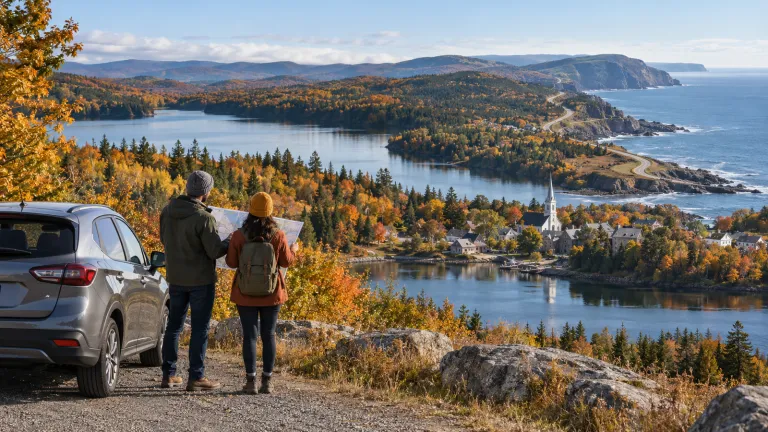
A clear comparison for travellers choosing between city-and-foliage days in Ontario and Quebec or a coastal road trip in Nova Scotia.
Researched and updated: 13 October 2026. Opening hours, prices, transport and seasonal conditions can change; confirm official information before booking.
Canada is too large for one “fall trip.” Ontario and Quebec suit travellers who want major airports, cities and day trips. Nova Scotia suits travellers who want a coastal drive and are comfortable covering more distance. Destination Canada highlights all three, but the right answer depends on your pace.
Turn the region choice into a bookable plan
Start with your arrival airport and the number of full days you actually have. A seven-night trip usually gives fewer than seven sightseeing days after arrival, departure and transfers. If you land in Toronto, keep Ontario as the core unless you can add time for Quebec. If you land in Halifax and want Cape Breton, treat the drive as part of the holiday rather than a transfer to be finished as fast as possible.
For colour: no one can promise a perfect foliage week months ahead. Rain, temperature, wind and location shift the timing each year. Choose a route you would enjoy even if the leaves are early or late: neighbourhood walks, food, museums, coast or short trails. Check the official regional foliage and park updates just before travel.
What to check in a quote
| Cost | Question to ask |
|---|---|
| Hotel | Are taxes, parking and cancellation included? |
| Rental car | Are insurance excess, extra drivers, distance and one-way fees clear? |
| Activity | What happens in poor weather, and how late can you cancel? |
Before buying, check what you already own. A comfortable daypack and a waterproof outer layer often serve a city-and-nature trip better than specialist equipment. These Amazon.com search links may show different stock or shipping outside the US. As an Amazon Associate, we earn from qualifying purchases.
Compare daypacks ↗
Compare rain layers ↗
Put these answers in one simple trip sheet. When two routes look equally attractive, choose the one with fewer hotel moves and longer daylight time at your favourite stop. That is often the difference between a memorable autumn trip and a tiring collection of highways.
Pick your trip in one minute
| Region | Best for | Good trip shape |
|---|---|---|
| Ontario | First-time visitors, Niagara, city food and easy parks | Toronto + Niagara + one nature day |
| Quebec | Historic streets, French-Canadian food and Laurentian colour | Montreal + Quebec City or Mont-Tremblant |
| Nova Scotia | Coast, seafood, long views and driving | Halifax + Cape Breton loop |
Option 1: Ontario in 7 days
Use Toronto for the first two nights, then make Niagara-on-the-Lake or Niagara Falls your second base. Destination Canada recommends the Niagara River Parkway for foliage, shops and wineries. Add a quieter city-edge nature day at Rouge National Urban Park, where Parks Canada suggests scenic drives and less-crowded trails.
Algonquin can be beautiful, but it adds distance. If you include it, remove something else. Do not turn a seven-day trip into a race between Toronto, Niagara, Algonquin, Ottawa and Montreal.
Option 2: Quebec in 7 days
Spend three nights in Montreal, then choose either Quebec City or the Laurentians for the remaining days. Destination Canada says the Laurentian colours are often most vivid around the end of September, but use Quebec’s current foliage map before travel. City parks, markets and neighbourhood walks give you a useful backup when mountain weather is poor.
If you do not speak French, simple greetings and patience go a long way. Major visitor services commonly offer English, but never assume every small business will.
Option 3: Nova Scotia in 7–9 days
Begin with Halifax, then move toward Cape Breton. The Cabot Trail is roughly a 300-kilometre loop, but it is not a quick lap. Viewpoints, weather, road curves and hikes make it a full experience. Parks Canada presents a six-day Cape Breton itinerary from Baddeck covering 615 kilometres, which is a useful reminder to slow down.
Build one weather buffer into the road trip. Coastal fog and wind can hide the view. A museum, local music session, food stop or shorter forest walk can save the day without unsafe driving.
Budget and booking order
| Item for two | Planning range for 7 nights | Book first |
|---|---|---|
| Hotels | C$1,400–2,800 | Small-town and Cape Breton stays |
| Car and fuel | C$650–1,300 | Automatic vehicle if required |
| Food | C$700–1,300 | Only special dinner reservations |
| Activities | C$150–500 | Limited-capacity tours |
These are broad planning estimates, not quotes. Taxes and peak weekends can change prices. International visitors should verify entry rules and insurance coverage.
Mini trip quiz
You want seafood, ocean viewpoints and do not mind driving. Which route fits best?
Show the answer
Frequently asked questions
Can I combine Ontario and Quebec?
When is Cape Breton colour strongest?
Do I need a car?
Booking order and route reality check
Choose the region before buying internal flights or a rental car. For Ontario and Quebec, lock in city hotels and only then decide whether a rural car segment is worth it. For Nova Scotia, reserve the vehicle and smaller Cape Breton stays early because the road trip depends on both.
Use rail and public transport between major cities, then rent a car only for the rural portion if needed.
Check one-way fees, insurance, kilometre limits, ferry plans and the real daily driving time before paying.
Keep one unscheduled half-day. Canada’s scale, autumn weather and traffic can turn an optimistic plan into a tiring one. A buffer protects the experience and the flight home.
Weather, packing and safety
- Bring a waterproof outer layer and warm layers that can be added or removed.
- Store offline maps and official park or road information.
- Carry water and food when driving between smaller communities.
- Respect wildlife guidance and never approach animals for photographs.
- Check sunset time before hikes or long scenic drives.
- Confirm entry, insurance and licence requirements for every traveller.
Editorial note: The cover illustration is a visual guide, not a photograph of a specific place. Planning ranges are estimates and no booking outcome is guaranteed.