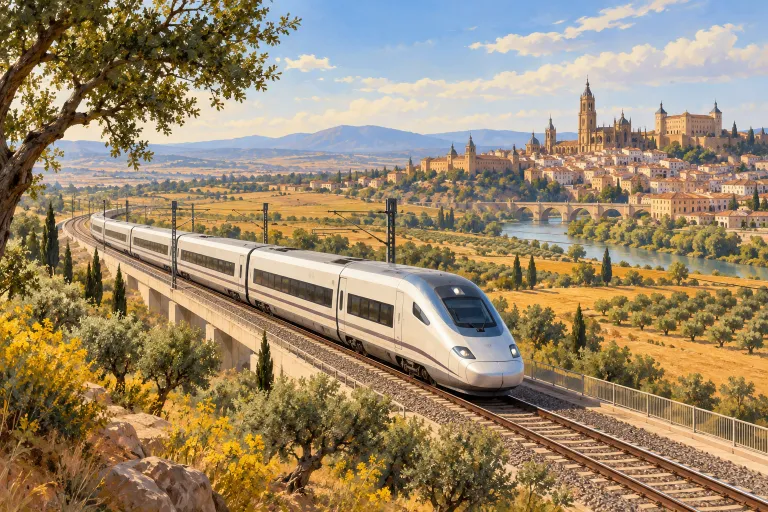
Spain by train: Madrid, Seville and Barcelona
A first-time seven-night route that leaves time to enjoy each city. Updated 14 October 2026.
Quick answer: Spend three nights in Madrid, two in Seville and two in Barcelona if flight prices and train times suit that order. This is a route idea, not a promise about a particular departure. Spain’s rail network makes these city pairs possible, but tickets, stations, luggage rules and service changes belong to the operator you book. If seven nights feels rushed, choose two cities instead of treating a third as compulsory.
| Nights | Base | Simple focus | Booking check |
|---|---|---|---|
| 1–3 | Madrid | Arrive, explore central areas, keep one flexible day | Airport transfer and departure station |
| 4–5 | Seville | Two slower evenings and one main sight | Train fare conditions and attraction entry |
| 6–7 | Barcelona | One booked sight and time for neighbourhoods | Arrival station and flight-home buffer |
Compare small carry-on cases ↗Compare packing cubes ↗
Pick cities before buying tickets
Start with the city you most want to see. Madrid, Seville and Barcelona are a workable first-trip combination, but not a checklist everyone must finish. A traveller focused on museums may spend four nights in Madrid and three in Barcelona. Someone who wants slower evenings may choose Madrid and Seville only. The best route depends on your interests, walking ability and flight options.
Check open-jaw flights, arriving in one city and leaving from another. Compare their total price with a return flight plus the cost and time of travelling back to the start. An extra train and hotel night can wipe out an apparent airfare saving. Make the last night easy to reach from the departure airport.
Renfe runs AVE and other services, while other operators may appear in a search. The official Spanish tourism site describes high-speed rail links among major cities, including Madrid, Seville and Barcelona. That does not guarantee every train on every date. Use the chosen operator’s live timetable before you reserve a hotel around a specific arrival time.
Madrid: three nights with room to breathe
On arrival day, do not commit to an expensive timed tour. Get to the hotel, eat nearby and take a gentle walk. Flight delays, baggage and jet lag make the first afternoon uncertain. On the second day, choose a main museum or neighbourhood, then allow time for a park or café. A good city day needs room for the things you find on the way.
Use the third day for a different side of Madrid or a day trip only if you actually want one. A day trip adds a return train, an early start and another set of opening hours. If you would rather see the city, stay. Book a limited-entry sight on its official site and verify the exact entrance and cancellation rule. The train itinerary does not require any specific museum ticket.
Before leaving Madrid, confirm the departure station printed on your ticket. The capital has multiple large stations, and the right one depends on the service. Build travel time from the hotel door to the station, not merely the Metro ride. Leave time for security or boarding checks where applicable.
Seville: give the city two evenings
Seville rewards a slower pace, particularly when the afternoon is hot. Check the weather for your travel dates and put longer walks in comfortable hours. Spend one morning on a main sight, then rest or choose an indoor option. A second evening lets you enjoy the city without trying to finish it before the next train.
Tickets for popular places can sell out. Buy from the attraction’s official channel and check the selected date, time and entry point. If you cannot get a ticket, you can still have a good visit with streets, squares, food and other open sites. Avoid resellers that make an ordinary ticket look like the only way in unless you deliberately want their extra service.
For a one-week trip, do not add Córdoba, Granada and several other stops just because they are well known. Each detour asks for transport, luggage and new opening hours. If one of those places matters deeply, trade a city night for it instead of stacking it on top.
Barcelona: a clear final base
Use the train to reach Barcelona with enough time for a calm check-in. Verify the actual arrival station and route to your hotel. A property near a map pin may still require stairs or a difficult transfer with luggage. Ask the hotel about an accessible entrance if you need one.
Choose one advance-booked sight for a full day, then leave other hours open for a neighbourhood or waterfront walk. Barcelona is not improved by collecting tickets without time to enjoy them. Use official attraction pages for current entry rules and prices. For the last full day, keep plans flexible; it is easier to shorten a walk than recover from a missed flight.
If your flight leaves early, consider how you will reach the airport before committing to a late-night activity. Check official airport transport hours and the airline’s baggage cutoff. A final morning should be simple and predictable.
What the ticket type really changes
Renfe’s long-distance fares have different conditions. Its Básico, Elige and Prémium options vary in included services and flexibility. A cheap fare may still be right if your plans are firm, but read the change and refund terms before paying. Do not rely on a blog’s old fee amount; the operator’s current booking page and conditions control the purchase.
Compare departures by final checkout cost, travel time, station, luggage allowance, seat options and flexibility. A very early train can force a taxi or lost sleep. A late train can make your first evening in the next city useless. The practical choice is often a mid-morning service that fits hotel checkout and arrival.
Enter passenger names as required and carry the identification specified for the ticket. Renfe says long-distance and AVE tickets are nominative and identity checks can occur. Save the booking offline. If the app fails at the station, a downloaded PDF or paper copy can help.
Luggage rules differ by service
Renfe’s standard luggage page allows up to three hand-luggage pieces within stated weight and combined-size limits on covered services, but Avlo has a stricter included allowance. If you switch operator or train type, check again. Do not assume airline cabin-bag rules apply to trains. An oversized suitcase can cost extra or be hard to store even when technically accepted.
Travel light enough to lift the bag yourself. Keep medicine, passport, ticket and valuables in a small bag you control. Luggage racks are shared. Do not block doors or aisles, and take your bag when you change trains. Parents with a stroller should check the operator’s folding and storage instructions.
If mobility assistance is needed, request it from the actual operator and confirm the relevant stations. A high-speed train label does not tell you everything about a platform or the last part of the route to a hotel.
Connections, delays and alternate routes
Try to avoid a tight connection between separate tickets. If the first train is late, the second ticket’s protection depends on the operator and fare. When a connection is unavoidable, leave a buffer you would be comfortable spending in a station. Use the operator’s current service messages on travel day.
Keep an alternative in mind: another train later, one extra night or a simpler city plan. You do not need to prebook every backup. You do need a contact number, enough battery and access to your booking details. If service is disrupted, ask the operator what replacement or refund options apply to your ticket before purchasing an expensive substitute.
Build a fair budget
Price each train for the date you actually travel. Add accommodation, city transport, attraction tickets, meals, luggage extras and a small reserve. A low train fare may require an early taxi; a central hotel may cost more but save several local trips. Compare the total rather than one attractive number.
If travelling with children, check age-based fares and seating rules directly with the operator. For a group, compare train tickets with other transport only after adding baggage, transfer and parking costs. A one-week trip is about usable hours, not just kilometres covered.
Booking order
- Choose two or three cities and the nights you want in each.
- Compare arrival and departure flights with the full rail cost.
- Search the actual date and stations with the operator.
- Read fare, luggage and change conditions before payment.
- Choose hotels with a realistic route from the station.
- Add just a few timed sights, leaving food and walks flexible.
Quick questions
Do I need a car for this route?
No. This is a city-and-train plan. A car adds parking and city driving work.
Is AVE always the cheapest train?
No. Fares change by service and date. Compare the live total and terms.
Can I bring an airline-size suitcase on Avlo?
Avlo’s included luggage rules are stricter than standard Renfe services. Check the current dimensions and any paid extra before booking.
Should I add Valencia too?
Only if you have more time or are happy to remove a different stop. Each extra city consumes travel and hotel time.
Leave a Reply