Alaska cruise planning: choose the route before the ship
A plain-English guide to Glacier Bay, port days, total cost, documents and what to pack. Updated 14 October 2026.
Quick answer: If this is your first Alaska cruise, compare the exact route and hours in port before comparing cabins. A round trip is simpler when you want one arrival airport. A one-way cruise can work better if you also want to see Southcentral Alaska, but it adds transfer and flight planning. If Glacier Bay is your priority, confirm that the named sailing visits Glacier Bay National Park; a vague “glacier viewing” label does not mean the same thing.
| Choose this first | What to check | Why it matters |
|---|---|---|
| Round trip or one way | Embarkation and final port, flights, transfer time | A cheap one-way fare may cost more after travel to and from the ship. |
| Glacier day | Exact location on the day-by-day itinerary | Glacier Bay and other glacier areas are different experiences. |
| Port time | Dock or tender, first and last possible times ashore | A long-looking stop can leave less usable time than expected. |
| Total cost | Fare, taxes, gratuities, excursions, Wi-Fi and transfers | The advertised cabin price is only the start. |
Pick the sailing that matches your real trip
Travel Alaska describes two broad patterns. Inside Passage trips visit Southeast Alaska ports. Cross-Gulf trips continue to Southcentral Alaska, often ending near Seward or Whittier. Those towns are not the same as an airport in Anchorage, so add the onward journey when you price a one-way trip. Some routes depart from Seattle, others from Vancouver. Your starting city changes border documents, flight choices and how much pre-cruise time you should allow.
Write down your top two reasons for going. If they are coastal scenery and a relaxed week, a convenient round trip may be enough. If Denali or a longer Alaska land stay is central to the plan, a one-way cruise may fit your route. Do not assume the land extension is automatically included. Check whether the offer includes hotels, buses, train seats and park activities, and look at the time you actually get in each place.
Compare sailing dates with your own schedule, not a blanket claim that one month is “best.” Alaska travel is seasonal, yet weather and wildlife do not follow a booking guarantee. Later daylight, rain, sea conditions and excursion availability can vary by date and place. A cheaper sailing is attractive only if its route and port hours still give you the experience you want.
Understand what a Glacier Bay day involves
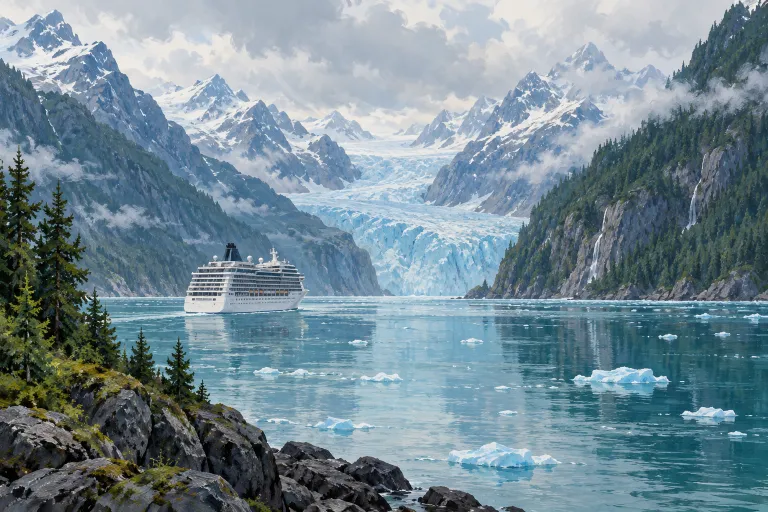
The National Park Service says cruise ships do not dock inside Glacier Bay National Park. They usually spend much of the day in the bay, and park rangers board the ship to explain the landscape, wildlife and history. That makes it a viewing day from the vessel, not a day to book a shore excursion in the park. Look for the park’s name on the cruise line’s day-by-day schedule, then check it again shortly before travel because itineraries can change.
Read the onboard program the evening before the park day. It may show ranger talks, the information desk and the times when the ship approaches major views. You can enjoy the day from an outside deck or a warm indoor lounge. If you care about photographs, keep a camera ready and a dry cloth for wet lenses. Give other passengers room at railings. Wildlife sightings and glacier calving are possible, never promised.
Other cruise routes may visit a different glacier area, which may still be a good choice. Judge the experience on its own terms. A family that wants more port activities may choose a different route from a traveler who specifically wants a long park day with ranger interpretation.
Read port days like a timetable
Juneau, Ketchikan and Skagway are common cruise stops, but the number and length of calls vary. Before you pay for an excursion, note arrival, scheduled departure, whether the ship docks or uses smaller tender boats, and the operator’s meeting point. Then allow time to leave and re-board the ship. The latest reboarding time is the deadline that matters, not the ship’s departure time.
One priority per port is enough
Choose one experience that would make the stop worthwhile. That might be a local museum or cultural visit, a guided nature outing, a rail trip or simply time to walk and eat in town. Add a nearby backup rather than stacking two distant paid tours. Fog, wind or a changed berth may affect an activity even when the ship arrives. Read each excursion’s cancellation policy and physical demands before booking.
For independent trips, save the route back to the terminal offline and know who to contact if transport fails. If you need step-free access, ask about the exact gangway or tender arrangement and the vehicle used for the tour. “Accessible” can cover very different conditions; get a specific answer from the cruise line and operator.
Calculate the trip price you will actually pay
Make one line for the cabin and one line for everything around it: flights, a hotel before sailing, travel to the pier, government taxes and port fees, gratuities, drinks, specialty meals, Wi-Fi, excursions, travel insurance and the journey home. Add costs in the currency you will be charged, then compare final totals. A higher cabin fare can be better value if it includes something you would otherwise buy; an “included” item has no value if you would not use it.
Read the deposit and final-payment dates. Note what you lose if you cancel after each date, and whether a fare change or itinerary change gives you any right to refund or credit under that booking. Compare travel insurance by the actual covered reasons, exclusions and medical limits, not by its label. If your plans include expensive flights or a land extension, leave a sensible buffer before embarkation and after disembarkation.
Documents: check the route, your nationality and the cruise line
Many Alaska itineraries involve Canada, even when the main destination is the United States. Documentation depends on citizenship, immigration status, route and where the cruise begins and ends. U.S. Customs and Border Protection describes limited rules for some U.S.-citizen closed-loop cruises, but those rules do not apply to every traveler or every itinerary. The U.S. State Department strongly recommends a passport book for cruise passengers because an emergency flight home may require one. Do not rely on a short social-media answer about “no passport needed.”
Check the cruise line’s document page for your exact sailing, then the relevant government border and visa guidance for every country on the route. Check the expiration date, names on tickets and any rules for children traveling with one parent or another adult. Do this before making a nonrefundable booking; document problems can cost more than a missed discount.
Pack for changeable days, not one temperature
Use layers: a comfortable base layer, a warm middle layer and a rain-resistant or waterproof outer layer. Shoes should handle wet decks and walking in town without needing to be brand new. Add any essential medicine and documents to your carry-on bag. A small day bag, a refillable bottle and a way to keep a phone dry may be useful. Check the ship’s prohibited-items policy before packing electronics or tools.
You do not need to buy every “Alaska must-have” product. Test the jacket you own in rain, try your shoes on a longer walk, and borrow binoculars if you will use them once. Check baggage allowance for both your airline and ship. If you plan an excursion involving water, ice or uneven paths, follow that operator’s specific clothing and mobility advice rather than a generic packing list.
Practical plan for your first booking
- Choose the month you can travel and a comfortable total budget.
- Compare routes by embarkation city, final port, glacier day and hours in each port.
- Read the full fare terms and add flights, hotels, transfers and planned extras.
- Confirm travel documents with the cruise line and official border sources.
- Book a sailing with enough arrival buffer and keep the final itinerary offline.
If you want to travel independently after the cruise, check the state tourism route information and real transfer timetables before adding hotels. If the land segment is only one rushed day, it may feel more like transport than a holiday. A better trip often has fewer moving parts and time to appreciate the places you chose.
Questions travelers ask
Does every Alaska cruise visit Glacier Bay?
No. The National Park Service says many Alaska cruises do not visit the park. Confirm the exact park day on the itinerary before buying if it is your priority.
Do I need an expensive balcony cabin?
A balcony can be pleasant, but it is not the only place to see scenery. Compare deck access, indoor viewing areas, cabin price and what the extra money could fund on shore. Choose based on how you plan to spend the day.
Should I book every shore excursion in advance?
Book the one or two activities that matter most if availability is limited. Leave room for a simple walk, a local meal or a weather change. Check cancellation rules before paying.
Can I fly home on disembarkation day?
Possibly, but first account for the time to leave the ship, reach the airport and check in. A one-way cruise ending near Seward or Whittier adds onward transport. Leave a larger buffer if missing the flight would be costly.
Leave a Reply