This guide uses official tourism, government and transport sources. Rules and prices can change, so check the linked official pages before booking.
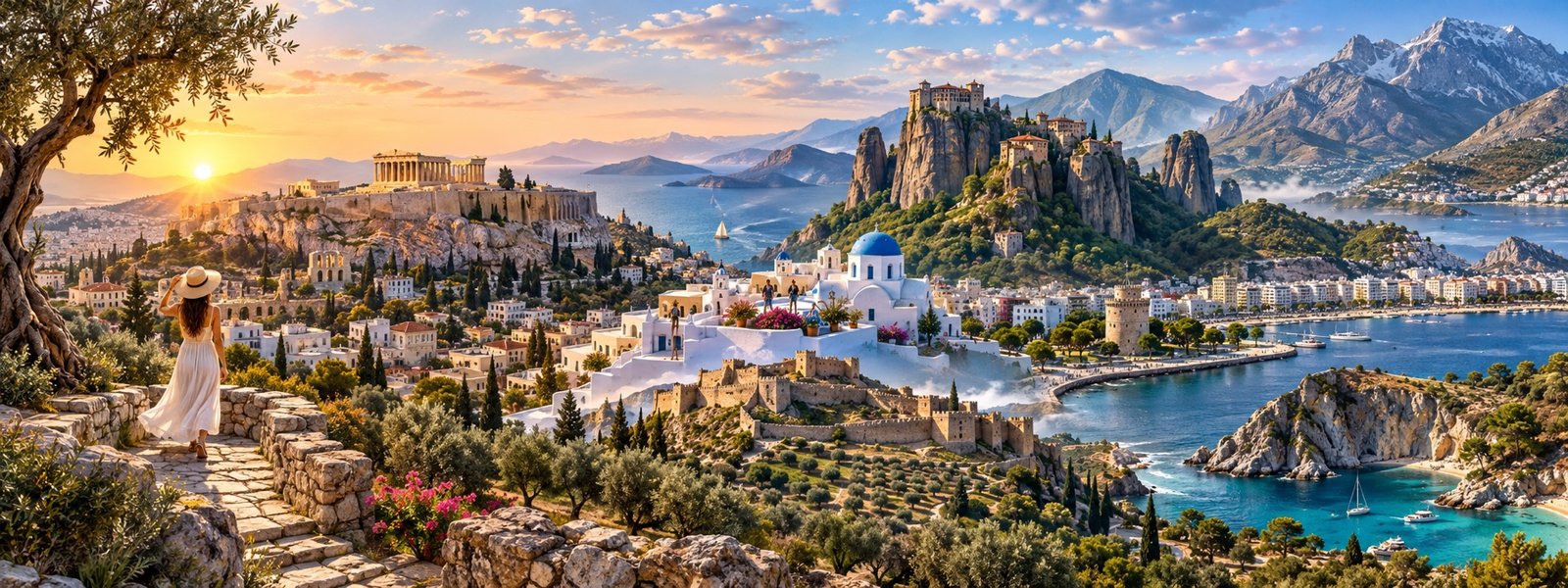
Greece is not one itinerary but a network of mainland regions and island groups shaped by archaeology, active faith, mountains, ferries, weather and local life. Athens, Delphi and the Peloponnese tell different stories from the Cyclades, Ionian islands, Dodecanese, Crete and Epirus. These fifty experiences help first-time visitors choose a coherent route, pair sites with museums, respect sacred and memorial spaces, plan ferries conservatively and avoid treating beaches or viewpoints as risk-free photo sets.
Greece at a glance
- Ideal first trip: 10–14 days for Athens, one mainland circuit and one island or island group; longer for Crete or a second archipelago.
- Currency: euro. Cards are widespread, but cash backup remains useful on small islands, rural routes and for minor purchases.
- Best planning principle: group experiences by transport corridor or island group and protect one weather-flexible day around ferries or mountain plans.
- Transport: intercity buses, rail on selected mainland corridors, domestic flights and many independent ferry operators require separate checks.
- Price check: verify official archaeological tickets, ferry conditions, baggage, hotel taxes, transfers and cancellation rules before purchase.
Entry, visa and arrival planning
Use the Hellenic Ministry of Foreign Affairs and the authority responsible for your passport and residence for Schengen entry rules. Nationality, residence, trip purpose and duration determine visa or exemption requirements.
Athens is the largest gateway, while Thessaloniki, Heraklion, Chania, Rhodes, Corfu and seasonal island airports can support open-jaw routes. Never build a same-day international connection around the last ferry.
When to go
Spring and autumn often support cities, archaeology and walking with less extreme heat. High summer brings island demand, meltemi winds and wildfire risk, while winter changes ferries, mountain access and small-island services.
Orthodox Easter, August holidays, major festivals and local saints days transform transport and accommodation. Check the exact island and municipality calendar before booking.
Budget and places to stay
Build value, mid-range and premium versions with live refundable totals. Ferry cabins, island flights, port transfers, beach transport and one-way rentals can outweigh an apparently cheap room.
Compare official hotel totals and verify tax, breakfast, air conditioning, lift access, port pickup, beach distance and cancellation. A map pin near the sea can still mean a steep road or no public transport.
Fifty things to do in Greece
1. Acropolis through one coherent archaeological route
Why go: Athens. The citadel’s monuments make sense as a designed sacred landscape, not a race between isolated photo points.
How to do it: Book the official timed entry, begin before heat and follow the authorised route without touching masonry.
Good for: Archaeology, architecture and first-time visitors
Know before you go: Marble is slippery, shade is limited and restoration changes circulation.
2. Acropolis Museum before or after the hill
Why go: Athens. Original sculpture, excavation layers and sightlines help visitors understand what remains above and what has moved.
How to do it: Check current galleries, use the official ticket and connect the visit directly with the archaeological site.
Good for: Museums, families and context-seeking travellers
Know before you go: Security, glass floors and timed demand affect some visitors.
3. Ancient Agora with civic history
Why go: Athens. Assembly, commerce, religion and law become more tangible in a broad landscape below the Acropolis.
How to do it: Use the site map, choose two civic questions and include the museum in the reconstructed stoa.
Good for: History, politics and archaeology travellers
Know before you go: Heat and uneven ground make midday visits tiring.
4. National Archaeological Museum by period
Why go: Athens. A vast collection can connect prehistoric, classical and later Greece when visitors resist seeing every room.
How to do it: Check open galleries and select two periods, leaving time for labels and a seated break.
Good for: Archaeology, art and rainy-day travellers
Know before you go: Renovation and gallery closures require an official check.
5. Plaka and Anafiotika with residential respect
Why go: Athens. Historic lanes, small churches and island-influenced houses reveal a lived district beyond souvenir streets.
How to do it: Walk early, use one documented route and keep voices and cameras away from private doors and windows.
Good for: Architecture, photography and slow-city travellers
Know before you go: Steps, heat and narrow residential lanes limit access.
6. Monastiraki to Psyrri through layered Athens
Why go: Athens. Markets, Ottoman traces, workshops and contemporary nightlife show how different eras overlap.
How to do it: Visit markets during working hours, choose one museum or craft stop and return after dark only with a clear route.
Good for: Markets, food and urban-culture travellers
Know before you go: Crowds and nightlife require normal valuables awareness.
7. Syntagma and the National Garden
Why go: Athens. Modern state institutions, public ceremony and a shaded garden balance an antiquity-heavy itinerary.
How to do it: Check demonstration routes, observe ceremonies respectfully and use the garden as a genuine rest period.
Good for: Civics, families and accessible-route planners
Know before you go: Security changes and summer heat can close paths or roads.
8. Benaki or Museum of Cycladic Art
Why go: Athens. Focused collections connect ancient forms with Byzantine, folk and modern Greek identity.
How to do it: Choose the museum that answers the day’s question and verify temporary exhibitions and hours.
Good for: Art, design and museum travellers
Know before you go: Special exhibitions may need separate admission.
9. Athens Central Market with food context
Why go: Athens. Produce, meat, fish, spice and tavern culture show everyday supply systems rather than a staged food hall.
How to do it: Go during active morning hours, keep aisles clear and ask before photographing workers.
Good for: Food, markets and curious travellers
Know before you go: Wet floors, strong smells and crowds may not suit everyone.
10. Lycabettus or Philopappos for one city panorama
Why go: Athens. A single elevated walk clarifies the basin, mountains, coast and density of modern Athens.
How to do it: Choose the hill according to ability and weather, carry water and descend before dark if trails are unfamiliar.
Good for: Views, walking and budget travellers
Know before you go: Heat, loose ground and limited shade require conservative timing.
11. Cape Sounion with transport and sunset discipline
Why go: Attica. The Temple of Poseidon and exposed headland connect archaeology with Aegean geography.
How to do it: Use an official excursion or current regional bus, check closing time and do not rely on an unverified late return.
Good for: Archaeology, coast and sunset travellers
Know before you go: Wind, cliffs and sparse evening transport are real constraints.
12. Aegina as a focused near-Athens island
Why go: Saronic Gulf. An inhabited island, pistachio culture and the Temple of Aphaia offer more depth than a ferry selfie.
How to do it: Check official ferries, choose one town or temple route and leave margin before the last return.
Good for: Islands, food and short-break travellers
Know before you go: Fast ferries, summer demand and road transfers affect the day.
13. Delphi sanctuary and museum together
Why go: Central Greece. Landscape, inscriptions, treasuries and objects explain the oracle only when the museum and site are paired.
How to do it: Arrive early, use the official route and allow several hours rather than treating Delphi as a coach stop.
Good for: Archaeology, mythology and mountain travellers
Know before you go: Steep paths, altitude and winter weather affect access.
14. Arachova or Galaxidi as a Delphi overnight
Why go: Central Greece. A nearby town turns a long day trip into a slower mountain or gulf chapter.
How to do it: Choose the base by season and onward route, verifying buses, parking and restaurant closures.
Good for: Slow travel, road trips and couples
Know before you go: Weekend ski demand and seasonal businesses change value.
15. Meteora monasteries with active-faith respect
Why go: Thessaly. Clifftop monasteries unite geology, Orthodox life, art and engineering in a working sacred landscape.
How to do it: Check each monastery’s official opening day and dress rules, then visit only two or three with a licensed driver or guide.
Good for: Faith, geology and photography travellers
Know before you go: Stairs, exposed viewpoints and changing closures demand planning.
16. Meteora trail below the road viewpoints
Why go: Thessaly. A marked walk reveals rock formations, hermit caves and valley scale beyond parking areas.
How to do it: Use an official or guided route, carry water and avoid unmarked shortcuts near cliffs.
Good for: Hiking, nature and active travellers
Know before you go: Heat, storms and loose rock can make trails unsafe.
17. Thessaloniki waterfront and White Tower context
Why go: Thessaloniki. Roman, Byzantine, Ottoman, Jewish and modern histories meet along a walkable urban waterfront.
How to do it: Start with one museum or official city route, then walk between the tower, port and central neighbourhoods.
Good for: History, food and city-break travellers
Know before you go: Heat and major events can make the promenade crowded.
18. Museum of Byzantine Culture
Why go: Thessaloniki. Objects, mosaics and interpretation establish the city’s importance beyond classical Greece.
How to do it: Check galleries and spend two focused hours before visiting selected churches.
Good for: Art history, faith and museum travellers
Know before you go: Religious objects require respectful interpretation.
19. Thessaloniki Jewish history with evidence
Why go: Thessaloniki. Community history and Holocaust memory are essential to understanding the modern city.
How to do it: Use official museums, memorials or a trained guide and allow reflective time without casual posing.
Good for: Modern history, remembrance and education travellers
Know before you go: Content is distressing and some sites have security procedures.
20. Mount Olympus foothills with a realistic route
Why go: Macedonia and Thessaly. Myth, biodiversity and high mountain terrain deserve more than an ambitious summit promise.
How to do it: Use the national park and refuge information, select a route below ability and book a mountain guide for technical goals.
Good for: Hiking, mythology and nature travellers
Know before you go: Storms, heat, altitude and route-finding can become serious quickly.
21. Nafplio old town and Palamidi at a humane pace
Why go: Peloponnese. A former capital, harbour and fortress provide a compact introduction to modern state and Venetian history.
How to do it: Stay overnight, choose stairs or road access to Palamidi and keep the waterfront for cooler hours.
Good for: History, couples and road-trip travellers
Know before you go: Heat and the long staircase make midday climbing unsuitable.
22. Mycenae with Bronze Age context
Why go: Peloponnese. Fortifications, tombs and landscape support a careful reading of archaeology beyond Homeric legend.
How to do it: Visit the museum and site together, arrive before heat and use the official interpretation.
Good for: Archaeology, families and mythology travellers
Know before you go: Exposed ground and loose stones require footwear and water.
23. Epidaurus theatre and sanctuary
Why go: Peloponnese. Performance architecture belongs within a wider healing sanctuary, not as an isolated acoustics trick.
How to do it: Use the official site route, respect rehearsals and check festival dates before assuming stage access.
Good for: Architecture, theatre and archaeology travellers
Know before you go: Summer performances transform traffic and availability.
24. Ancient Corinth and the canal as separate stories
Why go: Peloponnese. A commercial ancient city and a modern engineering cut explain different eras on one corridor.
How to do it: Prioritise the archaeological site and museum, then view the canal only from authorised areas.
Good for: History, engineering and day-trip travellers
Know before you go: Roadside stops and bridge edges require strict safety.
25. Olympia site and museum without rushing
Why go: Western Peloponnese. Athletic, religious and political history becomes clearer through the sanctuary and its objects together.
How to do it: Allow a half day, use the museum first or last according to heat and verify regional transport.
Good for: Sport history, archaeology and families
Know before you go: Summer heat and limited shade demand an early start.
26. Monemvasia with an overnight strategy
Why go: Southern Peloponnese. A fortified rock settlement, churches and sea routes reward visitors after day groups depart.
How to do it: Stay nearby or inside the lower town, carry light luggage and choose the upper-city climb only in suitable weather.
Good for: Architecture, couples and slow travellers
Know before you go: Cobbles, stairs and vehicle-free access complicate luggage and mobility.
27. Mani stone villages and coastal roads
Why go: Southern Peloponnese. Tower houses, family history and stark landscapes form a region distinct from resort Greece.
How to do it: Base in one village, drive conservatively and choose one cave, town or walk per day.
Good for: Road trips, architecture and landscape travellers
Know before you go: Narrow roads, heat and limited fuel or services require preparation.
28. Mystras Byzantine hillside
Why go: Near Sparta. Churches, palaces and frescoes explain a late Byzantine city across a steep layered site.
How to do it: Begin early, choose the upper or lower entrance strategically and protect frescoed interiors.
Good for: Byzantine history, architecture and active travellers
Know before you go: Long climbs, heat and uneven stones limit access.
29. Arcadian mountain villages without daily relocation
Why go: Central Peloponnese. Stone settlements, monasteries and the Lousios landscape create a cooler inland chapter.
How to do it: Choose one base, use marked trails or a guide and verify winter road or summer fire conditions.
Good for: Hiking, villages and slow-travel visitors
Know before you go: Remote roads, snow and gorge exposure require conservative plans.
30. Santorini caldera with village and archaeology balance
Why go: Cyclades. Volcanic geography, Akrotiri and lived settlements offer more than a crowded sunset ledge.
How to do it: Stay several nights, reserve Akrotiri officially and choose one caldera walk or boat based on weather.
Good for: Geology, archaeology and couples
Know before you go: Heat, stairs, cruise peaks and cliff edges require pacing.
31. Delos from Mykonos with sacred-site focus
Why go: Cyclades. A largely uninhabited sanctuary preserves architecture, sculpture and trade history on exposed terrain.
How to do it: Use an authorised boat, check return time and carry sun protection and water.
Good for: Archaeology, history and island travellers
Know before you go: Boats cancel in wind and the site has almost no shade.
32. Naxos villages and interior food route
Why go: Cyclades. Fertile valleys, marble villages and local agriculture broaden the Cycladic picture beyond beaches.
How to do it: Rent a car only if comfortable or use a local tour, then choose two villages and one producer.
Good for: Food, villages and road-trip travellers
Know before you go: Narrow roads and summer parking make overloading the day stressful.
33. Paros beyond Naoussa nightlife
Why go: Cyclades. Byzantine church history, marble landscapes and working villages provide a fuller island chapter.
How to do it: Use buses or one responsible rental day, verify beach wind and include one inland or cultural stop.
Good for: Families, design and island travellers
Know before you go: Peak-season traffic and nightlife noise affect base choice.
34. Milos geology by land and licensed boat
Why go: Cyclades. Volcanic colour, mining history and sea-eroded coastlines create unusual landscapes.
How to do it: Use official beach access and a licensed boat only in suitable wind, with a land alternative ready.
Good for: Geology, swimming and photography travellers
Know before you go: Cliff instability, sun and changing boat routes require caution.
35. Syros architecture and year-round town life
Why go: Cyclades. Neoclassical Ermoupoli and Ano Syros reveal an administrative and cultural island beyond whitewashed stereotypes.
How to do it: Walk both districts, choose one theatre or museum and use buses for beaches.
Good for: Architecture, music and slow-island travellers
Know before you go: Steep upper-town lanes and summer heat affect mobility.
36. Tinos pilgrimage and craft villages
Why go: Cyclades. Active pilgrimage, marble craft and rural terraces require respectful, region-wide exploration.
How to do it: Dress for the church, avoid obstructing worship and use a local bus, driver or car for one village circuit.
Good for: Faith, craft and cultural travellers
Know before you go: Festival dates create intense crowds and limited transport.
37. Corfu old town with Venetian and local layers
Why go: Ionian Islands. Fortresses, arcades, churches and island administration create a dense historic capital.
How to do it: Choose one fortress and one museum, then explore quieter residential streets without blocking homes.
Good for: Architecture, history and city-island travellers
Know before you go: Cruise peaks, heat and polished stones affect the route.
38. Kefalonia geology and village route
Why go: Ionian Islands. Caves, mountains and earthquake-rebuilt settlements make a geographically varied island.
How to do it: Stay several nights, use one base per side only if necessary and verify cave, beach and road conditions.
Good for: Road trips, geology and families
Know before you go: Long drives, cliff roads and summer traffic punish day-trip thinking.
39. Zakynthos marine habitat with licensed access
Why go: Ionian Islands. Loggerhead turtle nesting and protected waters require conservation-led choices beyond famous beach images.
How to do it: Use the marine park guidance and licensed operators, keep distance and follow beach access rules.
Good for: Wildlife, families and responsible travellers
Know before you go: Boat crowding, nesting restrictions and cliff risks are serious.
40. Ithaca or Paxos for a slower Ionian stay
Why go: Ionian Islands. Smaller harbours, walking routes and local life reward visitors who remain overnight.
How to do it: Choose one island, confirm ferry reliability and arrange accommodation near the transport actually used.
Good for: Slow travel, walking and couples
Know before you go: Limited medical services and ferry disruption require flexibility.
41. Rhodes medieval city before day crowds
Why go: Dodecanese. Fortifications, civic buildings and layered communities form one of the Mediterranean’s major walled-city experiences.
How to do it: Walk early, choose the palace or archaeology museum and return in the evening for ordinary city life.
Good for: History, architecture and families
Know before you go: Heat, cobbles and cruise congestion affect access.
42. Lindos acropolis with village respect
Why go: Rhodes. A dramatic sanctuary above a living village combines archaeology, sea and defensive landscape.
How to do it: Arrive early by bus or responsible transfer, use only the official route and avoid animal rides.
Good for: Archaeology, views and active travellers
Know before you go: Severe heat, smooth stone and steep climbs require caution.
43. Nisyros volcano or Kos archaeology as one Dodecanese focus
Why go: Dodecanese. Volcanic terrain on Nisyros and layered medical and Roman history on Kos support very different island routes.
How to do it: Choose one according to ferry reliability, weather and interests rather than forcing both into a short stay.
Good for: Geology, cycling and archaeology travellers
Know before you go: Heat, sulphur, ferry changes and exposed sites require planning.
44. Knossos with museum-first interpretation
Why go: Heraklion, Crete. The palace and reconstructed elements are best understood alongside original objects and current archaeological interpretation.
How to do it: Pair an early official site slot with the Heraklion Archaeological Museum and avoid treating reconstructions as untouched antiquity.
Good for: Archaeology, families and history travellers
Know before you go: Heat, crowds and uneven ground demand an early start.
45. Heraklion walls, market and museum day
Why go: Crete. Venetian defences, urban food and major collections provide a useful introduction to Crete beyond an airport stop.
How to do it: Choose one museum, walk a shaded wall or harbour section and reserve the evening for a neighbourhood meal.
Good for: History, food and city travellers
Know before you go: Traffic and heat make a coherent walking route important.
46. Chania old harbour beyond the waterfront tables
Why go: Western Crete. Venetian, Ottoman and Jewish traces survive across neighbourhoods behind the harbour.
How to do it: Use an official heritage route, choose one museum or synagogue visit and walk early or late.
Good for: Architecture, history and couples
Know before you go: Cruise peaks and restaurant solicitation can overwhelm midday.
47. Samaria Gorge only with full logistics
Why go: Western Crete. A long national-park descent through mountain and gorge environments is a transport-dependent expedition.
How to do it: Confirm park status, fitness, footwear, bus, ferry and pickup before committing; choose a shorter gorge when uncertain.
Good for: Experienced hikers and nature travellers
Know before you go: Heat, falling rock, distance and evacuation limits make this unsuitable for casual walkers.
48. Rethymno and Arkadi with historical context
Why go: Central Crete. A Venetian-Ottoman town and a significant monastery connect architecture with modern Cretan memory.
How to do it: Base in Rethymno, visit the monastery respectfully and avoid compressing it with distant beaches.
Good for: History, faith and road-trip travellers
Know before you go: Services, dress expectations and rural transport need checking.
49. Spinalonga with layered and humane interpretation
Why go: Eastern Crete. Fortress, settlement and leprosy-colony history require careful language and evidence.
How to do it: Use an authorised boat, read official interpretation and avoid sensational storytelling or intrusive photographs.
Good for: Modern history, architecture and families with older children
Know before you go: Sun, queues and emotionally difficult content require preparation.
50. Zagori stone villages and Vikos landscape
Why go: Epirus. Bridges, villages and a vast gorge show a mountain Greece far from island stereotypes.
How to do it: Stay in one village, use official trails or a guide and match viewpoints or hikes to weather and ability.
Good for: Hiking, architecture and slow-travel visitors
Know before you go: Remote terrain, winter conditions and gorge exposure require conservative planning.
Food and drink worth planning around
Athenian markets, Macedonian pies, Peloponnesian olive oil, island cheeses, Cretan greens and regional wines belong to different landscapes. Ask about allergens, catch origin and seasonal dishes rather than expecting one national menu everywhere.
Tavernas eat later than some visitors expect and remote kitchens may close weekly. Drink responsibly, keep ferry motion in mind and never combine wine or spirits with driving.
What to buy
For olive oil, honey, ceramics, textiles, jewellery, wine and herbs, identify the maker and production region. An ancient motif or blue-and-white label does not prove Greek manufacture.
Use established sellers for antiquities-style objects and high-value goods, keep receipts and follow export law. Never remove pottery, stone, plants, sand or material from archaeological and protected sites.
Getting around
Use the exact ferry, airline, rail or KTEL bus operator for current schedules and ticket rules. Ports can be far from the town implied by an island name, and weather changes are operational rather than optional.
A car is unnecessary in central Athens and Thessaloniki. Rent only for a defined mainland or large-island segment, including insurance exclusions, fuel, parking, narrow roads and a completely sober driver.
Easy access and family travel
Accessibility varies across marble sites, steep island lanes, ferries, monasteries and beaches. Confirm step-free routes, accessible cabins, lift dimensions, toilets and assistance with the exact operator.
Families and mixed-ability groups should plan a short shared core and one optional extension. Heat, glare, wind, ferry motion and long archaeological routes are genuine constraints.
Stay safe
Use official weather, civil-protection, coastguard, park and archaeological-site information. Heat, wildfire, wind, rough seas, storms and earthquakes can change access quickly.
Follow lifeguard and port instructions, never stand below unstable cliffs or cross barriers, and use normal city precautions around valuables and nightlife.
Mistakes to avoid
- Trying to combine several island groups in one short trip.
- Booking an international flight immediately after a weather-dependent ferry.
- Visiting exposed archaeological sites at midday in extreme heat.
- Treating active monasteries and churches as costume-photo sets.
- Renting a car or quad without understanding insurance and road conditions.
- Buying a multi-site ticket before checking its current inclusions and dates.
- Swimming or boating without official wind and sea information.
- Trusting an old ferry, hotel or restaurant price as a guarantee.
Sample seven-day route
Use three nights Athens, two Nafplio and two Delphi or Meteora. Alternatively use three Athens and four on one well-connected island; do not attempt both mainland circuits and islands.
Sample ten-day route
Use three Athens, three Peloponnese and four on one island, or combine Athens, Delphi, Meteora and Thessaloniki by a carefully checked mainland route.
Sample fourteen-day route
Use four Athens and Attica, four mainland nights and six on one island group or Crete. Keep one full weather-flexible day before the international departure.
Greece travel FAQ
How many days are enough for Greece?
Seven days supports Athens plus one mainland area or island. Ten to fourteen days is stronger for a mainland circuit and one island chapter.
Which Greek islands should a first-time visitor choose?
Choose one island group according to interests, season and transport. Crete needs substantial time; the Cyclades, Ionian and Dodecanese should not be treated as one cluster.
Do I need a car?
No in Athens or Thessaloniki and not on every island. A car helps in selected Peloponnese, Crete or mountain routes, but narrow roads and insurance rules matter.
How much ferry buffer should I keep?
Keep generous same-day margin and ideally a final night near the departure airport. Wind and operational changes can cancel or delay sailings.
Official planning sources
- Visit Greece official tourism portal
- Official Greece travel tips
- Official Greece destination sitemap
- Hellenic Ministry of Foreign Affairs visa information
- Official Greek island overview
- Official Cyclades guide
- Official Crete guide
- UNESCO World Heritage state-party record for Greece
- United Kingdom government travel advice for Greece
- United States government travel advisory for Greece
Disclosure: This independent editorial guide is informational, not a booking guarantee. No price, ranking, safety outcome, entry permission or availability is guaranteed. Recheck all time-sensitive details with the linked official source before purchase.