This guide uses official tourism, government and transport sources. Rules and prices can change, so check the linked official pages before booking.
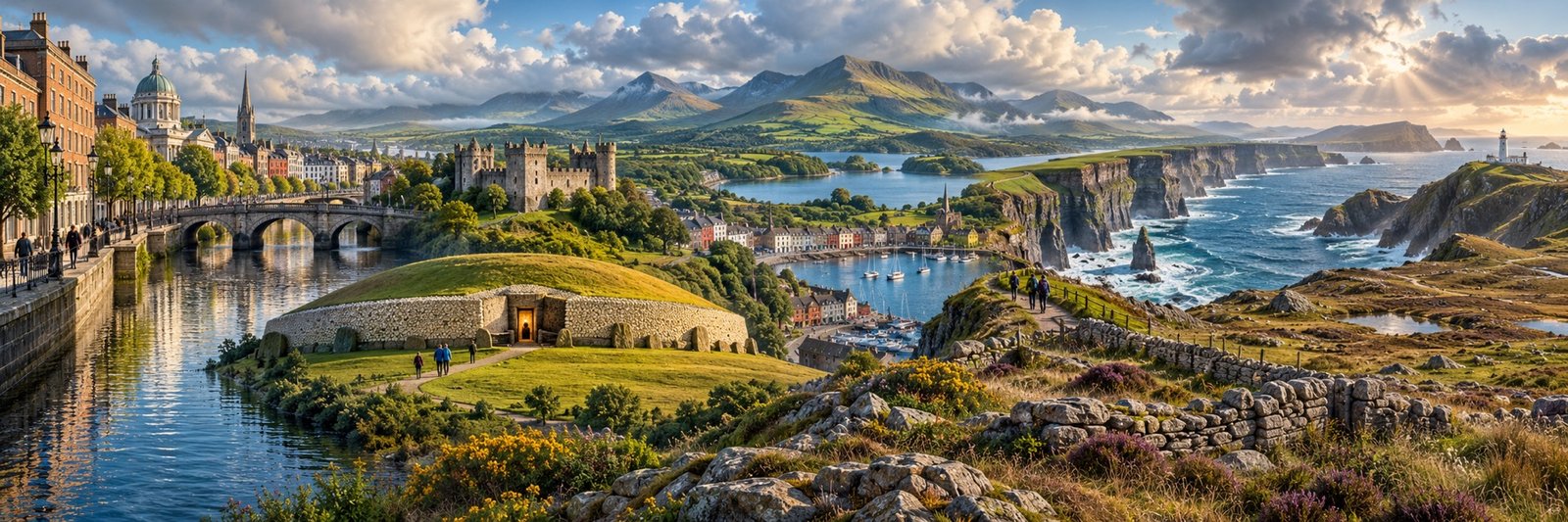
Ireland is not a road-trip checklist of cliffs and pubs. Dublin’s museums, the Boyne Valley, monastic landscapes, Cork harbour, Kerry’s peninsulas, the Burren, Connemara, Mayo, Sligo and Donegal each need different pacing and weather logic. These fifty experiences focus on the Republic of Ireland and help first-time visitors combine rail-accessible cities with one carefully chosen rural region, respect active communities and memorial spaces, and treat Atlantic weather, narrow roads and offshore transport as real planning constraints.
Ireland at a glance
- Ideal first trip: 10–14 days for Dublin, one eastern heritage corridor and one western or southern region.
- Currency: euro in the Republic of Ireland. Northern Ireland uses pound sterling and has separate UK entry rules.
- Best planning principle: use rail for city-to-city travel, then rent a car or book local transport only for one defined rural section.
- Transport: Irish Rail covers major corridors; Bus Éireann, local buses, ferries and tours fill gaps but require separate timetables.
- Price check: verify live rail fares, attraction slots, rental insurance, fuel, ferries, hotel totals and cancellation.
Entry, visa and arrival planning
Ireland is not part of the Schengen Area. Use Irish Immigration, the competent Irish embassy and the authority responsible for your passport and residence for current entry and visa rules.
Dublin is the largest gateway, while Cork, Shannon, Knock and Kerry can support open-jaw routes. Crossing into Northern Ireland enters the United Kingdom and may involve different entry requirements, currency and rental-car terms.
When to go
Cities work year-round, while islands, cliff walks, mountain routes and boat trips depend strongly on daylight, wind and sea state. Summer offers longer days but not guaranteed dry weather.
St Patrick’s period, school holidays, major music festivals, sporting fixtures and bank holidays transform capacity and prices. Check the exact county and event calendar before booking.
Budget and places to stay
Build value, mid-range and premium versions with live refundable totals. Automatic transmission, one-way car hire, rural taxis and peak Dublin rooms can dominate the budget.
Compare the official property total with a reputable platform and verify breakfast, parking, heating, lift access, noise, distance from transport and cancellation.
Fifty things to do in Ireland
1. Trinity College and the Book of Kells experience
Why go: Dublin. A working university, manuscript tradition and historic library deserve more than a queue for one illuminated page.
How to do it: Use the official timed system, verify the current exhibition route and keep active academic spaces clear.
Good for: Books, art and first-time visitors
Know before you go: Renovation and changing displays can alter the familiar library experience.
2. National Museum of Ireland archaeology collections
Why go: Dublin. Prehistory, metalwork, early medieval art and human remains provide essential context for sites across the country.
How to do it: Check which museum branch holds the desired collection and allow two focused hours before a city walk.
Good for: Archaeology, families and history travellers
Know before you go: Sensitive remains and religious objects require respectful attention.
3. Dublin Castle and Chester Beatty together
Why go: Dublin. State history, archaeology and a major manuscript collection create a layered civic and global story.
How to do it: Book the official castle route if required, then use the free collection as a separate unhurried visit.
Good for: History, books and cultural travellers
Know before you go: State events and security can restrict castle access.
4. Kilmainham Gaol with historical preparation
Why go: Dublin. The prison’s political and social history is clearest through evidence-led interpretation rather than heroic simplification.
How to do it: Buy only through the official timed system, arrive early and leave reflective time afterward.
Good for: Modern history and educational travellers
Know before you go: Content is difficult, spaces are confined and tickets sell quickly.
5. EPIC or emigration history with source awareness
Why go: Dublin Docklands. Migration stories connect family choices, labour and global communities when interactive displays lead to deeper sources.
How to do it: Reserve in busy periods, choose a family or social-history theme and pair it with a docklands walk.
Good for: Diaspora, families and interactive-museum travellers
Know before you go: Interactive density can cause fatigue; not every story has equal depth.
6. Little Museum or a neighbourhood history walk
Why go: Dublin. Twentieth-century objects and local storytelling help connect national events with ordinary city life.
How to do it: Choose an official guided programme or documented route and keep the day smaller than a museum checklist.
Good for: Social history, conversation and short-break travellers
Know before you go: Small venues have limited capacity and may use stairs.
7. Georgian Dublin from Merrion Square to the canal
Why go: Dublin. Townhouses, public squares and institutional buildings reveal planning, class and architectural change.
How to do it: Use one researched route, enter only public buildings and compare façades without photographing through private windows.
Good for: Architecture, history and slow-city travellers
Know before you go: Traffic, offices and residential privacy shape the walk.
8. Traditional music with session etiquette
Why go: Dublin. A genuine session is a social musical event, not a staged request show for visitors.
How to do it: Choose a reputable pub, arrive before the room fills, listen quietly and ask before recording musicians.
Good for: Music, culture and evening travellers
Know before you go: Late hours, alcohol and crowded rooms require a safe return plan.
9. Guinness Storehouse or a working brewery alternative
Why go: Dublin. Brewing, advertising and industrial history can be useful when marketing claims are kept in perspective.
How to do it: Compare the official visitor experience with a smaller brewery tour, check inclusions and never drink before driving.
Good for: Food, industry and brand-history travellers
Know before you go: Alcohol, stairs and crowds make pacing important.
10. Glasnevin Cemetery and Botanic Gardens
Why go: North Dublin. Political, social and family history sits beside a major scientific garden, forming a thoughtful full half-day.
How to do it: Use an official cemetery tour, behave quietly and cross to the gardens only during opening hours.
Good for: History, remembrance and garden travellers
Know before you go: Funerals remain active and weather affects outdoor routes.
11. Howth or Dalkey by DART with coastal conditions
Why go: Dublin coast. Rail-accessible harbour and cliff landscapes offer a manageable coast day without a rental car.
How to do it: Choose one town, use an official trail, check wind and daylight and keep away from cliff edges.
Good for: Walking, seafood and rail travellers
Know before you go: Mud, exposure and cliff erosion can close paths.
12. Newgrange and Brú na Bóinne through the visitor centre
Why go: County Meath. Neolithic passage tombs and the Boyne landscape require controlled access and archaeological context.
How to do it: Reserve the official tour, arrive at the visitor centre rather than the monument gate and follow all conservation rules.
Good for: Archaeology, astronomy and history travellers
Know before you go: Interior access is limited and not suitable for all mobility or claustrophobia needs.
13. Hill of Tara with landscape interpretation
Why go: County Meath. Ceremonial earthworks and later political memory make sense through the surrounding ridgelines rather than monumental buildings.
How to do it: Use official interpretation, stay on paths and visit in suitable visibility and ground conditions.
Good for: Archaeology, mythology and landscape travellers
Know before you go: Earthworks are subtle, exposed and vulnerable to erosion.
14. Trim Castle and medieval town
Why go: County Meath. A major Anglo-Norman fortress and river setting provide a substantial alternative to hurried film-location tourism.
How to do it: Check official tour access, choose the keep or grounds according to ability and walk the river route.
Good for: Castles, families and history travellers
Know before you go: Keep tours involve steep stairs and exposed heights.
15. Glendalough monastic valley before peak traffic
Why go: County Wicklow. Round tower, churches, lakes and mountain geography connect pilgrimage, settlement and landscape.
How to do it: Arrive early, begin at the visitor information, choose one signed walk and keep graves and ruins unobstructed.
Good for: Faith, hiking and first-time visitors
Know before you go: Parking, mud and mountain weather transform the day.
16. Wicklow Mountains with a conservative route
Why go: County Wicklow. Blanket bog, ridges and valleys offer wild scenery close to Dublin but require real outdoor planning.
How to do it: Use official trail and weather information, choose a route below ability and carry navigation and layers.
Good for: Hiking, nature and active travellers
Know before you go: Fog, bog, wind and limited signal can make short routes serious.
17. Powerscourt or Mount Usher as one garden day
Why go: County Wicklow. Designed landscapes, tree collections and estate history provide contrasting approaches to Irish gardens.
How to do it: Choose one garden, verify transport and accessibility and leave time for seasonal planting rather than adding another estate.
Good for: Gardens, families and relaxed travellers
Know before you go: Admission, café hours and paths change seasonally.
18. Kilkenny medieval mile with one major interior
Why go: Kilkenny. Castle, cathedral, merchants’ houses and craft connect medieval power with a lively modern city.
How to do it: Stay overnight or arrive by rail, choose the castle or cathedral as the anchor and walk the rest slowly.
Good for: Architecture, craft and rail travellers
Know before you go: Festivals and events can fill rooms and restrict streets.
19. Rock of Cashel with layered religious history
Why go: County Tipperary. Romanesque and Gothic buildings above the plain reward a visit grounded in church and political history.
How to do it: Check official access, include nearby interpretation and avoid combining it with multiple distant ruins.
Good for: Architecture, faith and road-trip travellers
Know before you go: Wind, stone steps and ongoing conservation affect access.
20. Waterford Viking Triangle and craft provenance
Why go: Waterford. Archaeology, medieval streets and glass-making history provide a compact southeast city chapter.
How to do it: Choose one museum and one documented workshop, checking where goods are actually made.
Good for: History, craft and families
Know before you go: Multiple branded attractions have separate admissions.
21. Hook Peninsula lighthouse and coastal history
Why go: County Wexford. One of the world’s long-operating lighthouse sites connects navigation, monastic history and a dangerous coast.
How to do it: Use the official tour, drive slowly on rural roads and check wind before the exposed headland.
Good for: Maritime history, families and road trips
Know before you go: Waves, cliffs and limited public transport require care.
22. Cobh migration and harbour history
Why go: County Cork. A steep harbour town connects emigration, maritime travel and living port communities.
How to do it: Arrive by rail, choose one museum or heritage centre and walk hills according to ability.
Good for: Migration history, photography and rail travellers
Know before you go: Cruise-ship days and steep streets change crowd levels.
23. Cork city English Market and riverside culture
Why go: Cork. Food supply, independent businesses, galleries and island-like city geography create a strong urban base.
How to do it: Visit the market during trading hours, ask before photographing workers and choose one museum or live event.
Good for: Food, culture and city-break travellers
Know before you go: Sunday closures and major events affect the centre.
24. Blarney Castle beyond one stone ritual
Why go: County Cork. Gardens, defensive architecture and estate landscape can provide more depth than the heavily marketed tradition.
How to do it: Use the official site, decide whether the steep ritual is appropriate and spend equal time in gardens.
Good for: Gardens, castles and family travellers
Know before you go: Queues, narrow stairs and hygiene or mobility concerns may rule out the stone.
25. Kinsale harbour, food and military forts
Why go: County Cork. A strategic harbour and culinary reputation support a full day when history and contemporary town life are balanced.
How to do it: Stay overnight or use a realistic bus, choose one fort or guided walk and reserve dinner only after transport is settled.
Good for: Food, maritime history and couples
Know before you go: Narrow roads and summer demand make parking and rooms difficult.
26. Beara Peninsula as a slow coastal circuit
Why go: Counties Cork and Kerry. Mining traces, villages, mountains and Atlantic headlands create a quieter alternative to faster scenic loops.
How to do it: Use one base, drive only a short section each day and preserve time for walks and local businesses.
Good for: Road trips, hiking and slow travellers
Know before you go: Narrow roads, livestock and sudden weather demand patience.
27. Killarney National Park without a car race
Why go: County Kerry. Lakes, woodland, mountains and historic estates form a protected landscape that deserves several nights.
How to do it: Use park paths, bikes, shuttle or licensed local transport and choose one major lake or estate route per day.
Good for: Nature, families and active travellers
Know before you go: Traffic, midges, rain and mountain weather affect plans.
28. Ring of Kerry in one direction with meaningful stops
Why go: County Kerry. Peninsulas, islands, forts and villages cannot be understood through a continuous coach-window circuit.
How to do it: Start early, select three stops, yield on narrow roads and stay overnight rather than returning late across the country.
Good for: Road trips, landscapes and photography travellers
Know before you go: Blind bends, coaches, cyclists and weather make rushed driving unsafe.
29. Dingle Peninsula language, archaeology and coast
Why go: County Kerry. Gaeltacht culture, early Christian sites and Atlantic headlands add human depth to spectacular scenery.
How to do it: Use one base, choose a guided archaeology or language experience and keep beaches and cliffs weather-dependent.
Good for: Culture, history and coastal travellers
Know before you go: Narrow roads and tourism pressure require respectful pacing.
30. Skellig Michael only with a licensed and flexible plan
Why go: County Kerry coast. A remote monastic island and seabird habitat are internationally significant and highly weather-dependent.
How to do it: Book an authorised landing or eco tour, understand fitness and cancellation terms and keep a mainland alternative.
Good for: Monastic history, wildlife and experienced travellers
Know before you go: Rough seas, steep exposed steps and limited rescue options make access demanding.
31. Cliffs of Moher from official paths
Why go: County Clare. Geology, seabirds and Atlantic scale are powerful only when visitors remain behind barriers and understand the wider coast.
How to do it: Use the official centre or public transport, check wind and visibility and consider a quieter legal section.
Good for: Geology, views and first-time visitors
Know before you go: Cliff edges, gusts and erosion are lethal hazards.
32. The Burren limestone with a trained guide
Why go: County Clare. Karst pavement, rare flora, archaeology and farming create a landscape easy to miss from the road.
How to do it: Join a local guide or use official trails, step on durable surfaces and never pick plants or move stone.
Good for: Geology, botany and archaeology travellers
Know before you go: Fissures, rain and fragile habitats require care.
33. Doolin music and Aran ferry decisions
Why go: County Clare. A small village can be a base for music, cliffs or islands when transport and crowd expectations are realistic.
How to do it: Choose one main purpose, verify ferry departure port and sea conditions and book accommodation before late sessions.
Good for: Music, islands and coastal travellers
Know before you go: Ferries cancel and narrow roads become congested.
34. Galway city culture beyond one pub street
Why go: Galway. Irish-language connections, arts, markets and the Corrib give the city substance beyond nightlife.
How to do it: Choose one museum, walking tour or live performance and explore daytime streets before an evening session.
Good for: Culture, food and music travellers
Know before you go: Festivals create extreme demand and crowded nights.
35. Connemara National Park and one Gaeltacht base
Why go: County Galway. Bogs, mountains, coast and Irish-speaking communities reward a slower regional stay.
How to do it: Use official park routes, choose one village base and avoid turning language or homes into spectacle.
Good for: Hiking, language and landscape travellers
Know before you go: Rain, bog and limited evening transport require preparation.
36. Kylemore Abbey with estate and community context
Why go: Connemara. A dramatic lakeside building gains depth through gardens, education and changing ownership.
How to do it: Use the official route, check shuttle or garden access and avoid presenting the façade as untouched ancient history.
Good for: Architecture, gardens and family travellers
Know before you go: Large grounds and weather require pacing.
37. Aran Islands with one-island commitment
Why go: County Galway. Stone walls, forts, Irish language and island transport reward an overnight or full unhurried day.
How to do it: Choose one island, verify ferry or flight and rent a bike only if wind and confidence allow.
Good for: Culture, cycling and archaeology travellers
Know before you go: Sea conditions, cliff edges and limited services require flexibility.
38. Limerick city and King John’s Castle context
Why go: Limerick. A river city, Georgian plan, sport and contemporary culture provide more than a transit stop.
How to do it: Choose the castle or Hunt Museum, walk the Shannon and check events before booking a short stay.
Good for: History, art and urban travellers
Know before you go: Match days and festivals change prices and traffic.
39. Bunratty or another folk-life site critically
Why go: County Clare. A castle and reconstructed village can introduce material culture when interpretation distinguishes original fabric from later assembly.
How to do it: Use official information, ask what is authentic to the site and avoid treating costumed displays as the complete past.
Good for: Families, social history and road-trip travellers
Know before you go: Evening events and coach groups affect timing.
40. Westport town and Great Western Greenway
Why go: County Mayo. A planned town, rail access and an off-road cycling route create a practical car-light western base.
How to do it: Reserve a correctly sized bike, choose a section within ability and confirm one-way return arrangements.
Good for: Cycling, families and slow-travel visitors
Know before you go: Wind, rain and mixed users require controlled speed.
41. Achill Island with weather and road restraint
Why go: County Mayo. Beaches, cliffs, villages and social history deserve more than a rapid scenic circuit.
How to do it: Stay overnight, choose one beach or walk and follow official road and cliff guidance.
Good for: Coast, history and road-trip travellers
Know before you go: Narrow roads, fog and powerful surf can become dangerous.
42. Céide Fields with archaeological landscape
Why go: County Mayo. A prehistoric field system beneath blanket bog connects settlement, farming and environmental change.
How to do it: Check the official centre and outdoor route, wear weatherproof footwear and allow time for interpretation.
Good for: Archaeology, landscape and family travellers
Know before you go: Wind, rain and bog surfaces affect access.
43. Sligo landscapes through art and archaeology
Why go: County Sligo. Mountains, lakes, passage tombs and literary associations offer more than a single famous grave.
How to do it: Choose one archaeological site and one cultural institution, using a guide where access is sensitive.
Good for: Literature, archaeology and landscape travellers
Know before you go: Some monuments cross farmland or fragile ground.
44. Donegal cliffs and headlands from legal viewpoints
Why go: County Donegal. Atlantic cliffs, beaches and remote peninsulas reward a multi-night base and conservative driving.
How to do it: Choose one peninsula, use official parking and paths and keep a weather-flexible inland alternative.
Good for: Road trips, hiking and photography travellers
Know before you go: Wind, fog, cliff edges and long distances make day-trip rushing unsafe.
45. Glenveagh National Park with park transport logic
Why go: County Donegal. Mountains, lakes, woodland and estate history provide a substantial protected-landscape day.
How to do it: Check shuttle, trail and visitor-centre status, then choose one walk rather than multiple distant stops.
Good for: Nature, families and hiking travellers
Know before you go: Weather and remote terrain require layers and turnaround times.
46. Inishowen Peninsula and Malin Head slowly
Why go: County Donegal. Northern headlands, forts, villages and maritime weather create a distinct multi-day route.
How to do it: Base locally, select two stops per day and avoid driving tired after sunset.
Good for: Coast, history and slow road trips
Know before you go: Exposed roads, wind and weak mobile signal require preparation.
47. Slieve League with approved access
Why go: County Donegal. Very high sea cliffs provide scale and geology when approached through managed paths and transport.
How to do it: Check official access, parking or shuttle arrangements and turn back in poor visibility or wind.
Good for: Hiking, geology and experienced walkers
Know before you go: Unfenced edges and rapidly changing weather are serious hazards.
48. Athlone and the Shannon as a central rail stop
Why go: County Westmeath. A river crossing, castle and living inland waterway add a useful break between east and west.
How to do it: Arrive by train, choose the castle or a licensed river experience and stay near the centre.
Good for: Rail, waterways and family travellers
Know before you go: River conditions and seasonal boat schedules require checking.
49. Clonmacnoise with river and monastic context
Why go: County Offaly. High crosses, churches and the Shannon landscape explain an important early medieval centre.
How to do it: Use the official visitor information, respect graves and combine the site only with a nearby central-Ireland stop.
Good for: Faith, archaeology and road-trip travellers
Know before you go: Limited public transport and exposed weather affect the visit.
50. Irish rail as a city-and-coast backbone
Why go: Across Ireland. InterCity, DART and commuter services can connect Dublin, Cork, Galway, Limerick, Kilkenny and coastal towns without daily driving.
How to do it: Use Irish Rail’s official planner, reserve eligible trains, check engineering work and understand the final local bus or taxi.
Good for: Car-free, multi-city and accessibility-conscious travellers
Know before you go: The network does not cover every peninsula, and onward rural transport can be sparse.
Food and drink worth planning around
Seafood, farmhouse cheese, soda bread, lamb, beef, seaweed, Cork market food and regional baking belong to distinct landscapes. Ask about allergens, catch origin and whether a tasting is a meal.
Pubs are social spaces, not all kitchens serve late and rural restaurants often close on specific days. Drink responsibly and never drive after alcohol.
What to buy
For wool, linen, ceramics, jewellery, food and music, identify the maker and production location. Celtic decoration or an Irish label is not proof that an item was made locally.
Use established sellers for antiques and high-value goods, keep receipts and check export rules. Never remove stone, plants, fossils or archaeological material from coasts, bogs or monuments.
Getting around
Use Irish Rail and the exact bus, ferry or local operator for current schedules. Advance rail fares can be service-specific, and a railway station name does not guarantee easy access to a rural attraction.
Driving is unnecessary in Dublin and often in central Cork or Galway. Rent only for a defined segment and include insurance excess, left-side driving, narrow roads, fuel, parking and a sober driver.
Easy access and family travel
Accessibility varies across historic buildings, cliffs, ferries, bog paths and rural stations. Confirm step-free entrances, accessible toilets, assistance booking and exact surface conditions.
Families and mixed-ability groups should plan a short shared route and optional extension. Rain, wind, mud, long drives and emotionally difficult sites affect pacing.
Stay safe
Use Met Éireann, Coast Guard, park and attraction information. Atlantic wind, swell, fog, rain, flooding and wildfire or gorse-fire conditions can change access quickly.
Stay behind cliff barriers, use signed trails, swim only with local safety information and use normal precautions around valuables and nightlife.
Mistakes to avoid
- Trying to drive the entire Wild Atlantic Way in one week.
- Treating Northern Ireland as if entry, currency and rental rules were identical.
- Following map distance instead of narrow-road driving time.
- Booking offshore trips without a weather-flexible alternative.
- Standing beyond cliff barriers for photographs.
- Assuming every pub serves food or live music nightly.
- Drinking before driving on rural roads.
- Trusting an old hotel, ferry or attraction price as a guarantee.
Sample seven-day route
Use three nights Dublin, two Kilkenny or Cork and two Galway. Choose one eastern heritage day and one western landscape day rather than adding Kerry and Donegal.
Sample ten-day route
Use three Dublin, two Ancient East, two Cork and three Galway or Clare. Travel city-to-city by rail and rent only for the final rural chapter.
Sample fourteen-day route
Use four Dublin and east, three Cork, four Kerry or Clare and three Galway, Mayo or Donegal. Keep one weather-flexible day before a major flight.
Ireland travel FAQ
How many days are enough for Ireland?
Seven days supports Dublin and one or two regions. Ten to fourteen days is stronger for a rail-and-road combination without daily hotel changes.
Do I need a car?
No for Dublin and several major cities. A car helps on peninsulas and rural routes, but should be rented only for a defined section.
Is Northern Ireland covered by the same travel rules?
No. Northern Ireland is part of the United Kingdom and can have different entry, currency, mobile and rental-car requirements.
Can I drive the whole Wild Atlantic Way quickly?
The official route is about 2,500 kilometres. It is far better to choose one or two sections and spend time in communities along them.
Official planning sources
- Ireland official tourism portal
- Official Ireland destinations overview
- Official Wild Atlantic Way guide
- Irish Immigration visa information
- Irish Rail official journey planning
- Explore Ireland by rail
- Met Éireann official weather service
- UNESCO World Heritage state-party record for Ireland
- United Kingdom government travel advice for Ireland
- United States government travel advisory for Ireland
Disclosure: This independent editorial guide is informational, not a booking guarantee. No price, ranking, safety outcome, entry permission or availability is guaranteed. Recheck all time-sensitive details with the linked official source before purchase.