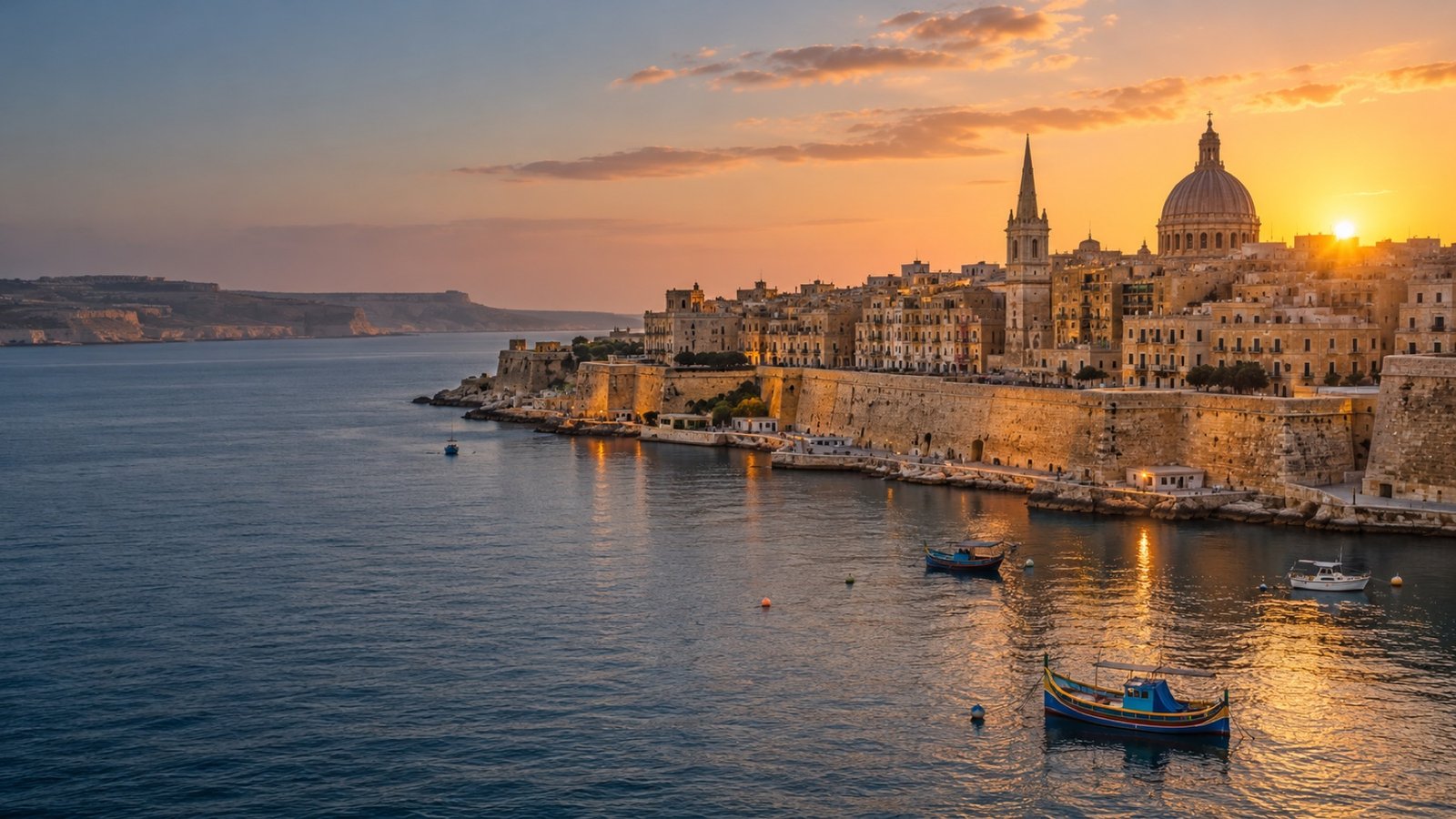
This guide uses official tourism, government and transport sources. Rules and prices can change, so check the linked official pages before booking.
Malta is small on a map but dense in archaeology, active worship, maritime history and exposed coastline. UNESCO lists three World Heritage properties in Malta: the City of Valletta, the Ħal Saflieni Hypogeum and the serial Megalithic Temples of Malta property, which comprises seven component temples. Gozo and Comino require their own transport, weather and pacing decisions. These fifty experiences help first-time visitors build a realistic route, reserve fragile sites, treat churches and festas as living culture, and keep boats, swimming and cliff walks conditional on current safety information. Heritage Malta also warns that museums or sites can be temporarily closed or partly inaccessible, so its Special Notices page must be checked immediately before each heritage day. Government travel advice was rechecked on 11 October 2026: the United States advisory lists Malta at Level 1, exercise normal precautions, while the United Kingdom tells travellers to research destination risks and obtain insurance suited to the itinerary. Travellers should check the advisory issued for their own nationality, their insurance and live local notices before departure rather than treating either summary as a personal safety guarantee.
Malta at a glance
- Ideal first trip: 8–12 days for Valletta and the Three Cities, prehistoric Malta, the north or south coast, Gozo and a weather-dependent Comino day.
- Currency: euro; cards are widespread, but small producers, festas and rural stops can require a backup payment method.
- Entry: Malta is in the Schengen Area; passport, visa, purpose and funds rules depend on nationality and status.
- Transport: buses cover Malta and Gozo, while ferries connect key harbours and islands; live timetables and proof-of-travel rules matter.
- Ethical rule: temples, catacombs, churches, salt pans, reserves and working harbours require authorised access and respectful conduct.
Entry, visa and arrival planning
Use Malta’s Identità authority or the authority responsible for your passport for current entry rules. Visa-exempt non-EU nationals can generally visit the Schengen Area for up to 90 days in any 180-day period, while travellers who require a visa normally need the appropriate Schengen permission. Nationality, passport, residence status and purpose still control the exact answer, so do not apply this summary to an individual case without checking the official rules.
Malta International Airport is the principal arrival point. Ferries connect Valletta, the Three Cities, Sliema, Gozo and Comino through different operators and seasonal patterns, so confirm the exact harbour and last return before departure. The European Union says the Entry/Exit System has been fully operational at participating countries’ external borders since 10 April 2026. It electronically registers in-scope non-EU short-stay travellers and can collect travel-document, entry-and-exit and biometric data; exemptions and the exact border process depend on status, so check the official EES guidance before travel.
When to go
Late spring and early autumn often balance swimming, walking and city touring. Summer brings intense sun, warm nights, festas and heavy coastal demand; winter can be mild but windy with rough seas.
A calm forecast in Valletta does not guarantee safe conditions on an exposed Gozo or Comino coast. Recheck marine conditions, flags, ferry notices and site access on the same day.
Budget and places to stay
Compare accommodation by transport corridor and late-return options, not only nightly price. Valletta, Sliema, St Julian’s, Mellieħa and Gozo create different ferry and bus trade-offs.
Many public viewpoints are free, but fragile archaeology, museums, boats and guided activities require current prices or reservations. Never repeat an old fare or admission charge as today’s price.
Fifty things to do in Malta
1. Valletta city gates and UNESCO street circuit
Why go: Valletta. A slow route from the city gate through public streets reveals a fortified capital as a lived city rather than a checklist of façades.
Good for: first-time visitors, urban history and slower travellers
Know before you go: Steep streets, heat, events and government security require a compact shaded plan.
2. St John’s Co-Cathedral with active-worship respect
Why go: Valletta. A timed visit can connect architecture, the Order of St John and sacred art while distinguishing worship from tourism.
Good for: history, archaeology and cultural travellers
Know before you go: Services, dress, photography, queues and conservation rules take priority.
3. Grand Master’s Palace on the authorised visitor route
Why go: Valletta. Official rooms and collections can explain government and ceremonial history when current access is checked.
Good for: history, archaeology and cultural travellers
Know before you go: Heritage Malta’s notice checked 11 October 2026 says the Throne Room is closed until further notice and lists additional State Rooms closures; verify again before visiting.
4. National Museum of Archaeology by one chronological story
Why go: Valletta. A focused route provides evidence before visiting Malta’s prehistoric temples instead of treating objects as isolated treasures.
Good for: culture, families and weather-safe planning
Know before you go: Rotations, gallery closures and dense interpretation make priorities useful.
5. MUŻA through one Maltese art question
Why go: Valletta. A selective visit can connect art, patronage and changing Maltese identity without gallery fatigue.
Good for: culture, families and weather-safe planning
Know before you go: Temporary loans, events and accessibility routes need a live check.
6. Fort St Elmo and the National War Museum
Why go: Valletta. Fortifications and collections can support a sober study of conflict, civilian life and the harbour’s strategic position.
Good for: history students, families and reflective travellers
Know before you go: Heritage Malta’s live notice checked 11 October 2026 says the World War I display in Section 4 is closed until further notice. On scheduled In Guardia show dates, regular admission for visitors not attending the show begins at noon; recheck both notices before travel.
7. Upper and Lower Barrakka Gardens with harbour context
Why go: Valletta. Two public gardens can frame the Grand Harbour’s geography when viewpoints are connected to the working port below.
Good for: first-time visitors, urban history and slower travellers
Know before you go: Edges, heat, ceremonies and crowding require patient timing.
8. Underground Valletta on an official guided visit
Why go: Valletta. An authorised tour can explain water, shelter and the city’s hidden infrastructure without searching for closed tunnels.
Good for: history, archaeology and cultural travellers
Know before you go: Confined spaces, stairs, humidity and limited tickets affect suitability.
9. Three Cities ferry and waterfront orientation
Why go: Grand Harbour. A public ferry and waterfront walk can connect Valletta with Vittoriosa, Senglea and Cospicua without rushing each town.
Good for: first-time visitors, urban history and slower travellers
Know before you go: Wind, harbour operations, last services and slippery quays require a fallback.
10. Fort St Angelo with restoration context
Why go: Vittoriosa. Official interpretation can distinguish medieval fabric, Order-era change and modern restoration while preserving operational boundaries.
Good for: history, archaeology and cultural travellers
Know before you go: Military zones, steep surfaces, heat and event closures control access.
11. Inquisitor’s Palace with evidence-led interpretation
Why go: Vittoriosa. Collections and rooms can explore institutions, belief and daily life without sensationalising punishment.
Good for: culture, families and weather-safe planning
Know before you go: Sensitive themes, stairs and changing room access require considered pacing.
12. Vittoriosa and Senglea public-street circuit
Why go: Three Cities. A respectful walk through public lanes, waterfronts and lookouts reveals residential life beyond the harbour panorama.
Good for: first-time visitors, urban history and slower travellers
Know before you go: Doorways, private balconies, traffic and midday heat require quiet behaviour.
13. Mdina old city before or after peak crowds
Why go: Mdina. A timed public-street route can connect defensive form, noble residences and changing use without blocking residents.
Good for: first-time visitors, urban history and slower travellers
Know before you go: Narrow streets, services, filming and limited vehicle access require restraint.
14. Rabat and St Paul’s Catacombs on the official route
Why go: Rabat. An authorised underground visit can explain burial practice and community history without entering closed chambers.
Good for: history, archaeology and cultural travellers
Know before you go: Low passages, steps, humidity and religious sensitivity affect suitability.
15. Domus Romana with archaeology before reconstruction
Why go: Rabat. Surviving evidence and careful interpretation can introduce Roman Malta while clearly separating objects from later display choices.
Good for: culture, families and weather-safe planning
Know before you go: Fragile floors, changing displays and school groups require patient movement.
16. Dingli Cliffs from a lawful inland route
Why go: Dingli. A marked public walk can explain Malta’s high western coast without treating an unprotected edge as a photo platform.
Good for: coast, landscape and ecology travellers
Know before you go: Wind, heat, traffic, unstable edges and darkness demand a conservative turnaround.
17. Buskett and Girgenti countryside walk
Why go: Western Malta. A signed route can reveal woodland, agricultural land and seasonal change while keeping estates and fields private.
Good for: prepared walkers and outdoor travellers
Know before you go: Hunting periods, heat, road sections and limited shade require current advice.
18. Ħaġar Qim and Mnajdra temple complex
Why go: Qrendi. A museum-led visit can connect architecture, landscape and prehistoric chronology without inventing certainty about ritual.
Good for: history, archaeology and cultural travellers
Know before you go: Sun, wind, uneven paths and conservation barriers require preparation.
19. Ħal Saflieni Hypogeum with advance reservation
Why go: Paola. A tightly controlled official visit protects a unique underground site and rewards visitors who study its context beforehand.
Good for: history, archaeology and cultural travellers
Know before you go: Tickets are limited; humidity, confinement, steps and strict rules affect access.
20. Tarxien Temples with museum preparation
Why go: Tarxien. An urban archaeological visit can compare multiple temple phases and later reuse without separating the monument from its setting.
Good for: history, archaeology and cultural travellers
Know before you go: Walkways, heat and conservation work can change the route.
21. Għar Dalam cave and museum
Why go: Birżebbuġa. Official displays can connect geology, animal remains and human occupation while explaining limits in the evidence.
Good for: history, archaeology and cultural travellers
Know before you go: Cave surfaces, steps, humidity and restricted sections require compliance.
22. Borġ in-Nadur after an official reopening notice
Why go: Birżebbuġa. The prehistoric complex can add Bronze Age settlement context, but it must not be placed in a current itinerary while the authority lists it as closed.
Good for: history, archaeology and cultural travellers
Know before you go: Heritage Malta’s notice checked 11 October 2026 says the site is closed until further notice because of roadworks; do not approach closed access.
23. Ħal Millieri Walk and medieval chapel landscape
Why go: Southern Malta. Visit Malta lists the Ħal Millieri Walk; following its current documented route can reveal medieval continuity without assuming every historic door is public.
Good for: history, archaeology and cultural travellers
Know before you go: Worship, keys, private land, road conditions and infrequent chapel opening require advance checking.
24. Marsaxlokk working harbour and market
Why go: Marsaxlokk. A visit outside the quickest tour-bus window can connect fishing, trade and town life when the harbour remains a workplace.
Good for: first-time visitors, urban history and slower travellers
Know before you go: Market days, traffic, boat gear and seafood provenance require attention.
25. Delimara coast from legal signed access
Why go: Delimara. A coastal walk can reveal limestone, industry and open-sea conditions without forcing entry to St Peter’s Pool or unsafe ledges.
Good for: coast, landscape and ecology travellers
Know before you go: Rough water, heat, cliff edges and access changes require a safer substitute.
26. Blue Grotto boat decision by same-day conditions
Why go: Wied iż-Żurrieq. The viewpoint and a licensed boat, when operating, can explain coastal geology without making departure or water colour a guarantee.
Good for: coast, landscape and ecology travellers
Know before you go: Swell, wind, queues and boarding ability control whether the boat is appropriate.
27. Wied iż-Żurrieq coast and village approach
Why go: Southern Malta. A documented coastal segment can provide a worthwhile day even when boats do not operate.
Good for: prepared walkers and outdoor travellers
Know before you go: Sun exposure, roads, unguarded edges and limited late transport require planning.
28. Għajn Tuffieħa on the managed beach route
Why go: Northwest Malta. Official steps and marked paths can connect beach, headland and dune conservation without creating an informal shortcut.
Good for: coast, landscape and ecology travellers
Know before you go: Flags, currents, heat, long stairs and erosion warnings must be obeyed.
29. Golden Bay with sea-safety discipline
Why go: Northwest Malta. A beach visit can work for mixed groups when swimming is optional and conditions are checked on arrival.
Good for: coast, landscape and ecology travellers
Know before you go: Red flags, currents, sun, crowded buses and seasonal facilities require a backup.
30. Mellieħa old town and sanctuary
Why go: Mellieħa. Public streets and a respectful church visit can connect settlement, worship and views before continuing to the coast.
Good for: history, archaeology and cultural travellers
Know before you go: Services, steep gradients, traffic and dress rules require consideration.
31. Red Tower and Marfa Ridge on authorised access
Why go: Mellieħa. A tower visit and marked ridge segment can explain coastal defence and island geography without approaching closed structures.
Good for: prepared walkers and outdoor travellers
Know before you go: Wind, heat, rough ground, road crossings and opening hours shape the route.
32. Għadira Nature Reserve from official hides
Why go: Mellieħa. An official hide or guided session can introduce wetland ecology without promising particular species.
Good for: coast, landscape and ecology travellers
Know before you go: Seasonal opening, breeding sensitivity, insects and quiet rules require checking.
33. Sliema promenade and Valletta ferry
Why go: Sliema. A public waterfront route can show modern urban Malta and create a practical ferry connection to the historic capital.
Good for: first-time visitors, urban history and slower travellers
Know before you go: Heat, cycling, construction, swell and last-ferry changes need attention.
34. Spinola Bay and St Julian’s beyond nightlife
Why go: St Julian’s. A daytime circuit can examine fishing-bay history and rapid development without presenting nightlife as the whole district.
Good for: first-time visitors, urban history and slower travellers
Know before you go: Crowds, traffic, late noise and private hospitality spaces require boundaries.
35. Gozo Citadel walls and currently open museums
Why go: Victoria, Gozo. A half-day can connect fortifications and town geography when the exact museums open on the visit date are selected rather than assumed.
Good for: history, archaeology and cultural travellers
Know before you go: Heritage Malta’s 2026 notice says the Gozo Museum of Archaeology closed on 13 April for redevelopment. Do not plan it as an open museum; verify the museums and Citadel route currently available on the visit date.
36. Victoria and Rabat, Gozo, as a lived town
Why go: Victoria, Gozo. Markets, squares and public streets can reveal daily Gozo beyond a coach stop while residents and worship remain central.
Good for: first-time visitors, urban history and slower travellers
Know before you go: Traffic, midday closures, services and private lanes require patience.
37. Ġgantija Archaeological Park
Why go: Xagħra, Gozo. Official interpretation can place monumental prehistoric architecture within chronology and landscape without unsupported claims.
Good for: history, archaeology and cultural travellers
Know before you go: Heat, stone surfaces, conservation work and group congestion affect the route.
38. Ta’ Kola Windmill and traditional technology
Why go: Xagħra, Gozo. A focused visit can explain milling, craft and domestic work without romanticising labour.
Good for: culture, families and weather-safe planning
Know before you go: Machinery, stairs and changing room access require care.
39. Ta’ Pinu sanctuary and surrounding landscape
Why go: Għarb, Gozo. A quiet visit can connect active faith, architecture and rural setting while avoiding staged worship photography.
Good for: history, archaeology and cultural travellers
Know before you go: Services, dress, large pilgrim events and limited shade take priority.
40. Xwejni salt pans from the public route
Why go: Żebbuġ, Gozo. A coastal walk can explain seasonal salt production when working pans and harvest activity are respected.
Good for: history, archaeology and cultural travellers
Know before you go: Do not enter pans; waves, heat, slippery rock and vehicles require distance.
41. Ramla Bay and inland approach
Why go: Gozo. A beach-and-landscape visit can reveal geology and agriculture when swimming remains conditional on flags.
Good for: coast, landscape and ecology travellers
Know before you go: Currents, sun, crowding, erosion and steep informal paths require caution.
42. Xlendi bay and one marked walking segment
Why go: Gozo. A short official route can connect cliffs, settlement and sea without turning a meal stop into a dangerous scramble.
Good for: prepared walkers and outdoor travellers
Know before you go: Wind, heat, edges, darkness and boat traffic require a conservative route.
43. Wied il-Mielaħ window from maintained access
Why go: Gozo. A lawful viewpoint can introduce coastal erosion without repeating risky behaviour associated with unstable arches.
Good for: coast, landscape and ecology travellers
Know before you go: Wind, spray, unfenced edges and road access require careful timing.
44. Dwejra and the Inland Sea with geology context
Why go: Gozo. A slow circuit can connect cliffs, the Inland Sea and protected landscape while acknowledging continuing geological change.
Good for: coast, landscape and ecology travellers
Know before you go: Swell, diving, boat access, rockfall and strong sun require official advice.
45. Comino Walk on the official marked circuit
Why go: Comino. A prepared walk can reveal watchtowers, bays and a largely car-free landscape beyond one crowded swimming stop.
Good for: prepared walkers and outdoor travellers
Know before you go: Little shade, limited services, rough ground and ferry dependence require self-sufficiency.
46. Blue Lagoon under current capacity rules
Why go: Comino. A visit can be considered only after checking live booking, boat and visitor-management rules, with no promise of entry.
Good for: coast, landscape and ecology travellers
Know before you go: Crowding, heat, water safety, waste and cancelled boats require an alternative.
47. Santa Marija Tower and authorised Comino heritage
Why go: Comino. An official opening or exterior route can add coastal-defence context without assuming access to the tower.
Good for: history, archaeology and cultural travellers
Know before you go: Opening is limited; rough paths, heat and private or closed areas require respect.
48. Licensed diving or snorkelling day
Why go: Malta or Gozo. A licensed operator can match site, equipment and supervision to conditions rather than chasing a famous cave or wreck.
Good for: coast, landscape and ecology travellers
Know before you go: Certification, medical fitness, currents, boats and no-fly intervals require professional control.
49. Village festa through the organiser’s current programme
Why go: Malta or Gozo. A community event can reveal music, worship, decoration and voluntary labour when visitors follow local guidance.
Good for: history, archaeology and cultural travellers
Know before you go: Fireworks, crowds, road closures, services, filming and hearing protection require planning.
50. Maltese food or craft workshop with a named producer
Why go: Malta or Gozo. A booked small-group session can explain ingredients, technique and local production better than an anonymous souvenir purchase.
Good for: history, archaeology and cultural travellers
Know before you go: Allergens, alcohol, heat, tools and authenticity claims require direct confirmation.
Food and drink worth planning around
Maltese food draws on Mediterranean ingredients, island agriculture and layered exchange. Ask what is made locally, verify allergens and distinguish a regional dish from a product merely sold to visitors.
Wine and spirits are optional. Never combine alcohol with driving, swimming, diving, boating or an exposed coastal walk.
What to buy
For food, salt, lace, glass, ceramics and jewellery, ask who made the item and where production occurred. A Maltese motif is not proof of local manufacture.
Retain receipts and check food, alcohol, shell, antique and customs restrictions before travel; never remove stone, plants or marine material from a protected place.
Getting around
Use Malta Public Transport for live bus rules and the exact ferry operator for harbour services. Validate or retain the correct proof of travel and allow extra time when traffic is heavy.
A rental car is optional, not essential. If used, account for left-side driving, narrow streets, parking, insurance, alcohol risk and a sober driver; never stop on a blind bend for a viewpoint.
Easy access and family travel
Accessibility varies sharply across Valletta gradients, temple walkways, catacombs, ferries, beaches and Gozo trails. Ask for the exact route, surfaces, toilets, shade and boarding method.
Do not infer access from one lift or ramp. Arrival terrain, heat, wind, interior steps and the last accessible return service are separate questions.
Stay safe
Use official weather, marine, beach-flag, transport and attraction information. Heat, dehydration, rough sea, wind, rockfall and slippery limestone can transform an easy-looking outing. The July 2026 United States advisory specifically notes tourist drowning deaths linked to riptides; follow lifeguards, designated swimming zones and current flags, and do not dive into unknown water.
Stay behind barriers, use marked paths and licensed operators, and never enter closed caves, tunnels, temples, salt pans, operational harbour areas or unstable cliff edges. The United Kingdom’s current advice also records pickpocketing on busy Valletta–St Julian’s buses and drink-spiking risk in some Paceville venues, so keep valuables and drinks controlled rather than assuming low overall risk means no personal precautions.
For a serious emergency in Malta, call 112 for ambulance, fire or police. Save the number before departure, keep insurance details available and contact the relevant operator and insurer promptly after a serious incident. Rural walkers should also check current hunting-season information and remain alert because hunting areas can overlap with public countryside routes.
Mistakes to avoid
- Trying to see Malta, Gozo and Comino in one rushed day.
- Assuming a famous boat or swimming trip always operates.
- Arriving at the Hypogeum without a valid reservation.
- Treating church services or village festas as staged entertainment.
- Using informal cliff shortcuts for photographs.
- Publishing old ticket prices as current.
- Ignoring the last ferry or bus after an evening event.
- Leaving without checking the travel advisory issued for your nationality, insurance cover and same-day local notices.
Sample seven-day route
Base in Valletta or a well-connected harbour. Spend two days on Valletta and the Three Cities, one on Mdina and Rabat, one on Ħaġar Qim, Mnajdra and the south, one on Mellieħa and the northwest, and two on Gozo. Keep Comino optional rather than displacing a reserved archaeological day.
Sample ten-day route
Follow the seven-day route at a slower pace, add the Hypogeum and Tarxien on a reserved day, give Gozo three nights and hold one flexible marine-weather day for Comino, the Blue Grotto or a land-based substitute.
Sample fourteen-day route
Use separate bases on Malta and Gozo. Add museums, Dingli or Buskett, Marsaxlokk and Delimara, village culture, a licensed water activity and genuine recovery days. Protect two flexible days so wind or heat does not force an unsafe coastal plan.
Malta travel FAQ
How many days do first-time visitors need?
Eight to twelve days supports Valletta, archaeological Malta, one coast and Gozo without treating every ferry as guaranteed. Seven days can work with fewer regions.
Do I need to reserve the Hypogeum?
Yes, treat it as a limited-capacity official booking and verify the exact ticket, time and suitability before building the day around it.
Is Comino guaranteed?
No. Boats, capacity management, weather and water conditions can change. Keep a Malta or Gozo alternative on the same day.
Can I swim everywhere?
No. Use managed beaches or licensed operators, obey flags and local warnings, and skip the water when conditions or ability are unsuitable.
Do I need a car?
Usually no. Buses and ferries cover many first-trip routes, though timetable discipline and early starts matter. A car adds parking, insurance and left-side-driving responsibilities.
Official planning sources
- UNESCO Malta World Heritage properties
- Visit Malta UNESCO sites
- Visit Malta history
- Visit Malta Gozo
- Visit Malta things to do
- Visit Malta hikes and walks
- Visit Malta diving
- Visit Gozo official Comino and Blue Lagoon visitor rules
- Blue Lagoon official visitor-management site
- Transport Malta Blue Lagoon access notice
- Heritage Malta opening hours and notices
- Heritage Malta museums and sites brochure
- Heritage Malta Gozo museum closure notice
- Fort St Angelo official page
- St John’s Co-Cathedral official visitor site
- Għadira Nature Reserve official information
- Malta Public Transport fares and tickets
- Malta Public Transport travel conditions
- Identità short-stay visits
- Identità visa FAQ
- European Union Entry/Exit System FAQ
- European Union Malta country profile
- United Kingdom Malta travel advice
- United Kingdom Malta safety and security advice
- United Kingdom Malta emergency information
- United States Malta travel advisory
Disclosure: This independent editorial guide is informational, not a booking guarantee. No price, ranking, safety outcome, entry permission or availability is guaranteed. Recheck all time-sensitive details with the linked official source before purchase.