This guide uses official tourism, government and transport sources. Rules and prices can change, so check the linked official pages before booking.
Czechia is far more than Prague’s most photographed streets. Royal and Jewish history, modernist architecture, spa towns, industrial regions, cave systems, vineyards, border landscapes and carefully protected national parks need different timing and behaviour. These fifty experiences help first-time visitors use rail and local transport realistically, book limited interiors, respect sacred and memorial places, follow park rules and build a route that gives Bohemia, Moravia and Silesia proper space.
Czechia at a glance
- Ideal first trip: 10–14 days for Prague plus South Bohemia, Brno and one additional region.
- Currency: Czech koruna; card acceptance is widespread, but independent services and rural routes should be checked.
- Transport: rail links major cities well, while local buses and seasonal attraction schedules need separate verification.
- Daily rule: confirm the exact operator, opening day, weather and last safe return every evening.
- Price check: verify current rail, museum, castle-tour, hotel, spa and cancellation totals before purchase.
Entry, visa and arrival planning
Czechia participates in the Schengen Area. Check the Czech Ministry of Foreign Affairs and the authority responsible for your passport and residence for current visa and entry rules.
Prague is the largest gateway. Brno, Ostrava, Vienna, Bratislava, Dresden and Katowice rail or air links can support an open-jaw route when tickets and border conditions are verified.
When to go
Late spring and early autumn balance cities, castles, wine regions and hiking. Summer increases castle access and crowds; winter supports city culture and spas but shortens daylight and closes many interiors.
Mountain snow, cave seasons, harvest events and river conditions vary. Build one weather-flexible day around outdoor routes.
Budget and places to stay
Compare individual rail tickets with exact regional or network products; different operators may use different rules. Add reservations, local transport and the correct airport transfer.
Castle and chateau tours often sell separate circuits. Compare the official route content instead of assuming the most expensive ticket is essential.
Fifty things to do in Czechia
1. Prague Castle as a full political and sacred complex
Why go: Prague. Cathedral, palaces, courtyards and gardens reveal changing power rather than one postcard building.
Good for: history, architecture and cultural travellers
Know before you go: Security, ceremonies, separate tickets and steep approaches alter routes.
2. St Vitus Cathedral with architecture and worship in balance
Why go: Prague. Gothic structure, chapels and royal memory make the cathedral essential when read beyond its façade.
Good for: history, architecture and cultural travellers
Know before you go: Services, queues and paid sections operate differently.
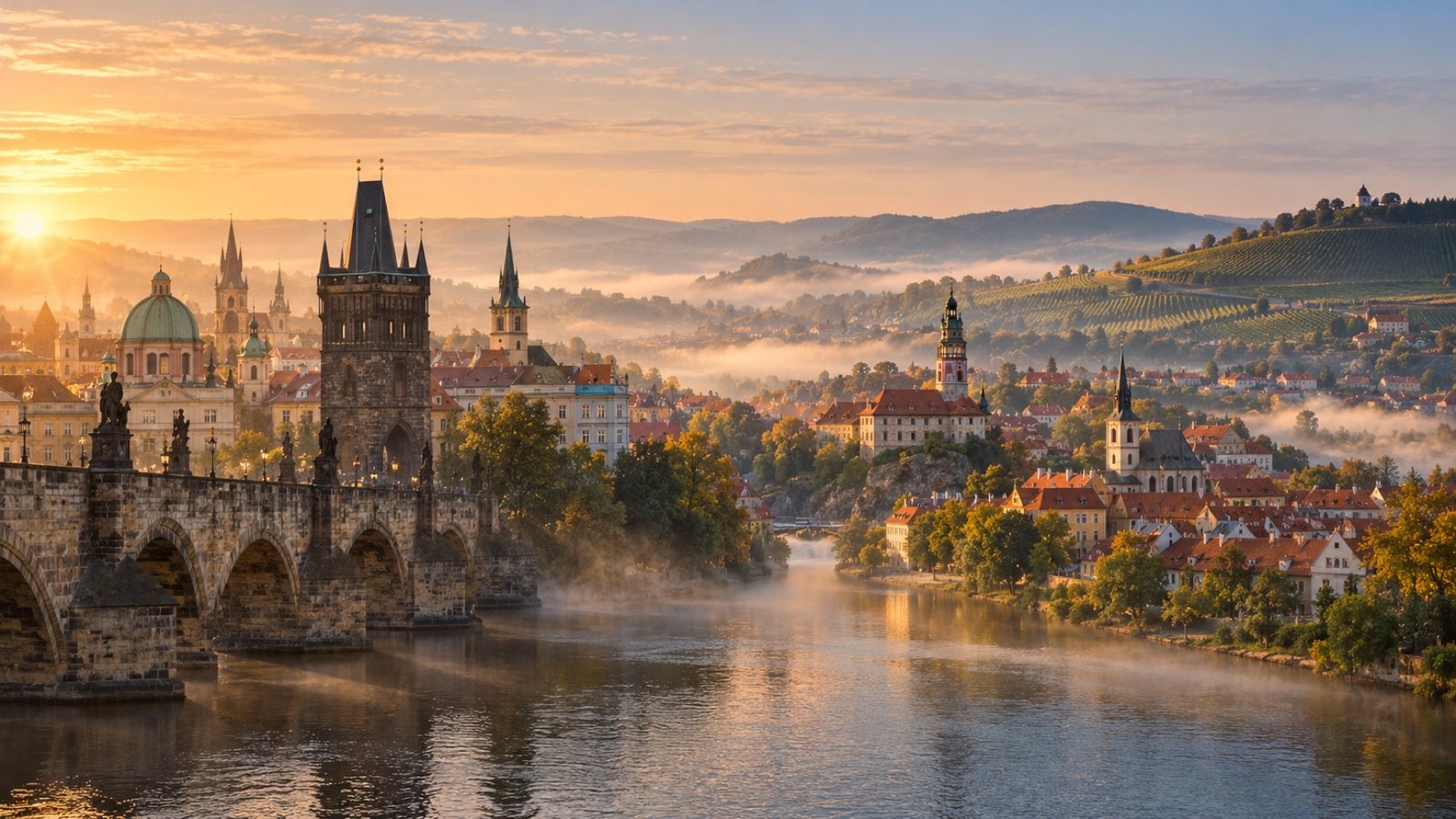
3. Charles Bridge before peak crowd pressure
Why go: Prague. Sculpture, river engineering and views connect Old Town with Malá Strana.
Good for: city breaks and first-time visitors
Know before you go: Crowding, cyclists, vendors and pickpocket risk require awareness.
4. Old Town Hall and astronomical clock with context
Why go: Prague. The town hall, tower and clock explain medieval civic ambition better than the hourly crowd alone.
Good for: history, architecture and cultural travellers
Know before you go: Tower access, event closures and dense gathering need planning.
5. Jewish Museum sites on a respectful sequence
Why go: Prague. Synagogues, cemetery and collections preserve community history, persecution and survival across several locations.
Good for: culture, families and rainy-day travellers
Know before you go: Sacred and memorial conduct, closures and emotional content matter.
6. National Museum with one Czech-history theme
Why go: Prague. Natural history, national identity and the restored building reward a selective route.
Good for: culture, families and rainy-day travellers
Know before you go: Collection scale and temporary displays can overwhelm a short visit.
7. National Gallery Prague by one venue
Why go: Prague. Separate palaces and modern galleries hold distinct collections, so choosing one creates a coherent art day.
Good for: culture, families and rainy-day travellers
Know before you go: Venues, tickets and opening days differ.
8. DOX Centre for contemporary art and debate
Why go: Prague. Current exhibitions and adaptive architecture offer a deliberate contrast to the historic centre.
Good for: culture, families and rainy-day travellers
Know before you go: Installations and accessibility change with each programme.
9. Municipal House and Art Nouveau interiors
Why go: Prague. Decorative arts, concert culture and civic history are best understood on an authorised interior tour.
Good for: design and industrial-heritage travellers
Know before you go: Events and guided-tour schedules limit access.
10. Vyšehrad as a quieter fortified landscape
Why go: Prague. Ramparts, cemetery and river views connect national mythology with a lived neighbourhood.
Good for: history, architecture and cultural travellers
Know before you go: Cliff edges, worship and cemetery privacy require respect.
11. Petřín Hill with current transport information
Why go: Prague. Gardens and elevated paths provide a slower view of the city beyond the central lanes.
Good for: landscape, geology and wildlife travellers
Know before you go: Funicular works, tower access, ice and steep paths can change the plan.
12. Žižkov and Vinohrady on a residential architecture walk
Why go: Prague. Housing, memorials and neighbourhood parks reveal twentieth-century and everyday Prague.
Good for: city breaks and first-time visitors
Know before you go: Homes, schools and tram routes are not tourist sets.
13. Prague public transport as part of the itinerary
Why go: Prague. Metro, trams and suburban rail support low-transfer planning and reduce pressure on the centre.
Good for: city breaks and first-time visitors
Know before you go: Ticket validation, service works and escalator etiquette need attention.
14. Karlštejn Castle using the official tour system
Why go: Central Bohemia. Imperial collections and controlled interiors explain Charles IV’s political and religious programme.
Good for: history, architecture and cultural travellers
Know before you go: Uphill access, fixed tours and village crowds require timing.
15. Kutná Hora beyond the Sedlec Ossuary
Why go: Central Bohemia. Cathedral, silver mining and urban form provide a fuller UNESCO story than one macabre stop.
Good for: history, architecture and cultural travellers
Know before you go: Sacred conduct and separate sites make rushed tours poor value.
16. Koněprusy Caves on an official guided route
Why go: Central Bohemia. Karst geology and archaeology offer an evidence-led underground experience near Prague.
Good for: landscape, geology and wildlife travellers
Know before you go: Stairs, cold, moisture and seasonal opening limit access.
17. Terezín memorial sites with preparation
Why go: Ústí nad Labem region. Ghetto, prison and museum evidence require slow, respectful attention to individual lives.
How to do it: Prepare with official evidence, behave quietly, follow photography rules and treat every name and grave as an individual life.
Good for: history students, families and reflective travellers
Know before you go: Emotional material and dispersed locations demand time.
18. Bohemian Switzerland on an open marked trail
Why go: North Bohemia. Sandstone walls, forests and gorges create a major landscape recovering from fire and erosion.
Good for: landscape, geology and wildlife travellers
Know before you go: Trail, boat and fire closures are non-negotiable.
19. Litoměřice and the Elbe wine landscape
Why go: North Bohemia. Historic streets and nearby vineyards reveal a warmer agricultural corridor often missed by Prague-only trips.
Good for: city breaks and first-time visitors
Know before you go: Seasonal cellars and cycling traffic require planning.
20. Liberec architecture and Ještěd by verified operation
Why go: North Bohemia. The modernist mountain hotel and regional city show a different Czech design story.
Good for: design and industrial-heritage travellers
Know before you go: Cableway status, mountain weather and road access can change.
21. Bohemian Paradise on one sandstone circuit
Why go: Northeast Bohemia. Rock towers, castles and marked paths reward a realistic walking day rather than viewpoint chasing.
Good for: prepared walkers and outdoor travellers
Know before you go: Ladders, ice, erosion and crowd controls affect routes.
22. Kuks hospital and Baroque sculpture
Why go: East Bohemia. Architecture, pharmacy and allegorical sculpture connect medicine, patronage and landscape design.
Good for: history, architecture and cultural travellers
Know before you go: Interior tours and garden seasons have different hours.
23. Litomyšl Castle and Smetana context
Why go: East Bohemia. Renaissance architecture, theatre and musical heritage make a coherent UNESCO stop.
Good for: history, architecture and cultural travellers
Know before you go: Festival periods and guided-tour times affect access.
24. Pardubice old town and horse-racing history
Why go: East Bohemia. Renaissance streets, industrial heritage and equestrian culture broaden the regional picture.
Good for: city breaks and first-time visitors
Know before you go: Race events and cycling traffic alter normal circulation.
25. Český Krumlov with an overnight pacing plan
Why go: South Bohemia. Castle, theatre history and river-town form reward early and evening hours beyond coach crowds.
Good for: history, architecture and cultural travellers
Know before you go: Castle seasons, cobbles and river conditions require planning.
26. Český Krumlov Baroque theatre on its limited tour
Why go: South Bohemia. Preserved stage machinery reveals rare performance practice and conservation choices.
Good for: history, architecture and cultural travellers
Know before you go: Capacity is very limited and photography restrictions apply.
27. Holašovice and living rural architecture
Why go: South Bohemia. The UNESCO village shows a distinctive farmstead tradition within an inhabited community.
Good for: history, architecture and cultural travellers
Know before you go: Private homes, events and limited transport require restraint.
28. Třeboň ponds and managed cultural landscape
Why go: South Bohemia. Fishpond engineering, flat routes and spa-town history reward a slow bicycle or walking day.
How to do it: Use a serviced bicycle, check the marked route and shared-path rules, carry repair basics and avoid alcohol.
Good for: confident cyclists and slow-travel visitors
Know before you go: Harvest work, shared paths and weather affect access.
29. Šumava National Park on an authorised route
Why go: South Bohemia. Forest, peatland and border history form a large protected landscape with zoned rules.
Good for: landscape, geology and wildlife travellers
Know before you go: Seasonal wildlife closures and remote weather require exact planning.
30. Pilsen Brewery Museum or official brewery tour
Why go: Pilsen. A responsible tour can explain industrial lager production, ingredients and local economic history.
How to do it: Choose an official or established producer, verify price and tour language, drink moderately and use public transport.
Good for: food-focused adult travellers
Know before you go: Alcohol, stairs and tour-language schedules matter.
31. Pilsen Great Synagogue and city history
Why go: Pilsen. Religious architecture and community history broaden a city often reduced to beer.
Good for: history, architecture and cultural travellers
Know before you go: Services, concerts and security can change opening.
32. Karlovy Vary through spa architecture and water culture
Why go: West Bohemia. Colonnades and treatment history explain the Great Spa Towns tradition beyond luxury branding.
Good for: history, architecture and cultural travellers
Know before you go: Hot springs, steep streets and medical claims need caution.
33. Mariánské Lázně parks and spa heritage
Why go: West Bohemia. Planned gardens, pavilions and therapeutic infrastructure create a contrasting spa landscape.
Good for: history, architecture and cultural travellers
Know before you go: Fountains and facilities are seasonal.
34. Loket Castle and Ohře river town
Why go: West Bohemia. A compact fortress and river bend provide a manageable regional-history day.
Good for: history, architecture and cultural travellers
Know before you go: Steep lanes, events and winter surfaces affect access.
35. Brno Villa Tugendhat on a reserved interior tour
Why go: Brno. Modernist space, materials and political history make advance access worth the effort.
Good for: design and industrial-heritage travellers
Know before you go: Tickets sell early and conservation rules are strict.
36. Špilberk Castle and Brno’s layered history
Why go: Brno. Fortress, prison memory and city views connect Habsburg power with later national narratives.
Good for: history, architecture and cultural travellers
Know before you go: Exhibitions, tunnels and slopes require route choices.
37. Brno underground spaces through one official circuit
Why go: Brno. Cellars, ossuary or reservoirs show infrastructure and burial history beneath the city.
Good for: history, architecture and cultural travellers
Know before you go: Cold, stairs and separate operators make overbooking unwise.
38. Moravian Gallery for design and art
Why go: Brno. Multiple collections explain applied arts, modernism and regional creativity.
Good for: culture, families and rainy-day travellers
Know before you go: Venues and exhibitions rotate.
39. Moravian Karst and Macocha on a booked route
Why go: South Moravia. Caves, gorge and karst hydrology form one of the country’s major natural systems.
Good for: landscape, geology and wildlife travellers
Know before you go: Cave tickets, shuttle rules, stairs and weather need advance checks.
40. Lednice-Valtice Cultural Landscape by bicycle or shuttle
Why go: South Moravia. Palaces, parks and follies reveal aristocratic landscape planning at vast scale.
Good for: history, architecture and cultural travellers
Know before you go: Distances, seasonal interiors and shared paths defeat rushed walking plans.
41. Mikulov and Pálava with responsible wine tasting
Why go: South Moravia. Castle town, limestone hills and vineyards combine culture, geology and regional wine.
How to do it: Choose an official or established producer, verify price and tour language, drink moderately and use public transport.
Good for: food-focused adult travellers
Know before you go: Heat, protected trails, alcohol and harvest traffic require caution.
42. Znojmo old town and national-park gateway
Why go: South Moravia. Fortifications, rotunda and wine culture pair well with the Thaya landscape.
Good for: history, architecture and cultural travellers
Know before you go: Underground tours and border-area hikes require separate checks.
43. Podyjí National Park on one marked valley route
Why go: South Moravia. River meanders, dry grasslands and forest protect exceptional biodiversity.
Good for: prepared walkers and outdoor travellers
Know before you go: Heat, steep paths and seasonal protection rules matter.
44. Telč square and chateau with living-town awareness
Why go: Vysočina. Renaissance façades, arcades and landscape planning form a compact UNESCO ensemble.
Good for: history, architecture and cultural travellers
Know before you go: Restoration, events and bus frequency can change access.
45. Pilgrimage Church of St John of Nepomuk at Zelená Hora
Why go: Vysočina. Santini’s geometry and symbolism reward an official interpretive visit.
Good for: history, architecture and cultural travellers
Know before you go: Worship, renovation and limited transport require planning.
46. Olomouc Holy Trinity Column and historic core
Why go: Olomouc. Baroque urban form, university life and church architecture make a strong Moravian base.
Good for: history, architecture and cultural travellers
Know before you go: Religious services and tram routes affect circulation.
47. Archdiocesan Museum and Olomouc Castle area
Why go: Olomouc. Sacred art, archaeology and Přemyslid history deepen the cathedral precinct.
Good for: culture, families and rainy-day travellers
Know before you go: Complex hours and church events require checking.
48. Kroměříž Archbishop’s Chateau and gardens
Why go: Zlín region. Palace collections and formal landscapes explain ecclesiastical power and European garden design.
Good for: history, architecture and cultural travellers
Know before you go: Interior and garden seasons differ.
49. Ostrava Lower Vítkovice industrial heritage
Why go: Ostrava. Furnaces, mines and cultural reuse make heavy industry legible within a changing city.
Good for: design and industrial-heritage travellers
Know before you go: Guided industrial routes, heights and event closures matter.
50. Landek Park and mining history
Why go: Ostrava. Underground interpretation and rescue history explain labour and technology beyond industrial spectacle.
Good for: culture, families and rainy-day travellers
Know before you go: Confined spaces, stairs and age restrictions require review.
Food and drink worth planning around
Czech cooking includes regional soups, sauces, dumplings, pastries, cheeses, Moravian wine and modern restaurants as well as beer culture. Verify menus and allergens.
Beer and wine strength vary. Eat, hydrate, use public transport and do not combine alcohol with cycling, cave routes or driving.
What to buy
For glass, porcelain, garnet jewellery, wooden crafts, textiles and food, confirm the maker, material and place of production. Country branding is not proof of local manufacture.
Use established sellers, keep receipts and check customs, alcohol, antique and wildlife-material rules before export.
Getting around
Use České dráhy and the relevant integrated regional system, but check whether another operator runs the selected service. Confirm engineering work and ticket validity.
Validate or activate tickets exactly as required. In cities, keep tram tracks, escalators and bicycle routes clear and hold handrails on long escalators.
Easy access and family travel
Accessibility varies across castles, caves, cobbles, historic trams, industrial tours and mountain trails. Ask for exact gradients, lifts, toilets and assistance.
Families and mixed-ability groups should agree on a shared short circuit plus one optional tower, cave or longer walk.
Stay safe
Use official weather, rail, road and park information. Obey every cave, wildfire, cliff, river and seasonal wildlife closure.
Keep valuables controlled in crowded transit, use licensed exchange or bank services, and never follow strangers to an ATM or informal exchange desk.
Mistakes to avoid
- Treating Prague as the whole country.
- Planning Český Krumlov, Kutná Hora and Karlštejn as one rushed day.
- Assuming every castle interior opens year-round or without a guided circuit.
- Using an informal exchange office without checking the rate and terms.
- Ignoring national-park zones or fire closures for a photograph.
- Combining strong beer or wine with cycling and driving.
- Booking a cave or limited modernist interior too late.
- Calling every historic story fact without checking official evidence.
Sample seven-day route
Use four Prague nights, one Kutná Hora or Karlštejn day, and two Český Krumlov or Pilsen nights.
Sample ten-day route
Use four Prague, two South Bohemia, three Brno and South Moravia, and one Olomouc night.
Sample fourteen-day route
Use four Prague and Central Bohemia, three South Bohemia or spa region, four Brno and South Moravia, and three Olomouc, Ostrava or North Bohemia nights.
Czechia travel FAQ
How many days are enough for Czechia?
Seven days covers Prague and two nearby trips. Ten to fourteen days gives South Bohemia, Brno and one nature or industrial region proper time.
Do I need a car?
No for Prague and major cities. A car helps on selected rural routes, but trains and regional buses support a strong first trip.
Should I exchange money at the airport?
Compare the displayed rate and fees with established banks or card withdrawal terms. Decline dynamic currency conversion when your provider offers a better home-currency rate.
Are castles open in winter?
Some are, many reduce or close interior circuits. Check the official property page for the exact date and route.
Official planning sources
- VisitCzechia official things to do
- VisitCzechia official Prague guide
- VisitCzechia official castles and chateaux
- Czech Railways official timetable
- Czech Ministry of Foreign Affairs visa information
- Šumava National Park visiting rules
- VisitCzechia official Pálava guide
- UNESCO World Heritage state-party record for Czechia
- United Kingdom government travel advice for Czechia
- United States government travel advisory for Czechia
Disclosure: This independent editorial guide is informational, not a booking guarantee. No price, ranking, safety outcome, entry permission or availability is guaranteed. Recheck all time-sensitive details with the linked official source before purchase.