This guide uses official tourism, government and transport sources. Rules and prices can change, so check the linked official pages before booking.
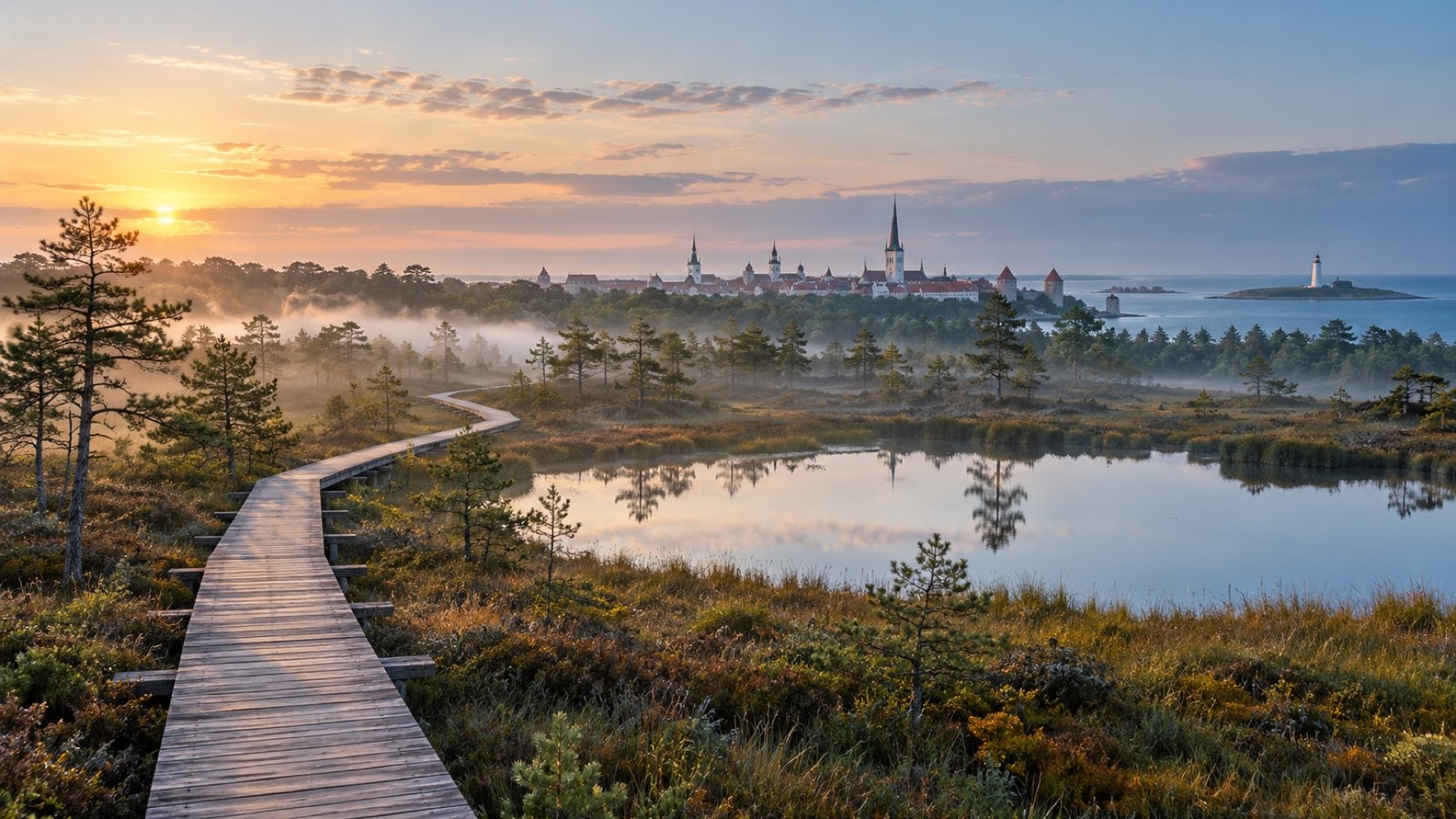
Estonia is compact, but it is not a single Tallinn weekend. Medieval and modern cities, Baltic islands, bogs, forests, border landscapes and living community traditions operate on different seasons and rules. These fifty experiences help first-time visitors build a rail- and ferry-aware route, distinguish living culture from spectacle, protect sensitive habitats and leave enough time for the country beyond the capital.
Estonia at a glance
- Ideal first trip: 8–12 days for Tallinn, Tartu, one western or eastern city, and one island or national-park chapter.
- Currency: euro; cards are widespread, but remote islands, small markets and rural services may require a backup payment method.
- Entry: Estonia is in the Schengen Area; passport, visa, residence, purpose and funds rules depend on nationality and status.
- Transport: trains connect Tallinn with Tartu, Narva, Viljandi, Paldiski and other towns; buses and ferries fill important gaps.
- Ethical rule: border facilities, living traditions, private villages and protected bird or bog habitats are not photo sets; use authorised routes and hosts.
Entry, visa and arrival planning
Use Estonia’s Ministry of Foreign Affairs, the Police and Border Guard Board or the authority responsible for your passport for current rules. Eligible visa-free short stays are generally limited to 90 days in any 180-day Schengen period, but nationality and status control the exact answer.
Tallinn is the largest gateway, with ferries linking Finland and Sweden. Tartu, regional buses, rail and island ferries can support open-jaw routes only after the exact date, vehicle or bicycle rules and disruption notices are checked.
When to go
Late spring to early autumn supports islands, boardwalks and long daylight. Summer brings beach and ferry demand; autumn migration and winter snow offer different landscapes but much shorter, colder days.
Storms, coastal wind, flooding, wildfire danger, black ice and rail or ferry disruption can change plans quickly. Soomaa’s fifth season and wildlife sightings are natural events, never guaranteed products.
Budget and places to stay
Compare live train, bus, ferry, bicycle, museum, park, spa, accommodation and cancellation totals. A low room rate can lose value after late taxis or missed island connections.
Many landscapes are free to enter, but safe access may require a reservation, ferry, vehicle space, guide or equipment. Never turn an old price into a current promise.
Fifty things to do in Estonia
1. Tallinn Old Town through surviving fabric and reconstruction
Why go: Tallinn. The UNESCO-listed core rewards a route that distinguishes medieval streets and institutions from later restoration, tourism staging and legend.
Good for: city breaks and first-time visitors
Know before you go: Cobbles, cruise peaks, worship and residential lanes require early timing and respectful photography.
2. Toompea Castle area and constitutional Tallinn
Why go: Tallinn. Public viewpoints, cathedral precincts and the parliament setting introduce political geography without reducing the hill to a postcard.
Good for: history, architecture and cultural travellers
Know before you go: Security boundaries, services, ceremonies and icy slopes can change access.
3. Kiek in de Kök fortifications on one official museum route
Why go: Tallinn. Towers, passages and collections explain the defended city when visitors choose an authorised route rather than searching for closed tunnels.
Good for: culture, families and rainy-day travellers
Know before you go: Timed access, stairs, confined spaces and separate entrances require planning.
4. Tallinn Town Hall and civic square beyond the market stalls
Why go: Tallinn. The town hall, guild landscape and public square reveal Hanseatic government and trade when interpreted with documentary context.
Good for: history, architecture and cultural travellers
Know before you go: Events, markets and seasonal interior hours can transform the route.
5. Niguliste Museum for sacred art and conservation
Why go: Tallinn. A focused visit connects surviving artworks, church architecture and conservation to the wider Baltic history of the city.
Good for: culture, families and rainy-day travellers
Know before you go: Exhibition loans, worship heritage, lighting and step-free routes should be checked.
6. Kadriorg Palace and park as one designed landscape
Why go: Tallinn. Palace rooms, collections, formal gardens and the wider park show imperial and Estonian cultural layers best when treated as one coherent half-day.
Good for: history, architecture and cultural travellers
Know before you go: Separate museum tickets, events, snow and seasonal garden conditions affect the plan.
7. Kumu Art Museum through one chosen question
Why go: Tallinn. A selective path through Estonian art helps visitors understand identity, occupation, modernism and contemporary practice without gallery fatigue.
Good for: culture, families and rainy-day travellers
Know before you go: Temporary loans and the building scale make current floor information essential.
8. Seaplane Harbour with maritime and military context
Why go: Tallinn. Ships, engineering and seafaring collections explain Estonia’s Baltic position when dramatic displays are connected to real labour and history.
Good for: culture, families and rainy-day travellers
Know before you go: Large objects, stairs, dark displays and family crowds require pacing.
9. Estonian Open Air Museum with reconstruction explained
Why go: Tallinn. Farm buildings and landscapes can introduce regional rural life when original, relocated and reconstructed elements are clearly distinguished.
Good for: culture, families and rainy-day travellers
Know before you go: Outdoor distances, weather, seasonal demonstrations and animal areas affect suitability.
10. Telliskivi and Balti Jaam through working creative businesses
Why go: Tallinn. A former industrial area, market and contemporary studios show urban change without treating workshops or neighbourhood life as a backdrop.
Good for: city breaks and first-time visitors
Know before you go: Ask before photographing people and confirm event access rather than entering private studios.
11. Patarei exterior and authorised memory route
Why go: Tallinn. The coastal prison complex and documented exhibitions can frame occupation and incarceration without turning trauma or decay into entertainment.
Good for: history students, families and reflective travellers
Know before you go: Use only the currently authorised museum route; unstable or closed areas are not viewpoints.
12. Pirita convent ruins and coast on a weather-safe circuit
Why go: Tallinn. Convent archaeology, river and Baltic shore provide a lower-density contrast to the old town when access and interpretation are checked.
Good for: history, architecture and cultural travellers
Know before you go: Wind, ice, events and protected coastal areas require flexibility.
13. Lahemaa National Park from an official visitor plan
Why go: North Estonia. Forests, bays, villages and manor landscapes reward one coherent corridor rather than a race between every named stop.
Good for: landscape, ecology and wildlife travellers
Know before you go: Storms, fire risk, seasonal services and limited rural transport require a conservative route.
14. Viru Bog boardwalk without leaving the authorised trail
Why go: Lahemaa. A marked boardwalk introduces peatland ecology and hydrology when visitors slow down and protect the fragile surface.
Good for: landscape, ecology and wildlife travellers
Know before you go: Ice, wind, crowding and maintenance closures can make the route unsafe.
15. Palmse or Sagadi manor with estate-history context
Why go: Lahemaa. One documented manor visit can examine architecture, landholding and rural labour without duplicating interiors.
Good for: history, architecture and cultural travellers
Know before you go: Check the exact museum, grounds, event and transport hours rather than assuming both estates fit.
16. Käsmu or Altja through coastal-community interpretation
Why go: Lahemaa coast. A single village route can connect maritime livelihoods, architecture and shore ecology when residents retain privacy.
Good for: city breaks and first-time visitors
Know before you go: Parking, private property, nesting areas and storms require restraint.
17. Jägala waterfall only from lawful viewpoints
Why go: Harju County. The broad waterfall offers a compact geology stop when water level, ice and official access are treated as conditions rather than guarantees.
Good for: landscape, ecology and wildlife travellers
Know before you go: Cliff edges, spray, unstable ice and informal tracks are serious hazards.
18. Paldiski cliffs and town history on public routes
Why go: Paldiski. Coastal geology, port history and the former closed-city landscape can be read together from lawful streets and marked viewpoints.
Good for: design, industrial history and urban travellers
Know before you go: Operational port, military and cliff-edge boundaries must never be crossed.
19. Tartu University and Toome Hill intellectual circuit
Why go: Tartu. University buildings, bridges, observatory history and parkland reveal a living academic city rather than a collection of statues.
Good for: city breaks and first-time visitors
Know before you go: Active teaching spaces, events, slopes and winter surfaces require a public-route plan.
20. Estonian National Museum with protected time
Why go: Tartu. The national museum provides essential evidence on everyday life, language, communities and twentieth-century history; it deserves more than a rushed gallery.
Good for: culture, families and rainy-day travellers
Know before you go: Large exhibitions and emotionally difficult material require priorities and rest.
21. Tartu Old Town, riverfront and neighbourhood transition
Why go: Tartu. A slow route from civic streets to the Emajõgi and one wooden-house neighbourhood shows how the city works beyond its university symbols.
Good for: city breaks and first-time visitors
Know before you go: Cycling traffic, flooding, nightlife and residential privacy shape the route.
22. AHHAA Science Centre with a focused family plan
Why go: Tartu. Hands-on science can balance heritage-heavy days when families select age-appropriate demonstrations and protect unstructured rest time.
Good for: culture, families and rainy-day travellers
Know before you go: Live demonstrations, noise, queues and height rules should be checked.
23. Lake Peipsi Onion Route through community businesses
Why go: East Estonia. Old Believer villages, foodways and shoreline settlements are best approached through museums, community hosts and lawful businesses rather than intrusive photography.
Good for: history, architecture and cultural travellers
Know before you go: Seasonal opening, language, private worship and winter ice require current local advice.
24. Alatskivi Castle and regional history without imitation myths
Why go: Tartu County. The estate, museum and landscape provide a distinct regional chapter when architectural influence is separated from invented royal narratives.
Good for: history, architecture and cultural travellers
Know before you go: Separate displays, event closures and rural transport require planning.
25. Setomaa through a community-led museum or cultural programme
Why go: South-east Estonia. Seto language, leelo singing, food and Orthodox traditions remain living culture and should be encountered through authorised local interpretation.
Good for: history, architecture and cultural travellers
Know before you go: Border proximity, worship, photography and event etiquette require care.
26. Võru and Vana-Võromaa smoke-sauna context
Why go: South Estonia. A museum or reputable host can explain language, farm culture and smoke-sauna practice without presenting private ritual as a spectacle.
Good for: history, architecture and cultural travellers
Know before you go: Fire safety, health suitability, consent and host instructions are non-negotiable.
27. Otepää on one season-appropriate outdoor route
Why go: South Estonia. Rolling lakes and forest support hiking, cycling or skiing when the route matches current surface, daylight and ability.
Good for: prepared walkers and outdoor travellers
Know before you go: Snow, thaw, heat and event closures can invalidate saved tracks.
28. Karula National Park on a marked low-impact trail
Why go: South Estonia. Small farms, lakes and rolling landscapes create a quieter national-park chapter through official trails and visitor information.
Good for: landscape, ecology and wildlife travellers
Know before you go: Rural transport, fire danger, storms and unmarked private land require preparation.
29. Viljandi castle hills and craft-city context
Why go: Viljandi. Ruins, lake views, music institutions and workshops connect historic fabric with a living UNESCO crafts and folk-art city.
Good for: city breaks and first-time visitors
Know before you go: Festivals, slopes and private studios require current hours and respectful access.
30. Soomaa National Park with an official seasonal plan
Why go: South-west Estonia. Bog, floodplain, forest and river habitats are strongest through an authorised boardwalk, guided canoe or visitor-centre route.
Good for: landscape, ecology and wildlife travellers
Know before you go: Fifth-season flooding is not guaranteed; current water, ice, fire and closure information controls access.
31. Soomaa dugout-canoe heritage through a trained host
Why go: Soomaa. Community-led interpretation can connect haabjas construction and river knowledge to living heritage instead of offering a generic paddle.
Good for: history, architecture and cultural travellers
Know before you go: Water conditions, lifejackets, skill limits and cultural consent require a reputable operator.
32. Pärnu beach and coastal meadow as one ecological resort day
Why go: Pärnu. A sandy beach, promenade and protected meadow show both resort culture and coastal habitat when swimming and wildlife rules are respected.
Good for: landscape, ecology and wildlife travellers
Know before you go: Bathing flags, heat, storms, nesting areas and peak-season crowds require checks.
33. Pärnu wooden villas and spa history on foot
Why go: Pärnu. A documented public route through resort architecture adds urban history without entering private homes or depending on a treatment booking.
Good for: design, industrial history and urban travellers
Know before you go: Residential privacy, road crossings and seasonal events shape the walk.
34. Kihnu Island through community rhythm, not a checklist
Why go: Kihnu. A multi-hour or overnight visit can introduce maritime livelihoods, museum evidence and living cultural traditions when residents control the encounter.
Good for: history, architecture and cultural travellers
Know before you go: Ferry capacity, weather, bicycles, worship and photography require advance planning.
35. Matsalu National Park from an official birdwatching point
Why go: West Estonia. Migration habitats and coastal meadows reward quiet observation from an authorised tower, trail or guide-led route.
Good for: landscape, ecology and wildlife travellers
Know before you go: Breeding closures, storms, insects and wildlife distance take priority over sightings.
36. Haapsalu old town and promenade with resort context
Why go: Haapsalu. Wooden houses, railway and spa history form a coherent small-town chapter when a castle or museum anchors the evidence.
Good for: city breaks and first-time visitors
Know before you go: Seasonal services, events and slippery waterfront surfaces require checking.
37. Haapsalu Castle with archaeology and legend separated
Why go: Haapsalu. Fortifications and exhibitions explain ecclesiastical and regional history when the White Lady story is labelled as tradition rather than fact.
Good for: history, architecture and cultural travellers
Know before you go: Stairs, events and seasonal access can limit the circuit.
38. Saaremaa through one slow island base
Why go: Saaremaa. Estonia’s largest island deserves several nights to connect Kuressaare, coast, villages and protected landscapes without constant driving.
Good for: landscape, ecology and wildlife travellers
Know before you go: Ferry or flight schedules, vehicle reservations, wind and late returns require live checks.
39. Kuressaare Castle and town as one island-history chapter
Why go: Saaremaa. A well-preserved fortress, museum and compact town provide evidence-led context for the island before remote excursions.
Good for: history, architecture and cultural travellers
Know before you go: Separate exhibitions, events, stairs and winter surfaces require priorities.
40. Kaali meteorite crater field with scientific interpretation
Why go: Saaremaa. The crater landscape is most useful through official geological and archaeological interpretation rather than dramatic speculation.
Good for: landscape, ecology and wildlife travellers
Know before you go: Stay on designated paths and do not disturb protected ground.
41. Panga cliff and north-coast geology from marked access
Why go: Saaremaa. A high coastal outcrop can introduce Silurian geology when visitors keep back from unstable edges and respect habitat.
Good for: landscape, ecology and wildlife travellers
Know before you go: Wind, erosion, ice and unfenced sections require conservative decisions.
42. Vilsandi National Park only with advance access planning
Why go: Western Saaremaa. Sensitive islands, coast and bird habitats reward an official guided or marked plan rather than an improvised crossing.
Good for: landscape, ecology and wildlife travellers
Know before you go: Water level, weather, nesting closures and transport can cancel the visit.
43. Muhu craft and farm culture through named local hosts
Why go: Muhu. A community business, museum or workshop can show island textiles, food and farm history with the maker credited.
Good for: history, architecture and cultural travellers
Know before you go: Opening days, consent and ferry-linked transport require confirmation.
44. Hiiumaa lighthouse route with one realistic corridor
Why go: Hiiumaa. One or two authorised lighthouse visits can connect navigation, island history and coastal landscape without a full-island driving race.
Good for: history, architecture and cultural travellers
Know before you go: Tower hours, height restrictions, stairs, wind and ferry timing require planning.
45. Sääretirp or another marked Hiiumaa coastal walk
Why go: Hiiumaa. A narrow coastal formation rewards slow observation when weather, tides and protected-area rules are checked.
Good for: landscape, ecology and wildlife travellers
Know before you go: Wind, slippery stones, nesting birds and no-service conditions require a turnaround point.
46. Narva Castle and river promenade with border awareness
Why go: Narva. The museum, promenade and view across the river explain a layered frontier city when the international border remains a real security boundary.
Good for: history, architecture and cultural travellers
Know before you go: Never cross barriers or photograph restricted facilities; confirm current border-area rules.
47. Kreenholm industrial history on an authorised tour
Why go: Narva. A documented tour can connect textile labour, architecture and post-industrial change without trespassing in a vast complex.
Good for: design, industrial history and urban travellers
Know before you go: Tours, security and structural access vary; exterior gaps are not invitations.
48. Narva-Jõesuu beach and spa-town history
Why go: Ida-Viru. A long sandy coast and resort architecture create a distinct eastern Baltic chapter when the day includes weather and transport contingencies.
Good for: city breaks and first-time visitors
Know before you go: Bathing flags, cold water, wind and last buses require attention.
49. Alutaguse National Park or Kauksi on one official route
Why go: North-east Estonia. Forests, dunes and Lake Peipsi shore can be explored responsibly through marked trails and visitor information.
Good for: landscape, ecology and wildlife travellers
Know before you go: Fire danger, storms, insects, wildlife and remote transport limit improvisation.
50. Aidu quarry landscape with licensed activity or public trail
Why go: Ida-Viru. A former oil-shale landscape can reveal environmental change through an authorised water, cycling or walking route.
Good for: landscape, ecology and wildlife travellers
Know before you go: Deep water, unstable industrial areas and active operations require a licensed operator or marked public access.
Food and drink worth planning around
Estonian food changes between Baltic fish, dark bread, dairy, forest ingredients, island cooking, Old Believer onion traditions and south-Estonian dishes. Verify allergens and seasonal availability.
Beer and spirits are optional, not cultural obligations. Arrange safe transport and never combine alcohol with driving, swimming, sauna heat, cycling or winter travel.
What to buy
For textiles, ceramics, woodwork, food and island craft, identify the maker, materials and production place. A folk pattern is not proof of community authorship.
Use established makers and museums for antiques or heritage objects; retain receipts and check cultural-property, food, wildlife and customs rules before export.
Getting around
Use Elron for live trains and replacement-bus notices, the relevant ferry or airline for islands, and the local city operator for fares and validation. A saved timetable is not authority.
A car helps selected islands and rural parks but is unnecessary in Tallinn and Tartu. Include vehicle reservation, winter tyres, parking, insurance, wildlife risk and a sober driver.
Easy access and family travel
Accessibility varies across cobbled old towns, towers, bog boardwalks, ferries, historic trains, beaches and winter surfaces. Ask for exact gradients, steps, toilets and assistance.
Do not infer accessibility from one lift or low-floor vehicle; the arrival surface, transfer, interior route, tide, snow and last return are separate questions.
Stay safe
Use official weather, rescue, park, rail, road and ferry alerts. Coastal wind, cold water, thin ice, storm-felled trees, floods and fire danger can close otherwise easy routes.
Stay on marked trails, keep wildlife distance, follow bathing flags and never enter unstable industrial, military, prison, lighthouse or border areas outside authorised access.
Mistakes to avoid
- Treating Tallinn as the whole country.
- Expecting a guaranteed Soomaa flood, snow day or wildlife sighting.
- Trusting an old ferry or train timetable.
- Leaving a bog boardwalk or climbing a closed tower for photographs.
- Treating Kihnu, Seto or smoke-sauna traditions as costumes for visitors.
- Driving onto an island without checking vehicle capacity and the last return.
- Photographing border or operational facilities without checking rules.
- Compressing Saaremaa, Hiiumaa and mainland parks into rushed day trips.
Sample seven-day route
Use four Tallinn nights and three Tartu, Pärnu or Lahemaa nights with one carefully planned day outside the base.
Sample ten-day route
Use four Tallinn, three Tartu and three Saaremaa, Pärnu, Haapsalu or Narva nights along checked transport links.
Sample fourteen-day route
Use four Tallinn, three Tartu, three western-island or Pärnu nights and four nights in one eastern, southern or national-park region.
Estonia travel FAQ
How many days are enough for Estonia?
Seven days supports Tallinn plus one city or nature region. Ten to fourteen days allows Tartu, an island or western coast, and one slower national-park chapter.
Do I need a car?
No for Tallinn, Tartu, Narva and several rail corridors. A car can help rural parks and islands, but buses, ferries, bicycles or a licensed guide may remove parking and alcohol risk.
Can I visit a bog independently?
Yes on an open marked boardwalk after checking the park or RMK information, weather, fire and ice conditions. Never step onto fragile bog surface or assume frozen water is safe.
How should I plan Estonia’s islands?
Choose one island or connected pair, check the official ferry or flight operator, reserve a vehicle when required and build a weather buffer around the last safe return.
Official planning sources
- Visit Estonia destination hub
- Visit Estonia national parks
- Visit Estonia UNESCO heritage
- Visit Estonia island guide
- Visit Estonia Tartu guide
- Visit Estonia Pärnu guide
- Visit Estonia Narva guide
- Visit Estonia transport guide
- Estonian Ministry of Foreign Affairs visa information
- Elron official stop and replacement transport information
Disclosure: This independent editorial guide is informational, not a booking guarantee. No price, ranking, safety outcome, entry permission or availability is guaranteed. Recheck all time-sensitive details with the linked official source before purchase.