This guide uses official tourism, government and transport sources. Rules and prices can change, so check the linked official pages before booking.
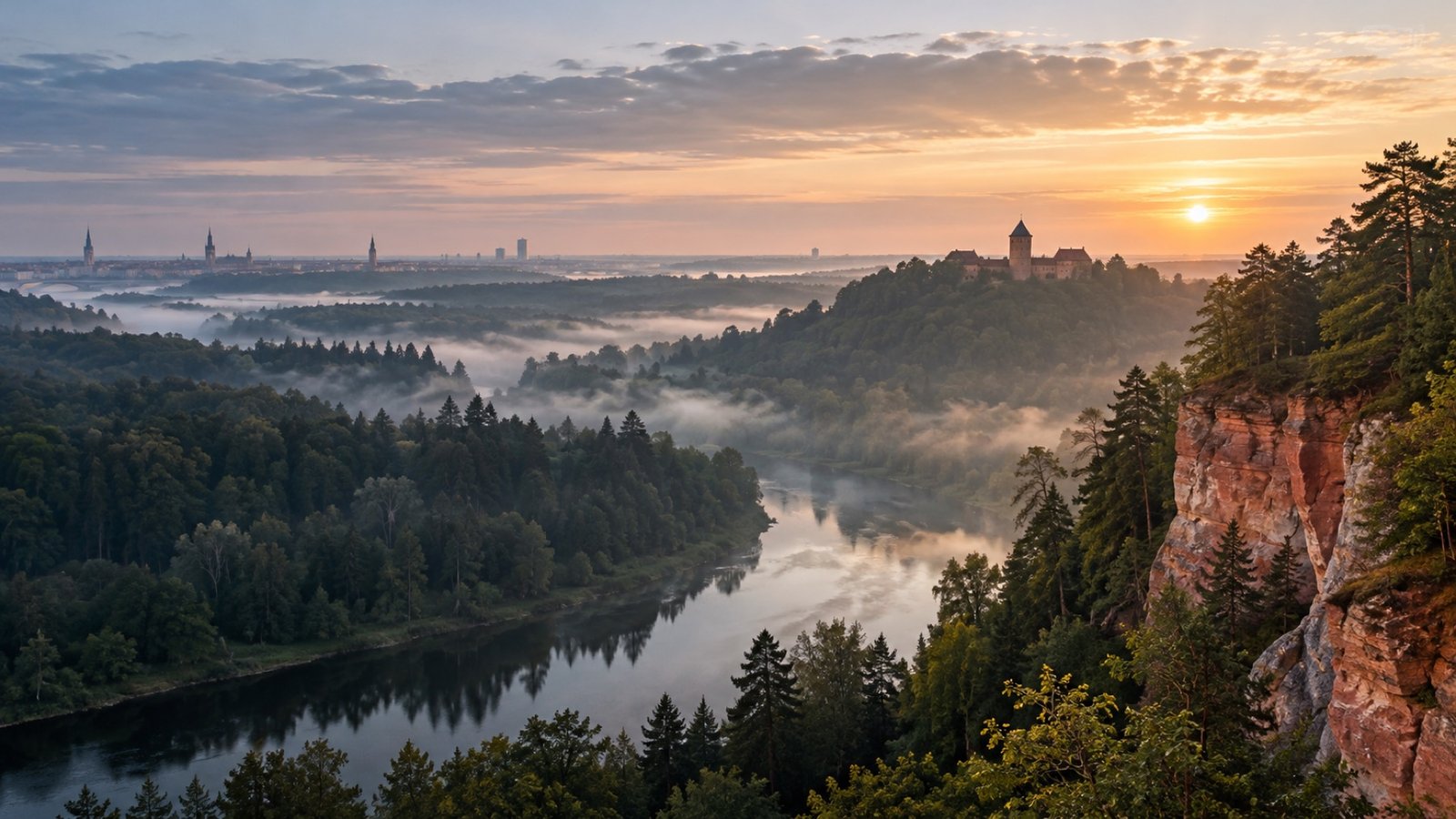
Latvia is not a Riga stopover. Art Nouveau streets, Baltic beaches, river valleys, bogs, castles, industrial ports and living regional cultures operate on different seasons and access rules. These fifty experiences help first-time visitors build a rail- and bus-aware route, separate evidence from legend, protect habitats and give western and eastern regions enough time to feel distinct.
Latvia at a glance
- Ideal first trip: 8–12 days for Riga, Gauja, one western coast or Kuldīga base, and one Zemgale or Latgale chapter.
- Currency: euro; cards are common, but rural makers, markets and remote services may require a backup payment method.
- Entry: Latvia is in the Schengen Area; passport, visa, residence, purpose and funds rules depend on nationality and status.
- Transport: Vivi trains serve several major corridors; regional buses and occasional car hire fill gaps.
- Ethical rule: border, military, port, private-village and protected habitat boundaries are real; use authorised routes and community hosts.
Entry, visa and arrival planning
Use Latvia’s Ministry of Foreign Affairs, border authority or the authority responsible for your passport for current entry rules. Short-stay Schengen visas are generally limited to 90 days in any 180-day period, but nationality and status control the exact answer.
Riga is the main air, bus and rail gateway. International buses, Baltic ferries and regional airports can support open-jaw plans only after the exact date, baggage, border and connection rules are checked.
When to go
Late spring and early autumn often balance cities, long daylight and lower crowds. Summer brings beach, festival and park demand; winter brings snow, ice, short daylight and a different urban atmosphere.
Storms, coastal wind, high or low river levels, wildfire danger, flooding and black ice can change trails, boardwalks, trains and ferries. Build a weather-safe alternative into every nature day.
Budget and places to stay
Compare live train, bus, museum, palace, park, spa, accommodation and cancellation totals. A cheap distant room can lose value after late taxis or a missed regional connection.
Many landscapes are free, but safe access may require a guide, reservation, equipment or rural transport. Never publish an old price as a current promise.
Fifty things to do in Latvia
1. Riga Old Town through trade, occupation and reconstruction
Why go: Riga. A compact circuit through civic squares, guild streets and the Daugava edge becomes useful when each historical layer is identified rather than flattened into medieval scenery.
Good for: city breaks and first-time visitors
Know before you go: Cobbles, worship, events, nightlife and cruise peaks require early timing and respectful photography.
2. House of the Black Heads with merchant-history context
Why go: Riga. The reconstructed ceremonial building can introduce urban trade and civic representation when visitors distinguish original evidence from later rebuilding.
Good for: history, architecture and cultural travellers
Know before you go: Timed interiors, events and the busy square require an official check.
3. Riga Cathedral and cloister with active-faith respect
Why go: Riga. Architecture, music and collections show a long religious and civic history when a visit fits around services and conservation.
Good for: history, architecture and cultural travellers
Know before you go: Worship, concerts, dress, photography and separate access take priority.
4. Riga Art Nouveau district through one documented route
Why go: Riga. A focused walk and museum visit can explain façades, interiors, planning and social history without turning residential entrances into props.
Good for: design, industrial history and urban travellers
Know before you go: Stay on public routes and avoid blocking doors or photographing residents.
5. Latvian National Museum of Art by one chosen collection
Why go: Riga. A selective visit connects Latvian art, identity and twentieth-century change without exhausting every floor.
Good for: culture, families and rainy-day travellers
Know before you go: Temporary loans, exhibition closures and the building scale require priorities.
6. Museum of the Occupation of Latvia with recovery time
Why go: Riga. Documents and testimony help visitors understand Nazi and Soviet occupations without sensational language or false equivalence.
Good for: history students, families and reflective travellers
Know before you go: Difficult material, security and group pacing require protected reflection time.
7. Corner House only on an authorised historical visit
Why go: Riga. A documented exhibition can address repression and detention when the building is approached as evidence rather than dark entertainment.
Good for: history students, families and reflective travellers
Know before you go: Access, tours and emotional intensity vary; closed areas are not viewpoints.
8. Riga Central Market through food systems and architecture
Why go: Riga. Market halls and outdoor stalls can reveal everyday food culture, reuse and regional supply when vendors are treated as working people.
Good for: city breaks and first-time visitors
Know before you go: Ask before photographing, watch belongings and verify allergens and producer origin.
9. Wooden Riga and Kalnciema through public streets and local makers
Why go: Riga. One west-bank route can connect timber architecture, restoration and contemporary craft without intruding on private houses.
Good for: design, industrial history and urban travellers
Know before you go: Market dates, traffic and residential privacy shape the plan.
10. National Library of Latvia and Daugava panorama
Why go: Riga. Public areas and exhibitions connect a contemporary landmark with language, books and the river geography of the capital.
Good for: design, industrial history and urban travellers
Know before you go: Library access, events, security and reading-room rules require checking.
11. Mežaparks and Song Festival landscape
Why go: Riga. Forest park and performance infrastructure can introduce the national song tradition when a museum, exhibition or event gives proper context.
Good for: history, architecture and cultural travellers
Know before you go: Event closures, cycling traffic and mass-crowd procedures can transform access.
12. Latvian Ethnographic Open-Air Museum with reconstruction explained
Why go: Riga outskirts. Relocated buildings and demonstrations can introduce regional rural life when original, moved and reconstructed elements are clearly labelled.
Good for: culture, families and rainy-day travellers
Know before you go: Outdoor distances, weather, events and seasonal hours require planning.
13. Riga Motor Museum with a focused technology story
Why go: Riga. Transport collections can balance art and war history by examining design, mobility and political context through selected galleries.
Good for: culture, families and rainy-day travellers
Know before you go: Family crowds, temporary displays and travel from the centre require timing.
14. Jūrmala wooden resort architecture and beach
Why go: Jūrmala. A slow walk can connect timber villas, spa history, pine forest and Baltic shore instead of treating the town as one beach stop.
Good for: city breaks and first-time visitors
Know before you go: Bathing flags, storms, dune protection and private villas require respect.
15. Ķemeri Great Bog Boardwalk on an open marked route
Why go: Ķemeri National Park. A boardwalk introduces raised-bog hydrology and habitat when visitors stay on infrastructure and accept changing weather.
Good for: landscape, ecology and wildlife travellers
Know before you go: Ice, wind, fire danger, sunrise crowds and maintenance closures can cancel access.
16. Sloka Lake birdwatching from official infrastructure
Why go: Ķemeri National Park. A marked trail or tower can reveal wetland and migration ecology without promising a species sighting.
Good for: landscape, ecology and wildlife travellers
Know before you go: Breeding sensitivity, insects, storms and damaged infrastructure require live park advice.
17. Sigulda and Gauja valley on one realistic circuit
Why go: Gauja National Park. A valley route can combine geology, viewpoints and town history when steep transfers are limited and the day is not overloaded.
Good for: landscape, ecology and wildlife travellers
Know before you go: Stairs, mud, ice, wind and cable-car or trail closures require a fallback.
18. Turaida Museum Reserve with legend separated from evidence
Why go: Gauja National Park. Castle, estate, church and cultural landscape deserve a coherent visit that labels the Rose of Turaida as tradition, not documentary fact.
Good for: history, architecture and cultural travellers
Know before you go: Tower stairs, events and seasonal grounds access require checking.
19. Gūtmanis Cave from the authorised path
Why go: Gauja National Park. Sandstone geology and inscriptions can be discussed responsibly when visitors do not add marks or leave the public route.
Good for: landscape, ecology and wildlife travellers
Know before you go: Slippery surfaces, crowding and fragile rock require distance and restraint.
20. Līgatne paper-mill village with labour history
Why go: Gauja National Park. A documented village or guide-led route can connect industrial production, workers’ housing and landscape without trespassing.
Good for: design, industrial history and urban travellers
Know before you go: Some buildings remain private or operational; use only advertised public access.
21. Cēsis medieval and new castles as one evidence-led visit
Why go: Cēsis. Ruins, museum spaces and town fabric show changing power when reenactment and legend are not mistaken for surviving evidence.
Good for: history, architecture and cultural travellers
Know before you go: Tower access, candles, events, steps and winter surfaces affect suitability.
22. Cēsis old town and contemporary culture
Why go: Cēsis. A slow route between public streets, parks and one current exhibition shows why Cēsis is more than its castle.
Good for: city breaks and first-time visitors
Know before you go: Festival periods, worship and independent venue hours require planning.
23. Āraiši Lake Castle with reconstruction clearly labelled
Why go: Vidzeme. Archaeology and a reconstructed Latgalian lake settlement become useful when displays explain what was excavated, inferred and rebuilt.
Good for: culture, families and rainy-day travellers
Know before you go: Outdoor weather, boardwalk surfaces and seasonal transport shape the visit.
24. Valmiera river town and Gauja gateway
Why go: Valmiera. A compact route through the river landscape, museum evidence and civic centre provides a northern park base rather than another day trip checklist.
Good for: city breaks and first-time visitors
Know before you go: Riverbanks, events and regional transport require a live plan.
25. Gauja paddling with a licensed operator
Why go: Gauja National Park. One suitable river section can reveal cliffs and forest ecology when equipment, water level and exit points are professionally managed.
Good for: landscape, ecology and wildlife travellers
Know before you go: Cold water, floods, storms, alcohol and skill mismatch are serious risks.
26. Kuldīga historic centre through urban-water evidence
Why go: Kuldīga. UNESCO-recognised town fabric, canals, timber buildings and civic streets reward an overnight pace rather than a photograph-and-leave visit.
Good for: city breaks and first-time visitors
Know before you go: Cobbles, private buildings and seasonal crowding require care.
27. Venta Rapid from safe lawful viewpoints
Why go: Kuldīga. The broad river feature and brick bridge create a strong landscape chapter when water level and safety determine how close visitors go.
Good for: landscape, ecology and wildlife travellers
Know before you go: Do not wade or swim without current local safety advice; wet rock and current can be dangerous.
28. Suiti cultural space through a community-led experience
Why go: Alsunga region. Music, dress, food and religious history should be encountered through local museums, events or hosts who control interpretation.
Good for: history, architecture and cultural travellers
Know before you go: Living culture, worship and people are not props; consent and event etiquette matter.
29. Liepāja beach and Seaside Park as one coastal day
Why go: Liepāja. A long Baltic shore and park provide space for walking, swimming or winter light when weather and bathing rules shape the plan.
Good for: landscape, ecology and wildlife travellers
Know before you go: Wind, cold water, storms and protected dunes require conservative choices.
30. Karosta through an authorised museum or guided route
Why go: Liepāja. Military-port planning, prison history and monumental buildings can be understood without entering ruins or active areas.
Good for: design, industrial history and urban travellers
Know before you go: Use only advertised tours and public roads; unstable structures and operational zones are off limits.
31. Liepāja music and civic architecture
Why go: Liepāja. One concert, exhibition or architecture circuit can connect the city’s contemporary identity with its port history.
Good for: city breaks and first-time visitors
Know before you go: Performance dates, venue security and late transport require advance coordination.
32. Ventspils castle, port and public waterfront
Why go: Ventspils. A museum-led route can distinguish medieval evidence, modern port activity and family-oriented public spaces.
Good for: city breaks and first-time visitors
Know before you go: Operational port boundaries, wind and event closures must be respected.
33. Slītere National Park from an official visitor plan
Why go: Kurzeme coast. Forests, dunes and former Baltic shorelines reward one marked route with current conservation information.
Good for: landscape, ecology and wildlife travellers
Know before you go: Fire risk, storms, ticks, seasonal restrictions and limited transport require preparation.
34. Cape Kolka with wind, currents and Livonian context
Why go: Kurzeme coast. The meeting of open Baltic and gulf waters becomes meaningful when coastal dynamics and Livonian cultural history are both interpreted.
Good for: landscape, ecology and wildlife travellers
Know before you go: Strong currents, wind, dunes and bird migration make off-route swimming or disturbance unsafe.
35. Livonian coast villages through community businesses
Why go: Kurzeme coast. Language, fishing history and village landscapes should be approached through museums, signs and local hosts rather than private yards.
Good for: history, architecture and cultural travellers
Know before you go: Seasonal opening, consent and fragile coastal habitat require a slow route.
36. Engure or Mērsrags bird habitat from an official tower
Why go: Gulf of Riga coast. A marked hide or tower supports quiet wetland observation without chasing birds across protected ground.
Good for: landscape, ecology and wildlife travellers
Know before you go: Breeding closures, storms and damaged boardwalks require a live check.
37. Jelgava Palace and city-island landscape
Why go: Jelgava. A documented public visit can connect ducal architecture, education and river geography instead of relying on exterior scale alone.
Good for: history, architecture and cultural travellers
Know before you go: University use, floods, events and interior hours affect access.
38. Rundāle Palace and garden as one designed estate
Why go: Zemgale. Curated rooms, collections and formal garden reveal court culture and craftsmanship when enough time is protected.
Good for: history, architecture and cultural travellers
Know before you go: Separate routes, seasonal gardens, stairs and events require selection.
39. Bauska Castle and confluence landscape
Why go: Bauska. Ruins, restored sections and river geography make a coherent regional stop when reconstruction is clearly distinguished.
Good for: history, architecture and cultural travellers
Know before you go: Tower stairs, weather and seasonal opening can limit the route.
40. Koknese castle ruins and Daugava memory landscape
Why go: Koknese. River-changed ruins and nearby memorial spaces require historical context and quiet behaviour, not dramatic posing.
Good for: history students, families and reflective travellers
Know before you go: Water edges, events and separate sites need careful sequencing.
41. Daugavpils Fortress through public museums and streets
Why go: Daugavpils. A vast fortified district can connect military, urban and contemporary cultural history through authorised public institutions.
Good for: design, industrial history and urban travellers
Know before you go: Do not enter derelict or restricted buildings; distances and weather require a mapped circuit.
42. Daugavpils Mark Rothko Art Centre by one exhibition question
Why go: Daugavpils. A focused contemporary-art visit provides a distinct Latgale chapter without claiming every display relates directly to the artist.
Good for: culture, families and rainy-day travellers
Know before you go: Exhibition rotation, terminology and fortress access require current information.
43. Latgale pottery with a named working maker
Why go: Latgale. A booked studio or museum demonstration can explain clay, firing and regional design with the craftsperson credited.
Good for: history, architecture and cultural travellers
Know before you go: Kilns, tools, purchases and photography follow the host’s safety and consent rules.
44. Aglona Basilica with pilgrimage and worship respect
Why go: Latgale. Architecture and pilgrimage history can be understood through an active-faith visit that fits around services.
Good for: history, architecture and cultural travellers
Know before you go: Dress, silence, photography, events and large pilgrimage crowds take priority.
45. Rāzna National Park on one lake-and-hill route
Why go: Latgale. A marked route can introduce Latvia’s lake-rich eastern landscape without turning every viewpoint into a driving checklist.
Good for: landscape, ecology and wildlife travellers
Know before you go: Water safety, rural roads, storms and seasonal services require preparation.
46. Ludza old town and castle-hill context
Why go: Latgale. A compact route through wooden streets, museum evidence and hilltop remains offers a quieter eastern history chapter.
Good for: city breaks and first-time visitors
Know before you go: Slopes, worship and limited opening days require a flexible plan.
47. Rēzekne with Latgalian language and culture context
Why go: Latgale. A museum, cultural centre or documented walk can introduce regional identity as living practice rather than colourful folklore.
Good for: city breaks and first-time visitors
Know before you go: Events, language and local community spaces require respectful participation.
48. Abava valley through one marked town-and-nature corridor
Why go: Kurzeme interior. A single walking, cycling or driving corridor can connect small towns, river landscape and local producers without overloading the day.
Good for: landscape, ecology and wildlife travellers
Know before you go: Road safety, private land, weather and seasonal businesses require checks.
49. Tērvete forest and heritage route with clear interpretation
Why go: Zemgale. A marked forest circuit can combine ecology and storytelling when commercial characters are not confused with historical evidence.
Good for: landscape, ecology and wildlife travellers
Know before you go: Storms, fire risk, family crowds and long walking distances affect the plan.
50. Latvian Song and Dance tradition through an official event or museum
Why go: Latvia. An official performance, exhibition or archival programme can explain collective singing as living civic heritage rather than a tourist costume show.
Good for: history, architecture and cultural travellers
Know before you go: Tickets, mass-crowd safety, performer consent and event rules require advance planning.
Food and drink worth planning around
Latvian food changes between rye bread, smoked or fresh fish, dairy, forest ingredients, grey peas, seasonal berries and Latgalian or coastal traditions. Verify allergens and producer origin.
Beer and Riga Black Balsam are optional, not cultural obligations. Never combine alcohol with driving, swimming, sauna heat, cycling or winter travel.
What to buy
For linen, ceramics, woodwork, amber, food and regional craft, identify the maker, materials and production place. A Latvian motif is not proof of local manufacture.
Use established sellers for amber, antiques and heritage objects; retain receipts and check cultural-property, food, wildlife and customs rules before export.
Getting around
Use Vivi for live trains, ticket validation and disruption rules; use the exact bus, city transport or ferry operator for schedules, platforms, baggage and bicycles. A saved timetable is not authority.
A car helps selected coast, Latgale and rural parks but is unnecessary in Riga. Include winter tyres, parking, insurance, wildlife risk and a sober driver.
Easy access and family travel
Accessibility varies across cobbled centres, towers, castles, bog boardwalks, beaches and winter surfaces. Ask for exact gradients, steps, toilets, transfers and assistance.
Do not infer accessibility from one lift or low-floor vehicle; the arrival surface, interior route, weather and last return are separate questions.
Stay safe
Use official weather, rescue, park, rail, road and bathing information. Cold water, wind, thin ice, unstable sandstone, floods and storm-felled trees can close otherwise easy routes.
Stay on marked paths, keep wildlife distance, follow bathing flags and never enter unstable industrial, military, port, prison or border areas outside authorised access.
Mistakes to avoid
- Treating Riga as the whole country.
- Trusting old train, bus or attraction prices.
- Wading the Venta or entering Baltic water without current safety advice.
- Leaving bog boardwalks or climbing unstable sandstone for photographs.
- Treating Suiti, Latgalian or Livonian culture as costume entertainment.
- Entering Karosta, ports or fortress ruins outside authorised routes.
- Expecting guaranteed birds, floods, snow or autumn colour.
- Compressing Gauja, Kuldīga, Liepāja and Latgale into day trips from Riga.
Sample seven-day route
Use four Riga nights and three Gauja, Jūrmala or Kuldīga nights with one carefully planned regional day.
Sample ten-day route
Use four Riga, three Gauja or Kuldīga and three Liepāja, Ventspils, Zemgale or Latgale nights.
Sample fourteen-day route
Use four Riga, three Gauja, three western-coast or Kuldīga nights and four nights in one Zemgale or Latgale corridor.
Latvia travel FAQ
How many days are enough for Latvia?
Seven days supports Riga plus one regional base. Ten to fourteen days allows Gauja, the western coast or Kuldīga, and one Zemgale or Latgale chapter.
Do I need a car?
No for Riga, Jūrmala, Sigulda, Cēsis and several rail or bus corridors. A car can help rural coast and Latgale, but a licensed guide may remove parking and alcohol risk.
Can I visit Latvia’s bogs independently?
Yes on an open marked boardwalk after checking current Nature Conservation Agency or park information, weather, fire and ice conditions. Never leave the infrastructure.
Is the Venta Rapid safe to cross?
Conditions change. Observe from lawful viewpoints unless current local authorities explicitly describe a safe activity; strong current, cold water and slippery rock can be dangerous.
Official planning sources
- Latvia official city guide
- Latvia official national parks guide
- Latvia official Gauja National Park guide
- Latvia official day trips from Riga
- Latvia official Kuldīga guide
- Latvia official top experiences
- Latvian Ministry of Foreign Affairs visa information
- Vivi official passenger rules
- Vivi official e-ticket information
- Nature Conservation Agency birdwatching guidance
Disclosure: This independent editorial guide is informational, not a booking guarantee. No price, ranking, safety outcome, entry permission or availability is guaranteed. Recheck all time-sensitive details with the linked official source before purchase.