This guide uses official tourism, government and transport sources. Rules and prices can change, so check the linked official pages before booking.
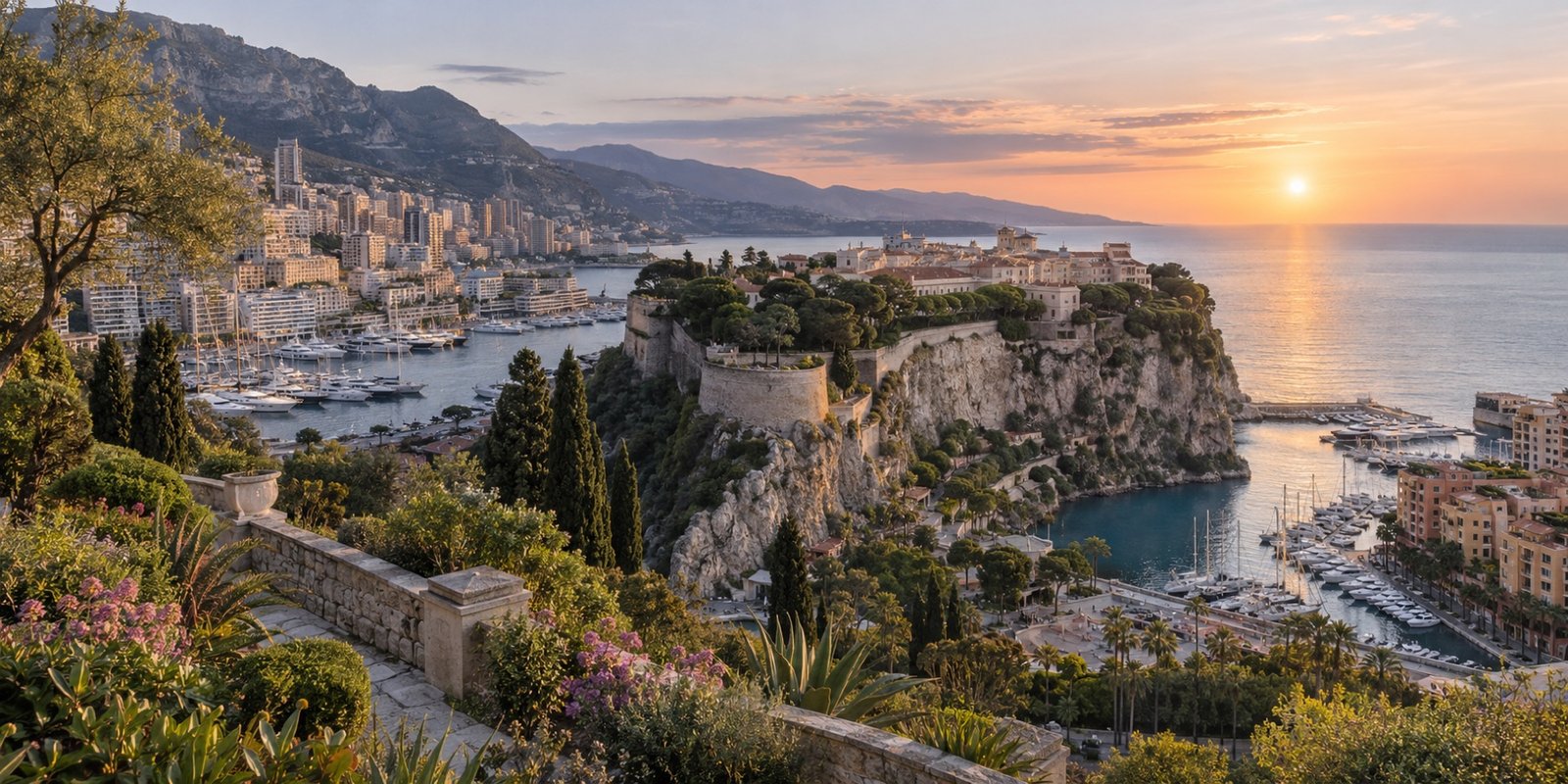
Monaco is geographically tiny but vertically complex. Its museums, gardens, harbour walks and historic districts sit on steep levels joined by buses, public lifts, stairs and short pedestrian corridors. A good first visit groups experiences by district, distinguishes public space from controlled private venues, and verifies event closures because the Grand Prix, yacht events, concerts and official ceremonies can reshape access.
Monaco at a glance
- Entry: Monaco forms a customs and border area with France; travellers normally enter through France and must satisfy the relevant Schengen rules.
- Language: French is official; Italian and English are commonly encountered in visitor settings.
- Terrain: short map distances can involve steep climbs, tunnels, stairs and several urban levels.
- Currency: the euro is used; advertised luxury is not a requirement for enjoying the public city.
- Emergency: use Monaco’s official police, fire or medical emergency information and appropriate travel insurance.
Entry, visa and arrival planning
Monaco has no routine immigration checkpoint separate from France for most road or rail arrivals, but this does not remove passport, visa or Schengen obligations. Verify entry through the French authorities and the traveller’s official government guidance.
Nice Côte d’Azur Airport, regional trains, buses, taxis and the heliport serve different budgets and needs. Check the exact operator, final stop and luggage rules; Monaco’s train station has multiple exits at different urban levels.
When to go
Spring and autumn often support comfortable walking, while major events can increase prices and restrict roads. Summer brings beach conditions, heat and crowds; winter is quieter but some seasonal services reduce frequency.
Monaco’s calendar matters as much as climate. Grand Prix preparation, the Yacht Show, official ceremonies, exhibitions and performances can affect access months or weeks beyond the headline event dates.
Budget and places to stay
Balance paid anchors such as the Oceanographic Museum or a performance with free gardens, sculpture routes, district walks and public lifts. Check the final price, reservation conditions and any combined museum ticket rather than assuming every famous building requires a luxury budget.
Accommodation outside Monaco can lower the nightly rate but creates transport time and late-evening constraints. Compare the final door-to-door plan from Beausoleil, Cap-d’Ail, Menton or Nice with a central room before booking.
Fifty things to do in Monaco
1. Prince’s Palace State Apartments
Why go: Monaco-Ville. The official residence presents Grimaldi history through ceremonial rooms and collections.
How to do it: Reserve through the Palace’s official system and check whether the apartments are open on the chosen date.
Good for: dynastic history, interiors and first-time context
Know before you go: The Palace is a working residence; closures, security rules and photography restrictions can change.
2. Changing of the Guard at the Palace
Why go: Place du Palais. The Carabiniers’ ceremony is a living civic tradition rather than a staged attraction.
How to do it: Arrive early without blocking palace access, verify the current ceremony time and combine it with a reserved Palace visit.
Good for: ceremony, families and a short heritage stop
Know before you go: Crowds and official duties can alter access; remain behind barriers and follow security instructions.
3. Place du Palais viewpoints
Why go: Monaco-Ville. The palace square and nearby terraces reveal the relationship between the Rock, Port Hercule and Fontvieille.
How to do it: Walk both sides of the square, allow security space and use the view to understand the city-state’s compact geography.
Good for: orientation, city views and photography
Know before you go: Edges, midday heat and event closures require attention.
4. Old Town lanes of Le Rocher
Why go: Monaco-Ville. Pedestrian lanes, civic buildings and small squares show Monaco beyond the headline monuments.
How to do it: Follow a compact signed loop between the Palace, Cathedral and Oceanographic Museum, pausing without blocking residents.
Good for: architecture, cafés and slow urban exploration
Know before you go: The district is residential and hilly; keep doorways clear and wear suitable shoes.
5. Monaco Cathedral
Why go: Monaco-Ville. The Romanesque-Byzantine cathedral is an active church and burial place of former sovereigns.
How to do it: Check service times, enter quietly and treat the building as a place of worship first.
Good for: religious architecture and modern Monegasque history
Know before you go: Ceremonies take priority; dress and photography rules must be respected.
6. Oceanographic Museum of Monaco
Why go: Monaco-Ville. The museum joins marine science, historic oceanography, aquariums and a monumental cliffside building.
How to do it: Buy from the official museum, study the current exhibitions and allow several unhurried hours.
Good for: marine life, science history and families
Know before you go: Animal welfare rules, timed activities and rooftop access can change; never promise a specific specimen.
7. Saint-Martin Gardens
Why go: Monaco-Ville. Clifftop paths link Mediterranean planting, sculptures and sea views beside the Oceanographic Museum.
How to do it: Walk slowly as part of a Rock itinerary and use shaded sections for recovery.
Good for: gardens, sculpture and free panoramic walking
Know before you go: Paths include gradients and exposed edges; heat and wind matter.
8. Fort Antoine Theatre
Why go: Monaco-Ville. The former fort is now an open-air performance space with a strong maritime setting.
How to do it: Check the official cultural calendar; visit the exterior respectfully when no event access is offered.
Good for: performing arts, architecture and evening culture
Know before you go: Event entry, rehearsal access and weather policy vary.
9. Chapel of Mercy
Why go: Monaco-Ville. The chapel is connected with the historic Brotherhood of Black Penitents and local religious traditions.
How to do it: Verify public opening and enter only when permitted, pairing it with the nearby old town.
Good for: sacred heritage and intimate architecture
Know before you go: It is not guaranteed to operate as a continuously open museum.
10. Museum of the Chapel of the Visitation
Why go: Monaco-Ville. The chapel museum presents sacred art in a small historic setting.
How to do it: Check the current exhibition status and opening through the official cultural listings.
Good for: religious art and quiet indoor study
Know before you go: Hours can be limited and exhibitions may change.
11. Princess Grace Irish Library
Why go: Monaco-Ville. The library connects Princess Grace’s Irish heritage with literature, music and cultural programming.
How to do it: Consult its official calendar and reserve any required tour, lecture or concert.
Good for: books, cultural history and small events
Know before you go: It is a specialist library, not a general walk-in attraction at all times.
12. Rainier III Sculpture Trail on the Rock
Why go: Monaco-Ville. A section of the official open-air route places public art within the historic district.
How to do it: Use the VisitMonaco interactive map and scan interpretation only from safe stopping points.
Good for: public art, self-guided walking and repeat visitors
Know before you go: Do not step into roads or private areas to frame a sculpture.
13. Sainte-Dévote Church
Why go: La Condamine ravine. The church honours Monaco’s patron saint and anchors one of the principality’s most important traditions.
How to do it: Visit outside worship, read the official account of the saint and connect the site with the nearby port.
Good for: living heritage and religious history
Know before you go: Traffic around the famous corner and services can restrict safe access.
14. La Condamine Market
Why go: Place d’Armes. The market hall and square are a practical place to encounter local daily life and regional food.
How to do it: Visit during active market hours, order considerately and try a Monegasque speciality from a current vendor.
Good for: food, everyday culture and budget meals
Know before you go: Vendor mix and opening days change; allergies must be confirmed directly.
15. Rue Princesse Caroline
Why go: La Condamine. The pedestrian street links the market district and port through shops, public life and seasonal decoration.
How to do it: Use it as a walking connection rather than a separate rushed attraction.
Good for: easy strolling, families and evening atmosphere
Know before you go: Respect residents and restaurant circulation during busy periods.
16. Port Hercule waterfront
Why go: La Condamine. The harbour illustrates Monaco’s maritime geography and the scale contrast between working port, yachts and the Rock.
How to do it: Walk designated quays, check event restrictions and use the public water shuttle when operating.
Good for: harbour views, boats and urban orientation
Know before you go: Quay access changes during major events; never enter controlled marina areas.
17. Bateau Bus across Port Hercule
Why go: Port Hercule. The public electric boat offers a short transport link and a low-effort water-level view of the harbour.
How to do it: Check the Compagnie des Autobus de Monaco timetable and treat it as transport, not a guaranteed cruise.
Good for: families, mobility-conscious visitors and harbour perspective
Know before you go: Service can pause for weather or events and has its own accessibility limits.
18. Monaco Grand Prix circuit walk
Why go: Monte-Carlo and La Condamine streets. The race route is formed from ordinary public roads and reveals Monaco’s extreme urban topography.
How to do it: Walk selected sections only when pavements are open, using Sainte-Dévote, the tunnel and harbour as reference points.
Good for: motorsport history and urban geography
Know before you go: Never stand in traffic; construction and race setup can close or reroute streets.
19. Monte-Carlo Casino public areas
Why go: Casino Square. The Belle Époque landmark shaped the development and international image of Monte-Carlo.
How to do it: Check age, ID, dress, admission and room-access rules on the official operator’s site before visiting.
Good for: architecture, social history and formal interiors
Know before you go: Gaming has legal and financial risks; set a firm budget or visit non-gaming areas only.
20. Opéra de Monte-Carlo, Salle Garnier
Why go: Casino Square. The ornate opera house is an important performance venue integrated with the Casino complex.
How to do it: Book an official performance or authorised visit and select seats based on access needs.
Good for: music, theatre and historic interiors
Know before you go: Backstage or auditorium access is not guaranteed outside ticketed activity.
21. Casino Square
Why go: Monte-Carlo. The square brings together Belle Époque architecture, gardens and contemporary public space.
How to do it: Visit on foot, observe vehicle and event controls and compare daytime architecture with an evening return.
Good for: architecture, people-watching and orientation
Know before you go: Keep out of active vehicle zones and avoid photographing strangers intrusively.
22. Casino Gardens and Little Africa
Why go: Monte-Carlo. Terraced gardens, ponds and subtropical planting explain how the district was designed as a resort landscape.
How to do it: Use the public paths and pair the free garden with Casino Square rather than crossing repeatedly.
Good for: garden design, shade and a free cultural stop
Know before you go: Temporary events can alter routes; wet paving and slopes need care.
23. One Monte-Carlo urban quarter
Why go: Monte-Carlo. Contemporary buildings and landscaped public space show the city-state’s current approach to dense luxury development.
How to do it: Walk through lawful public areas and focus on architecture rather than treating shops as obligatory spending.
Good for: modern architecture and urban design
Know before you go: Retail spaces are private businesses; photography and access rules vary.
24. Japanese Garden
Why go: Larvotto. The landscape garden uses water, stone, bridges and planting in a compact Mediterranean urban setting.
How to do it: Visit quietly, follow the signed circulation and combine it with Larvotto promenade.
Good for: garden design, reflection and accessible leisure
Know before you go: Paths can be busy; do not climb features or disturb wildlife.
25. Larvotto Beach and promenade
Why go: Larvotto. The rebuilt public seafront combines beach access, shade, walking and dining.
How to do it: Check sea conditions and seasonal lifeguard information; use the promenade even when swimming is unsuitable.
Good for: swimming, families and level seaside walking
Know before you go: Follow flags, protect against heat and keep clear of protected marine areas.
26. Larvotto marine reserve viewpoint
Why go: Larvotto coast. The protected coastal zone adds an ecological dimension to a heavily urbanised shore.
How to do it: Use official interpretation and observe from permitted areas; choose recognised operators for any water activity.
Good for: marine ecology and responsible coastal travel
Know before you go: Do not collect marine life, feed fish or enter restricted zones.
27. Nouveau Musée National de Monaco – Villa Sauber
Why go: Larvotto. One of the national museum’s villas presents changing exhibitions on art, performance and heritage.
How to do it: Check the current exhibition, opening day and combined-ticket options on the NMNM site.
Good for: contemporary art and design history
Know before you go: Content changes completely between exhibitions; verify before promising a theme.
28. Grimaldi Forum Monaco
Why go: Larvotto. The seafront cultural and convention centre hosts major exhibitions, performances and public events.
How to do it: Use the official programme, reserve the exact event and check security or bag rules.
Good for: large exhibitions, concerts and rainy-day culture
Know before you go: The building is not continuously open as a general museum.
29. New National Museum – Villa Paloma
Why go: Jardin Exotique district. The second NMNM villa combines changing art exhibitions with a terraced setting above Monaco.
How to do it: Confirm exhibition status and pair it with one nearby museum or garden.
Good for: contemporary art and architecture
Know before you go: The hillside approach and villa circulation should be checked for accessibility.
30. Museum of Prehistoric Anthropology
Why go: Jardin Exotique district. Collections and research interpret human presence and archaeology in the region.
How to do it: Check whether the museum is operating independently of garden works and allow time for scientific context.
Good for: archaeology, geology and families
Know before you go: Do not assume the Observatory Cave or Exotic Garden is included or open.
31. Exotic Garden Botanical Centre
Why go: Jardin Exotique district. The botanical collections conserve and display a large range of succulent plants.
How to do it: Use the official garden page for the currently open component and avoid relying on old reopening dates.
Good for: botany, conservation and plant photography
Know before you go: The main cliff garden and cave may have separate closure status; steep terrain limits access.
32. Exotic Garden and Observatory Cave
Why go: Jardin Exotique district. The historic cliff garden and deep cave combine botany, geology and wide coastal views.
How to do it: Visit only after the official site confirms reopening, cave tours and accessibility for the exact date.
Good for: botany, geology and dramatic landscapes
Know before you go: More than 300 cave steps and steep garden paths make this unsuitable for some visitors.
33. Chemin des Révoires
Why go: western Monaco. The stepped route reaches Monaco’s highest area and demonstrates the principality’s vertical geography.
How to do it: Treat it as an urban climb, check the route and use public lifts for a shorter version.
Good for: fitness, city views and urban topography
Know before you go: Many steps, heat and shared residential space require pacing and consideration.
34. Parc Princesse Antoinette
Why go: La Colle. The neighbourhood park offers olive trees, play areas and a quieter family break from the central districts.
How to do it: Check current public opening and family facilities, then use buses or lifts to avoid unnecessary road walking.
Good for: families, picnics and shade
Know before you go: Event use and opening can change; supervise children near terraces.
35. Fontvieille Park
Why go: Fontvieille. Landscaped paths soften the reclaimed district and connect several museums and memorial gardens.
How to do it: Use it as the spine of a Fontvieille walking day rather than adding repeated cross-city transfers.
Good for: easy walking, greenery and families
Know before you go: Some paths slope and major events can affect circulation.
36. Princess Grace Rose Garden
Why go: Fontvieille. The memorial garden contains themed rose beds, mature olive trees and accessible interpretation.
How to do it: Visit in a suitable flowering season, use plant labels and leave time to sit rather than rushing through.
Good for: horticulture, memorial landscapes and accessible gardens
Know before you go: Flowering varies with season and weather; special-event information becomes outdated.
37. UNESCO Garden
Why go: Fontvieille terraces. Mediterranean planting, public sculpture and views towards the Rock create a compact free cultural stop.
How to do it: Follow the sculpture interpretation and combine it with nearby museums.
Good for: public art, gardens and lunch breaks
Know before you go: Respect artworks and keep shared seating available.
38. Fontvieille Harbour promenade
Why go: Fontvieille. The smaller harbour gives a calmer water-level perspective on the reclaimed district and the Rock.
How to do it: Walk designated public quays and connect to the gardens and museums above.
Good for: harbour views and an easy district circuit
Know before you go: Marina access is controlled; stay on public paths.
39. Collection of Cars of H.S.H. the Prince of Monaco
Why go: Port Hercule area. The official collection traces automotive history and Monaco’s connection with motoring.
How to do it: Check its current location, displayed vehicles and ticket conditions before visiting.
Good for: car design, engineering and families
Know before you go: Vehicles on display rotate; do not promise a particular racing car.
40. Museum of Stamps and Coins
Why go: Fontvieille. The museum uses philately and numismatics to explain sovereignty, communication and Monegasque history.
How to do it: Allow time for the historical sequence and verify temporary displays.
Good for: collecting, design and political history
Know before you go: Special exhibitions and shop products change.
41. Naval Museum of Monaco
Why go: Fontvieille. Ship models and maritime objects present naval history at many scales.
How to do it: Confirm current opening and exhibition status through the official listing.
Good for: maritime history, model-making and families
Know before you go: It is distinct from the Oceanographic Museum and should not be described as an aquarium.
42. Rainier III Zoological Gardens
Why go: Fontvieille. The hillside animal garden has a specific rescue and care history within Monaco.
How to do it: Check current access, species information and welfare policies before deciding whether it matches personal values.
Good for: families interested in animal care and urban ecology
Know before you go: Steep paths and changing animal holdings require careful accessibility and ethical consideration.
43. Stade Louis II guided or event visit
Why go: Fontvieille. The multi-sport complex is integrated into dense urban architecture and hosts Monaco’s major sporting events.
How to do it: Attend an official event or advertised visit, checking ticket source and entry rules.
Good for: sport, architecture and events
Know before you go: It is not freely explorable during ordinary operations.
44. Rainier III Sculpture Trail in Fontvieille
Why go: Fontvieille. This section of the official route combines major public works with gardens and harbour space.
How to do it: Use the interactive map, select a manageable cluster and read the QR interpretation.
Good for: modern sculpture and free self-guided culture
Know before you go: Look up from the phone around roads, steps and cyclists.
45. Rainier III Sculpture Trail in Monte-Carlo
Why go: Monte-Carlo. Public works around the casino district connect twentieth-century art with the resort’s designed spaces.
How to do it: Follow a short official cluster and avoid obstructing hotel, casino or opera entrances.
Good for: art, architecture and evening walks
Know before you go: Crowds and private-event boundaries change access.
46. Monaco’s public lifts and travelators route
Why go: multiple districts. The free vertical transport network is essential to understanding how Monaco functions on steep terrain.
How to do it: Download the official accessibility or transport map and build a route that uses lifts rather than unnecessary road gradients.
Good for: urbanism, accessibility planning and families
Know before you go: Individual lifts can close for maintenance; retain an alternative.
47. Monabike public e-bike circuit
Why go: stations across Monaco. The public bicycle system offers a practical way to examine short distances and significant elevation changes.
How to do it: Register through the official system, check bike-lane conditions and choose a low-traffic route suited to experience.
Good for: confident urban cyclists and transport enthusiasts
Know before you go: Traffic, tunnels, slopes, helmets and parking rules require serious attention.
48. Monaco Le Grand Tour bus loop
Why go: major Monaco districts. The hop-on route can provide first-day orientation across steep districts with less physical strain.
How to do it: Verify the current official stops, operating days and last circuit before purchase.
Good for: orientation, limited-mobility planning and short stays
Know before you go: Traffic and major events can reroute or delay the service.
49. Rainier III Outdoor Swimming Stadium
Why go: Port Hercule. The municipal open-air pool creates an unusual public recreation space beside the harbour.
How to do it: Check the seasonal programme, admission, lane access and required swimwear with the municipal service.
Good for: lap swimming, families and active breaks
Know before you go: It may convert to another seasonal use and can close for events.
50. Solarium Beach platform
Why go: Port Hercule outer harbour. The public concrete bathing area offers direct sea access without a conventional sandy beach.
How to do it: Use only when officially open and sea conditions are safe; bring appropriate footwear.
Good for: strong swimmers and a short coastal pause
Know before you go: There may be no lifeguard or gentle entry; rough water and boat traffic make conditions critical.
Food and drink worth planning around
Barbajuan, socca and other regional dishes provide a useful entry to Monegasque and Riviera food culture. La Condamine Market is a practical place to compare vendors without treating one old recommendation as permanent.
Fine dining is optional. Read current menus and service information, reserve only when the experience matters, and confirm allergies or dietary needs directly in French or another shared language.
What to buy
Distinguish locally relevant books, stamps, coins, museum editions and artisan work from generic Riviera souvenirs. Ask who made an item and where it was produced.
Luxury shopping is not an investment guarantee. Keep receipts, understand home-country customs rules and do not buy watches, jewellery or collectibles without provenance and independent judgment.
Getting around
Regional trains, Monaco buses, the Bateau Bus, public lifts and walking can cover a first visit. Use the official Compagnie des Autobus de Monaco and SNCF or regional operator information, not an old route screenshot.
Driving is usually less convenient than it looks because of one-way systems, tunnels, event closures and parking cost. If driving, choose a garage by district and avoid moving the car between nearby stops.
Easy access and family travel
Monaco promotes accessible routes, but the steep terrain means the precise lift, tunnel exit, gradient and museum entrance matter. Check each venue and retain a route that avoids stairs if needed.
Public lifts are helpful but can close for maintenance. Families and mobility-conscious travellers should save the official map, build one district at a time and keep money for a taxi contingency.
Stay safe
Monaco is highly managed, yet ordinary risks remain: heat, traffic, crowded events, sea conditions, valuables and steep edges. Follow police, venue, beach and transport instructions.
Swimming from platforms or beaches requires attention to flags and local conditions. Travel insurance should cover health needs and planned activities; in an emergency use official Monaco numbers rather than relying on a travel article.
Mistakes to avoid
- Planning by straight-line distance without accounting for elevation and tunnel exits.
- Assuming Casino access, Palace rooms or performance venues are continuously open to sightseeing.
- Using a normal-day route during Grand Prix setup or another major event.
- Treating Monaco as only luxury shopping and missing its public museums, gardens and transport design.
- Entering roads or private marina areas for photographs.
Sample seven-day route
Use two days for Monaco-Ville and the Palace, Cathedral, Oceanographic Museum and gardens; one for La Condamine and Port Hercule; one for Monte-Carlo and Larvotto; one for Fontvieille; one for the Jardin Exotique museums; and one flexible day for an exhibition, performance or weather change.
Sample ten-day route
Extend the seven-day plan with deeper museum visits, separate sculpture-route clusters and a low-pressure coastal day. Attend one cultural or sporting event only if the official calendar fits; leave time to understand the vertical transport network.
Sample fourteen-day route
A fortnight works best as a slow Monaco and Riviera base rather than fourteen packed days inside the principality. Revisit districts at different times, add rotating exhibitions and performances, and make lawful regional day trips without mislabelling French sites as Monaco attractions.
Monaco travel FAQ
Is Monaco part of France?
No. Monaco is a sovereign principality, although its border and customs arrangements are closely integrated with France.
How many days are enough?
Two or three days cover major highlights; five to seven days supports museums, gardens and events without rushing.
Is Monaco only for luxury travellers?
No. Public gardens, district walks, sculpture routes, lifts, harbour views and some beaches can be enjoyed free or at modest cost.
Can visitors walk everywhere?
Many journeys are walkable, but steep levels, stairs and tunnels make buses and public lifts valuable.
Can tourists enter the Casino?
Access depends on the exact room, age, identification, dress, operating hours and admission rules. Check the official operator before visiting.
Official planning sources
- VisitMonaco official tourism portal
- VisitMonaco official map and visitor plan
- Government of Monaco official portal
- Prince’s Palace of Monaco official site
- Oceanographic Museum of Monaco
- Nouveau Musée National de Monaco
- Compagnie des Autobus de Monaco
- Monaco City Hall parks and public services
- Monaco weather service
- UK government travel advice for Monaco
- US government travel advisory for Monaco
- Monaco cultural events official agenda
Disclosure: This independent editorial guide is informational, not a booking guarantee. No price, ranking, safety outcome, entry permission or availability is guaranteed. Recheck all time-sensitive details with the linked official source before purchase.