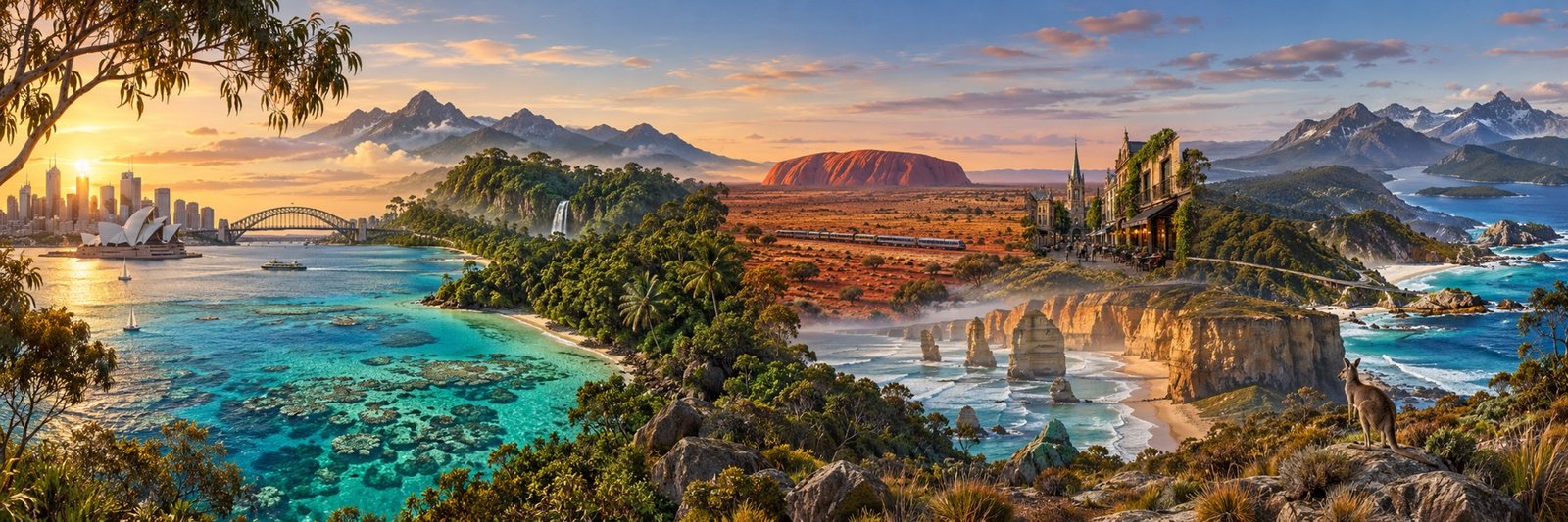
This guide uses official tourism, government and transport sources. Rules and prices can change, so check the linked official pages before booking.
Australia is a continent, not a compact highlights loop. Sydney, tropical Queensland, the Red Centre, southern food regions, Tasmania and Western Australia need different seasons, transport and safety planning. These fifty experiences help a first-time visitor choose a coherent route, learn from Aboriginal and Torres Strait Islander custodians, protect wildlife and reefs, and understand the real time and cost of crossing the country.
Australia at a glance
- Ideal first trip: 12–18 days for two or three connected regions; add a separate week before attempting another coast.
- Currency: Australian dollar. Card payments are widespread, but remote routes need fuel, food and communication backups.
- Best planning principle: choose one major city, one nature region and one cultural or road-trip chapter instead of collecting airports.
- Transport: cities have useful public transport; interstate distances often require flights, while remote parks demand permits, tours or carefully prepared driving.
- Price check: compare final totals including tax, baggage, one-way rental fees, park access, transfers, parking, resort fees and cancellation terms.
Entry, visa and arrival planning
Use Australia’s Department of Home Affairs for visa, ETA, transit and arrival requirements attached to your passport and purpose. Airlines and commercial visa sites do not decide admission. Declare food, plant, animal and outdoor items honestly under Australia’s strict biosecurity rules.
Sydney, Melbourne, Brisbane, Perth, Adelaide, Cairns and Darwin can support open-jaw routing. Compare the entire arrival chain, including immigration, domestic-terminal transfer, baggage limits and the journey from a gateway city to the reef, outback or island.
When to go
Australia spans tropical monsoon, desert, temperate coast, alpine and subantarctic climates. Southern summer can bring heat and bushfire risk while the tropical north has a wet season, cyclones, floods and marine stingers. Match every route to its exact region and month.
School holidays, major sports, festivals and peak wildlife seasons change prices and capacity. Shoulder seasons can be excellent, but only when parks, ferries and tours still operate and the weather matches the activity.
Budget and places to stay
Build live value, mid-range and premium scenarios. Domestic flights, reef tours, remote transfers, campervan one-way fees, island ferries and guided First Nations experiences can cost more than city accommodation and should be priced first.
Compare the official hotel total with a reputable platform and check air conditioning, lift access, parking, breakfast, room configuration, resort charges and distance to the transport you will use. An inexpensive outer suburb can become costly after late taxis.
Fifty things to do in Australia
1. Sydney Opera House through an official tour or performance
Why go: Sydney, New South Wales. Architecture, performance and harbour geography become richer when the building is experienced as a working cultural institution.
How to do it: Book through the official venue, choose either a tour or performance and allow security and transport time.
Good for: Architecture, music and first-time visitors
Know before you go: Events, rehearsals and stairs change access; confirm the exact route and seating.
2. Circular Quay, The Rocks and harbour history
Why go: Sydney, New South Wales. A compact walk links ferries, colonial history and contemporary harbour life without reducing Sydney to one photograph.
How to do it: Start early, use a museum or documented heritage route and keep working ferry areas clear.
Good for: History, walking and car-free travellers
Know before you go: Cruise days and events create crowds; many lanes are steep or uneven.
3. Harbour ferry to Manly with a coastal walk
Why go: Sydney, New South Wales. Public ferries turn transport into a harbour experience and connect the city with ocean beaches and headlands.
How to do it: Check official ferry and trail status, choose a short signed section and return before the last practical service.
Good for: Coast, families and public-transport travellers
Know before you go: Surf, cliffs, heat and ferry queues need realistic timing.
4. Bondi to Coogee walk with beach-safety discipline
Why go: Sydney, New South Wales. Clifftop paths connect beaches, pools and neighbourhoods while revealing Sydney’s active coastal culture.
How to do it: Walk outside peak heat, swim only between flags and use buses rather than searching for scarce parking.
Good for: Walkers, swimmers and photography travellers
Know before you go: Surf, sun, storms and crowded path edges require attention.
5. Sydney’s neighbourhood food and migration stories
Why go: Sydney, New South Wales. Suburbs and markets reveal Chinese, Vietnamese, Lebanese, Greek and many other communities that shape the city.
How to do it: Choose one neighbourhood, use transit and support independent businesses after reading current menus and hours.
Good for: Food, culture and repeat-city travellers
Know before you go: Ask before photographing people or shops and avoid treating communities as themed attractions.
6. Blue Mountains viewpoints and one signed trail
Why go: New South Wales. Sandstone escarpments, eucalyptus forest and Gundungurra and Darug Country form a major nature chapter near Sydney.
How to do it: Use official park alerts and rail or a responsible tour, then select one route within weather and ability.
Good for: Hikers, families and landscape travellers
Know before you go: Cliffs, fire, fog, heat and track closures make improvised detours unsafe.
7. Hunter Valley with sober transport and producer context
Why go: New South Wales. Vineyards, farms and restaurants work best as an overnight regional experience rather than a tasting race.
How to do it: Book a driver or guided route, select a few producers and include food or non-alcoholic experiences.
Good for: Wine, food and couples
Know before you go: Alcohol, heat and rural roads make driving after tasting unacceptable.
8. Jervis Bay and Booderee with Traditional Owner context
Why go: South Coast, New South Wales. White beaches, marine life and Aboriginal-owned Booderee National Park create a layered coastal visit.
How to do it: Use park and community information, stay overnight and choose marked beaches and trails.
Good for: Families, coast and Indigenous-culture travellers
Know before you go: Cold water, surf, fire conditions and wildlife need official advice.
9. Lord Howe Island within its visitor limits
Why go: New South Wales. A World Heritage island combines reef, forest and walking with deliberately limited capacity.
How to do it: Reserve flights and accommodation far ahead, choose accredited marine activities and follow biosecurity rules.
Good for: Nature, hiking and premium-island travellers
Know before you go: Weather can delay flights and mountain routes require real fitness or guiding.
10. Byron hinterland without crowd-chasing
Why go: Northern New South Wales. Headlands, rainforest and inland towns offer more than one crowded lighthouse sunrise.
How to do it: Base outside the busiest core if useful, use shuttles or legal parking and add an Indigenous-led or conservation experience.
Good for: Coast, wellness and road-trip travellers
Know before you go: Surf, heat and local parking restrictions require a flexible plan.
11. Melbourne laneways, galleries and neighbourhoods
Why go: Melbourne, Victoria. Street design, independent culture and major art institutions reward a themed day rather than random photo collecting.
How to do it: Choose one gallery, one market or neighbourhood and use trams while respecting private lanes.
Good for: Art, food and urban travellers
Know before you go: Weather changes quickly and not every decorated alley is public or safe at all hours.
12. Koorie Heritage Trust or an Aboriginal-led city walk
Why go: Melbourne, Victoria. First Peoples-led interpretation changes how visitors understand the river, city and continuing culture.
How to do it: Book the organisation’s official program and follow the guide’s language and photography instructions.
Good for: Culture, history and responsible travellers
Know before you go: Do not detach cultural stories from the people authorised to share them.
13. Great Ocean Road as a multi-night coast journey
Why go: Victoria. Cliffs, rainforest, towns and Eastern Maar and Wadawurrung Country deserve more than a rushed return coach day.
How to do it: Use two bases, check road and park alerts and stop only in safe designated areas.
Good for: Road-trip, coast and nature travellers
Know before you go: Fatigue, wind, wildlife and unsafe roadside stopping are serious.
14. Phillip Island wildlife with an accredited operator
Why go: Victoria. Penguins, wetlands and coastal habitat can be experienced through controlled viewing and conservation education.
How to do it: Use official viewing platforms, follow light and photography rules and reserve return transport.
Good for: Wildlife, families and conservation travellers
Know before you go: Cold, wind and wildlife disturbance require strict behaviour.
15. Grampians National Park with cultural and fire awareness
Why go: Victoria. Mountain scenery and Aboriginal cultural landscapes require current park information and respectful routes.
How to do it: Check closures and cultural-site guidance, choose one signed walk and support local recovery when appropriate.
Good for: Hiking, culture and road-trip travellers
Know before you go: Fire, heat, rockfall and cliff edges can close routes immediately.
16. Brisbane river city and contemporary cultural precinct
Why go: Brisbane, Queensland. River transport, galleries and subtropical public space make a strong gateway beyond a stopover.
How to do it: Use ferries and transit, choose one cultural institution and walk early or late in hot weather.
Good for: Urban, art and family travellers
Know before you go: Heat, storms and river events change outdoor plans.
17. K’gari through an authorised, low-impact route
Why go: Queensland. The world’s largest sand island combines lakes, dunes, rainforest and Butchulla cultural connections.
How to do it: Use a permitted, suitable four-wheel-drive plan or guided tour and follow all dingo and beach-driving rules.
Good for: Adventure, ecology and Indigenous-culture travellers
Know before you go: Tides, soft sand, aircraft, dingoes and remote driving demand expertise.
18. Noosa coast and hinterland with a quieter base
Why go: Queensland. National-park headlands, beaches and inland producers support a balanced Sunshine Coast stay.
How to do it: Use shuttles or walkable accommodation, check track and surf conditions and avoid peak parking hours.
Good for: Families, coast and food travellers
Know before you go: Heat, surf and crowded trails require water and restraint.
19. Great Barrier Reef from Cairns with an accredited operator
Why go: Queensland. A reef day becomes more valuable when marine science, safety and reef-protection practice lead the itinerary.
How to do it: Compare operator accreditation, platform or vessel access, weather policy and snorkel support before booking.
Good for: Marine life, families and first-time reef visitors
Know before you go: Seasickness, sun, stinger advice and swimming ability must be disclosed honestly.
20. Daintree Rainforest with Eastern Kuku Yalanji guidance
Why go: Far North Queensland. Ancient rainforest, coast and living culture are best understood through Traditional Owner-led interpretation.
How to do it: Choose an Indigenous-owned or led experience, check ferry and road conditions and stay within marked access.
Good for: Rainforest, culture and wildlife travellers
Know before you go: Floods, heat, crocodile habitat and limited services require local advice.
21. Port Douglas as a reef-and-rainforest base
Why go: Far North Queensland. A smaller base can connect reef trips and rainforest days without repeated transfers from Cairns.
How to do it: Allow weather flexibility, select one reef and one land day and confirm late transport and medical needs.
Good for: Couples, reef and slow-travel visitors
Know before you go: Cyclones, marine conditions and premium-season prices can alter the plan.
22. Whitsundays sailing and Whitehaven Beach responsibly
Why go: Queensland. Island scenery and reef systems reward a licensed sailing or day-tour experience with conservation guidance.
How to do it: Compare vessel size, accessibility, weather policy and included protective equipment before paying.
Good for: Sailing, beaches and group travellers
Know before you go: Sun, wind, tides and coral-safe behaviour matter; images never guarantee exact conditions.
23. Atherton Tablelands food, waterfalls and wildlife
Why go: Queensland. Cooler uplands add farms, rainforest and freshwater landscapes to a tropical-coast itinerary.
How to do it: Choose a loop within daylight, verify swimming safety and visit producers during posted hours.
Good for: Food, road-trip and nature travellers
Know before you go: Fog, wet roads, wildlife and unguarded water require caution.
24. Adelaide Central Market and cultural boulevard
Why go: Adelaide, South Australia. A walkable city links food producers, galleries, migration stories and civic institutions.
How to do it: Visit the market on an operating day, choose one museum and use tram or foot rather than repeated driving.
Good for: Food, art and relaxed-city travellers
Know before you go: Market schedules and major festivals transform prices and crowds.
25. Barossa Valley with a designated driver
Why go: South Australia. Wine history, farms and towns can support a full regional stay beyond cellar-door sampling.
How to do it: Select a small number of producers, book transport and include food, landscape or heritage stops.
Good for: Wine, food and slow-road travellers
Know before you go: Alcohol, heat and harvest operations require safe transport and respect.
26. Kangaroo Island wildlife and recovery-aware travel
Why go: South Australia. Coasts, farms and native wildlife form a multi-day island route with visible conservation and fire-recovery stories.
How to do it: Reserve ferry and vehicle, use accredited guides and keep a weather buffer.
Good for: Wildlife, families and road-trip travellers
Know before you go: Long drives, wildlife at dusk and ferry disruption make rushed visits unsafe.
27. Flinders Ranges and Ikara through Adnyamathanha context
Why go: South Australia. Ancient geology and living cultural landscapes become meaningful through Traditional Owner interpretation.
How to do it: Use official park information, choose Adnyamathanha-led experiences and plan fuel, water and communication.
Good for: Geology, culture and outback travellers
Know before you go: Heat, floods, remote roads and no signal require self-sufficiency.
28. Eyre Peninsula coast and marine wildlife ethically
Why go: South Australia. Rugged shoreline, seafood communities and marine encounters can support a slower west-coast route.
How to do it: Choose accredited operators, verify animal-welfare practice and keep several weather alternatives.
Good for: Marine wildlife, food and road-trip travellers
Know before you go: Cold water, wind, distance and wildlife unpredictability affect every booking.
29. Hobart waterfront, markets and Tasmanian history
Why go: Hobart, Tasmania. A compact harbour city connects food, design, colonial history and contemporary art.
How to do it: Choose one museum or historic site, visit markets only on operating days and walk the waterfront beyond peak hours.
Good for: Food, art and urban-coast travellers
Know before you go: Weather and major events affect ferries, roads and room prices.
30. kunanyi/Mount Wellington with Palawa context
Why go: Hobart, Tasmania. The mountain provides ecological and cultural perspective over the city but changes weather rapidly.
How to do it: Check road and summit conditions, use a shuttle if needed and follow recognised names and interpretation.
Good for: Views, walking and first-time visitors
Know before you go: Snow, wind, fog and cold can arrive despite mild city weather.
31. Port Arthur with a complete, sensitive history
Why go: Tasman Peninsula, Tasmania. The site can address convict history, colonial violence and the landscape beyond a picturesque ruin.
How to do it: Use official interpretation, allow several hours and approach memorial material with care.
Good for: History, architecture and learning travellers
Know before you go: Emotional content, uneven surfaces and night tours need personal consideration.
32. Freycinet beyond one Wineglass Bay photograph
Why go: East Coast, Tasmania. Granite mountains, beaches and coastal ecosystems reward several nights and multiple ability-level routes.
How to do it: Reserve park access and accommodation, choose the correct trail and carry layers and water.
Good for: Hiking, coast and couples
Know before you go: Weather, steep tracks and parking demand can change the day.
33. Cradle Mountain with shuttle and weather planning
Why go: Tasmania. Alpine landscapes, wildlife and multi-level walks make a major nature chapter when conditions lead the plan.
How to do it: Use official shuttles, select a route below the group’s maximum ability and carry cold-weather layers.
Good for: Hikers, families and wildlife travellers
Know before you go: Snow, wind, mud and sudden cold are possible in every season.
34. Bruny Island through local produce and protected coast
Why go: Tasmania. Ferry travel, small producers and dramatic shoreline create a compact island journey.
How to do it: Stay overnight if possible, check ferry demand and support traceable local businesses.
Good for: Food, coast and wildlife travellers
Know before you go: Roads, queues, nesting wildlife and limited services require patience.
35. Perth river, beaches and cultural institutions
Why go: Perth, Western Australia. A spacious city combines Noongar Country, river landscapes, art and Indian Ocean sunsets.
How to do it: Use trains and buses, choose one museum or Aboriginal-led experience and time the coast for safe conditions.
Good for: Urban, beach and culture travellers
Know before you go: Heat, surf and long suburban distances require a focused plan.
36. Rottnest Island/Wadjemup with history and wildlife distance
Why go: Western Australia. Beaches and quokkas share an island with important Aboriginal prison history that should not be omitted.
How to do it: Reserve ferry and bicycle or bus, visit the museum or cultural interpretation and never feed wildlife.
Good for: Cycling, history and family travellers
Know before you go: Heat, wind, ferry disruption and wildlife crowding require care.
37. Margaret River beyond cellar doors
Why go: Western Australia. Coast, caves, forests, farms and wine support a varied multi-night regional stay.
How to do it: Choose one base, use a driver for tastings and check cave, surf and trail conditions.
Good for: Food, wine and coast travellers
Know before you go: Alcohol, long drives and powerful surf demand separate plans.
38. Ningaloo Coast with reef-safe access
Why go: Western Australia. A fringing reef can be reached from shore in places, while specialist tours support seasonal wildlife encounters.
How to do it: Use park zoning and accredited operators, check swim ability and weather and keep wildlife expectations realistic.
Good for: Snorkelling, wildlife and remote-coast travellers
Know before you go: Heat, currents, sun and remote medical access require preparation.
39. Karijini National Park gorge country
Why go: Pilbara, Western Australia. Layered rock, pools and gorges create a demanding landscape far from major services.
How to do it: Check park alerts, choose trails matching ability and carry extra water, fuel and communications.
Good for: Hiking, geology and road-trip travellers
Know before you go: Flash floods, heat, falls and remoteness make casual descent unsafe.
40. Broome, Yawuru culture and Roebuck Bay
Why go: Kimberley, Western Australia. Pearling history, tidal landscapes and Yawuru-led interpretation provide a meaningful Kimberley gateway.
How to do it: Choose a cultural tour, verify seasonal conditions and use legal beach and vehicle access.
Good for: Culture, coast and remote-region travellers
Know before you go: Heat, tides, crocodile habitat and cyclones require current advice.
41. Gibb River Road only with remote-road readiness
Why go: Kimberley, Western Australia. Gorges, stations and vast landscapes form an expedition route, not a normal rental-car shortcut.
How to do it: Confirm road opening, vehicle permission, fuel, tyres, water, permits and emergency communication.
Good for: Experienced four-wheel-drive travellers
Know before you go: Floods, breakdowns, heat and no signal can become life-threatening.
42. Esperance and Cape Le Grand with safe beach planning
Why go: Western Australia. White beaches, granite and coastal heath create a spectacular but distant southern route.
How to do it: Allow several nights, check roads and park camping and swim only under suitable local conditions.
Good for: Beaches, camping and road-trip travellers
Know before you go: Cold water, wind, distance and wildlife on roads demand caution.
43. Uluru-Kata Tjuta through Aṉangu-led understanding
Why go: Northern Territory. Sacred landscapes and living Aṉangu culture should guide the visit, not the pursuit of a single sunset image.
How to do it: Use official park information, choose an Aṉangu-led experience, stay on permitted paths and never climb.
Good for: Culture, landscape and first-time outback travellers
Know before you go: Heat, flies, distance and sacred-site photography rules require preparation.
44. Kings Canyon rim or valley route within conditions
Why go: Northern Territory. Sandstone walls and desert ecology offer routes of very different physical demand.
How to do it: Check official heat closures, start early and choose the valley route when the rim is unsuitable.
Good for: Hiking, geology and Red Centre travellers
Know before you go: Extreme heat, cliffs and dehydration make timing non-negotiable.
45. Alice Springs art centres and desert context
Why go: Northern Territory. Galleries, museums and Aboriginal-owned art centres provide a base for understanding Central Australian communities.
How to do it: Buy through transparent art centres, ask permission for photography and plan remote excursions separately.
Good for: Art, culture and outback travellers
Know before you go: Distances, heat and cultural protocols require local guidance.
46. Kakadu National Park with Bininj/Mungguy guidance
Why go: Northern Territory. Wetlands, rock art and living culture change across six recognised seasons.
How to do it: Check seasonal access, use Indigenous-led or park interpretation and spend several nights rather than a rushed loop.
Good for: Culture, wildlife and landscape travellers
Know before you go: Floods, heat, crocodiles and remote roads require strict official advice.
47. Litchfield waterfalls within seasonal safety rules
Why go: Northern Territory. Waterfalls, stone country and monsoon forest create an accessible Top End nature day when sites are officially open.
How to do it: Check swimming and road notices, carry water and avoid combining too many distant stops.
Good for: Families, swimming and short-road travellers
Know before you go: Crocodile closures, storms and heat can change access without warning.
48. Canberra’s national institutions without rushing
Why go: Australian Capital Territory. Parliament, galleries, museums and memorials provide context for Australia’s government, art and contested histories.
How to do it: Choose two institutions per day, check sitting and exhibition schedules and use lake paths or buses between precincts.
Good for: Civics, art and family travellers
Know before you go: Security, ceremonies and emotionally demanding memorial content need time.
49. Ngunnawal Country through local interpretation
Why go: Canberra region. An Aboriginal-led experience reframes the capital’s landscape, food, plants and long history.
How to do it: Book with a recognised local provider and follow the guide’s language, access and photography directions.
Good for: First Nations culture and responsible travellers
Know before you go: Do not generalise one community’s knowledge to all of Australia.
50. The Ghan or Indian Pacific as a rail journey
Why go: Cross-country Australia. Long-distance trains reveal scale and changing landscapes when treated as multi-day experiences rather than efficient transport.
How to do it: Compare cabin, meal, mobility and excursion details, reserve early and leave a full day before any critical onward connection.
Good for: Rail, landscape and slow-travel visitors
Know before you go: Delays, heat and premium prices mean the train must fit the budget and schedule on its own merits.
Food and drink worth planning around
Australian food reflects Indigenous ingredients, migration and distinct producing regions. Seek businesses that name their growers, fishers, makers and cultural authority rather than treating native ingredients or one café style as a complete national cuisine.
Ask about allergies and cross-contact, never combine alcohol tasting with driving and check whether seafood or wildlife claims are lawful and traceable. In remote regions, carry food and water without removing supplies from small communities.
What to buy
Buy Aboriginal and Torres Strait Islander art from the artist, an Indigenous-owned centre or a seller following an authenticity code. Keep documentation identifying the artist, community and story that the artist has chosen to share.
For opals, pearls, wine, fashion and high-value goods, use established sellers and keep receipts. Never remove shells, coral, stones, fossils, plants or cultural material from protected or Traditional Owner-managed land and sea.
Getting around
Use each state or territory transport authority, park service, ferry company and airline for current schedules. Contactless payment rules, airport fares and regional ticket systems differ between cities, and separate tickets may not protect a missed connection.
Drive on the left and plan remote journeys around daylight, fuel, water, tyres, wildlife and communications. Sealed-road distance does not guarantee services. Avoid fatigue, flooded roads and beach or four-wheel-drive routes beyond the vehicle and driver’s real ability.
Easy access and family travel
Tourism Australia and individual operators publish accessibility information, but suitability is route-specific. Confirm surfaces, beach access, boarding methods, accessible toilets, vehicle lifts, reef platforms, sensory conditions and evacuation limits directly.
Families should count heat, sun, jet lag, long drives and water safety as real demands. One major reservation plus flexible beach, garden or neighbourhood time is often more successful than a string of distant headline stops.
Stay safe
Use Bureau of Meteorology, emergency, park, marine and road information. Heat, bushfire, smoke, cyclones, floods, surf, cold water and remote distance create more realistic risks than wildlife mythology. Swim only where and when local authorities advise.
Keep distance from all wildlife, never feed it and use accredited operators. Sun protection, hydration, travel insurance and a clear emergency plan matter even on urban beaches and short walks.
Mistakes to avoid
- Trying to combine Sydney, Melbourne, the reef, Uluru, Perth and Tasmania in two weeks.
- Treating the tropical north and southern cities as if they share one best season.
- Booking reef, outback or island transport without a weather-buffer day.
- Buying Aboriginal-style souvenirs without identifying the artist or cultural authority.
- Driving remote distances after dark or without fuel, water and communications planning.
- Ignoring beach flags, marine stinger advice, park closures or fire restrictions.
- Approaching wildlife or using an operator that promises touching or feeding.
- Trusting old hotel, tour or rental prices instead of the final live total.
Sample seven-day route
Use four nights in Sydney and three in Melbourne, flying once and keeping one neighbourhood day in each city. Alternatively use Brisbane and the Sunshine Coast or Adelaide and Kangaroo Island as one regional week.
Sample ten-day route
Use three nights Sydney, three Melbourne and four in either tropical Queensland or the Red Centre. Do not add both distant nature chapters unless the trip is longer.
Sample fourteen-day route
Use four Sydney, three Melbourne, three Cairns or Port Douglas and four around Uluru or Adelaide. A west-coast or Tasmania trip works better as its own fourteen-day route.
Australia travel FAQ
How many days are enough for Australia?
Two weeks is a useful minimum for two cities and one major nature region. Three to four weeks allows a slower east-coast, Red Centre, Tasmania or Western Australia chapter.
Do I need a car?
Not in central Sydney, Melbourne, Brisbane, Adelaide or Perth. A car helps on selected regional routes, but some islands, parks and remote roads need permits, ferries, four-wheel-drive skills or a guided tour.
When should I visit the Great Barrier Reef?
Conditions vary along a very large coast. Check the exact gateway, rainfall, wind, stinger advice and operator policy rather than assuming one universal reef season.
Is Australian wildlife dangerous?
Most visitors stay safe by following simple local advice. Heat, surf, distance, driving and weather are often more relevant; keep wildlife distance and never handle animals without authorised supervision.
Official planning sources
- Tourism Australia official visitor guide
- Official places to visit in Australia
- Tourism Australia first-timer planning guide
- Australian Department of Home Affairs
- Parks Australia
- Bureau of Meteorology
- Australian biosecurity for travellers
- Tourism Australia accessible travel
- UNESCO World Heritage state-party record for Australia
- United Kingdom government travel advice for Australia
- United States government travel advisory for Australia
Disclosure: This independent editorial guide is informational, not a booking guarantee. No price, ranking, safety outcome, entry permission or availability is guaranteed. Recheck all time-sensitive details with the linked official source before purchase.