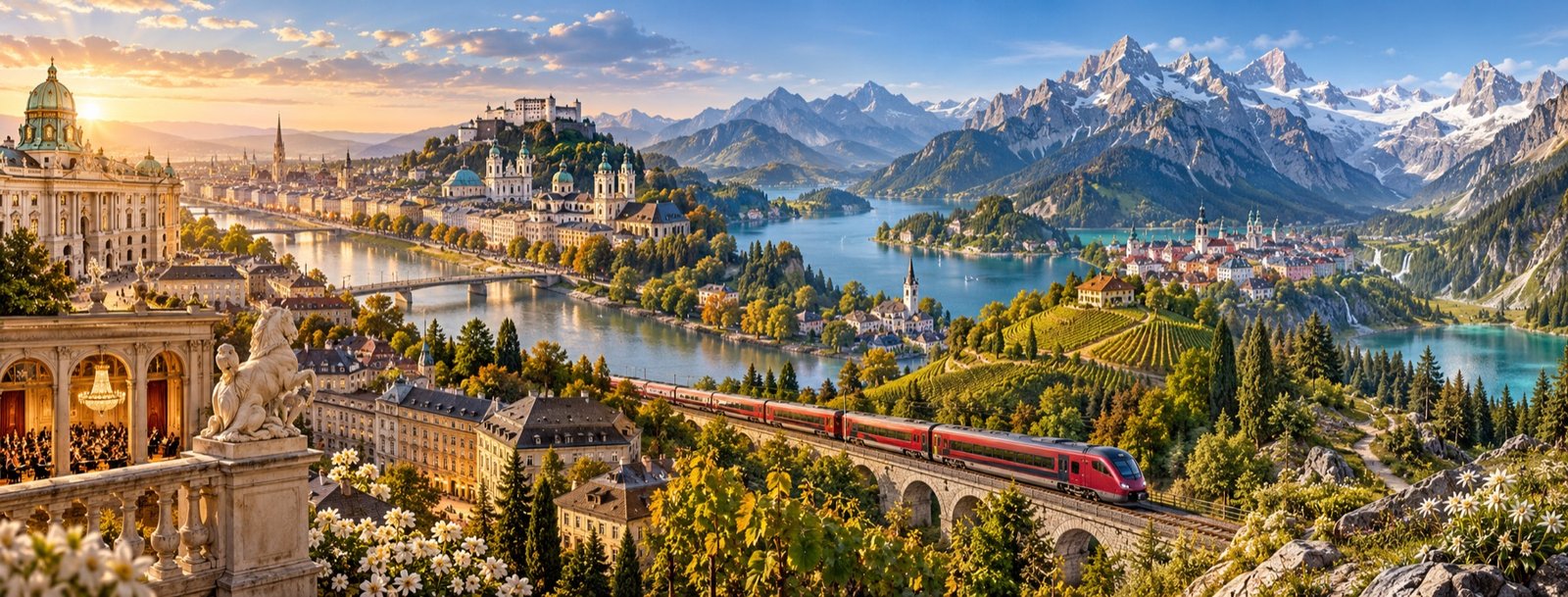
This guide uses official tourism, government and transport sources. Rules and prices can change, so check the linked official pages before booking.
Austria is more than Vienna and a hurried Salzburg day trip. Imperial collections, contemporary art, Danube vineyards, lake districts, Tyrolean valleys, Styrian design, Carinthian water and six national parks create distinct regional journeys. These fifty experiences help first-time visitors build a rail-led route, choose mountain days according to conditions, approach music and memorial history with context, and compare expensive passes or summit excursions honestly.
Austria at a glance
- Ideal first trip: 9–13 days for Vienna, Salzburg and one lake or Alpine region; longer for Graz, Carinthia or Vorarlberg.
- Currency: euro. Cards are common, but smaller inns, huts and markets may need a modest cash backup.
- Best planning principle: use the Vienna–Salzburg–Innsbruck rail corridor, then add one slower regional base rather than daily long excursions.
- Transport: ÖBB connects major cities well; local buses, boats and cable cars are separate systems with seasonal timetables.
- Price check: compare live train fares, city cards, timed entries, lift tickets, hotel taxes, parking and cancellation terms.
Entry, visa and arrival planning
Use Austria’s Federal Ministry for European and International Affairs and the authority responsible for your passport and residence for Schengen entry rules. Nationality, residence, purpose and duration determine visa or exemption requirements.
Vienna is the principal gateway, while Salzburg, Innsbruck, Graz and nearby foreign airports can support open-jaw routes. Compare the complete airport, cross-border rail and luggage journey before adding a positioning flight.
When to go
Vienna’s cultural calendar, Alpine hiking, lake swimming, autumn wine regions and winter sports have different high seasons. Mountain lifts often close for maintenance between summer and winter, while lowland heat or Danube flooding can affect warm-season routes.
Christmas markets, New Year’s concerts, ski holidays, Salzburg Festival and major trade events transform availability and price. Reserve only after checking the exact city and region calendar.
Budget and places to stay
Build value, mid-range and premium versions with live refundable prices. Opera seats, palace interiors, lake boats, mountain lifts and spa access can dominate the day’s cost even when public rail is reasonable.
Compare the hotel’s official total with a reputable platform and verify breakfast, city tax, lift access, air conditioning, parking and distance from the rail or bus actually needed.
Fifty things to do in Austria
1. St. Stephen’s Cathedral with old-city context
Why go: Vienna. Sacred architecture, archaeology and the medieval street plan become meaningful beyond the patterned roof.
How to do it: Check worship and tower access, enter quietly and pair the cathedral with one documented old-city route.
Good for: Architecture, faith and first-time visitors
Know before you go: Services, stairs and security can restrict entry.
2. Hofburg complex with one museum priority
Why go: Vienna. Centuries of imperial government produced a vast complex that overwhelms visitors who attempt every interior.
How to do it: Choose one collection or apartment route, reserve officially and leave time for surrounding civic spaces.
Good for: History, architecture and museum travellers
Know before you go: Different institutions have separate tickets and entrances.
3. Schönbrunn Palace and gardens without rushing
Why go: Vienna. Imperial rooms, service systems and designed landscape deserve a substantial half or full day.
How to do it: Book the official interior route, arrive before the slot and use the accessible garden paths suited to the group.
Good for: Palaces, gardens and family travellers
Know before you go: Heat, hills and timed entry make an overfilled day exhausting.
4. Belvedere with Austrian art and garden time
Why go: Vienna. Baroque architecture and major Austrian works can be understood through a focused collection route.
How to do it: Select the relevant building, reserve peak periods and walk the garden in one direction.
Good for: Art, architecture and first-time visitors
Know before you go: Upper and Lower Belvedere are separate sites with changing displays.
5. Kunsthistorisches Museum by theme
Why go: Vienna. A major imperial collection rewards visitors who choose paintings, antiquities or decorative arts rather than every gallery.
How to do it: Check current rooms, select two priorities and schedule a seated break.
Good for: Art-history and museum travellers
Know before you go: Large galleries and special exhibitions require pacing.
6. Albertina or MuseumsQuartier for modern culture
Why go: Vienna. Graphic art, modern collections and contemporary institutions balance the imperial narrative.
How to do it: Choose one museum according to the current exhibition and combine it with nearby public space.
Good for: Modern art and design travellers
Know before you go: Temporary exhibitions and queues change value by date.
7. Vienna State Opera through the official programme
Why go: Vienna. A performance or authorised tour reveals a working institution beyond the façade.
How to do it: Buy through the opera, check sightlines and dress expectations and arrive early.
Good for: Music, theatre and architecture travellers
Know before you go: Standing places and restricted-view seats require honest comfort planning.
8. Musikverein or Konzerthaus with programme-first booking
Why go: Vienna. World-class halls matter most when the music, performers and seating suit the visitor.
How to do it: Use the official venue calendar and choose a real programme rather than a vaguely branded tourist concert.
Good for: Classical music and acoustic-design travellers
Know before you go: Dress, interval and late-entry rules vary by event.
9. Viennese coffee house as a paced cultural stop
Why go: Vienna. Coffee houses connect literature, conversation, newspapers and everyday city rhythm when visitors do more than photograph cake.
How to do it: Choose one near the day’s route, read the current menu and allow a genuine pause without occupying a table unfairly.
Good for: Food, literature and slow-city travellers
Know before you go: Famous rooms queue at peak hours and service conventions may differ.
10. Naschmarkt and neighbourhood food without hype
Why go: Vienna. Produce, prepared food and nearby districts reflect migration and contemporary eating.
How to do it: Visit on the correct day, compare displayed prices and support vendors without blocking aisles.
Good for: Food, markets and urban travellers
Know before you go: Not every stall is local or inexpensive; watch belongings in crowds.
11. Ringstrasse architecture by tram and short walks
Why go: Vienna. Parliament, museums, university and civic buildings explain the nineteenth-century expansion of the capital.
How to do it: Use public transport for the full circle and get off for only two focused architectural stops.
Good for: Architecture, civics and accessibility-conscious travellers
Know before you go: Construction, demonstrations and events alter tram routes.
12. Danube Island or Prater as a flexible city-nature day
Why go: Vienna. Large public landscapes show recreation beyond the historic core and provide recovery from museum-heavy itineraries.
How to do it: Choose river paths or selected rides, check weather and use U-Bahn rather than driving.
Good for: Families, cycling and relaxed travellers
Know before you go: Fast cycling, heat and river safety require awareness.
13. Wachau Valley by rail, boat and one village
Why go: Lower Austria. Vineyards, monasteries and Danube towns create a coherent cultural landscape when the route is not overloaded.
How to do it: Check seasonal boats, choose one abbey or village and arrange sober transport after wine tasting.
Good for: River, wine and heritage travellers
Know before you go: Floods, heat and steep vineyard paths can change plans.
14. Melk Abbey with town and river context
Why go: Lower Austria. Baroque architecture, library and monastic history anchor the western Wachau.
How to do it: Use official entry, respect active religious spaces and connect the visit with the town or a short river section.
Good for: Architecture, books and rail travellers
Know before you go: Group tours and stairs affect access.
15. Lake Neusiedl birdlife and wine responsibly
Why go: Burgenland. A shallow steppe lake, reed habitats and villages create a landscape distinct from Alpine Austria.
How to do it: Use the national park or an authorised guide, check seasonal water and bird conditions and use a bicycle or driver safely.
Good for: Birdlife, cycling and wine travellers
Know before you go: Wind, heat, mosquitoes and water levels alter activities.
16. Salzburg old town beyond film-location tourism
Why go: Salzburg. Baroque streets, church history and river geography deserve context beyond familiar screen images.
How to do it: Use an official heritage walk, choose one church or museum and explore both sides of the Salzach.
Good for: Architecture, history and first-time visitors
Know before you go: Festival season creates extreme demand and crowds.
17. Hohensalzburg Fortress with city and state history
Why go: Salzburg. The fortress explains political and ecclesiastical power while providing a useful city overview.
How to do it: Check funicular and interior access, reserve if needed and choose one museum route.
Good for: History, families and city-view travellers
Know before you go: Steep approaches and busy funicular queues affect timing.
18. Mozart museums with one authentic focus
Why go: Salzburg. Birthplace, residence and performance history are clearer when visitors select one documented institution.
How to do it: Choose the museum that answers the day’s question and use official concert calendars for live music.
Good for: Music, biography and family travellers
Know before you go: Commercial Mozart branding is not the same as historical interpretation.
19. Salzburg Festival or a regular-season performance
Why go: Salzburg. Opera, theatre and concerts connect the city with living performance rather than museum-only culture.
How to do it: Use the official programme, compare venue and seating and reserve accommodation only after checking dates.
Good for: Performing-arts and festival travellers
Know before you go: Festival tickets and rooms can be scarce and expensive.
20. Mirabell and Mülln as a broader city walk
Why go: Salzburg. Gardens, residential streets and river views provide a quieter route beyond the busiest old-town lanes.
How to do it: Visit gardens at opening time and continue to a neighbourhood café or church without entering private courtyards.
Good for: Gardens, walking and slow-city travellers
Know before you go: Events and weddings can restrict garden sections.
21. Untersberg or Gaisberg according to conditions
Why go: Salzburg region. A local mountain day adds Alpine perspective without travelling deep into another region.
How to do it: Choose one summit, verify cable-car or bus operation and keep a valley alternative.
Good for: Views, hiking and city-base travellers
Know before you go: Wind, cloud, snow and final transport can close the route.
22. Hallein salt history and Celtic context
Why go: Salzburg region. Mining, archaeology and a smaller old town explain the economic foundations behind regional wealth.
How to do it: Check mine age, clothing and accessibility rules, then connect the visit with the town museum or rail route.
Good for: Industry, families and archaeology travellers
Know before you go: Underground conditions and slides may not suit every visitor.
23. Berchtesgaden-border day only with historical care
Why go: Salzburg region. Cross-border landscapes and twentieth-century history can be visited responsibly when memorial evidence leads.
How to do it: Check passport and transport needs, choose an official documentation site and avoid sensational tour claims.
Good for: Modern history and cross-border travellers
Know before you go: Memorial sites are not entertainment; weather and national rules differ.
24. Hallstatt with an overnight or off-peak strategy
Why go: Salzkammergut. Lake, salt and settlement history deserve more than a congested viewpoint stop.
How to do it: Stay overnight or arrive by public transport outside coach peaks, visit a museum or mine and keep lanes clear.
Good for: Heritage, lake and photography travellers
Know before you go: Crowds, stairs and private property make intrusive photography harmful.
25. Bad Ischl spa and imperial history
Why go: Salzkammergut. A lived spa town, villas and cafés provide a useful base between lake excursions.
How to do it: Use rail and bus, choose one historic interior and allow time for parks and contemporary town life.
Good for: History, wellness and slow-travel visitors
Know before you go: Spa access and medical suitability vary by facility.
26. Wolfgangsee by boat and one shore town
Why go: Salzkammergut. Lake transport links villages and mountain views without repeated driving.
How to do it: Check seasonal boats, choose St. Wolfgang, St. Gilgen or Strobl as one focused stop and verify the return.
Good for: Families, boats and relaxed travellers
Know before you go: Wind and seasonal timetables can strand rushed plans.
27. Schafberg railway with weather logic
Why go: Salzkammergut. A steep cog railway offers high views when cloud, wind and reservation timing cooperate.
How to do it: Use the official operator, check summit conditions and keep a lake-level alternative.
Good for: Mountain rail and landscape travellers
Know before you go: Cold, queues and poor visibility can reduce value.
28. Gosausee and Dachstein viewpoints responsibly
Why go: Upper Austria. Lakes and glacier views create a strong landscape day without requiring technical terrain.
How to do it: Use official trails and buses, check weather and avoid stepping beyond barriers for reflections.
Good for: Families, photography and moderate walkers
Know before you go: Rockfall, ice and storms can close paths.
29. Salzkammergut base without daily hotel changes
Why go: Upper Austria and Salzburg. One rail- or bus-connected town can support lake, salt and mountain days with less luggage and fewer transfers.
How to do it: Choose the base according to the exact excursions, not the prettiest image, and preserve one weather-flexible day.
Good for: Slow travel and public-transport visitors
Know before you go: Sparse evening transport can make remote lodging impractical.
30. Innsbruck old town and Golden Roof in context
Why go: Innsbruck, Tyrol. Imperial streets and mountain geography meet in a compact urban centre.
How to do it: Use an official city route, choose one museum or church and allow time away from the central square.
Good for: History, architecture and first-time visitors
Know before you go: Ski events and conventions alter prices and access.
31. Nordkette from city to high mountain
Why go: Innsbruck, Tyrol. Funicular and cable cars show the city’s immediate relationship with the Alps.
How to do it: Check live weather and maintenance, choose the appropriate height and keep a lower walking option.
Good for: Mountain views, families and short-break travellers
Know before you go: Altitude, wind and snow can affect non-hikers.
32. Tyrol Panorama and Bergisel history
Why go: Innsbruck, Tyrol. Art, conflict history and ski-jump architecture create a layered hill above the city.
How to do it: Use public transport, choose one principal institution and check sporting-event closures.
Good for: History, design and sport travellers
Know before you go: Steep approaches and events change access.
33. Stubai Valley with one mountain objective
Why go: Tyrol. Glacier, villages and side valleys offer choices from gentle paths to high-alpine terrain.
How to do it: Base on the bus route, choose one lift or trail and follow official weather and glacier advice.
Good for: Hiking, families and Alpine travellers
Know before you go: Altitude, crevasses and rapid weather rule out unguided glacier travel.
34. Ötztal archaeology and mountain landscape
Why go: Tyrol. The valley connects Alpine farming, archaeology, thermal traditions and high mountains beyond ski branding.
How to do it: Choose one theme and base, use valley buses where practical and verify lift seasons.
Good for: Archaeology, wellness and mountain travellers
Know before you go: Long valley distances and seasonal closures make day-trip stacking inefficient.
35. Alpbach or another Tyrolean village with local context
Why go: Tyrol. Wooden architecture and agricultural landscapes are meaningful when visitors stay rather than photograph façades.
How to do it: Choose a public-transport base, use marked paths and support working farms or inns respectfully.
Good for: Village, hiking and slow-travel visitors
Know before you go: Private balconies, meadows and farm tracks are not public photo sets.
36. Hohe Tauern National Park with a ranger
Why go: Tyrol, Salzburg or Carinthia. Austria’s largest protected high-mountain area rewards interpretation, conservative routes and several nights.
How to do it: Use the relevant park centre, book a ranger where useful and select a trail below maximum ability.
Good for: Wildlife, geology and experienced hikers
Know before you go: Glaciers, storms, altitude and rockfall require official guidance.
37. Graz old town and Schlossberg in one route
Why go: Graz, Styria. Renaissance courtyards, civic history and hilltop views create a compact UNESCO city experience.
How to do it: Use trams, choose one museum or armoury and ascend by the route suited to mobility.
Good for: Architecture, history and city-view travellers
Know before you go: Heat, stairs and major events affect the hill.
38. Kunsthaus and Murinsel for contemporary Graz
Why go: Graz, Styria. Modern architecture on the Mur balances the historic centre and shows the city’s design ambitions.
How to do it: Check the current exhibition, walk both riverbanks and avoid treating one façade as the whole visit.
Good for: Contemporary art and design travellers
Know before you go: Temporary installations and events change access.
39. Styrian Armoury with historical interpretation
Why go: Graz, Styria. A remarkable collection can explain conflict, defence and material culture when it is not romanticised.
How to do it: Use an official guided or audio route and pair the collection with wider regional history.
Good for: Military history and museum travellers
Know before you go: Weapons displays require age-appropriate and critical context.
40. South Styrian wine road with sober logistics
Why go: Styria. Vineyards, farms and border landscapes create a food region best experienced slowly.
How to do it: Stay in one base, appoint a driver or book transport and choose producers with clear origin information.
Good for: Wine, food and landscape travellers
Know before you go: Alcohol, narrow roads and harvest traffic require caution.
41. Gesäuse National Park with river and cliff awareness
Why go: Styria. Wild Enns water and limestone mountains form a demanding protected landscape.
How to do it: Use the park visitor information, choose a signed route and book guides for technical activities.
Good for: Hiking, rafting and geology travellers
Know before you go: Fast water, storms and steep terrain require expertise.
42. Riegersburg or Styrian castle and food route
Why go: Styria. A hilltop fortress and nearby producers connect defensive history with a living agricultural region.
How to do it: Check lift or walking access, choose one documented producer and avoid building a tasting day around driving.
Good for: Castles, families and food travellers
Know before you go: Heat, steep paths and alcohol affect the plan.
43. Linz Ars Electronica and Danube city
Why go: Linz, Upper Austria. Digital culture, industry and river redevelopment distinguish Linz from imperial-city itineraries.
How to do it: Choose a major exhibition, check demonstration times and walk or tram along the Danube.
Good for: Technology, families and contemporary-culture travellers
Know before you go: Festival dates transform access and prices.
44. Mauthausen Memorial with preparation and reflection
Why go: Upper Austria. The former concentration camp requires evidence-based learning, quiet behaviour and emotional time.
How to do it: Use official visitor information or a guided programme and plan a calm transition after the visit.
Good for: History, remembrance and educational travellers
Know before you go: Content is distressing; never pose casually or treat the site as ordinary sightseeing.
45. Kalkalpen National Park forest route
Why go: Upper Austria. Large forest landscapes and biodiversity offer a quieter protected-area chapter.
How to do it: Use the park centre, select an official trail and check wildlife, weather and seasonal guidance.
Good for: Forest, wildlife and hiking travellers
Know before you go: Storm damage and remote sections require navigation and turnaround plans.
46. Klagenfurt and Wörthersee by transit
Why go: Carinthia. A compact city and warm lake create a cultural and summer-water combination.
How to do it: Use rail and bus, choose one beach or boat section and follow local swimming guidance.
Good for: Families, lake and relaxed-city travellers
Know before you go: Heat, storms and crowded summer facilities affect access.
47. Grossglockner region without a rushed driving race
Why go: Carinthia and Salzburg. Austria’s highest peak and surrounding valleys deserve ranger, trail or viewpoint planning rather than speed across a toll road.
How to do it: Check road and park conditions, choose one visitor centre or signed route and keep weather buffers.
Good for: Road-trip, geology and landscape travellers
Know before you go: Snow, fog, cyclists and wildlife make mountain driving demanding.
48. Carinthian lake base with one regional route
Why go: Carinthia. Millstätter See, Weissensee or another lake can provide swimming, cycling and mountain access without daily relocation.
How to do it: Choose one lake, verify public transport and water quality and reserve bikes or boats from authorised operators.
Good for: Families, cycling and slow-travel visitors
Know before you go: Cold water, storms and seasonal closures require checks.
49. Bregenzerwald architecture and craft
Why go: Vorarlberg. Contemporary timber design, village culture and Alpine landscapes create a distinctive western region.
How to do it: Stay in one bus-connected village, use documented architecture routes and visit named makers respectfully.
Good for: Architecture, craft and mountain travellers
Know before you go: Cross-border transport and seasonal bus or lift schedules need planning.
50. ÖBB Railjet corridor with fare and connection discipline
Why go: Across Austria. Fast rail links Vienna, Linz, Salzburg, Innsbruck, Graz and Carinthia when ticket rules and transfers are understood.
How to do it: Use ÖBB’s official planner, compare flexible and train-specific fares, reserve when useful and allow realistic transfer margins.
Good for: Car-free, multi-city and sustainability travellers
Know before you go: Engineering work, platform changes and separate tickets can disrupt tight plans.
Food and drink worth planning around
Viennese coffee houses, Styrian pumpkin-seed oil, Wachau apricots, Alpine cheese, Burgenland wine, Carinthian dishes and regional baking belong to different landscapes. Ask about allergens and origin rather than treating schnitzel and cake as the whole country.
Markets, taverns and mountain huts have weekly and seasonal closures. Drink responsibly, never drive after tasting and check the final transport before ordering another course.
What to buy
For ceramics, glass, textiles, woodwork, food and music-related goods, identify the maker and place of production. An imperial motif or Alpine label is not proof of local origin.
Use established sellers for antiques, jewellery and high-value goods, keep receipts and check export rules. Never remove plants, stones, fossils or cultural material from protected areas.
Getting around
Use ÖBB and the exact regional, boat or mountain operator for schedules and ticket rules. Sparschiene fares can be train-specific, local transport may require a separate zone ticket and reservations can be compulsory on selected services.
A car is unnecessary in Vienna, Salzburg, Graz, Linz and Innsbruck. Rent only for a defined rural segment and include vignette, toll, parking, winter equipment, mountain roads and sober driving.
Easy access and family travel
Accessibility varies by historic building, platform, boat and cable car. Confirm step-free routes, lift dimensions, cobbles, accessible toilets, seating and assistance booking with the exact operator.
Families and mixed-ability groups should use a short shared route with optional extensions. Museum density, summer heat, snow, altitude and final cable-car times are real constraints.
Stay safe
Use official weather, avalanche, trail, river and park information. Storms, snow, rockfall, heat and cold water can change mountain or lake access quickly.
Memorials, cemeteries and active churches require quiet, historically informed behaviour. In cities use normal precautions around valuables, nightlife and crowded transport.
Mistakes to avoid
- Treating Salzburg as a rushed photo stop from Vienna.
- Scheduling several cable-car days without a weather-flexible alternative.
- Buying a city card before pricing the exact admissions and transport.
- Assuming every famous musical venue offers the same quality or programme.
- Driving into historic centres without checking parking and restricted access.
- Ignoring winter equipment, avalanche advice or final mountain transport.
- Visiting memorial sites as ordinary sightseeing stops.
- Trusting an old hotel, concert or restaurant price as a guarantee.
Sample seven-day route
Use four nights Vienna and three Salzburg, with a single Wachau or Salzkammergut day chosen according to season. Travel by rail and avoid adding Innsbruck as another day trip.
Sample ten-day route
Use four Vienna, three Salzburg and three Innsbruck or Graz. Keep one flexible nature day and fly open-jaw when it avoids returning across the country.
Sample fourteen-day route
Use four Vienna, two Wachau or Burgenland, three Salzburg, two Salzkammergut and three Innsbruck or Graz. Choose one western or southern chapter, not both.
Austria travel FAQ
How many days are enough for Austria?
Seven days supports Vienna and Salzburg. Ten to fourteen days is stronger for a lake, Tyrol, Styria or another slower regional chapter.
Do I need a car?
No for major cities and the principal rail corridor. A car helps in selected rural valleys, but boats, postbuses and cable cars still determine many mountain days.
Is a city card worth it?
Only when the exact admissions and transport match the itinerary. Compare individual official prices before buying and check whether reservations are still required.
When should I book concerts or opera?
Use the official venue once the programme and date are fixed. Avoid generic tourist-concert sellers whose location, performers and seating are unclear.
Official planning sources
- Austria Tourism official visitor portal
- Official destinations in Austria
- Official Austria planning overview
- Austrian Foreign Ministry visa information
- ÖBB official rail connections
- National Parks Austria
- GeoSphere Austria weather
- UNESCO World Heritage state-party record for Austria
- United Kingdom government travel advice for Austria
- United States government travel advisory for Austria
Disclosure: This independent editorial guide is informational, not a booking guarantee. No price, ranking, safety outcome, entry permission or availability is guaranteed. Recheck all time-sensitive details with the linked official source before purchase.