This guide uses official tourism, government and transport sources. Rules and prices can change, so check the linked official pages before booking.
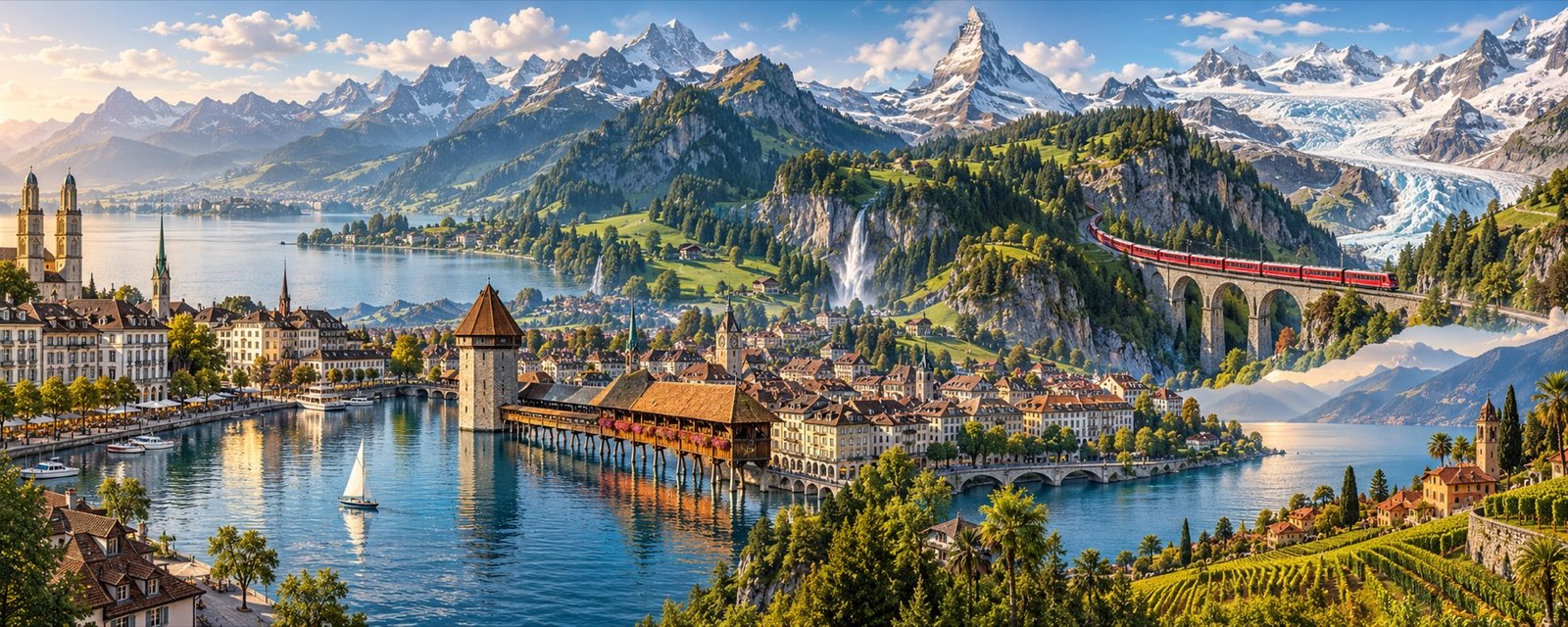
Switzerland is compact on a map but vertical, multilingual and highly seasonal. Zürich and Basel, the Bernese Oberland, Lake Geneva, Valais, Ticino and Graubünden offer different languages, transport patterns and mountain conditions. These fifty experiences help first-time visitors use the public-transport network intelligently, compare expensive mountain excursions honestly, respect fragile Alpine landscapes and build a route with depth rather than a collection of cable-car tickets.
Switzerland at a glance
- Ideal first trip: 8–12 days for two city regions and one Alpine base; longer for Ticino or Graubünden.
- Currency: Swiss franc. Cards are widespread, but keep a modest backup and check dynamic-currency-conversion prompts before authorising payment.
- Best planning principle: choose a rail corridor and one mountain base, then use weather-flexible day trips rather than changing hotels every night.
- Transport: trains, buses, boats and mountain railways integrate well, but panoramic reservations, supplements and fare coverage differ.
- Price check: compare point-to-point, saver, half-fare and visitor-pass totals for the actual itinerary; no pass is automatically cheapest.
Entry, visa and arrival planning
Use Switzerland’s official foreign-affairs and migration information plus the authority responsible for your passport and residence. Switzerland participates in the Schengen Area, but nationality, residence, travel purpose and future entry systems determine what applies.
Zürich and Geneva are the principal international gateways, while Basel is useful for northwestern routes. Compare an open-jaw journey with the time and fare needed to return to the first airport, and verify whether a cross-border airport or train connection changes entry or ticket rules.
When to go
Lowland spring can coexist with deep mountain snow, while summer heat can occur in cities and severe weather can close high routes. Autumn has clear days and shorter operating seasons; winter suits snow activities but not every summer path, boat or cable car.
Mountain transport often closes for maintenance between major seasons. Check the exact lift, trail, lake boat and scenic railway on the intended date rather than assuming a destination is fully open year-round.
Budget and places to stay
Price the most expensive mountain days first. A rail pass may reduce transport, but seat reservations, premium trains, cable cars or summit railways can be excluded or discounted rather than fully covered.
Compare the hotel’s official final total with a reputable platform and check breakfast, city tax, lift access, air conditioning, spa fees and the walk from the station. A cheaper remote room can lose value after repeated mountain transfers.
Fifty things to do in Switzerland
1. Zürich old town and Limmat river in one walk
Why go: Zürich. Medieval lanes, guild history and river geography introduce the city beyond banking stereotypes.
How to do it: Use an official city route, choose one church interior and continue along the river or lake rather than collecting every lane.
Good for: Architecture, history and first-time visitors
Know before you go: Cobbles, trams and busy shopping streets require attention.
2. Kunsthaus Zürich with a focused collection plan
Why go: Zürich. Swiss and international art rewards a period or theme rather than a rushed attempt to cover every building.
How to do it: Check current exhibitions and room closures, choose two collection priorities and allow rest time.
Good for: Art and museum travellers
Know before you go: Special exhibitions and newer wings can have separate timing or routes.
3. Swiss National Museum for a complicated national story
Why go: Zürich. Material culture and social history provide context for languages, federalism, migration and everyday life.
How to do it: Use the official museum route, select a historical question and avoid treating one display as a simple national summary.
Good for: History, families and educational travellers
Know before you go: Large collections and temporary galleries require pacing.
4. Lake Zürich and Uetliberg as a flexible city-nature day
Why go: Zürich. Boat, rail and a modest ridge route reveal how water and hills structure the metropolitan region.
How to do it: Check SBB and boat schedules, choose either a short cruise or ridge walk and keep a lowland weather alternative.
Good for: Families, walkers and city-view travellers
Know before you go: Fog, ice and storms can remove views and change trail safety.
5. Zürich-West design, food and industrial reuse
Why go: Zürich. Former industrial districts now hold design, performance and neighbourhood businesses that balance the old centre.
How to do it: Use trams, choose one cultural venue and support independent businesses without entering private workspaces.
Good for: Design, food and contemporary-city travellers
Know before you go: Nightlife and active construction change the district by hour.
6. Rhine Falls with rail and safe viewpoints
Why go: Schaffhausen. Europe’s powerful waterfall can be experienced by public transport without turning the day into a car-based rush.
How to do it: Check official paths, boat operations and rail stations, then choose viewpoints suited to mobility and weather.
Good for: Families, nature and rail travellers
Know before you go: Spray, steps, high water and slippery surfaces affect access.
7. St. Gallen Abbey District and textile history
Why go: St. Gallen. Manuscripts, Baroque architecture and textile traditions explain an influential eastern city.
How to do it: Reserve any library access officially, follow sacred-site rules and add one textile or city-history institution.
Good for: Books, architecture and heritage travellers
Know before you go: Photography and access rules differ between library and church spaces.
8. Appenzell and Säntis with a village or mountain priority
Why go: Appenzell region. Painted streets, rural traditions and dramatic limestone landscapes reward a slower eastern Switzerland chapter.
How to do it: Base in a rail-connected village, choose either cultural exploration or a cable-car day and check weather live.
Good for: Culture, hiking and landscape travellers
Know before you go: Mountain wind, snow and event crowds can transform the plan.
9. Lucerne old town and Chapel Bridge beyond the photograph
Why go: Lucerne. River, lake, medieval streets and later reconstruction create a compact but layered urban route.
How to do it: Walk early, use one museum or church for context and continue along a quieter lakefront section.
Good for: First-time, architecture and family travellers
Know before you go: Tour groups and events crowd narrow bridges; keep passages clear.
10. Swiss Museum of Transport as a full museum day
Why go: Lucerne. Rail, road, aviation and communications exhibits explain the systems that shape modern Switzerland.
How to do it: Choose three galleries, confirm demonstrations and allow more time than a quick rainy-day stop.
Good for: Families, technology and rail enthusiasts
Know before you go: The complex is large and additional experiences may cost extra.
11. Mount Rigi by rail and boat loop
Why go: Central Switzerland. Cogwheel rail, lake travel and ridge views create an integrated excursion with several difficulty levels.
How to do it: Build the loop in SBB and operator timetables, verify pass coverage and keep a shorter station-to-station walk.
Good for: Rail, families and moderate walkers
Know before you go: Cloud, snow and final connections change the value of the day.
12. Pilatus with one ascent and one descent plan
Why go: Central Switzerland. Mountain railways and views offer a dramatic day when weather and transfer logic are clear.
How to do it: Choose the operating side, check reservations and return options and avoid stacking another summit the same day.
Good for: Mountain-rail and city-base travellers
Know before you go: Altitude, storms and maintenance closures can cancel sections.
13. Bern UNESCO old town under the arcades
Why go: Bern. Fountains, civic buildings and covered streets show how the capital’s historic fabric still supports daily life.
How to do it: Use an official heritage walk, enter one institution and leave time for markets or river viewpoints.
Good for: Architecture, civics and first-time visitors
Know before you go: Trams, cobbles and demonstrations can alter central routes.
14. Bern museums, Einstein and federal history selectively
Why go: Bern. Science, art and political institutions provide different ways to understand the capital.
How to do it: Choose one principal museum and one smaller house or civic visit instead of rushing across every collection.
Good for: Science, history and museum travellers
Know before you go: Parliament sessions and museum closing days affect access.
15. Aare river and Rose Garden without unsafe swimming assumptions
Why go: Bern. River landscapes and hill views add everyday city life to the historic centre.
How to do it: Use signed paths and local swimming guidance, choosing a riverbank walk when conditions or ability are unsuitable.
Good for: Walkers, families and city-view travellers
Know before you go: The Aare is fast and cold; swimming requires local knowledge and strong ability.
16. Emmental farm and cheese experience with provenance
Why go: Bern region. Agricultural landscapes and documented production explain a famous food beyond a shop label.
How to do it: Choose an official dairy, farm or visitor centre, verify operating days and use rail and bus where practical.
Good for: Food, families and rural travellers
Know before you go: Working farms require hygiene, animal and access rules.
17. Interlaken as a transport base, not the whole Oberland
Why go: Bernese Oberland. Two lakes and multiple rail valleys make the town useful when daily routes are disciplined.
How to do it: Select one valley or lake per day, compare accommodation near the needed station and keep one weather-flexible day.
Good for: First-time Alps and car-free travellers
Know before you go: Constant transfers and expensive add-ons can overwhelm a short stay.
18. Lauterbrunnen valley with waterfall and resident respect
Why go: Bernese Oberland. Cliffs, waterfalls and villages create a remarkable landscape that is also a lived agricultural valley.
How to do it: Use trains and buses, stay on marked paths and avoid blocking farms, roads or private lawns for photographs.
Good for: Landscape, walking and family travellers
Know before you go: Rockfall, storms and crowded roadside stops require care.
19. Jungfraujoch only with weather and altitude checks
Why go: Bernese Oberland. High-altitude rail and glacier views can be memorable, but the cost and physical effects require honest comparison.
How to do it: Check the live forecast and webcams, understand pass discounts and allow a slow day without another major booking.
Good for: Mountain-rail and once-in-a-lifetime travellers
Know before you go: Altitude sickness, cold and cloud can affect anyone; follow medical advice.
20. Grindelwald-First with a route below maximum ability
Why go: Bernese Oberland. Gondola access opens ridge walks and views, but optional activities should not replace mountain judgement.
How to do it: Check lift and trail status, choose a signed route and reserve only the activity that fits age, mobility and weather.
Good for: Hiking, families and adventure travellers
Know before you go: Wind, snow and exposed paths can close attractions quickly.
21. Mürren and Schilthorn with car-free pacing
Why go: Bernese Oberland. A village above the valley and a high cable-car system provide a quieter Alpine base when not treated as a race.
How to do it: Confirm the full chain of trains and lifts, stay overnight if possible and keep a village-level alternative.
Good for: Scenery, rail and slow-travel visitors
Know before you go: Final lifts, altitude and maintenance periods require exact timing.
22. Lake Thun by boat and one shore town
Why go: Bernese Oberland. A lake journey can replace a rushed summit when weather is poor and connects castles, towns and mountain views.
How to do it: Check seasonal boat schedules, choose one shore stop and verify pass coverage before boarding.
Good for: Families, accessibility-conscious and relaxed travellers
Know before you go: Wind, rain and limited late boats affect the return.
23. Lake Brienz and Giessbach with seasonal access
Why go: Bernese Oberland. Turquoise water, forest and a historic waterfall route create a coherent lower-altitude day.
How to do it: Combine official boat and funicular or walking schedules and avoid forcing the route when spray or ice is unsafe.
Good for: Boat, landscape and heritage travellers
Know before you go: Seasonal operations and wet steps require current checks.
24. Oeschinen Lake from Kandersteg responsibly
Why go: Bern region. A high lake and surrounding cliffs offer several routes, from cable-car viewpoints to demanding hikes.
How to do it: Check reservations, trail closures and avalanche or rockfall information and choose a route within ability.
Good for: Hiking, families and landscape travellers
Know before you go: Cold water, steep paths and overcrowding require restraint.
25. Basel old town and Rhine crossings
Why go: Basel. Medieval streets, modern architecture and a working cross-border city make a strong cultural base.
How to do it: Use trams, choose one museum and cross the Rhine by bridge or official ferry.
Good for: Architecture, art and city-break travellers
Know before you go: Trade fairs and Art Basel periods radically change prices.
26. Fondation Beyeler with architecture and garden time
Why go: Basel region. A focused modern collection in a designed landscape rewards an unhurried half day.
How to do it: Reserve major exhibitions, use public transport and allow time for the building and grounds.
Good for: Modern art and architecture travellers
Know before you go: Popular exhibitions sell out and gallery photography rules vary.
27. Kunstmuseum Basel with a period-led route
Why go: Basel. A deep public collection becomes useful when visitors choose one century, movement or set of artists.
How to do it: Check which building holds the desired works and pace the visit with a river or café break.
Good for: Art-history and museum travellers
Know before you go: Temporary moves and multiple buildings can confuse old guides.
28. Rhine river life without copying unsafe local swimming
Why go: Basel. Riverbanks and ferries show how residents use the city in summer.
How to do it: Walk the banks, use official ferries and swim only when local guidance, conditions and personal ability make it appropriate.
Good for: Summer-city and slow-travel visitors
Know before you go: Current, cold water and boat traffic make casual imitation dangerous.
29. Geneva lakefront and old city in one direction
Why go: Geneva. International institutions, Reformation history and the lake fit a compact route when organised geographically.
How to do it: Start in the old town or lakefront, choose one museum and avoid crossing the city repeatedly.
Good for: History, diplomacy and city travellers
Know before you go: Conferences and state events affect hotels and access.
30. United Nations district and humanitarian history
Why go: Geneva. International organisations and museums explain modern diplomacy beyond building façades.
How to do it: Check official visitor access and identification, then pair one tour with a related museum or public garden.
Good for: Civics, education and international-affairs travellers
Know before you go: Security rules and meeting schedules change access.
31. CERN visitor experience with advance planning
Why go: Geneva region. Particle physics and engineering become accessible through exhibitions and official programming.
How to do it: Use CERN’s official booking system, verify age and identification rules and travel by public transport.
Good for: Science, families and technology travellers
Know before you go: Research operations determine what can be visited; old tour descriptions may be wrong.
32. Carouge markets and neighbourhood design
Why go: Geneva. Arcades, workshops and local food provide a human-scale contrast to the international district.
How to do it: Visit on the correct market day, use trams and ask before photographing makers.
Good for: Food, craft and urban-design travellers
Know before you go: Businesses and residential courtyards are not open exhibits.
33. Lausanne cathedral and steep old city
Why go: Lausanne. Gothic architecture, civic history and hillside streets reveal a city shaped by Lake Geneva’s slopes.
How to do it: Use metro or a downhill route, confirm cathedral access and combine it with one neighbourhood or museum.
Good for: Architecture, walking and first-time visitors
Know before you go: Steep paving and heat or ice make short map distances demanding.
34. Olympic Museum with critical sporting context
Why go: Lausanne. Collections and lake gardens explore global sport, media and institutions beyond medals alone.
How to do it: Check temporary exhibitions, allow several hours and connect the visit with the Ouchy waterfront.
Good for: Sport, families and museum travellers
Know before you go: Major event periods affect access and visitor numbers.
35. Lavaux vineyards by train and signed path
Why go: Vaud. Terraced vineyards and lake views form a UNESCO cultural landscape best explored without driving after tasting.
How to do it: Choose a rail station pair, check path gradients and book one producer with a safe return.
Good for: Wine, hiking and landscape travellers
Know before you go: Heat, harvest work and steep lanes require respect.
36. Montreux lakefront beyond festival imagery
Why go: Vaud. Belle Époque architecture, music history and lake landscapes make a strong base on the GoldenPass corridor.
How to do it: Walk one waterfront section, choose a museum or music site and check festival dates before booking rooms.
Good for: Music, architecture and lake travellers
Know before you go: Festival periods transform prices, transport and crowd levels.
37. Chillon Castle with lake and defensive context
Why go: Vaud. A lakeside fortress reveals trade, power and Romantic interpretation when explored beyond its exterior.
How to do it: Reserve if needed, use train, bus or boat and allow time for stairs and interpretation.
Good for: Castles, history and family travellers
Know before you go: Narrow stairs and lake weather affect accessibility.
38. Rochers-de-Naye as a weather-dependent rail day
Why go: Vaud. Cogwheel rail connects Montreux with a high viewpoint and seasonal walks.
How to do it: Check live weather, railway operation and trail status, then keep a lake-level alternative.
Good for: Rail, views and moderate hikers
Know before you go: Cloud, snow and wind can remove the main reason for travelling.
39. Zermatt village and Matterhorn viewpoints without car access
Why go: Valais. A car-free mountain resort supports walking and rail while iconic views remain weather-dependent.
How to do it: Arrive by rail, choose accommodation near the needed lift or station and keep one flexible viewpoint day.
Good for: Mountain, rail and first-time visitors
Know before you go: High prices, altitude and cloud require realistic expectations.
40. Gornergrat railway with altitude pacing
Why go: Zermatt, Valais. A rack railway provides glacier and peak views with optional walks at several levels.
How to do it: Check the forecast and railway status, ascend slowly and choose a lower walking segment if altitude is uncomfortable.
Good for: Mountain rail and landscape travellers
Know before you go: Cold, sun and altitude can affect even non-hikers.
41. Zermatt Five Lakes or a shorter marked trail
Why go: Valais. Reflections and varied Matterhorn angles reward walkers who match distance and elevation to conditions.
How to do it: Use the official trail map, check lift times and carry layers, water and a turnaround point.
Good for: Hiking and photography travellers
Know before you go: Snow, storms and trail damage can persist outside winter.
42. Aletsch Glacier from a protected viewpoint
Why go: Valais. The vast glacier illustrates Alpine geology and climate change without requiring visitors to step onto ice.
How to do it: Use official mountain transport and marked viewpoints, and choose a qualified guide for any glacier activity.
Good for: Geology, climate and landscape travellers
Know before you go: Crevasses, rockfall and retreating ice make unguided glacier access unacceptable.
43. Sion castles and Valais wine with sober transport
Why go: Valais. Hilltop heritage, vineyards and bilingual regional culture create a varied lower-valley base.
How to do it: Use rail and buses, choose one castle route and reserve a producer visit with a safe return.
Good for: History, wine and regional travellers
Know before you go: Heat, steep paths and alcohol require pacing.
44. Lugano lakefront and one local mountain
Why go: Ticino. Italian-speaking urban life, lake scenery and mountain railways provide a distinct southern Switzerland chapter.
How to do it: Choose Monte Brè or San Salvatore, not both in one rushed day, and use local buses or funiculars.
Good for: Lake, food and city-nature travellers
Know before you go: Summer heat and thunderstorms change mountain plans.
45. Bellinzona castles and city history
Why go: Ticino. Three fortifications explain the strategic Alpine route and create a coherent rail day.
How to do it: Check official opening, choose one or two interiors and use lifts or buses where available.
Good for: Castles, families and history travellers
Know before you go: Steep paths, heat and event closures affect access.
46. Verzasca Valley with safe water behaviour
Why go: Ticino. Stone villages, clear river and steep valley landscapes reward public-transport day trips.
How to do it: Use postbus schedules, walk marked routes and follow local swimming and parking guidance.
Good for: Landscape, villages and active travellers
Know before you go: Cold, powerful water and polished rock make viral swimming spots dangerous.
47. Chur old town and Graubünden gateway
Why go: Graubünden. Switzerland’s oldest city connects Romansh culture, regional museums and major Alpine rail lines.
How to do it: Stay near the station, use one museum for context and reserve scenic-train segments separately.
Good for: Rail, culture and architecture travellers
Know before you go: Short connections and platform changes require attention with luggage.
48. Bernina railway as a route, not a photo train
Why go: Graubünden. The UNESCO-listed line crosses glaciers, lakes and Italianate valleys through extraordinary railway engineering.
How to do it: Compare regular regional trains with branded panoramic services, reserve where required and plan the return or onward stay.
Good for: Rail, engineering and landscape travellers
Know before you go: Seat reservations, supplements and weather differ by service.
49. Engadin villages and St. Moritz beyond luxury branding
Why go: Graubünden. Lakes, Romansh heritage and marked trails offer a broader regional story than one resort name.
How to do it: Choose one valley base, use buses and trains and pair a gentle lake route with a cultural stop.
Good for: Hiking, culture and slow-travel visitors
Know before you go: Altitude, snow and seasonal hotel closures change options.
50. Swiss National Park with strict trail discipline
Why go: Graubünden. The country’s oldest national park protects Alpine ecosystems through unusually strict leave-no-trace rules.
How to do it: Use the park visitor centre, select an official trail and carry everything needed while remaining on the path.
Good for: Wildlife, hiking and conservation travellers
Know before you go: No shortcuts, fires, camping or wildlife approach; weather and remoteness require preparation.
Food and drink worth planning around
Treat food as regional: German-speaking cities, Romandy, Ticino, Valais, Graubünden and Alpine valleys have distinct traditions. Ask about allergens, read the current menu and try smaller producers without turning dairy, chocolate or wine into one national stereotype.
Reserve famous restaurants only when they fit the route. Bakeries, markets, mountain inns and neighbourhood cafés can offer better geographic value, but opening days and kitchen hours require checking.
What to buy
For watches, knives, textiles, chocolate and cheese, verify the maker, production origin, warranty and export rules. A Swiss flag or central-city display is not proof that an item was made locally.
Buy craft directly from named makers where possible and keep receipts for high-value goods. Never remove rocks, plants, fossils or cultural material from protected landscapes.
Getting around
Use SBB and the exact mountain, boat or local operator for current schedules. Supersaver tickets can be connection-specific, some panoramic trains require reservations and separate mountain systems have different pass coverage.
A car is unnecessary for most first trips and cannot enter several famous car-free resorts. Rent only for a clearly defined rural route, and include parking, winter equipment, mountain-road conditions and vignette or cross-border rules.
Easy access and family travel
SBB provides assistance information, but accessibility is station-, platform-, vessel- and mountain-railway-specific. Confirm boarding gaps, lift dimensions, snow conditions, accessible toilets, surface gradients and reservation requirements directly.
Families and mixed-ability groups should agree on a lower shared route and an optional extension. Altitude, sun, cold, queues and long platform transfers are real physical demands even when no hiking is planned.
Stay safe
Use official weather, avalanche, trail, lake and mountain-operator information. Altitude, storms, rockfall, snow, cold water and exposed paths can turn a short scenic outing into a serious event.
In cities use normal precautions around valuables and late transport. In the mountains, respect closures, carry layers and water, turn around early and never step onto a glacier or frozen lake without qualified guidance and appropriate equipment.
Mistakes to avoid
- Changing hotels every night because rail distances look short.
- Buying an expensive travel pass before pricing the actual route.
- Scheduling several summit excursions with no weather-flexible day.
- Assuming every panoramic train seat, boat or cable car is included in one pass.
- Treating the Matterhorn or Jungfraujoch view as guaranteed.
- Ignoring altitude, winter maintenance or final mountain-transport times.
- Using one language or regional food stereotype for the whole country.
- Trusting an old hotel or attraction price instead of the current final total.
Sample seven-day route
Use two nights Zürich, two Lucerne and three in the Bernese Oberland. Keep one Alpine day weather-flexible and avoid adding Geneva or Zermatt unless replacing a base.
Sample ten-day route
Use two Zürich, two Lucerne, three Bernese Oberland and three around Lausanne or Montreux. Travel by regular intercity trains and choose one premium mountain experience.
Sample fourteen-day route
Use two Zürich, two Lucerne, three Bernese Oberland, two Bern, three Lake Geneva and two Zermatt or Ticino. Choose Valais or Ticino, not both, for a calmer first trip.
Switzerland travel FAQ
How many days are enough for Switzerland?
Seven days supports Zürich, Lucerne and one Alpine base. Ten to fourteen days allows a French- or Italian-speaking region without turning every day into a transfer.
Is the Swiss Travel Pass always worth it?
No. Compare the exact itinerary with point-to-point, saver and half-fare options, including reservations and mountain discounts. Convenience may still justify a higher price.
Do I need a car?
Usually not. Public transport reaches cities, lakes and many mountain valleys efficiently, while famous resorts such as Zermatt are car-free.
Which mountain excursion should I choose?
Choose one that fits the route, budget, altitude tolerance and weather. A lower lake or ridge day can be better than paying for cloud at a famous summit.
Official planning sources
- Switzerland Tourism official visitor portal
- Official Swiss destinations
- Switzerland Tourism nature planning
- Swiss Federal Department of Foreign Affairs
- SBB official tickets for Switzerland
- SBB travel and accessibility information
- Swiss National Park
- Swiss weather service
- UNESCO World Heritage state-party record for Switzerland
- United Kingdom government travel advice for Switzerland
- United States government travel advisory for Switzerland
Disclosure: This independent editorial guide is informational, not a booking guarantee. No price, ranking, safety outcome, entry permission or availability is guaranteed. Recheck all time-sensitive details with the linked official source before purchase.