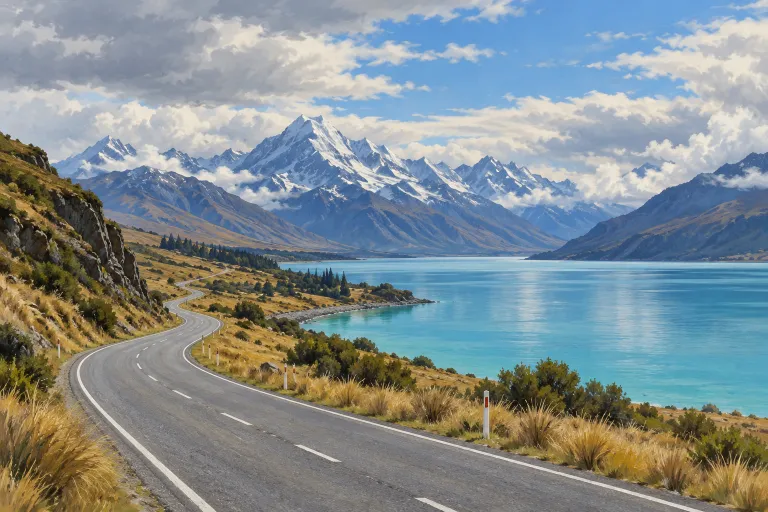
South Island road trip: a route you can actually enjoy
Christchurch to Queenstown in eight days, with safer drive days, weather choices and a clear budget. Updated 14 October 2026.
Quick answer: For a first South Island road trip of about eight days, start in Christchurch, spend time near Lake Tekapo and Aoraki/Mount Cook, then travel through Wānaka to Queenstown. This route chooses one alpine corridor rather than racing around the entire island. Milford Sound / Piopiotahi is an optional addition only if you can give Fiordland proper time and check conditions. Book an open-jaw flight if it saves backtracking.
| Nights | Base or travel day | Main purpose | Do not forget |
|---|---|---|---|
| 1–2 | Christchurch | Recover, explore and collect the car | Do not start a long drive after a tiring arrival. |
| 3–4 | Tekapo or Aoraki/Mount Cook area | Mountain views, a walk suited to conditions | Check DOC track alerts and weather before hiking. |
| 5 | Wānaka | Slow lake day and break in the drive | Allow stops rather than using map time as a promise. |
| 6–8 | Queenstown | Choose one major activity and a flexible day | Return the car or arrange airport travel clearly. |
Why this route beats a rushed full-island loop
Tourism New Zealand publishes an eight-day Christchurch-to-Queenstown route through Lake Tekapo. It is a useful geographic starting point, but your version should depend on arrival time, season, interest and road confidence. A plan that says “South Island” does not have to include every coast. Each extra stop adds packing, check-out, parking and a new drive. With limited nights, the best choice is often to do one corridor well and leave the West Coast or Fiordland for a longer trip.
New Zealand’s transport agency warns that roads can be narrow, winding, steep or unsealed, and journeys can take longer than a map suggests. It also reminds visitors to drive on the left. That changes how we use the day: one main drive, rest stops, a walk only if conditions suit, then an early enough arrival to enjoy the next base. If you have never driven on the left, collect the car after a night of sleep rather than immediately after a long-haul flight.
Days 1–2: settle into Christchurch
Use the first day for arrival and a gentle walk rather than an ambitious drive. If your flight is delayed or baggage takes longer than planned, a local night protects the whole itinerary. On the next day, choose a neighbourhood, garden or museum based on your energy. Shop for food and any small essentials before leaving a larger city. Confirm the rental company’s collection hours, insurance excess, fuel policy, one-way fee and what happens if the car has a fault.
Before driving away, check lights, tyres and existing damage with the rental staff. Save their support number. Test your navigation with offline maps and keep a charger accessible. If a child seat or accessibility equipment matters, confirm the exact fitting in advance. A low headline hire rate can become expensive if those items and insurance are added later.
Days 3–4: Lake Tekapo and Aoraki/Mount Cook
Travel toward the Mackenzie area at a pace that leaves daylight for stops. Lake Tekapo is a base many first-time visitors choose for scenery and sky watching. Clear night skies are possible, never guaranteed. If you are paying for a stargazing activity, read its cloud policy and what happens if weather cancels it.
Aoraki/Mount Cook National Park deserves more than a quick photograph. Pick one walk that matches your fitness, footwear and the current track status. The Department of Conservation, or DOC, publishes track information and alerts. Conditions can change after rain, snow, wind or maintenance. Do not repeat a travel site’s old walking time without checking the official track page and your actual pace. Take water and layers even if the car park feels mild.
Book accommodation early for dates with limited rooms, but avoid paying for an activity that depends heavily on the sky before reading its terms. If the mountains are hidden, enjoy a shorter safe walk, visitor information or a relaxed meal. You do not need perfect visibility for the stop to be worthwhile.
Day 5: use Wānaka as a pause
Wānaka can turn a long point-to-point transfer into a more enjoyable journey. It gives you a day to walk by the lake, eat slowly and decide whether you want an active outing. You can also keep it as a weather buffer. A travel day with a beautiful road is still a travel day, so avoid reserving a timed activity too close to your expected arrival.
For the move toward Queenstown, Tourism New Zealand notes that the Crown Range option is more challenging than the route via Cromwell. Choose the road suited to your comfort and current conditions, not the one that looks most dramatic on social media. Check the NZ Transport Agency journey planner before leaving, especially when frost, snow, roadwork or incidents could change the plan.
Days 6–8: Queenstown without overscheduling
Queenstown has many paid activities, but one highlight is enough for a short visit. Choose between a scenic outing, a walk, an adventure activity or a day with food and nearby towns. Check the operator’s physical requirements and cancellation terms. Leave one block free in case weather moves your main activity. If your flight is on the last day, keep the night before in town or near the airport rather than returning from a distant region.
Some travelers want Milford Sound / Piopiotahi from Queenstown. Treat that as a separate, serious travel decision, not an easy add-on. Road time is long, conditions in Fiordland can change, and a cruise or guided excursion has a departure you cannot casually miss. If it is the main reason for the trip, consider extra nights around Te Anau and read the current road and DOC alerts. If time is short, staying in Queenstown and enjoying the route you already have is a sensible choice.
Drive safely, especially across seasons
New Zealand drives on the left. Everyone needs a seat belt and using a handheld phone while driving is illegal, according to the transport agency. Before you set out each day, check the official journey planner for closures and delays. Follow signs and local warnings even if your navigation suggests a shortcut. Allow rest stops and avoid driving while tired. If you are unsure about mountain or winter conditions, consider a coach, tour or a shorter route.
Winter can bring ice, snow and reduced daylight; warmer months can still bring rain and roadwork. A booking with a flexible date can be worth more than a rigid discount. Do not plan a hike, a long scenic drive and a late dinner in three different towns on one day. The road is part of the holiday, but it deserves attention.
Documents and arrival checks
Entry rules depend on your passport and status. Immigration New Zealand says some visitors need a Visitor Visa, while eligible travelers may use an NZeTA. It also says travelers must complete a New Zealand Traveller Declaration. Check the official eligibility tool before buying nonrefundable flights, and read the latest details for your exact passport and transit route. A visa waiver is not permission to skip the other entry conditions.
If you intend to drive, check that your licence is valid for New Zealand and whether you need an approved translation or international driving permit. The transport agency’s visitor page explains the current rules; its overseas-licence time limit is changing in November 2026, so do not rely on an old article. Your rental company may impose additional conditions such as driver age or card requirements.
Budget without guessed daily prices
Compare the complete trip: flights into one city and out of another, rental car, one-way fee, insurance, fuel, parking, accommodation, food, park or activity costs, and a reserve. A campervan adds campsite or holiday-park costs and different driving demands; it does not automatically make the trip cheaper. A scenic flight is optional and weather-sensitive, so read cancellation terms before treating it as a fixed highlight.
Make three columns: essential, special experience and flexible extra. Put the money first into safe transport and enough nights in each base. If the budget is tight, shorten the route before cutting every meal and rest day. You will remember the places more clearly if you are not constantly trying to recover lost time.
Book in this order
- Choose the region and number of nights you can actually enjoy.
- Check passport, visa or NZeTA and licence requirements on official sites.
- Compare flights and rental terms, including one-way charges.
- Reserve scarce accommodation for your dates.
- Add one or two important activities, with weather and cancellation rules.
- Recheck roads, DOC track alerts and the forecast before each travel day.
Quick questions
Is eight days enough for the whole South Island?
No, not if you want relaxed time in multiple regions. Eight days can support one good corridor. Add nights for the West Coast, Fiordland or extra hiking.
Do I have to drive the Crown Range?
No. Tourism New Zealand describes a route via Cromwell as an easier alternative. Check current road conditions before choosing either road.
Can I add Milford Sound as a simple day trip?
It can be done with some operators, but it is a long day. If it is central to your trip, give Fiordland more time and check the road and weather.
Where do I check road closures?
Use the NZ Transport Agency journey planner close to each driving day. For a walk, also check the specific DOC track page and alerts.
Leave a Reply