This guide uses official tourism, government and transport sources. Rules and prices can change, so check the linked official pages before booking.
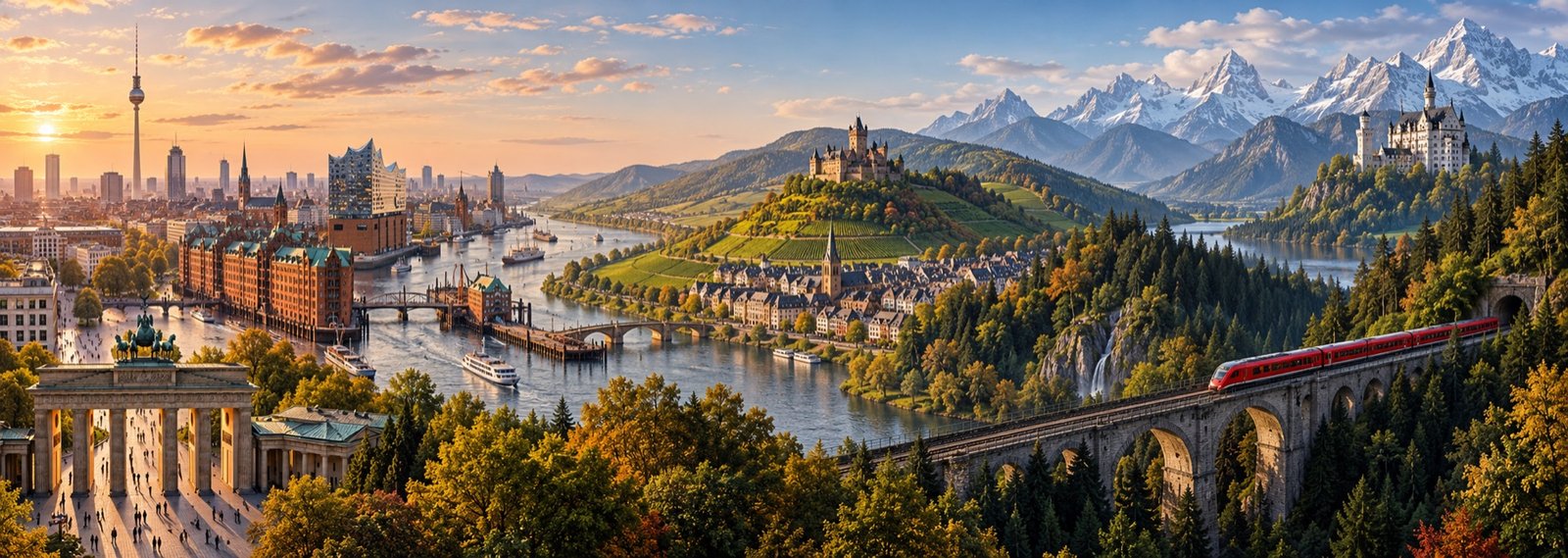
Germany rewards a regional rail route more than a rushed list of castles. Berlin’s twentieth-century history, Hanseatic ports, Saxon art cities, Bavarian landscapes, Rhine and Moselle valleys, industrial heritage and North Sea ecosystems each need context and time. These fifty experiences help first-time visitors plan efficient journeys, use official sources, respect memorial spaces and connect famous architecture with living neighbourhoods.
Germany at a glance
- Ideal first trip: 10–14 days for Berlin plus two connected regions; seven days works for one city pair and nearby day trips.
- Currency: euro. Cards are common but not universal, so carry a modest backup for smaller businesses and ticket machines.
- Best planning principle: build around one Intercity or high-speed rail corridor and reserve only the headline sites that truly sell out.
- Transport: national and regional rail is extensive, but train-specific fares, engineering work and separate local tickets need checking.
- Price check: compare final hotel totals, breakfast, city tax, parking, spa access, reservation fees and cancellation terms.
Entry, visa and arrival planning
Use Germany’s Federal Foreign Office and the authority responsible for your passport and residence for Schengen entry rules. Visa exemptions, allowed stay, purpose and future digital systems can change; a transport company or booking platform does not grant admission.
Berlin, Frankfurt, Munich, Düsseldorf and Hamburg support open-jaw routes. Compare the complete airport-to-city journey and a rail arrival before adding a domestic flight; separate tickets and late arrivals need realistic buffers.
When to go
Spring and autumn often balance mild weather and cultural schedules, while summer brings festivals and crowds and winter brings Christmas markets, short daylight and possible snow or ice. Mountain, coast and city conditions differ substantially.
Trade fairs, football, school holidays, Oktoberfest, major conventions and Christmas markets can transform room prices. Check the exact city calendar before assuming an ordinary weekend rate.
Budget and places to stay
Build value, mid-range and premium versions using live refundable rates. Saver rail fares can be train-specific, city passes vary, and famous castle or museum tickets may need timed reservations without making a bundle good value.
Compare a hotel’s official final total with a reputable platform and verify air conditioning, lift access, breakfast, late arrival and the exact U-Bahn, tram or rail connection. A central old-town address can still mean nightlife, stairs or pedestrian-only luggage access.
Fifty things to do in Germany
1. Brandenburg Gate and the government quarter in context
Why go: Berlin. A walk through civic architecture and reunification history works best with a documented route rather than isolated photographs.
How to do it: Begin early, use official parliamentary information and connect the gate with the Reichstag and Spree on foot.
Good for: History, civics and first-time visitors
Know before you go: Security and state events change access; public institutions remain working spaces.
2. Reichstag dome with an official reservation
Why go: Berlin. The restored parliament building connects transparent modern architecture with German democracy.
How to do it: Reserve through the Bundestag’s official system, carry required identification and allow security time.
Good for: Architecture, politics and city-view travellers
Know before you go: Names and identification must match; ceremonies or security can cancel visits.
3. Museum Island with a focused collection plan
Why go: Berlin. Five major institutions cover millennia of art and archaeology, but construction and display changes make selection essential.
How to do it: Check the official museums, choose one principal collection and reserve only the entry actually needed.
Good for: Art, archaeology and museum travellers
Know before you go: Major works or buildings can be closed; avoid claiming one object represents an entire culture.
4. Berlin Wall Memorial instead of a souvenir-only stop
Why go: Berlin. Preserved border structures and personal histories explain division more clearly than painted fragments alone.
How to do it: Use the official outdoor and visitor-centre route and allow quiet time for testimony and interpretation.
Good for: Modern history and educational travellers
Know before you go: This is a memorial landscape, not a backdrop for playful posing.
5. Topography of Terror and Holocaust memorial learning
Why go: Berlin. Documentation sites confront state violence and persecution through evidence, place and testimony.
How to do it: Choose one or two sites, read official preparation material and avoid rushing immediately into entertainment.
Good for: History, remembrance and adult learners
Know before you go: Content is emotionally demanding; behaviour and photography must remain respectful.
6. Kreuzberg, Neukölln or another lived neighbourhood
Why go: Berlin. Migration, food, music and housing histories reveal contemporary Berlin beyond monuments.
How to do it: Choose one district, use public transport and support independent businesses without treating residential courtyards as attractions.
Good for: Food, culture and urban travellers
Know before you go: Nightlife, demonstrations and private spaces require awareness and consent.
7. Potsdam palaces and gardens without palace collecting
Why go: Potsdam, Brandenburg. Royal landscapes, lakes and urban history form a coherent rail day from Berlin.
How to do it: Select one palace interior, verify its timed entry and spend equal time in the surrounding garden or old town.
Good for: Gardens, architecture and rail travellers
Know before you go: The park is vast and some interiors lack full step-free access.
8. Hamburg Speicherstadt and HafenCity
Why go: Hamburg. Warehouse heritage, port trade and contemporary redevelopment show how the city continues to change.
How to do it: Use an official heritage or harbour route, visit one museum and keep working quays clear.
Good for: Architecture, maritime and urban travellers
Know before you go: Wind, rain and cruise days affect comfort and crowds.
9. Elbphilharmonie plaza or performance
Why go: Hamburg. The concert hall connects acoustic design, harbour views and modern city identity.
How to do it: Reserve the official plaza or performance ticket and arrive early for security and wayfinding.
Good for: Music, architecture and city-view travellers
Know before you go: Performance tickets and plaza access are different products; verify the exact entry.
10. Hamburg harbour ferry as public transport
Why go: Hamburg. A normal transport ticket can reveal container terminals, shipyards and river neighbourhoods without a premium cruise.
How to do it: Check the local transit route and return, stay clear of commuters and combine it with one waterfront district.
Good for: Value, maritime and family travellers
Know before you go: Fog, wind and timetable changes can remove views or extend the trip.
11. Lübeck’s Hanseatic old town and marzipan myths
Why go: Lübeck, Schleswig-Holstein. Brick Gothic streets and trade history make a strong day or overnight stop from Hamburg.
How to do it: Use a city museum or documented walking route and verify any food-production claims before buying.
Good for: Architecture, food and rail travellers
Know before you go: Old-town paving and busy event days affect access.
12. Bremen town hall, Roland and river quarter
Why go: Bremen. Civic independence, maritime trade and contemporary neighbourhoods fit into a compact rail stop.
How to do it: Check official town-hall tours and connect the UNESCO square with the Weser rather than staying in one lane.
Good for: History, architecture and short-break travellers
Know before you go: Markets and public events can close interiors or crowd the square.
13. Wadden Sea with a qualified mudflat guide
Why go: North Sea coast. Tides expose a globally important ecosystem that is safe only with expert timing and local knowledge.
How to do it: Book a certified guide, dress for conditions and follow every turnaround and wildlife instruction.
Good for: Nature, families and birdlife travellers
Know before you go: Fast tides, fog, cold and channels make unguided crossing dangerous.
14. Rügen and Jasmund National Park by marked routes
Why go: Mecklenburg-Vorpommern. Chalk coast, beech forest and Baltic resorts create a varied northern nature chapter.
How to do it: Use park transport and official viewing routes, stay back from cliff edges and allow several nights.
Good for: Coast, hiking and heritage travellers
Know before you go: Erosion, storms and seasonal traffic close paths and strain parking.
15. Dresden Old Masters with a selective museum day
Why go: Dresden, Saxony. Reconstructed architecture and major collections open questions about patronage, war and restoration.
How to do it: Choose one collection and one historic interior, reserving official timed access where required.
Good for: Art, architecture and history travellers
Know before you go: Reconstruction should not be confused with untouched survival; check gallery closures.
16. Dresden Neustadt and contemporary culture
Why go: Dresden, Saxony. Independent venues, courtyards and neighbourhood life balance the monumental old centre.
How to do it: Explore by tram and foot, choose current local businesses and respect residential courtyards.
Good for: Design, nightlife and urban travellers
Know before you go: Late-night noise, cycling lanes and private access need awareness.
17. Saxon Switzerland on an official trail
Why go: Saxony. Sandstone formations and Elbe landscapes offer dramatic hiking within rail reach of Dresden.
How to do it: Check national-park closures and weather, use trains and ferries and choose a route within ability.
Good for: Hiking, geology and active travellers
Know before you go: Cliffs, ice, heat and wildfire restrictions can change routes.
18. Leipzig music, civic history and creative districts
Why go: Leipzig, Saxony. Bach traditions, peaceful-revolution history and contemporary neighbourhoods create a layered city break.
How to do it: Choose one music site and one civic-history institution, then use trams to a creative district.
Good for: Music, history and urban travellers
Know before you go: Concert schedules and trade fairs can transform prices.
19. Weimar’s classical and difficult twentieth-century history
Why go: Weimar, Thuringia. Literature, Bauhaus and nearby dictatorship history require a deliberately balanced itinerary.
How to do it: Use official museums, keep memorial visits separate and avoid reducing the city to one golden age.
Good for: Literature, design and history travellers
Know before you go: Buchenwald requires preparation, quiet behaviour and emotional time.
20. Bauhaus Dessau and modern design
Why go: Dessau, Saxony-Anhalt. School buildings, housing and design objects make modernism understandable at city scale.
How to do it: Reserve an official guided route or key interiors and confirm restoration closures.
Good for: Architecture, design and rail travellers
Know before you go: Some historic buildings have limited access or residential use.
21. Munich old centre with civic and religious context
Why go: Munich, Bavaria. Churches, markets and royal institutions make sense when organised as one walk, not a beer-hall checklist.
How to do it: Begin before peak crowds, choose one church or palace interior and use U-Bahn or S-Bahn.
Good for: Architecture, food and first-time visitors
Know before you go: Major festivals, football and events radically change prices and access.
22. Alte Pinakothek or modern art with a focused route
Why go: Munich, Bavaria. Major collections across several museums reward a period or theme rather than a full-day marathon.
How to do it: Check the official museum opening and renovation information and select a manageable floor.
Good for: Art and museum travellers
Know before you go: Works and wings rotate; weekly closing days differ.
23. Deutsches Museum for science and technology
Why go: Munich, Bavaria. Large exhibitions connect engineering, transport and scientific change, making it especially useful for families.
How to do it: Choose three themes in advance, confirm which buildings are open and allow rest breaks.
Good for: Families, science and technology travellers
Know before you go: The site is too large for total coverage and some demonstrations have set times.
24. English Garden and Isar river responsibly
Why go: Munich, Bavaria. Large public landscapes show everyday recreation and provide recovery from museum-heavy days.
How to do it: Use marked paths, respect cyclists and local bathing guidance and pair the park with one nearby neighbourhood.
Good for: Families, walkers and slow-city travellers
Know before you go: Fast river currents, heat and busy cycle routes require caution.
25. Neuschwanstein and Hohenschwangau with timed logistics
Why go: Bavaria. Royal castles and Alpine scenery are memorable when transport, ticket and walking times are planned honestly.
How to do it: Buy only official timed entry, arrive well before the slot and choose viewpoints that are legally open.
Good for: Castles, architecture and family travellers
Know before you go: Uphill routes, ice and bridge closures can change the experience.
26. Berchtesgaden National Park and Königssee
Why go: Bavaria. Lake, mountain and conservation landscapes form a strong Alpine chapter distinct from Munich.
How to do it: Check park, boat and weather information, choose one valley or lake day and stay several nights.
Good for: Nature, hiking and landscape travellers
Know before you go: Storms, snow, steep terrain and last-boat times are serious.
27. Bavarian Alpine village without a daily long drive
Why go: Bavaria. One mountain base allows cable cars, signed walks and local transport to work with weather rather than against it.
How to do it: Choose a base with rail or bus access, verify lift seasons and keep a valley alternative.
Good for: Hikers, families and slow-travel visitors
Know before you go: Weather, altitude and cable-car closures require flexible days.
28. Nuremberg old city beyond medieval atmosphere
Why go: Nuremberg, Bavaria. Imperial history, reconstruction and urban life provide context beyond walls and market squares.
How to do it: Use one city museum, one church or castle route and allow time to understand postwar rebuilding.
Good for: History, architecture and rail travellers
Know before you go: Christmas-market periods are extremely crowded and expensive.
29. Nuremberg Documentation Center and trial history
Why go: Nuremberg, Bavaria. Sites connected to National Socialism and postwar justice require evidence-based interpretation.
How to do it: Check current exhibitions and construction, read visitor guidance and plan a reflective transition afterward.
Good for: Modern history and educational travellers
Know before you go: Memorial material is disturbing; never imitate propaganda imagery.
30. Bamberg old town and brewing culture
Why go: Bamberg, Bavaria. Medieval urban form, waterways and Franconian brewing create a compact overnight stop.
How to do it: Use the UNESCO visitor information, explore on foot and taste alcohol only with food and safe transport.
Good for: Architecture, food and beer-culture travellers
Know before you go: Cobbles, hills and busy weekends affect access.
31. Rothenburg ob der Tauber after day-trip hours
Why go: Bavaria. An overnight stay reveals a functioning small town beyond tour-bus imagery.
How to do it: Arrive by regional rail, walk the walls only where open and explore outside the central square.
Good for: Medieval towns and photography travellers
Know before you go: Wall stairs, winter ice and souvenir-heavy lanes need pacing.
32. Frankfurt museums and neighbourhoods beyond the skyline
Why go: Frankfurt, Hesse. The river museum bank, migration and trade history make the transport hub worth a deliberate stop.
How to do it: Choose one museum, cross the Main on foot and use local transit to a neighbourhood market or restaurant.
Good for: Art, food and stopover travellers
Know before you go: Trade fairs raise room rates dramatically; verify dates.
33. Upper Middle Rhine by train and boat
Why go: Rhineland-Palatinate and Hesse. Castles, vineyards and river towns form a coherent UNESCO landscape best seen slowly.
How to do it: Base in one town, compare official rail and boat schedules and choose one castle interior.
Good for: Rail, river and landscape travellers
Know before you go: Seasonal boats, floods and steep station access affect routes.
34. Moselle cycle or rail journey with one base
Why go: Rhineland-Palatinate. River bends, vineyards and small towns reward a regional route without daily luggage changes.
How to do it: Choose a rail-connected base, rent bicycles only for a suitable signed section and arrange sober wine transport.
Good for: Cycling, wine and slow-travel visitors
Know before you go: Heat, narrow roads and alcohol require careful planning.
35. Cologne Cathedral with sacred-site awareness
Why go: Cologne, North Rhine-Westphalia. Gothic architecture, pilgrimage and wartime survival become meaningful beyond the façade.
How to do it: Check worship and tower access, keep the nave quiet and pair the cathedral with one nearby museum.
Good for: Architecture, faith and first-time visitors
Know before you go: Security, services and tower stairs can restrict access.
36. Cologne’s Roman and contemporary city layers
Why go: Cologne, North Rhine-Westphalia. Museums, riverfront and neighbourhoods reveal two thousand years beyond the cathedral.
How to do it: Choose one Roman or art collection and use trams to a lived district rather than adding another distant monument.
Good for: History, art and urban travellers
Know before you go: Carnival dates transform transport, behaviour and prices.
37. Aachen Cathedral and Charlemagne context
Why go: Aachen, North Rhine-Westphalia. The cathedral connects early medieval power, pilgrimage and European history near two borders.
How to do it: Use the official cathedral and treasury information, respect worship and allow time for the old city.
Good for: Medieval history and rail travellers
Know before you go: Services and group tours affect entry; some areas are not step-free.
38. Zollverein industrial complex with interpretation
Why go: Essen, Ruhr. Coal, labour, architecture and regional transformation become visible at one major industrial heritage site.
How to do it: Take an official tour or museum route and use regional transit instead of treating the site as abandoned scenery.
Good for: Industry, architecture and photography travellers
Know before you go: Large distances, stairs and active event areas require a route plan.
39. Ruhr art, canals and repurposed industry
Why go: Ruhr region. A network of museums, cycle paths and former works explains a polycentric region beyond one city centre.
How to do it: Choose one corridor and two sites connected by transit or bicycle, not a car-based checklist across the entire Ruhr.
Good for: Industrial culture, cycling and design travellers
Know before you go: Distances and event schedules make overpacking inefficient.
40. Düsseldorf art, Rhine promenade and Little Tokyo
Why go: Düsseldorf. Major art collections, Japanese community businesses and river architecture create a varied urban day.
How to do it: Choose one museum, use trams and approach community restaurants and shops as everyday businesses.
Good for: Art, food and city-break travellers
Know before you go: Trade fairs and nightlife change prices and crowd levels.
41. Heidelberg castle and university city with pacing
Why go: Baden-Württemberg. River, hillside ruins and academic history make a classic stop that improves after peak day-trip hours.
How to do it: Stay overnight or arrive early, check funicular and castle access and explore one quieter district.
Good for: Architecture, literature and first-time visitors
Know before you go: Steep routes, cobbles and coach crowds affect comfort.
42. Black Forest railway and village base
Why go: Baden-Württemberg. Rail, forest, farms and small towns create a lower-impact regional route without constant driving.
How to do it: Choose one rail corridor, verify local guest-card transport and select signed walks near the base.
Good for: Rail, hiking and family travellers
Know before you go: Snow, storms, ticks and trail closures require seasonal checks.
43. Black Forest clocks and craft with provenance
Why go: Baden-Württemberg. Workshops and museums can explain regional craft beyond mass-produced souvenir claims.
How to do it: Visit a documented maker or museum, ask where the object was made and compare repairability and shipping.
Good for: Craft, design and heritage travellers
Know before you go: A large clock on display is not evidence that every product is locally made.
44. Freiburg old city and sustainable transport
Why go: Freiburg, Baden-Württemberg. Trams, markets and access to nearby nature make a strong car-free base.
How to do it: Use the market on an operating day, keep clear of open water channels and take transit to one nearby trail.
Good for: Food, sustainability and family travellers
Know before you go: Summer heat and busy cycling routes require awareness.
45. Stuttgart automobile museums and design history
Why go: Stuttgart, Baden-Württemberg. Engineering collections and industrial design can be compared without turning the visit into brand promotion.
How to do it: Choose one automobile museum and one art or architecture stop, using S-Bahn or U-Bahn.
Good for: Technology, design and families
Know before you go: Special exhibitions and factory access differ from museum admission.
46. Trier Roman monuments as a connected route
Why go: Trier, Rhineland-Palatinate. Gates, baths, basilica and museum collections reveal a major Roman city north of the Alps.
How to do it: Use the official combined information, select two outdoor sites and one museum and walk in one direction.
Good for: Roman history and rail travellers
Know before you go: Large distances and church functions require pacing.
47. Moselle wine town with sober logistics
Why go: Moselle Valley. Vineyard landscapes and small producers are strongest with an overnight base and clear transport.
How to do it: Book one or two tastings, include a non-alcoholic option and use rail, taxi or a designated driver.
Good for: Wine, food and landscape travellers
Know before you go: Harvest work and alcohol make spontaneous driving unsafe.
48. Baden-Baden spa tradition and contemporary rules
Why go: Baden-Württemberg. Historic bath culture, parks and galleries offer a wellness chapter with specific etiquette.
How to do it: Compare official spa facilities, clothing policies, health restrictions and admission before arrival.
Good for: Wellness, architecture and couples
Know before you go: Thermal bathing may not suit every medical condition and rules differ between facilities.
49. Harz Mountains by narrow-gauge rail and signed walk
Why go: Central Germany. Forest, mining history and mountain towns create a regional nature route between major cities.
How to do it: Check railway and trail status, choose one base and keep a lower-altitude alternative in poor weather.
Good for: Rail, hiking and family travellers
Know before you go: Snow, storms, forest damage and crowded summit days affect access.
50. A Deutsche Bahn corridor planned with buffers
Why go: Across Germany. Long-distance rail can connect major regions efficiently when fare rules and transfers are understood.
How to do it: Use the official planner, compare flexible and train-specific fares, reserve seats when useful and leave transfer margins.
Good for: Car-free, multi-city and sustainability travellers
Know before you go: Engineering work, platform changes and delays make tight separate-ticket connections risky.
Food and drink worth planning around
German food is regional: northern fish, Berlin’s international neighbourhoods, Franconian cooking, Swabian dishes, Rhineland traditions, Saxon baking and wine regions cannot be reduced to sausage and beer. Ask about allergens and read the current menu and service charge.
Markets, bakeries, breweries and wine taverns are workplaces and community spaces. Drink responsibly, never combine tasting with driving and use public transport or an overnight base.
What to buy
Look for named makers and places of production when buying ceramics, woodwork, glass, textiles, food or design. A souvenir sold in an old town is not necessarily locally made.
For antiques, art and high-value goods, use established sellers, keep documentation and check export and tax rules. Never remove material from archaeological, memorial or protected natural sites.
Getting around
Use Deutsche Bahn and the relevant Verkehrsverbund for current schedules and local fares. Long-distance, regional and urban tickets follow different rules, and platform changes or engineering work can invalidate a screenshot made days earlier.
A car is unnecessary in major cities and often inconvenient in medieval centres. Rent only for a defined rural chapter and include environmental zones, parking, fuel, speed rules and winter equipment.
Easy access and family travel
Germany’s Travel for All information is a useful start, but accessibility is specific to station, platform, monument and route. Confirm lifts, step-free entrances, cobbles, accessible toilets, seating and assistance booking directly.
Families should count museum intensity, memorial content, long station transfers and weather as real demands. One major interior plus a park, river or neighbourhood walk usually creates a better day.
Stay safe
Use official weather, park, rail and municipal information. Heat, storms, flooding, snow and Alpine conditions can change outdoor access. In cities, secure valuables in busy transport and use licensed taxis or established apps where needed.
Memorials, cemeteries, active churches and former camp sites require quiet, historically informed behaviour. Never use them as photo sets or repeat extremist symbols or gestures that are illegal and harmful.
Mistakes to avoid
- Trying to combine Berlin, Hamburg, the Rhine, Munich and the Alps in one week.
- Assuming every saver train ticket works on any departure.
- Visiting memorial sites without time for preparation or reflection.
- Driving into environmental zones or old towns without checking restrictions.
- Treating Oktoberfest or Christmas-market dates as normal pricing periods.
- Booking Neuschwanstein without its timed entry and transport plan.
- Using an old restaurant, museum or train price as a guarantee.
- Reducing regional culture to stereotypes about beer, castles or festivals.
Sample seven-day route
Use four nights in Berlin and three in Dresden or Hamburg. Rail makes both pairings simple, and one carefully chosen day trip provides variety without changing hotels daily.
Sample ten-day route
Use four Berlin, three Munich and three Nuremberg or the Rhine. Fly open-jaw or use a direct Intercity connection and keep one flexible half day in every base.
Sample fourteen-day route
Use four Berlin, two Dresden, three Munich, two Nuremberg and three along the Rhine or in Hamburg. Choose north or west as the final chapter rather than attempting both.
Germany travel FAQ
How many days are enough for Germany?
Seven days supports two connected cities. Ten to fourteen days is stronger for Berlin, Bavaria and one northern, eastern or Rhine chapter.
Do I need a car?
No for nearly all major cities and many historic towns. Use a car only for a rural route whose parking and environmental-zone rules are clear.
Should I buy a German Rail Pass or city pass?
Compare the exact journeys and admissions. Point-to-point saver fares or regional tickets can be better; a pass is useful only when its coverage matches the itinerary.
When should I book famous castles and museums?
Reserve scarce timed sites as soon as the date is fixed, using the official seller. Keep parks, neighbourhoods and smaller museums flexible.
Official planning sources
- Germany Travel official visitor portal
- Germany Travel cities and culture
- Germany official UNESCO travel routes
- German Federal Foreign Office visa information
- Deutsche Bahn journey planner
- Germany Travel accessible travel
- German National Tourist Board sustainable travel
- UNESCO World Heritage state-party record for Germany
- United Kingdom government travel advice for Germany
- United States government travel advisory for Germany
Disclosure: This independent editorial guide is informational, not a booking guarantee. No price, ranking, safety outcome, entry permission or availability is guaranteed. Recheck all time-sensitive details with the linked official source before purchase.