This guide uses official tourism, government and transport sources. Rules and prices can change, so check the linked official pages before booking.
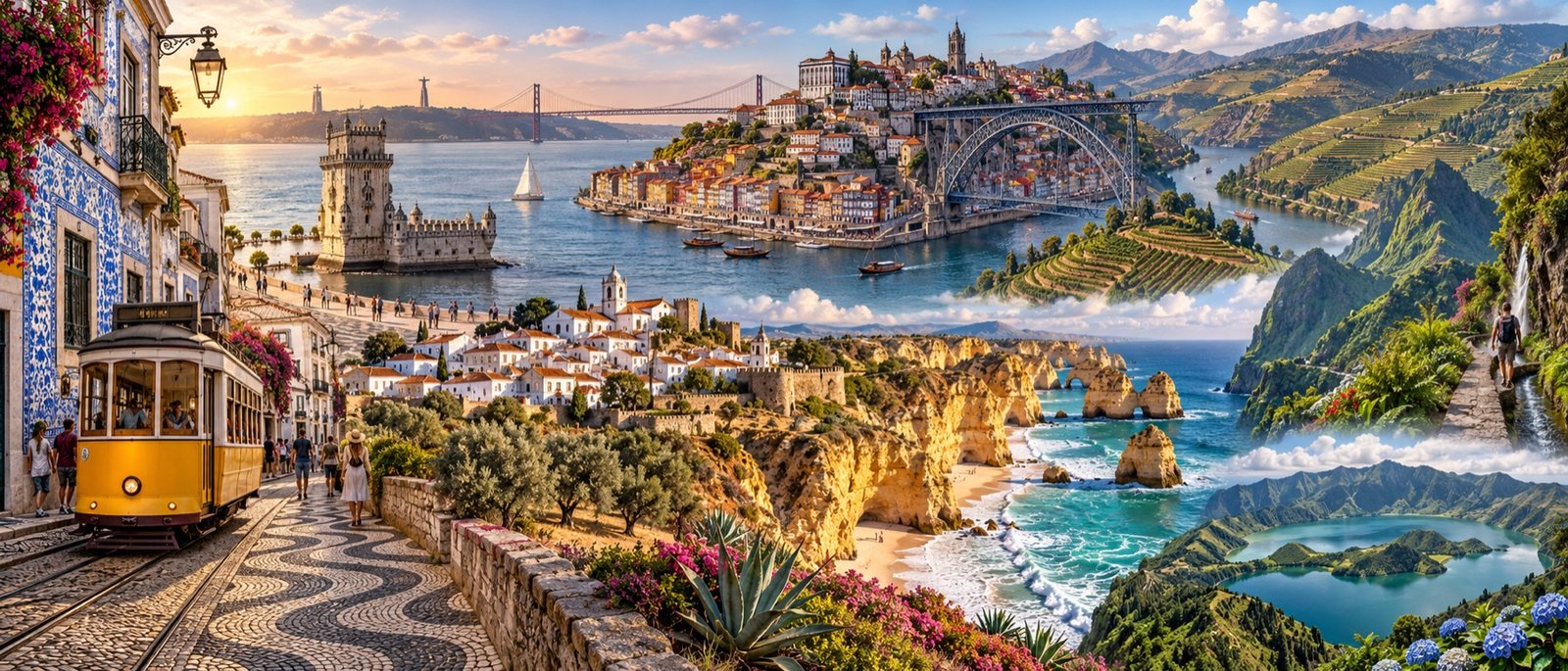
Portugal rewards a route that looks beyond a Lisbon weekend and an Algarve beach. Atlantic cities, wine landscapes, medieval towns, pilgrimage routes, surf coasts, volcanic islands and mountain paths belong to different regions with different transport and weather. These fifty experiences help first-time visitors plan a coherent mainland or island journey, recognise when a car adds value, compare popular passes honestly and leave room for weather, local life and unhurried meals.
Portugal at a glance
- Ideal first trip: 10–14 days for Lisbon, Porto and one slower region; add a separate island chapter rather than squeezing it into a mainland loop.
- Currency: euro. Cards are common, but carry a modest cash backup for small cafés, markets, tolls and rural services.
- Best planning principle: connect Lisbon, Coimbra and Porto by rail, then add one defined regional base instead of changing hotels every night.
- Transport: CP trains and intercity coaches cover major corridors; island, beach and rural routes require separate timetables and sometimes a car.
- Price check: verify live rail fares, monument slots, city cards, hotel taxes, tolls, ferries and cancellation rules before purchase.
Entry, visa and arrival planning
Use the Portuguese government, the competent consulate and the authority responsible for your passport and residence for Schengen entry rules. Passport, nationality, residence, trip purpose and duration determine visa or exemption requirements.
Lisbon and Porto are the principal mainland gateways. Faro supports the Algarve, while Madeira and the Azores require flights or limited sea connections. Compare an open-jaw itinerary with the complete cost of returning to the original airport.
When to go
Lisbon and Porto work year-round, while Atlantic surf, Douro harvest, Alentejo heat, Algarve beach demand, Madeira walking and Azores weather have distinct rhythms. Island and mountain plans always need a flexible day.
Holy Week, summer holidays, major football matches, Lisbon festivals, Porto’s São João and New Year events transform crowds and prices. Check the exact municipal and transport calendar before reserving non-refundable rooms.
Budget and places to stay
Build value, mid-range and premium versions with live refundable totals. A central hotel can save more than a cheap edge-of-city room when steep streets, late transport or parking are included.
Compare the property’s official total with a reputable platform and verify breakfast, local tax, air conditioning, lift access, parking, beach transport and cancellation. Historic buildings often have small rooms, stairs or street noise.
Fifty things to do in Portugal
1. Alfama at street level before the viewpoints
Why go: Lisbon. Lanes, fountains, churches and lived neighbourhood history explain Lisbon better than a single crowded miradouro.
How to do it: Use an official walking route, start early, keep doorways clear and choose one small museum or church for context.
Good for: History, photography and slow-city travellers
Know before you go: Steep polished paving, stairs and residential privacy require care.
2. São Jorge Castle with city geography
Why go: Lisbon. Fortifications and archaeological layers provide a useful orientation to the Tagus, Baixa and surrounding hills.
How to do it: Reserve through the official site in busy periods, arrive before heat and pair it only with nearby Alfama.
Good for: History, families and city-view travellers
Know before you go: Queues, uneven surfaces and exposed sun affect comfort.
3. Baixa and Praça do Comércio through earthquake history
Why go: Lisbon. The planned lower city reveals how Lisbon rebuilt after the 1755 disaster and reconnected commerce to the river.
How to do it: Follow a documented route from Rossio to the waterfront and add one interpretive museum rather than repeated shopping streets.
Good for: Architecture, urban history and accessible-route planners
Know before you go: Crowds, traffic and demonstrations can change pedestrian routes.
4. Jerónimos Monastery with Belém context
Why go: Lisbon. Manueline architecture, maritime history and memorial narratives require more than a façade photograph.
How to do it: Use the official timed system, verify church access separately and read critically about empire and navigation.
Good for: Architecture, history and first-time visitors
Know before you go: Long queues, closures and separate entries can disrupt a rushed Belém list.
5. Belém Tower from the river landscape
Why go: Lisbon. The tower’s scale, symbolism and position make sense as part of the Tagus defensive and ceremonial waterfront.
How to do it: Check whether the interior is open, visit the exterior in softer light and keep enough time for the return tram or train.
Good for: Architecture, river walks and photographers
Know before you go: Interior stairs are narrow and waterfront wind can be strong.
6. National Tile Museum for azulejo history
Why go: Lisbon. A focused collection explains technique, religious art, urban decoration and the reuse of tiles across centuries.
How to do it: Check current galleries and bus access, allow two hours and compare museum examples with buildings seen later.
Good for: Design, art and rainy-day travellers
Know before you go: The historic complex has varied levels; confirm step-free routes.
7. Gulbenkian collection and gardens
Why go: Lisbon. Art from several regions and a calm modern garden offer a valuable counterpoint to the historic centre.
How to do it: Choose the founder or modern collection according to current displays and leave time for the garden.
Good for: Art, design and quiet-city travellers
Know before you go: Renovation schedules and temporary closures require an official check.
8. Fado through a reputable small venue
Why go: Lisbon. Live voice and Portuguese guitar can provide cultural context when the programme is more than a tourist dinner package.
How to do it: Use a venue with a clear schedule, understand minimum spend and respect silence during songs.
Good for: Music, culture and evening travellers
Know before you go: Late hours, stairs and vague package inclusions need checking.
9. Tagus ferry for a working-city perspective
Why go: Lisbon and Almada. A regular ferry reveals the port, bridges and city hills without turning transport into an expensive cruise.
How to do it: Use the official ferry timetable, choose one south-bank walk and keep the last return visible.
Good for: Budget, photography and transit travellers
Know before you go: Wind, service changes and commuter peaks affect the trip.
10. Pena Palace with one timed Sintra plan
Why go: Sintra. Romantic architecture and a designed mountain landscape deserve a focused visit rather than a palace race.
How to do it: Reserve the official interior slot, allow uphill transfer time and combine with only one nearby site.
Good for: Architecture, gardens and first-time visitors
Know before you go: Fog, traffic, queues and steep paths can transform the day.
11. Moorish Castle for landscape and defence
Why go: Sintra. Walls and ridge-top positions explain the town’s strategic landscape beyond colourful palace imagery.
How to do it: Check weather, use grippy footwear and choose the extent of the wall walk according to ability.
Good for: History, hiking and panoramic-view travellers
Know before you go: Wind, rain, exposed drops and stairs can close or limit sections.
12. Quinta da Regaleira with symbolic context
Why go: Sintra. Gardens, tunnels and revivalist architecture are more useful when their symbolism is read critically rather than reduced to one well.
How to do it: Use the official entry, follow one directional garden route and avoid crowding narrow underground passages.
Good for: Gardens, architecture and families with older children
Know before you go: Dark, damp tunnels and stairs are not suitable for every visitor.
13. Cascais and Guincho without a rushed coastal checklist
Why go: Lisbon coast. A rail-connected town, Atlantic promenade and exposed surf coast offer different experiences on one corridor.
How to do it: Choose either a town-and-museum day or a beach-and-walk day, and use official beach conditions before swimming.
Good for: Coast, cycling and relaxed-city travellers
Know before you go: Strong wind, swell and seasonal bus gaps change beach plans.
14. Porto riverside before the crowds
Why go: Porto. Ribeira’s layered streets and working river context are clearest early, before terraces and tour groups dominate.
How to do it: Walk one bank at opening time, read the city’s mercantile history and climb only one planned route.
Good for: History, photography and first-time visitors
Know before you go: Steep lanes, wet paving and pickpocketing in crowds require attention.
15. Dom Luís I Bridge on the correct level
Why go: Porto and Vila Nova de Gaia. The two decks connect city, metro, river and port-lodge landscapes from different heights.
How to do it: Choose the level that matches mobility and weather, keep to pedestrian space and use the metro for the return if tired.
Good for: Architecture, views and budget travellers
Know before you go: Wind, heights, cyclists and tram movements require awareness.
16. São Bento Station and tile narratives
Why go: Porto. Historic tile panels turn a working station into an introduction to national and regional stories.
How to do it: Visit between commuter peaks, keep passages clear and compare the panels with a reliable historical source.
Good for: Art, rail and short-break travellers
Know before you go: It remains an active station, not a photo studio.
17. Palácio da Bolsa with guided interpretation
Why go: Porto. Nineteenth-century commercial rooms explain merchant power and the city’s international trade.
How to do it: Book the official language and time, arrive early and pair it with one nearby church or river walk.
Good for: Architecture, history and guided-tour travellers
Know before you go: Entry is generally by scheduled tour and ornate rooms can be crowded.
18. Serralves Museum, park and architecture
Why go: Porto. Contemporary exhibitions, Art Deco design and a large park create a full half-day beyond the old centre.
How to do it: Check which galleries and grounds are open, use bus or taxi time honestly and pace the park for weather.
Good for: Art, design, families and garden travellers
Know before you go: Temporary exhibitions vary, while the grounds involve distance and slopes.
19. Casa da Música through a concert or official tour
Why go: Porto. A major contemporary building becomes meaningful when its acoustics, public programme and urban setting are experienced.
How to do it: Choose a real performance or authorised tour and verify language, seating and late-entry rules.
Good for: Music, architecture and evening travellers
Know before you go: Events and rehearsals change tour access.
20. Port wine lodge with sober planning
Why go: Vila Nova de Gaia. A documented cellar visit can explain Douro geography, ageing and trade when brand marketing is kept in perspective.
How to do it: Book the exact tour, compare tasting inclusions and arrange walking, metro or taxi transport afterward.
Good for: Wine, history and food travellers
Know before you go: Alcohol, steep streets and warm cellars require pacing.
21. Foz do Douro by tram, bus or cycle path
Why go: Porto coast. The meeting of river and Atlantic adds beaches, forts and promenades to a city-heavy visit.
How to do it: Use modern transit when the heritage tram queue is long, check surf and choose one coastal direction.
Good for: Coast, families and sunset travellers
Know before you go: Large waves can overtop waterfront structures; respect barriers.
22. Douro Valley by rail with one focused stop
Why go: Douro region. River engineering, terraced vineyards and small towns form a cultural landscape best understood slowly.
How to do it: Use CP’s current timetable, choose Pinhão or another single base and prearrange any winery transfer.
Good for: Rail, landscape and wine travellers
Know before you go: Heat, limited local transport and train disruption punish tight day trips.
23. Douro winery with origin and labour context
Why go: Douro region. A good visit connects vineyard work, climate, fortification and appellation rules rather than offering unlimited samples.
How to do it: Select a producer with clear access and tasting details, reserve officially and never drive afterward.
Good for: Wine, agriculture and culinary travellers
Know before you go: Harvest operations, heat and steep ground change accessibility.
24. Guimarães historic centre and castle narrative
Why go: Minho. Medieval streets and national foundation stories provide a compact, rail-accessible history day.
How to do it: Use the official heritage route, choose the castle or palace as the principal interior and leave time for the lived town.
Good for: History, architecture and families
Know before you go: National myths need context, while stone surfaces can be slippery.
25. Braga sanctuaries and contemporary city
Why go: Minho. Religious architecture, stairways and a university city create more than a single monumental viewpoint.
How to do it: Choose Bom Jesus plus the centre, use the funicular or bus where helpful and respect services.
Good for: Faith, architecture and mixed-ability travellers
Know before you go: Stairs, heat and worship schedules shape access.
26. Peneda-Gerês National Park with local guidance
Why go: Northern Portugal. Granite mountains, forests, villages and water systems form Portugal’s only national park.
How to do it: Use official park information, choose one signed route and book a trained guide for remote or wildlife-focused days.
Good for: Hiking, nature and rural travellers
Know before you go: Wildfire, heat, fog, livestock and limited signal require conservative planning.
27. Viana do Castelo and the Lima coast
Why go: Minho coast. A historic port, craft traditions and hilltop setting offer a quieter northern coastal chapter.
How to do it: Arrive by rail, choose one museum or funicular visit and check coastal weather before extending the walk.
Good for: Architecture, craft and slow-travel visitors
Know before you go: Wind and seasonal opening times affect the hill and waterfront.
28. Coimbra University with an official timed visit
Why go: Coimbra. Library, ceremonial rooms and student traditions explain a city shaped by centuries of learning.
How to do it: Book the correct circuit, arrive before the slot and follow rules protecting books and active university spaces.
Good for: Books, history and education travellers
Know before you go: Steep streets, timed groups and restricted photography require preparation.
29. Coimbra old town beyond the university
Why go: Coimbra. Cathedrals, riverside parks and residential streets balance the famous hilltop institution.
How to do it: Walk downhill through one documented route, choose a fado or museum stop and avoid dragging luggage over steep paving.
Good for: History, music and rail-route travellers
Know before you go: Academic events and heat change crowd patterns.
30. Aveiro canals and lagoon without Venice comparisons
Why go: Central coast. Art Nouveau, salt, fishing history and the Ria de Aveiro deserve their own regional context.
How to do it: Use rail, choose a museum, salt-pan or lagoon experience and treat a boat ride as optional rather than essential.
Good for: Design, food and family travellers
Know before you go: Wind, rain and packaged day tours can limit depth.
31. Nazaré with official ocean respect
Why go: Silver Coast. Fishing traditions, the upper town and exceptional wave conditions explain why the coast attracts both residents and surfers.
How to do it: Use the funicular or bus, check maritime conditions and observe giant waves only from authorised safe areas.
Good for: Coast, culture and surf spectators
Know before you go: Unpredictable waves and cliff edges are life-threatening.
32. Óbidos before or after coach peaks
Why go: Central Portugal. Walls, book culture and a compact medieval plan are more rewarding when lanes are not treated as a theme park.
How to do it: Arrive early or stay overnight, choose one church or literary stop and keep wall walking optional.
Good for: History, books and couples
Know before you go: Unprotected walls, cobbles and festival crowds affect safety.
33. Batalha and Alcobaça through one monastic theme
Why go: Central Portugal. Two major monasteries reveal architecture, royal memory and religious institutions without needing every nearby landmark.
How to do it: Choose one as a deep visit or connect both with realistic bus or car timing, using official opening information.
Good for: Architecture, history and road-trip travellers
Know before you go: Large interiors, services and transport gaps require pacing.
34. Tomar Convent of Christ with Templar context
Why go: Central Portugal. Fortress, convent and changing architectural styles support a nuanced history beyond popular Templar mythology.
How to do it: Use the official route, allow several hours and verify hill access before combining with the town.
Good for: History, architecture and rail travellers
Know before you go: Stairs, exposed courtyards and complex circulation affect access.
35. Évora Roman, medieval and contemporary layers
Why go: Alentejo. Temple, cathedral, university streets and museums create a coherent regional capital rather than a quick ruins stop.
How to do it: Stay overnight, follow a shaded route and choose one major interior plus an evening meal.
Good for: History, food and slow-city travellers
Know before you go: Summer heat and limited midday opening make rushing unsafe.
36. Alentejo megaliths with a responsible guide
Why go: Alentejo. Prehistoric stone landscapes become meaningful through archaeology and land-use context rather than isolated photographs.
How to do it: Use an authorised guide or official route, stay on tracks and avoid climbing or touching protected stones.
Good for: Archaeology, landscape and small-group travellers
Know before you go: Heat, rough access and private land require preparation.
37. Monsaraz and Alqueva dark-sky country
Why go: Alentejo. A hill town, reservoir landscape and low-light night sky create a strong rural overnight.
How to do it: Stay locally, use an accredited astronomy provider and preserve dark adaptation with responsible lighting.
Good for: Astronomy, history and couples
Know before you go: Night driving, heat and limited transport make a planned base essential.
38. Marvão and Castelo de Vide as a border chapter
Why go: Upper Alentejo. Fortified heights, Jewish heritage and border geography offer a quieter alternative to headline cities.
How to do it: Use one base, choose a museum or guided heritage route and avoid attempting both towns plus a long drive in one afternoon.
Good for: History, road trips and landscape travellers
Know before you go: Narrow roads, wind and steep lanes need cautious driving and walking.
39. Alentejo food and wine with sober logistics
Why go: Alentejo. Bread, olive oil, cheese, pork traditions and wine connect agriculture with the region’s climate and labour.
How to do it: Reserve one producer or cooking experience, ask about origin and arrange a driver or overnight stay.
Good for: Food, wine and rural travellers
Know before you go: Alcohol, heat and long distances make spontaneous driving unsafe.
40. Ria Formosa by licensed boat or boardwalk
Why go: Algarve. Barrier islands, lagoons and bird habitat show an Algarve beyond resort beaches.
How to do it: Choose a licensed small-group operator or official trail, check tides and keep wildlife distance.
Good for: Birdlife, families and nature travellers
Know before you go: Heat, sun, wind and shallow-water schedules change routes.
41. Tavira as an eastern Algarve base
Why go: Eastern Algarve. Churches, river streets and ferry-linked beaches support a slower town-based stay.
How to do it: Check seasonal ferry times, choose one heritage interior and avoid fitting multiple islands into one day.
Good for: Couples, families and slow-travel visitors
Know before you go: Summer heat and final boats require conservative timing.
42. Lagos cliffs from legal paths and boats
Why go: Western Algarve. Sea caves, headlands and maritime history are impressive only when weather and access are respected.
How to do it: Use fenced trails or a licensed operator, check swell and never enter a cave on an unverified calm forecast.
Good for: Coast, kayaking and photography travellers
Know before you go: Rockfall, swell and cliff-edge shortcuts are serious hazards.
43. Sagres and Cape St Vincent with wind planning
Why go: Western Algarve. Headlands, fortifications and Atlantic navigation history provide a dramatic end-of-landscape day.
How to do it: Use a car or current bus timetable, carry layers and choose one interpretation stop before sunset.
Good for: History, road trips and coastal travellers
Know before you go: Wind, exposed cliffs and sparse late transport demand caution.
44. Monchique for a cooler inland Algarve
Why go: Algarve interior. Wooded hills, springs and small towns contrast with the beach strip and distribute spending inland.
How to do it: Check wildfire and road conditions, choose one marked walk or local food stop and return before dark.
Good for: Walking, food and rural travellers
Know before you go: Summer fire risk and narrow roads can close the plan.
45. Funchal market, old town and one garden
Why go: Madeira. A working capital, subtropical plants and Atlantic food culture provide the best island orientation.
How to do it: Choose one major garden, verify cable-car links and visit the market during genuine trading hours.
Good for: Gardens, food and first-time island visitors
Know before you go: Steep streets, cruise peaks and tropical heat affect pacing.
46. Madeira levada walk matched to ability
Why go: Madeira. Historic water channels cross forests and slopes, but routes vary enormously in exposure, tunnels and maintenance.
How to do it: Use official trail status, choose a route below maximum ability and hire a qualified guide when exposure or transport is complex.
Good for: Hiking, nature and active travellers
Know before you go: Closures, darkness, drops, waterfalls and flash weather can be dangerous.
47. Pico do Arieiro or a lower Madeira viewpoint
Why go: Madeira. High volcanic ridges provide extraordinary perspective when official access, cloud and wind cooperate.
How to do it: Check trail status and sunrise transport, carry layers and keep a lower forest or coastal alternative.
Good for: Mountain views and experienced walkers
Know before you go: High exposure and closures make social-media shortcuts unacceptable.
48. Sete Cidades viewpoints and crater landscape
Why go: São Miguel, Azores. Twin lakes, caldera walls and villages introduce the scale and weather of the archipelago.
How to do it: Check cloud webcams, use official viewpoints and preserve a flexible half-day for clearer conditions.
Good for: Landscape, road trips and first-time island visitors
Know before you go: Fog, rain and roadside parking create frequent hazards.
49. Furnas geothermal landscape and local meal
Why go: São Miguel, Azores. Steam, mineral water, gardens and earth-cooked food connect geology with community practice.
How to do it: Use authorised paths, choose one thermal facility and reserve any meal with clear ingredients and timing.
Good for: Geology, wellness and food travellers
Know before you go: Hot ground, sulphur, health suitability and weather require care.
50. Pico, Faial or Terceira as a second-island choice
Why go: Azores. Volcanic vineyards, whaling history, mountain landscapes and historic towns differ enough to justify a focused island chapter.
How to do it: Choose one island according to ferry or flight reliability, stay several nights and book weather-dependent activities flexibly.
Good for: Volcanology, culture and slow-island travellers
Know before you go: Inter-island disruption and rapidly changing weather punish same-day connections.
Food and drink worth planning around
Lisbon seafood and pastries, Porto tripe and sandwiches, Minho greens, Douro wine, Alentejo bread dishes, Algarve fish, Madeira espetada and Azorean dairy belong to different regions. Ask about allergens, portion size and catch or ingredient origin.
Markets and tascas have weekly closures, while famous pastry shops and waterfront restaurants can queue. Reserve only when needed, drink responsibly and plan the final train, metro or taxi before a wine tasting.
What to buy
For cork, ceramics, textiles, canned fish, olive oil, wine and embroidery, identify the maker and production location. Portuguese-style design or a rooster motif is not proof of domestic manufacture.
Use established sellers for antiques, jewellery and high-value goods, keep receipts and check customs restrictions. Never remove tiles, plants, shells, rocks or archaeological material from buildings or protected landscapes.
Getting around
Use CP and the exact metro, bus, ferry or island operator for current schedules and ticket rules. Discount rail fares can be train-specific; suburban cards, city passes and intercity tickets are separate products.
A car is unnecessary in Lisbon, Porto and Coimbra. Rent for a defined rural, Alentejo or coastal segment, and include electronic toll registration, fuel, parking, narrow streets, one-way drop fees and sober driving.
Easy access and family travel
Accessibility varies sharply across tiled hills, historic trams, castle stairs, boardwalks, boats and levada paths. Confirm step-free entrances, lift dimensions, gradients, accessible toilets and assistance with the exact operator.
Families and mixed-ability groups should agree on a short shared route and optional extension. Midday heat, cobbles, ocean exposure, ferry motion and long museum queues require realistic pacing.
Stay safe
Use IPMA weather and official civil-protection, beach, trail and maritime information. Heat, wildfire, Atlantic swell, fog, wind and flash flooding can close roads, walks, caves or swimming areas quickly.
Use normal city precautions around valuables and nightlife. Respect lifeguard flags, never turn your back on Atlantic waves and avoid cliff edges or unofficial viewpoints for photographs.
Mistakes to avoid
- Treating Sintra as a checklist of every palace in one day.
- Assuming Lisbon’s historic trams are the quickest transport at peak time.
- Driving into old-town streets without checking access and parking.
- Combining Madeira or the Azores with the mainland in too few days.
- Buying a city card before pricing the exact admissions and reservations.
- Swimming or cliff-walking without checking official ocean conditions.
- Treating port or wine tasting as compatible with driving.
- Trusting an old hotel, restaurant or attraction price as a guarantee.
Sample seven-day route
Use three nights Lisbon, one Coimbra and three Porto. Choose one Sintra day and one Douro or Guimarães day; do not add the Algarve or an island.
Sample ten-day route
Use four Lisbon, two central Portugal and four Porto or the Douro. An open-jaw flight reduces backtracking, while one flexible day protects the coastal or valley plan.
Sample fourteen-day route
Use four Lisbon, two central Portugal, four Porto and four in the Alentejo or Algarve. Treat Madeira or the Azores as an alternative four-to-seven-night chapter, not another rushed stop.
Portugal travel FAQ
How many days are enough for Portugal?
Seven days supports Lisbon, Coimbra and Porto. Ten to fourteen days is stronger for the Douro, Alentejo, Algarve or another slower region.
Do I need a car?
No for the Lisbon–Coimbra–Porto corridor. A car helps for selected rural, wine and coastal routes, but city parking and electronic tolls add complexity.
Is a Lisbon or Porto card worth it?
Only when the included transport zones and admissions match the exact itinerary. Timed reservations may still be required.
Should I add Madeira or the Azores?
Yes when you can give the islands several nights and preserve weather flexibility. They are not practical mainland day trips.
Official planning sources
- Visit Portugal official tourism portal
- Official destinations and regions
- Official getting-to-Portugal information
- Portuguese Communities visa information
- CP official rail planning
- IPMA official weather and warnings
- Portugal accessible tourism guidance
- UNESCO World Heritage state-party record for Portugal
- United Kingdom government travel advice for Portugal
- United States government travel advisory for Portugal
Disclosure: This independent editorial guide is informational, not a booking guarantee. No price, ranking, safety outcome, entry permission or availability is guaranteed. Recheck all time-sensitive details with the linked official source before purchase.