This guide uses official tourism, government and transport sources. Rules and prices can change, so check the linked official pages before booking.
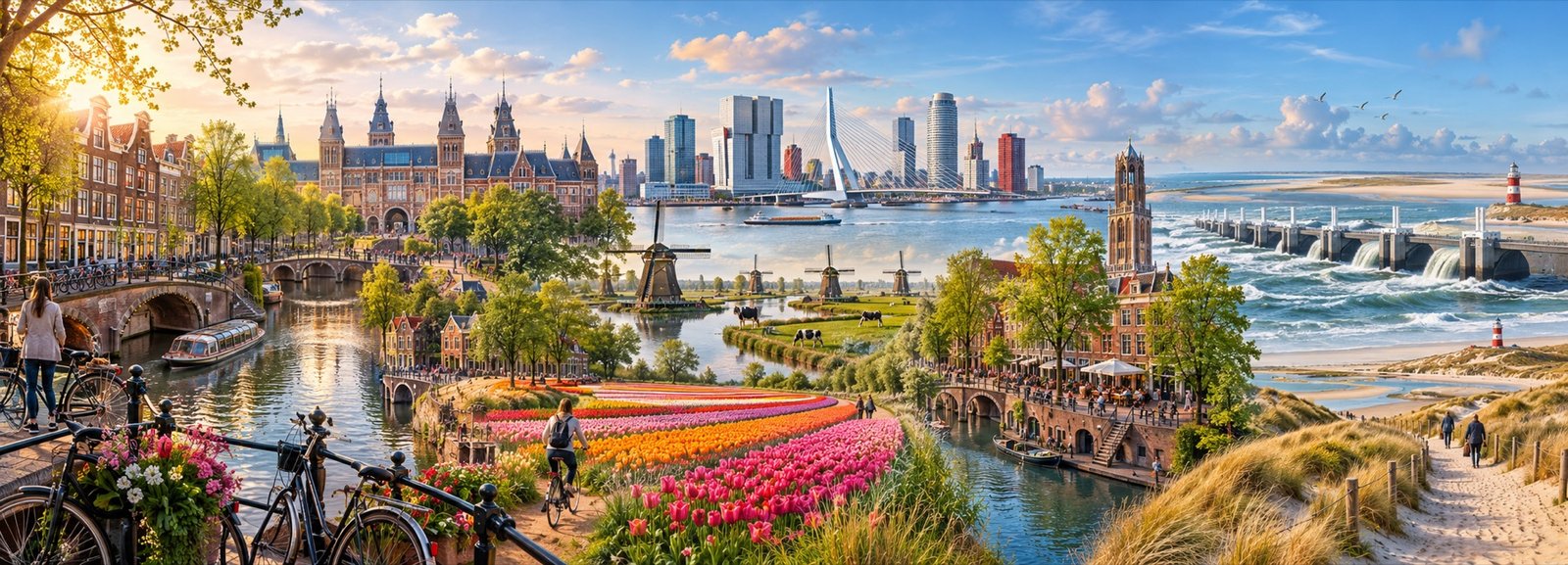
The Netherlands is compact but not a one-city destination. Amsterdam’s collections and canal plan, Rotterdam’s architecture, The Hague’s institutions, Utrecht’s layered waterways, Zeeland’s flood defences, eastern Hanseatic cities and the Wadden coast tell different stories. These fifty experiences help first-time visitors use the rail network intelligently, cycle only when competent, understand water management, respect residential neighbourhoods and compare famous seasonal attractions with year-round alternatives.
the Netherlands at a glance
- Ideal first trip: 8–12 days for Amsterdam, two other cities and one landscape or water-engineering region.
- Currency: euro. Contactless payment is common, but acceptance policies vary and a backup card is sensible.
- Best planning principle: use one or two rail bases and group day trips by corridor instead of moving hotels across short distances.
- Transport: NS trains link major cities; urban tram, metro, bus and regional operators require correct check-in and check-out.
- Price check: compare live rail fares, timed museums, city cards, hotel tax, bike rental and attraction reservations.
Entry, visa and arrival planning
Use the Government of the Netherlands, the competent embassy and the authority responsible for your passport and residence for Schengen entry rules. Nationality, residence, purpose and duration determine visa or exemption requirements.
Amsterdam Schiphol is the principal gateway, while Rotterdam The Hague, Eindhoven and well-connected foreign airports can support alternatives. Rail disruption or airport construction makes a realistic departure buffer essential.
When to go
Museums and cities work year-round. Tulips are highly seasonal, beach weather is variable and the Wadden coast can be cold or windy even in summer. Autumn and winter require rain and wind planning rather than cancellation by default.
King’s Day, major football matches, conferences, Pride, school holidays and flower season transform capacity and prices. Check the exact city calendar before booking.
Budget and places to stay
Build value, mid-range and premium versions with live refundable totals. A rail-connected base outside central Amsterdam can save money only when late transport and daily fares still work.
Compare the official property total with a reputable platform and verify tax, breakfast, air conditioning, lift access, street noise, bike storage and cancellation.
Fifty things to do in the Netherlands
1. Rijksmuseum through one collection question
Why go: Amsterdam. Dutch art, global trade, design and national memory become clearer when the museum is not treated as a greatest-hits race.
How to do it: Reserve officially, choose one floor or period first and allow a seated break before a second theme.
Good for: Art, history and first-time visitors
Know before you go: Crowds, gallery changes and a vast plan require pacing.
2. Van Gogh Museum with chronological context
Why go: Amsterdam. Works, letters and changing technique provide a more useful story than a quick search for famous canvases.
How to do it: Book the official timed ticket, read the sequence and keep another major museum for a different day.
Good for: Art, biography and museum travellers
Know before you go: Slots sell out and busy rooms may affect sensory comfort.
3. Anne Frank House with preparation and reflection
Why go: Amsterdam. The preserved hiding place and documented family history require quiet, evidence-led attention.
How to do it: Use only the official timed ticket, read introductory material and leave unscheduled time afterward.
Good for: Modern history, remembrance and education travellers
Know before you go: Narrow stairs, emotional content and strict admission rules require preparation.
4. Canal belt on foot before a boat
Why go: Amsterdam. Bridges, warehouses, house widths and water management explain the UNESCO city plan at street level.
How to do it: Walk one coherent ring, use marked crossings and take a licensed boat only if commentary and access suit the group.
Good for: Architecture, photography and first-time visitors
Know before you go: Bikes, tram tracks and crowded bridge edges require constant awareness.
5. Jordaan beyond its busiest shopping lanes
Why go: Amsterdam. Courtyards, workers’ housing and community institutions reveal a district shaped by change and tourism pressure.
How to do it: Use a documented daytime walk, keep residential doorways clear and choose one local museum or café.
Good for: Urban history, food and slow-city travellers
Know before you go: Private courtyards and homes are not public attractions.
6. Museum of Amsterdam history in its current venue
Why go: Amsterdam. A city-history collection connects migration, protest, planning and everyday life beyond postcard canals.
How to do it: Check the museum’s current location and galleries, then connect one theme to a neighbourhood walk.
Good for: Civics, families and context-seeking travellers
Know before you go: Temporary premises or renovation can change the visit.
7. Rembrandt House with workshop context
Why go: Amsterdam. A reconstructed working environment explains printmaking, collecting and the economics of an artist’s household.
How to do it: Reserve in busy periods, attend a demonstration if offered and compare the house with finished works elsewhere.
Good for: Art, printmaking and families
Know before you go: Historic stairs and compact rooms limit some visitors.
8. Portuguese Synagogue and Jewish Cultural Quarter
Why go: Amsterdam. Religious, migration and community history deepen understanding of the city before and after the Holocaust.
How to do it: Use official combined information, check worship and security arrangements and behave quietly.
Good for: Faith, history and educational travellers
Know before you go: Opening varies with holidays and security procedures.
9. NEMO or Micropia for a family science day
Why go: Amsterdam. Hands-on science or the microbial world offers a substantial alternative to adult-focused art museums.
How to do it: Choose one institution, verify age fit and demonstration times and avoid adding another large museum.
Good for: Families, science and rainy-day travellers
Know before you go: School holidays create noise and ticket demand.
10. Amsterdam-Noord by public ferry
Why go: Amsterdam. Free working ferries connect contemporary architecture, former industry and neighbourhoods across the IJ.
How to do it: Use the correct ferry, choose one destination and keep cycle lanes clear after disembarking.
Good for: Architecture, budget and urban travellers
Know before you go: Ferries and bike flows are transport, not sightseeing platforms.
11. Vondelpark and neighbourhood recovery time
Why go: Amsterdam. A large public landscape shows daily recreation and provides a needed break from dense central streets.
How to do it: Walk or cycle only within ability, observe lane markings and pair the park with one nearby district.
Good for: Families, cycling and relaxed travellers
Know before you go: Fast cyclists, events and wet paths require awareness.
12. Amsterdam by bicycle only after a skills check
Why go: Amsterdam. Cycling reveals the transport system when visitors understand lanes, signals, parking and local speed.
How to do it: Use a guided introduction or quiet practice area, rent a correctly sized bike and follow every signal.
Good for: Confident cyclists and transport enthusiasts
Know before you go: Inexperienced riders can endanger themselves and commuters; walking and transit are valid alternatives.
13. Haarlem museums and historic centre
Why go: Haarlem. Frans Hals, civic history, church scale and compact streets create an easy rail day without copying Amsterdam.
How to do it: Choose one museum, check church events and walk from the station through quieter lanes.
Good for: Art, architecture and rail travellers
Know before you go: Market days and events alter access around the main square.
14. Keukenhof or bulb fields with season truth
Why go: South Holland. Spring flower landscapes are agricultural and highly seasonal rather than a year-round Dutch backdrop.
How to do it: Check official opening dates, use public transport or reserved parking and never enter private fields.
Good for: Gardens, photography and spring travellers
Know before you go: Peak crowds, traffic and fragile crops require strict boundaries.
15. Leiden canals, university and museum choice
Why go: Leiden. A historic university city links science, global collections, pilgrimage history and compact waterways.
How to do it: Choose Naturalis, antiquities or another collection, then follow one city route from the station.
Good for: Science, history and family travellers
Know before you go: Large museums need half a day and separate tickets.
16. The Hague civic and international institutions
Why go: The Hague. Parliamentary, royal and international-law landscapes explain a city often reduced to one painting museum.
How to do it: Check security closures around the Binnenhof, choose one institution and keep demonstrations or official business unobstructed.
Good for: Civics, law and architecture travellers
Know before you go: Renovation and security can reroute central walks.
17. Mauritshuis with a focused Dutch-art visit
Why go: The Hague. A compact collection rewards close looking at technique, patronage and conservation.
How to do it: Reserve in peak periods, select a small set of works and read provenance information critically.
Good for: Art, history and short-break travellers
Know before you go: Small galleries can feel crowded.
18. Peace Palace through its visitor programme
Why go: The Hague. International courts, arbitration and legal ideals gain context beyond the exterior gates.
How to do it: Use official visitor information, book any tour or centre access and respect active institutional security.
Good for: Law, diplomacy and civic travellers
Know before you go: Tours are limited and court schedules can change access.
19. Scheveningen coast beyond the pier
Why go: The Hague coast. Dunes, fishing history, sea conditions and urban beach culture create a different city edge.
How to do it: Use tram transport, check lifeguard and weather information and walk the quieter dune or harbour side.
Good for: Coast, families and accessible-route planners
Know before you go: North Sea wind, cold water and currents require caution.
20. Delft old town and ceramics with origin checks
Why go: Delft. Canals, churches, engineering history and ceramic production make a coherent rail day.
How to do it: Choose one church or museum and visit a documented maker rather than buying any blue-and-white souvenir.
Good for: Craft, architecture and history travellers
Know before you go: Historic workshops and towers may have stairs.
21. Rotterdam architecture from station to river
Why go: Rotterdam. Postwar rebuilding, experimental housing and towers reveal deliberate urban change after destruction.
How to do it: Follow an official architecture route, choose one building interior and use tram or metro between distant sections.
Good for: Architecture, design and urban travellers
Know before you go: Construction and traffic make improvised crossings unsafe.
22. Depot Boijmans Van Beuningen or current art venue
Why go: Rotterdam. Visible storage and contemporary presentation raise questions about collections, conservation and public access.
How to do it: Check which galleries and roof areas are open, reserve if required and pair with Museumpark.
Good for: Art, design and behind-the-scenes travellers
Know before you go: The main museum’s status and exhibitions change during renovation.
23. Markthal and food migration without overclaiming
Why go: Rotterdam. A dramatic building and diverse stalls show contemporary city food culture, but not every product is local.
How to do it: Visit outside meal rush, compare prices and choose a producer or dish with clear origin.
Good for: Food, architecture and family travellers
Know before you go: Crowds and slippery floors require care.
24. Rotterdam port with an authorised harbour tour
Why go: Rotterdam. Europe’s major port becomes legible through logistics, energy transition and immense working infrastructure.
How to do it: Use an official visitor centre or licensed tour, verify language and weather and obey all restricted zones.
Good for: Industry, engineering and families
Know before you go: The port is operational, distant and security-controlled.
25. Kinderdijk by waterbus, bike or transit
Why go: South Holland. Historic windmills and polders explain coordinated water management in a living landscape.
How to do it: Use the official site, choose one arrival mode and stay on paths without entering residents’ space.
Good for: Engineering, landscape and family travellers
Know before you go: Wind, rain, bike traffic and peak groups affect the narrow route.
26. Utrecht wharf cellars and canal levels
Why go: Utrecht. Two-level canals, medieval streets and contemporary rail-city life make a distinctive urban system.
How to do it: Walk one canal loop, choose the Dom or Centraal Museum and keep wharves clear for businesses.
Good for: Architecture, rail and city-break travellers
Know before you go: Stairs to wharves and construction around the centre affect access.
27. Dom Tower with timed climbing or ground-level history
Why go: Utrecht. The separated tower, cathedral and storm history provide a clear urban landmark with several accessibility options.
How to do it: Book the official climb if suitable or use the visitor centre and square for a step-free interpretation.
Good for: History, views and families with older children
Know before you go: Many steps and weather exposure make the climb demanding.
28. Rietveld Schröder House by official tour
Why go: Utrecht. A compact De Stijl house reveals radical spatial ideas only when visited with controlled interpretation.
How to do it: Reserve the official timed tour, arrive early and follow conservation rules.
Good for: Architecture, design and specialist travellers
Know before you go: Capacity is tiny and the historic interior is not fully accessible.
29. Gouda beyond a staged cheese-market hour
Why go: Gouda. Stained glass, town history and regional food production offer more than a seasonal performance.
How to do it: Check the market calendar, choose the church or museum and buy cheese from a seller with clear provenance.
Good for: Food, history and rail travellers
Know before you go: Market crowds and event dates can dominate the square.
30. Muiderslot with castle and water-defence context
Why go: North Holland. A restored castle gains meaning through trade routes, defence and the wider Dutch Waterline.
How to do it: Use official transport guidance, reserve family activities and allow time for grounds and exhibitions.
Good for: Castles, families and history travellers
Know before you go: Bus links and historic stairs need checking.
31. Zaanse Schans with working-village respect
Why go: North Holland. Windmills, industrial craft and wooden architecture can explain regional production when tourism is handled critically.
How to do it: Arrive by train or bus, choose one paid mill or museum and keep private houses and paths unobstructed.
Good for: Industry, craft and family travellers
Know before you go: Coach peaks and commercial displays can overwhelm context.
32. Waterland villages by bus, foot or bike
Why go: North Holland. Dykes, wooden houses and former fishing communities reveal landscapes shaped by water near Amsterdam.
How to do it: Choose one or two villages, use signed cycling routes only if confident and support local businesses quietly.
Good for: Villages, cycling and slow-travel visitors
Know before you go: Narrow dykes, wind and resident privacy require care.
33. Afsluitdijk and Wadden engineering story
Why go: North Holland and Friesland. A major closure dam connects flood protection, transport and ecological adaptation at national scale.
How to do it: Use the official visitor or transport information, stop only in authorised areas and combine with one Friesland base.
Good for: Engineering, road trips and landscape travellers
Know before you go: Construction, wind and high-speed roads make informal stops unsafe.
34. Delta Works through Neeltje Jans or an official site
Why go: Zeeland. Storm-surge barriers demonstrate the response to the 1953 flood and changing sea risk.
How to do it: Choose one visitor centre or barrier, check operation and transport and read both engineering and ecological impacts.
Good for: Engineering, families and climate travellers
Know before you go: Sites are widely separated and exposed to weather.
35. Zeeland beaches and flood-memory route
Why go: Zeeland. Dunes, estuaries, villages and memorial landscapes add cultural depth to a coastal stay.
How to do it: Use official beach flags, choose one island or peninsula and visit a flood museum or local heritage site.
Good for: Coast, history and family travellers
Know before you go: Tides, wind and long road distances require planning.
36. Biesbosch wetlands with a licensed route
Why go: North Brabant and South Holland. Freshwater tides, willow landscapes and wildlife show a less familiar water system.
How to do it: Use a park centre, licensed boat or marked trail and keep distance from nesting areas.
Good for: Birdlife, paddling and nature travellers
Know before you go: Fog, cold water and changing channels require navigation skills.
37. Hoge Veluwe by bike and museum
Why go: Gelderland. Forest, heath, dunes and the Kröller-Müller collection create an unusual nature-and-art day.
How to do it: Use the official entrances, understand bike availability and choose either a long ride or a long museum visit.
Good for: Art, cycling and family travellers
Know before you go: Distances, heat and wildlife closures make overplanning tiring.
38. Arnhem airborne history with remembrance
Why go: Gelderland. Museums, cemeteries and the Rhine landscape explain the 1944 battle beyond simplified film narratives.
How to do it: Use official museums and memorial routes, behave quietly and avoid casual posing at graves.
Good for: Military history, remembrance and education travellers
Know before you go: Content is distressing and sites are dispersed.
39. Nijmegen Roman and river-city layers
Why go: Gelderland. Roman archaeology, wartime history and a living riverfront show one of the country’s oldest urban centres.
How to do it: Choose one museum or heritage route and walk the Waal waterfront according to weather.
Good for: Archaeology, history and rail travellers
Know before you go: Major walking events and high water change access.
40. Den Bosch architecture and Brabant food
Why go: North Brabant. A medieval cathedral, waterways and regional culinary culture make a strong compact city break.
How to do it: Choose the cathedral or a licensed canal tour, verify accessibility and reserve only one substantial meal stop.
Good for: Architecture, food and couples
Know before you go: Boat clearances and historic steps limit some visitors.
41. Eindhoven design and industrial heritage
Why go: North Brabant. Former manufacturing sites, contemporary design and technology culture broaden the Dutch city narrative.
How to do it: Check current exhibitions, choose one design district and use buses or bikes only with route awareness.
Good for: Design, technology and urban travellers
Know before you go: Festival periods transform access and accommodation.
42. Maastricht Roman, religious and European layers
Why go: Limburg. A border city combines archaeology, churches, fortifications and a distinct regional identity.
How to do it: Stay overnight, choose one underground or museum experience and use the station-to-centre walk as orientation.
Good for: History, food and cross-border travellers
Know before you go: Caves or tunnels need official tours and may not suit all visitors.
43. South Limburg hills by rail and marked walk
Why go: Limburg. Rolling terrain, villages and cross-border culture challenge the stereotype of a uniformly flat country.
How to do it: Base near a station, use signed routes and check weather and gradients before renting a bike.
Good for: Walking, cycling and rural travellers
Know before you go: Steep roads and fast local traffic demand appropriate ability.
44. Deventer or Zwolle for a Hanseatic city day
Why go: Overijssel. Warehouses, river trade and medieval street plans reveal the eastern Netherlands’ commercial networks.
How to do it: Choose one city, follow an official Hanseatic route and pair it with a regional museum or riverside walk.
Good for: History, architecture and rail travellers
Know before you go: Flood levels and event weekends can alter waterfront access.
45. Giethoorn without blocking village life
Why go: Overijssel. Canals, footbridges and peat history are best understood beyond crowded rental-boat circuits.
How to do it: Arrive early, walk a signed route or rent from a responsible operator and keep private bridges clear.
Good for: Families, waterways and rural travellers
Know before you go: Boat congestion and shallow-water rules require patience.
46. Groningen city and museum architecture
Why go: Groningen. A young university city, bold museum and cycling culture provide a lively northern base.
How to do it: Arrive by train, choose one museum or tower and use walking rather than copying local cycling speed.
Good for: Design, students and city-break travellers
Know before you go: Weekend nightlife and bike traffic affect central streets.
47. Friesland lakes and Leeuwarden culture
Why go: Friesland. Language, water sports, historic towns and regional museums form a distinct northern identity.
How to do it: Base in Leeuwarden or one lake town, check sailing conditions and use regional rail or bus routes realistically.
Good for: Culture, boating and slow-travel visitors
Know before you go: Wind, water safety and sparse evening transport matter.
48. Texel as one Wadden island chapter
Why go: North Holland Wadden. Dunes, tidal flats, birdlife and villages reward several nights rather than a rushed ferry loop.
How to do it: Check ferry, bus and bike logistics, use marked nature routes and respect seasonal closures.
Good for: Nature, cycling and family travellers
Know before you go: Wind, rain and nesting restrictions can change plans.
49. Wadden mudflat experience with a certified guide
Why go: Wadden Sea. Intertidal ecology and moving channels are extraordinary but unsafe without expert timing.
How to do it: Book a certified guide, follow clothing instructions and never attempt an independent crossing.
Good for: Nature, geology and active travellers
Know before you go: Tides, cold, mud and fog can become life-threatening.
50. Dutch rail network as the itinerary backbone
Why go: Across the Netherlands. Frequent trains make several cities practical without hotel changes when check-in rules and operators are understood.
How to do it: Use the NS planner, check in and out correctly, verify supplements and recheck engineering work before departure.
Good for: Car-free, multi-city and accessibility-conscious travellers
Know before you go: Changing operators, gate rules and disruptions can affect tight connections.
Food and drink worth planning around
Cheese, herring, Indonesian-Dutch cooking, Surinamese food, pastries, regional beer and Limburg or Brabant dishes reflect trade and migration as well as local agriculture. Ask about allergens and origin.
Markets have specific days and popular food halls can be crowded. Drink responsibly, respect residential nightlife rules and never cycle after alcohol.
What to buy
For ceramics, cheese, textiles, design, prints and food, identify the maker and place of production. Delft-style blue decoration or a windmill motif is not proof of Dutch manufacture.
Use established sellers for art, antiques and high-value goods, keep receipts and check export rules. Never remove tiles, plants or material from heritage buildings, dunes or tidal landscapes.
Getting around
Use the NS planner and exact urban or regional operator for live routes. Contactless check-in is convenient, but every traveller needs a valid method and must use the same card or device to check out.
Driving is unnecessary for the principal cities. Rent only for a defined rural segment and include parking, environmental zones, narrow dykes and priority rules for bikes and trams.
Easy access and family travel
Modern rail is generally strong, but canal houses, historic towers, boats, cobbles and narrow bridges vary. Confirm step-free entrances, platform assistance, lift dimensions and accessible toilets with the exact operator.
Families and mixed-ability groups should plan a shorter shared route with optional extensions. Wind, rain, bike traffic and long museum standing time affect comfort.
Stay safe
Use KNMI weather and official water, beach and park information. Wind, lightning, heat, cold water, high river levels and coastal tides can alter routes quickly.
Keep out of cycle lanes, cross tram tracks at a safe angle and use normal city precautions around valuables and nightlife. Never enter tidal flats without a qualified guide.
Mistakes to avoid
- Spending the whole trip in central Amsterdam.
- Walking or standing in cycle lanes.
- Renting a bike before understanding signals and local speed.
- Expecting tulip fields or Keukenhof outside the official season.
- Buying a city card before pricing exact admissions.
- Forgetting to check out or switching payment devices.
- Treating working villages and homes as open-air sets.
- Trusting an old hotel, museum or rail price as a guarantee.
Sample seven-day route
Use four nights Amsterdam and three Utrecht or Rotterdam, with Haarlem, Leiden, The Hague or Delft as a single rail day according to interests.
Sample ten-day route
Use four Amsterdam, three Rotterdam or The Hague and three Utrecht or another regional base, adding one water-engineering or nature day.
Sample fourteen-day route
Use five Amsterdam and north Holland, four Randstad cities, three eastern or southern cities and two Wadden or Zeeland nights.
the Netherlands travel FAQ
How many days are enough for the Netherlands?
Seven days supports Amsterdam and several rail day trips. Ten to fourteen days is stronger for regional cities, water engineering and the Wadden coast.
Do I need a car?
No for the major cities and most classic day trips. A car helps for selected rural routes but parking and bike priority add complexity.
Should every visitor rent a bike?
No. Only confident riders who understand Dutch lane and signal rules should cycle in busy cities; walking and public transport are excellent.
How do I use Dutch trains?
Plan with NS, buy a valid ticket or use a supported contactless method, and check in and out with the same card or device.
Official planning sources
- Netherlands official tourism portal
- Official regional tourism contacts
- Government of the Netherlands visa information
- NS official train planning
- NS how to travel by train
- NS accessibility and simple-language guidance
- KNMI official weather service
- UNESCO World Heritage state-party record for the Netherlands
- United Kingdom government travel advice for the Netherlands
- United States government travel advisory for the Netherlands
Disclosure: This independent editorial guide is informational, not a booking guarantee. No price, ranking, safety outcome, entry permission or availability is guaranteed. Recheck all time-sensitive details with the linked official source before purchase.