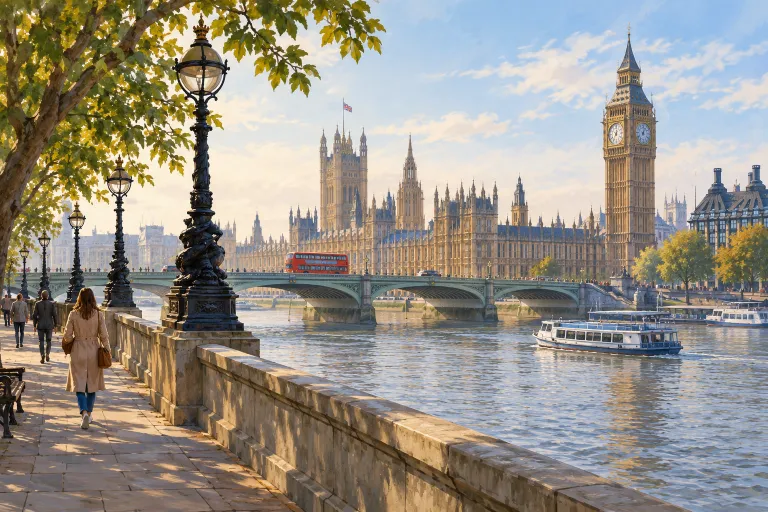
London in 5 days: a first visit without the rush
Plan by neighbourhood and river section. You will spend more time enjoying London and less time changing trains for a photo.
Quick answer: Use one main area each day: Westminster, the Tower area, Bloomsbury, Greenwich, and a flexible market or museum day. Five days let you see a lot, but you do not need to buy five days of attraction tickets.
| Day | Main area | Simple plan | Booking check |
|---|---|---|---|
| 1 | Westminster and South Bank | See the river, Parliament area and nearby streets; choose one paid visit at most. | Westminster Abbey sightseeing hours can change with services. |
| 2 | Tower and City | Tour the Tower if history interests you, then walk the river area. | Check Tower of London official tickets and current hours. |
| 3 | Bloomsbury | British Museum or another museum, then a slower neighbourhood afternoon. | General British Museum entry is free; check current timed-entry advice. |
| 4 | Greenwich | Take rail or river transport, explore one or two sites, and return without a deadline. | Compare transport route and any admission you want. |
| 5 | Your choice | Pick a market, park, gallery or theatre based on weather and energy. | Only reserve a show or timed attraction you truly want. |
Browse walking shoes ↗Browse day bags ↗
Choose your priorities before booking
Write down the two places that would make the trip feel worthwhile. They might be the Tower, a show, a football stadium, a free museum or simply a walk beside the Thames. Put those first. Then fit nearby stops around them. London can fill weeks, so a long list is a poor measure of whether your first visit went well.
Count actual usable days. Arrival evening is for reaching your hotel, eating and learning the immediate area. An early departure day is mostly transport. If you have only three full days, use Days 1 to 3 in the table and keep Greenwich or the market day for a longer visit. If you have a child or a slower walking pace, leave one afternoon almost empty.
Day 1: Westminster and South Bank
Start around Westminster and let the river guide the walk. You can see major exteriors without paying entry, which makes this a gentle first day. If you want to tour Westminster Abbey, check its official opening and ticket page for your exact day. Sightseeing times vary because the Abbey is a working church. Attending a service and taking a sightseeing tour are different activities; do not treat one as a free version of the other.
Cross toward South Bank when you are ready. Stop for a meal or a seat rather than walking the entire river route in one push. Keep one indoor option for rain. If you arrive tired, simply enjoy the riverside and save the paid visit for another day. That is a better choice than missing an expensive entry time because the flight, train or hotel check-in took longer than expected.
Day 2: Tower area and the City
History lovers can give the Tower of London a substantial part of the day. Read the official Tower ticket page for current admission, concessions and any access details that matter to you. Compare the final cost for your group rather than assuming a city pass is automatically cheaper. If the Tower does not appeal to you, use the same day for a slower City and riverside walk.
Keep the afternoon local. Crossing London to squeeze in another big museum makes this day tiring, especially with children. A nearby café, bridge view or small stop is enough. At the end of the day, use the route planner for the return journey; a station entrance that looks close on a map may lead to a long walk underground.
Day 3: one museum and room to think
The British Museum visitor page says general entry is free and recommends a free advance ticket for useful visit updates and priority entry at busy times. Special exhibitions can have separate tickets. Choose a few rooms rather than trying to see the whole collection. Decide in advance what interests you, then leave while you still have energy for the rest of the day.
After the museum, stay around Bloomsbury or choose a nearby park, bookshop or meal. If you would rather see art, science or another subject, swap museums. The key is one main indoor activity with an easy afternoon, not a race through several collections. A rainy day may be a good day for this section; check opening times before swapping your calendar.
Day 4: Greenwich as a different kind of day
Greenwich gives you a change of pace from the busiest central sights. Choose rail or river travel after comparing cost, travel time and weather. A river ride is an experience; rail may be faster or simpler for some routes. Decide which parts of Greenwich you want to enter before buying tickets. It is fine to spend the day walking, eating and enjoying the area without paying for every attraction.
Leave extra time to get home. You may be tired after four days of sightseeing, and a flexible return prevents the day from turning stressful. If your stay is short or weather is poor, swap this day for a closer neighbourhood. No single outer-area trip is required for a successful London visit.
Day 5: build around your interests
Use the last full day for what you enjoyed most. A market can be fun, but check its actual trading days and whether the shops you want are open. A theatre show needs a ticket and enough travel time from dinner; a park needs suitable weather. If you are travelling with children, choose one activity they can enjoy rather than another long sequence of adult landmarks.
This flexible day is also a buffer if earlier weather changed your plan. If the Tower or museum day slipped, use this slot. Keep the evening easy if you depart early the next morning. Packing and reaching the airport calmly are part of the trip, not chores to squeeze into midnight.
Paying for transport without confusion
Transport for London explains fares and daily caps. For many visitors, contactless payment or Oyster is simpler than buying a paper ticket each time. Use the same card or same device when touching in and out, or the fare cap may not combine journeys as expected. On the Tube, rail and DLR, follow the readers at the start and end of a journey. On a bus, follow the bus-specific touch rule. Check the operator’s current guidance before you travel.
Airport travel needs its own comparison. Heathrow, Gatwick, Stansted, Luton and London City have different routes and operators. Do not buy a central-London pass assuming it covers every airport train. Check your exact airport, terminal, luggage and arrival time. A low advertised fare is not useful if the route adds a long transfer or you miss the last service.
Weekend engineering work can change journeys. Check the live TfL route planner the night before and again on the day. If you need step-free travel, use the operator’s accessibility tools for the exact stations rather than assuming every Tube stop has a lift. Allow more time at busy interchanges.
What will this trip really cost?
Make a simple list: accommodation including taxes, airport transfer, local rides, admissions, meals and any theatre or event ticket. Add a small reserve for a taxi, altered route or bad weather. Compare attraction-pass prices against the sights you will actually enter, not a brochure’s maximum saving. A free museum plus outdoor walks may make an expensive pass poor value for your group.
Food costs can climb around major tourist streets. Pick one meal you care about and keep others straightforward. A supermarket lunch or casual café can be a welcome break. Check service charges and the final bill before comparing restaurants. For families, confirm whether child tickets, beds and breakfast are included in your actual booking.
Comfort, safety and accessibility
Wear shoes you have already used for long walks. Carry a small weather layer and keep tickets, phone power and essential medicine accessible. Do not leave your bag unattended, and follow venue security rules. Check step-free routes, accessible entrances, toilets and seating with each venue before purchase. London’s attractions differ greatly in layout; a general accessibility label may not answer your needs.
If you are visiting with children, choose one anchor activity per day and plan a nearby park or rest stop. A museum can be fascinating for a short focused visit and miserable as an all-day obligation. If anyone in your group is overwhelmed, shorten the day. You can still have a memorable trip.
Common questions
Is five days enough for a first London trip?
Yes for a useful first visit, if you choose areas rather than trying to cover every attraction. Three full days can still work with a shorter route.
Is the British Museum free?
General admission is free according to its official visitor page. A free timed ticket is recommended, and special exhibitions may cost extra.
Should I buy a London attraction pass?
List the paid sights you will truly enter, then compare their official checkout totals with the pass terms. If you prefer free museums and walks, a pass may add cost rather than save it.
Can I use one bank card for several people on TfL?
Check TfL’s current payment rules for your group. Each traveller generally needs their own payment method or valid ticket; do not assume one tap covers everyone.
For another city break, compare our Paris, Rome and Amsterdam plans.
Leave a Reply