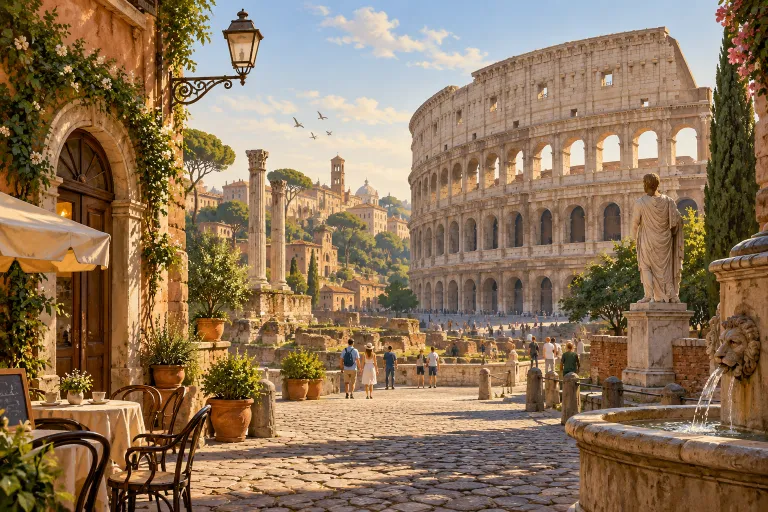
Rome in three manageable days
First visit? Keep ancient Rome, the historic centre and the Vatican area on separate days. That gives you time for security lines, cobbled streets, water breaks and the places you did not expect to love.
Updated 14 October 2026. Check current tickets, opening times and transport rules at the official links before you pay.
| Day | Core route | Book first | Easy extra |
|---|---|---|---|
| 1 | Colosseum, Roman Forum and Palatine area | Colosseum entry time | Short evening walk near your hotel |
| 2 | Pantheon area, Piazza Navona and nearby lanes | Only any paid site you choose | Trastevere after a rest |
| 3 | Vatican Museums or St Peter’s Basilica | Museum ticket if visiting | River walk or a park |
Comfortable shoes and a refillable bottle may matter more than extra gadgets. Compare fit, capacity and return rules if you need either.
As an Amazon Associate I earn from qualifying purchases.
Browse walking shoes on Amazon.com ↗ · Browse reusable water bottles on Amazon.com ↗
These are US-store searches. Visitors elsewhere can compare local retailers; a search does not confirm stock or suitability.
Simple rule: One demanding ticketed visit per day is enough. Keep a nearby free walk as the backup if the weather, queues or your energy change.
Decide your dates and base before buying tickets
Three full days means three days after you have reached your hotel, not an arrival afternoon and two mornings. If you have less time, choose the two areas you care about most. The Colosseum and Vatican Museums are both large visits. Putting them back to back on the same day can turn your trip into a queue-management exercise.
Pick a hotel by its evening return route as well as its price. A room near a useful metro or bus connection can save time, but Rome’s historic centre is better explored on foot. Check whether your specific room has a lift if stairs are difficult. Old buildings can look close together on a map while their entrances, hills and cobbles make the walk slower.
Book any must-see attraction only after you know your arrival time and hotel area. Use an email address you can access while travelling, save tickets offline, and check the exact name, date and entry point on the confirmation. If a tour seller says “skip the line,” read whether it includes actual admission and whether security checks still apply.
Day 1: ancient Rome without a race
Use your reserved Colosseum time as the anchor. The Colosseum Archaeological Park’s official page lists ticket types, current hours and the official booking route. Check what your ticket includes; some areas require a different ticket. A photograph of the outside is free, but entering the site is a separate decision.
Leave time before the slot to find the correct entrance and pass security. After the Colosseum, visit the Roman Forum and Palatine area if they are included in your ticket and your energy allows. These are not quick indoor rooms. There is a lot of walking on uneven ground, and shade can be limited. Bring water and wear shoes you can walk in for hours.
Do not schedule another distant paid attraction immediately afterwards. Eat nearby or return to the hotel for a rest. In the evening, a short local walk can be more enjoyable than a late reservation you must rush to. If rain or heat makes the archaeological area difficult, check the operator’s current rules and shift the rest of your day to an indoor option.
Day 2: the historic centre in small loops
Start with one central landmark, then walk rather than jumping across town. The Pantheon area and Piazza Navona can form a simple morning loop. Add a café or lunch break and allow time to find quieter side streets. Check the Pantheon’s own entry information before visiting; religious use, tickets and opening arrangements can change.
The appeal of this day is not a giant checklist. Pause in a square, look inside a church that is open to visitors, and decide whether you want another stop. If a site has a dress code or active service, follow the posted instructions. Do not photograph worshippers as if the building were only a tourist set.
After a midday rest, cross towards Trastevere if you still want an evening neighbourhood walk. It is a place where people live, not a themed attraction. Choose a meal based on menu and total cost rather than assuming the first busy-looking place is best. A short route home planned in advance makes a relaxed evening easier.
Day 3: plan the Vatican area carefully
Choose whether your main goal is the Vatican Museums, St Peter’s Basilica, or both. The official Vatican Museums booking site is the right starting point for museum tickets. Its ticket information explains what entry includes. The Museums and Sistine Chapel are one visit; St Peter’s Basilica has its own access arrangements. Do not assume a museum ticket is a guaranteed shortcut into the Basilica.
If you plan to see both, give the area most of the day and check current entrances and security requirements. The Basilica’s official entrance guidance explains where access begins. Dress respectfully for a religious site. Allow time for security and for changes linked to services or events.
If museums are not your thing, choose the Basilica and a shorter nearby walk instead. A second full museum on the same afternoon is optional, not required. Use your last evening for a favourite neighbourhood or a meal near your hotel, especially if you have an early train or flight next morning.
Tickets: what to buy and what to skip
Buy a named, timed ticket only for places you genuinely want to enter. Use the venue’s official page as the price and inclusion baseline, then compare any tour’s full checkout total. Look for service fees, language, meeting point, cancellation deadline and whether a guide is licensed or actually included. Do not pay extra for a vague promise to bypass every line.
A city pass can work for a visitor who will use its covered sites and transit within the validity period. For a relaxed three-day trip with only one or two paid attractions, it may cost more. Write down your intended tickets and local rides, then compare the sum with the current pass terms. Never assume a pass includes a special area or sold-out entry slot.
How to move around Rome
Walk within each day’s area and use transit for the longer jump. Rome’s ATAC Tap & Go guidance explains contactless payment on supported services and when to tap again on a change. The operator also warns about fake payment texts, so use official channels rather than a link in an unexpected message.
Check the current ATAC ticket list before buying a day or multi-day ticket. Count your likely rides; a walking-heavy trip may need less transit than you expect. Check separately how you will get from your airport or station to the hotel, because that is not automatically the same as a city ride.
Map apps give a useful first estimate, but add time for station exits, road crossings, stairs and heat. If step-free access matters, check the specific station and attraction entrance on the day. Carry the card or device you used to pay so you can show it during an inspection if required.
Make the trip comfortable for your group
Summer or hot days: Put long outdoor walks earlier, carry water, and plan a real midday pause. Shade, queues and security lines can make a short distance tiring. Check weather and health guidance before departure.
Children: Offer one clear highlight each day, then an easy break. The Forum is interesting but exposed and large. Snacks, water, toilets and a shorter route matter more than fitting in every monument.
Limited mobility: Ask the operator for the exact accessible entrance and route, not just a general accessibility badge. Cobblestones, steps and slopes may change how long a journey takes. Build extra time into timed tickets.
One or two days: Keep one ancient-Rome block and one historic-centre or Vatican block. Skip anything you would visit only because it appears on a list. Your best route depends on your real interests and the slots available.
Questions before you leave
Can I do the Colosseum and Vatican Museums in one day?
It is physically possible for some travellers, but both involve entry procedures and substantial walking. Separate days make a first visit less rushed. If you only have one day, choose which matters more.
Do I need a transport pass?
Not automatically. Add up your expected rides and compare with ATAC’s current tickets. The best choice depends on where you stay and how much you walk.
Where should I buy Vatican Museums tickets?
Begin at the official Vatican Museums ticket domain linked above. Check the date, visit type and total charge before payment. A lookalike domain or outside tour is not the official ticket office.
Sources checked 14 October 2026: Rome tourism’s three-day overview, Colosseum official tickets, Vatican Museums ticket information, Basilica access, and ATAC transport payment. This route and buying analysis are original editorial planning work; no first-hand visit is claimed.
Need a full-cost plan? Use our travel budget worksheet to include tickets, food, rooms and local rides.
Leave a Reply