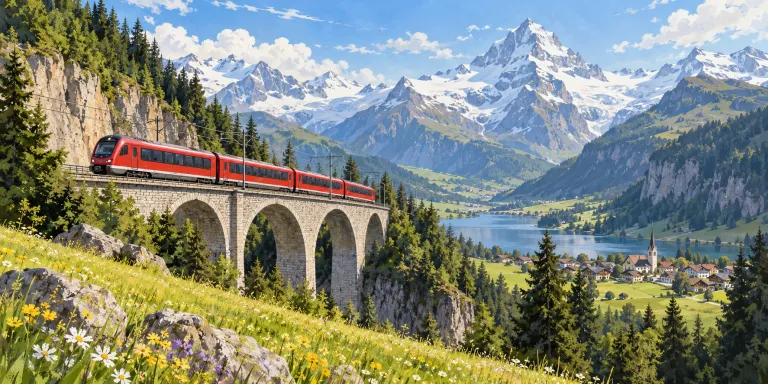
Switzerland by train: two bases beat seven hotel changes
A first-time rail itinerary with ticket choices, mountain-day weather and a simple cost test. Updated 14 October 2026.
Quick answer: For a first Swiss rail trip of about a week, choose Lucerne and the Interlaken area as two bases. Use day trips for lakes and mountain views, then add Zermatt only if you have extra nights. Check each journey in the official SBB timetable before buying a pass. A Swiss Travel Pass is convenient for many journeys, but it is not automatically the cheapest ticket for a slower two-base holiday.
| Nights | Base | What to do | Ticket decision |
|---|---|---|---|
| 1–3 | Lucerne | Town, lake and one mountain day | Compare local ticket, day pass and any mountain surcharge. |
| 4–7 | Interlaken or nearby town | One valley or lake at a time | Price actual train, bus and cable-car legs separately. |
| Optional extension | Zermatt | Stay long enough for a weather backup | Check rail fare and mountain railway exclusion. |
Why two bases work well on a first visit
Swiss trains make changing towns possible, but the timetable does not show the time you spend checking out, carrying bags, finding the platform and waiting to check in again. Two bases give you both a lake-city experience and access to the Bernese Oberland without treating the trip as a luggage relay. A couple of longer rides can still be scenic; the goal is to choose them deliberately.
Lucerne is a manageable starting base for a first arrival. The Interlaken area connects to several valleys and lakes. You could instead stay in a smaller nearby village if you prefer quiet, but compare the last train or bus back and the cost of reaching dinner. A room farther from a station can look cheaper until local travel is added.
Days 1–3: Lucerne with one mountain choice
On arrival day, get to the hotel and take an easy walk along the lake or through town. Save the mountain trip for a day when visibility is promising. The next day, choose one mountain excursion or lake journey and check the first and last services before paying. Do not assume that a national rail pass covers every cable car, cog railway or boat in full. The exact route matters.
Keep a third day flexible. If the mountain is hidden in cloud, swap the days and enjoy a town museum, lakeside route or shorter local ride. This works better than prepaying every scenic trip on fixed dates. Families should compare whether children have a separate fare or special card, and travelers needing step-free access should inspect individual station and vehicle information before choosing the route.
Days 4–7: one Interlaken-area base
Move by train from Lucerne to the Interlaken area. SBB can show the live timetable and connections. Decide whether to stay in Interlaken itself or nearer a valley that you intend to explore. A central base makes changing the day’s destination easier; a valley base may reduce local travel for one favourite area. Compare the full week, not a single journey.
Give one day to a lake or lower-altitude walk, one day to a valley, and one day to a mountain excursion if the weather and budget fit. Leave a flexible day for a missed view or a quiet recovery. Choosing one area each day avoids paying for multiple expensive lifts without enough time to enjoy any of them. Some scenic excursions require separate tickets or reservations, so check the operator’s current conditions as well as SBB’s timetable.
If you want Zermatt, add at least two nights rather than turning it into a rushed photo stop. Mountain views are weather-dependent. A second day can give you a better chance without a guarantee. Check the rail and mountain-railway fare independently before adding the extension.
Ticket choice: make a small spreadsheet, not a guess
SBB sells point-to-point tickets, saver offers, day passes and other travelcards. The right option depends on the exact dates, number of journeys, class, group and mountain trips. Write each train, bus, boat and mountain leg down. Price the itinerary once using ordinary tickets and any available saver offers; then price it using the pass you are considering plus anything it does not cover. Compare the final totals and the flexibility you value.
A Supersaver Ticket may cost less when you can commit to a particular train. SBB says it is connection-specific and has limited refund rights. If your plans depend on weather, a flexible ticket may be worth more than a small saving. A Saver Day Pass is a different product: check its valid services and date. Do not buy an impressive-sounding pass just because another traveler used it for a much faster itinerary.
Read the current Swiss Travel Pass validity map and the separate rules for mountain transport. A pass may cover the base rail journey while offering only a discount on a cable car or another excursion. Add compulsory reservations for premium panoramic trains where relevant. Your ordinary trains may offer the landscape you want without a premium booking, so compare the view, time and total cost rather than the train name.
Do you need to reserve a seat?
SBB offers optional seat reservations on some domestic services; selected premium or international trains have different rules. For each leg, check the SBB or operator result. A rail ticket and a seat reservation are not always the same thing. On a short regular connection, an optional reservation may have little value; for a long popular scenic service, it may improve comfort or be required. Do not assume a pass includes a seat on every train.
When changing trains, pay attention to platform, luggage and connection time. SBB Mobile can show updates, but keep your ticket or pass accessible even if the phone battery is low. If you require assistance, check the station’s accessibility and request procedures ahead of time. A change of platform at short notice is more difficult with a large suitcase, stroller or mobility device.
Budget beyond rail tickets
Accommodation, meals and mountain excursions can dominate the total cost. Choose hotels within an easy walk of a station if you will travel often, then compare the saved transport and taxi money. Groceries and simple meals can help with the budget, but do not plan a trip so tightly that a missed train ruins dinner. Keep an allowance for a weather-driven plan change.
Price in Swiss francs at checkout. A third-party site may show another currency or a partial fare by default. Some displays assume a Half Fare Card; check the passenger setting before using that amount in your budget. For a group, calculate the cost for everyone, including children and any required reservations. Check cancellation conditions on lodging and mountain tickets separately.
Practical travel habits
- Use the SBB timetable for every day and save the journey details offline.
- Keep luggage light enough to lift and move yourself without blocking aisles.
- Check the operator’s weather and operating status before a mountain trip.
- Leave one flexible day for poor visibility or a slower pace.
- Respect quiet spaces, boarding instructions and local trail rules.
What to book, and when
Start with flights and the two bases. Once dates are fixed, price the train journeys and compare passes. Book a compulsory scenic-train reservation if that journey is central to your trip. Hold some weather-sensitive mountain activities until the forecast is clearer unless their cancellation terms suit you. Train timetables and fares can change, so do a final check shortly before travel.
Visitors from different countries may have different entry conditions. Check official Swiss government guidance for your passport, length of stay and any other Schengen stops before buying nonrefundable travel. A train ticket does not settle visa or border requirements.
Quick questions
Is the Swiss Travel Pass always the best value?
No. Price your exact rail and local trips, add mountain supplements and compare with ordinary and saver tickets. The pass may still be worth paying for if you value flexibility.
Do I need a car?
Not for this route. The two bases and day trips are planned around rail and local transport. A car changes parking, cost and route decisions.
Does a train pass include every mountain lift?
No. Coverage and discounts vary. Check the pass validity map and the specific operator before assuming the ride is free.
Should I reserve every train?
No. Check each service. Domestic reservations can be optional; some premium scenic services require a separate reservation.
Leave a Reply