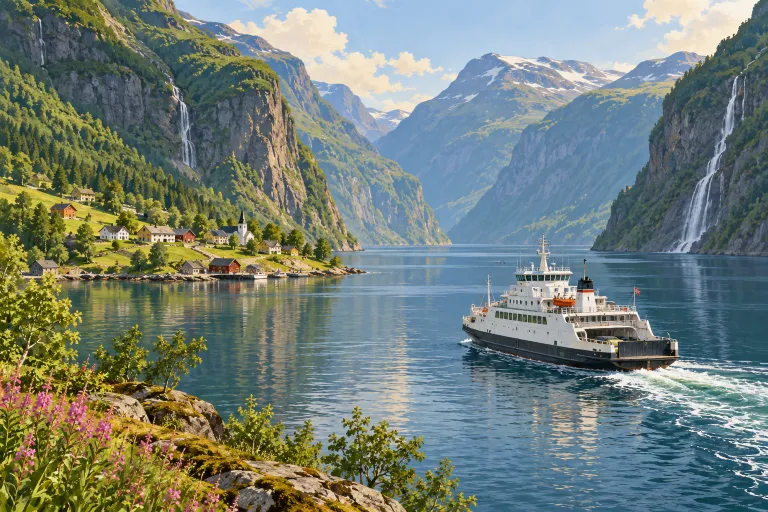
Norway fjord road trip: choose a smaller region
A seven-night western Norway route with ferry, weather and road checks. Updated 14 October 2026.
Quick answer: For a first fjord trip, base the plan around western Norway instead of driving across the whole country. Seven nights can allow two near Bergen, two in a fjord area and two around another chosen base, with one final night near departure. The exact villages depend on ferries, road openings and what you want to do. A scenic route is a travel choice, not a guarantee that every mountain road is open on your dates.
| Nights | Base idea | Main decision |
|---|---|---|
| 1–2 | Bergen area | Rest, explore the city and decide whether a car is needed yet. |
| 3–4 | One fjord base | Choose a boat or a walk, not both on a rushed transfer day. |
| 5–6 | A second base toward your departure route | Check ferries and road conditions before committing. |
| 7 | Near departure airport | Return car with a large time buffer. |
Compare packable rain jackets ↗Compare power banks ↗
Decide whether a car is worth it
A car gives freedom to stop, but it adds rental cost, parking, ferries and responsibility on narrow roads. Visit Norway publishes public-transport fjord itineraries from Bergen. Compare one of those with a car route before booking. If your main goal is a boat trip and two city bases, a car may not add much. If you want rural lodging or trail access, a car may be more useful.
Build the budget around the full journey: rental, insurance excess, tolls, ferries, fuel, parking and accommodation. Read the rental company’s rules for ferries, drivers and cross-border travel if relevant. Ask whether toll charges are collected automatically and if an administration fee applies. A cheap daily rate can become a costly week after these extras.
Do not use a map’s fastest drive time as the day’s schedule. Mountain roads, photo stops, ferry waits and weather add time. A pleasant plan usually has one main destination, one flexible stop and enough daylight for an unhurried arrival.
Bergen as an arrival base
Give yourself a city day before the long drive. If your flight arrives late, sleep first and collect the car later. Compare the cost of airport pickup with collecting it in town after the city day. Parking in a city may cost more than the rental day you save.
Use the day to settle into local time and check the forecast. Choose one walk or museum that interests you, then have a relaxed meal. Booking a boat, a mountain drive and a timed city attraction on arrival day creates avoidable stress. If you travel with children or an older relative, leave even more space.
Before departure, download your route and save booking confirmations offline. Mobile signal can be patchy in valleys. Mark fuel and food stops, but still follow current road signs. A navigation app may not understand a temporary closure.
One fjord base is better than daily hotel changes
Choose a base that supports two different days. One can be a boat trip or short guided activity; the other can be a walk, viewpoint or quiet village day. If rain makes the first plan less attractive, swap the order. A two-night stay also reduces packing and gives time to enjoy the place after day visitors leave.
Read the boat operator’s live schedule and cancellation policy. A ferry used as public transport and a sightseeing cruise are different products. They may leave from different piers, take different vehicles and have different luggage rules. Do not book the next hotel transfer around an assumed boat crossing until you have the actual timetable.
For a hike, check the route length, elevation, weather and your group’s ability. “Popular” does not mean safe in fog or rain. Stay on marked paths, turn back when conditions deteriorate and obey local closures. A shorter accessible viewpoint can give a better day than a long climb that leaves everyone exhausted.
Geiranger and Trollstigen need special care
The Norwegian Scenic Routes authority describes Geiranger–Trollstigen as a mountain-and-fjord route with a ferry crossing. It also warns that some stretches close in winter or bad weather. Do not put Trollstigen into an itinerary as a guaranteed through-road. Check its official route page and the Norwegian Public Roads Administration’s live traffic information for your exact date.
Even when open, a narrow road with bends may not suit every driver or vehicle. The scenic route authority notes vehicle-length restrictions on the Trollstigen stretch. If you are driving a large camper, check those rules before departure. If the road is closed, a lower road or a different fjord day can still make a good trip.
Look at ferries as part of the route, not a small afterthought. Find the operator, departure point, vehicle rules and last sailing. Arrive early enough to join the correct queue. If a crossing is full or cancelled, know your next realistic option. A meal and a safe overnight are more important than completing a route line on a map.
Road conditions can change the day
Norway’s Public Roads Administration provides real-time road and traffic information and mountain-pass status. Check it before every long transfer. Follow road signs and closures even if your offline map disagrees. Landslides, snow, storms and maintenance can affect the road. If a section is closed, do not use a local lane as an improvised bypass without official guidance.
Drive at a speed that feels safe for the road and weather, within the legal limit. Pull over only in suitable areas to let others pass or take photographs. Do not stop in a narrow passing place or block a farm entrance. Give cyclists and walkers room. In a region where the road is part of the scenery, patience improves the trip for everyone.
Keep daylight in mind. A long final drive in darkness after a day of hiking is a poor trade. Split it with an overnight or shorten the activity. If you are tired, stop. No viewpoint is worth a risky drive.
Choose one paid experience, then compare it
A boat tour, guided kayak trip or cable car can be memorable. Decide which one fits your ability and budget. Look at departure time, meeting point, duration, age or health restrictions, clothing requirements and cancellation terms. A large price does not automatically mean a better view; a public ferry or free viewpoint may suit you just as well.
Do not buy nonrefundable activities for every day. Weather can change the experience and sometimes the operator cancels. A flexible day lets you move the main activity or spend time in a town. Before paying, check whether a guide, equipment and transport are included in the full price.
Respect local residents. Park in marked spaces, take rubbish away and do not enter private land because a photo online shows a path. If a viewpoint is crowded, consider another stop rather than adding to unsafe roadside parking.
Hotels and the final night
Pick accommodation based on route and ferry timetable as well as price. A room with a dramatic view may add an hour each way to the activity you care about. Check late check-in, parking, meals and cancellation. In a small place, dinner choices may be limited; decide where you will eat before a late arrival.
The last night should be within a comfortable transfer of the departure airport. Refuelling, toll records, vehicle inspection and the rental return all take time. A flight after a distant mountain drive leaves no margin for a closed road. Move the final scenic day earlier and finish calmly.
If you are travelling without a car, confirm that the accommodation can be reached from the station or ferry at the arrival time. A “nearby” hotel may be across a steep hill or have no suitable evening transport.
Build the total-cost comparison
- Price flights and check whether an open-jaw route reduces backtracking.
- Compare a car itinerary with a public-transport route.
- Add ferries, tolls, fuel, parking and rental insurance terms.
- Choose two useful bases instead of four one-night stops.
- Book one main activity and leave a weather buffer.
- Recheck road and ferry conditions before each transfer.
A lower-cost trip may simply mean fewer transfers and one well-chosen base. It need not mean missing the fjords. Spend money on the experience that matters to your group, then allow time to enjoy it.
Quick questions
Is Trollstigen open all year?
No. The official scenic-route page describes winter and weather closures. Check live road status for your day.
Do I need a rental car to see a fjord?
No. Visit Norway lists public-transport options. Compare their schedules with the freedom and total cost of a car.
Can I skip a fjord cruise?
Yes. Viewpoints, villages and public transport can make a rewarding trip. Choose a cruise only if it fits your interests and budget.
How many hotels for seven nights?
Two main bases plus arrival and departure nights is a calmer starting point than changing rooms every day.
Leave a Reply